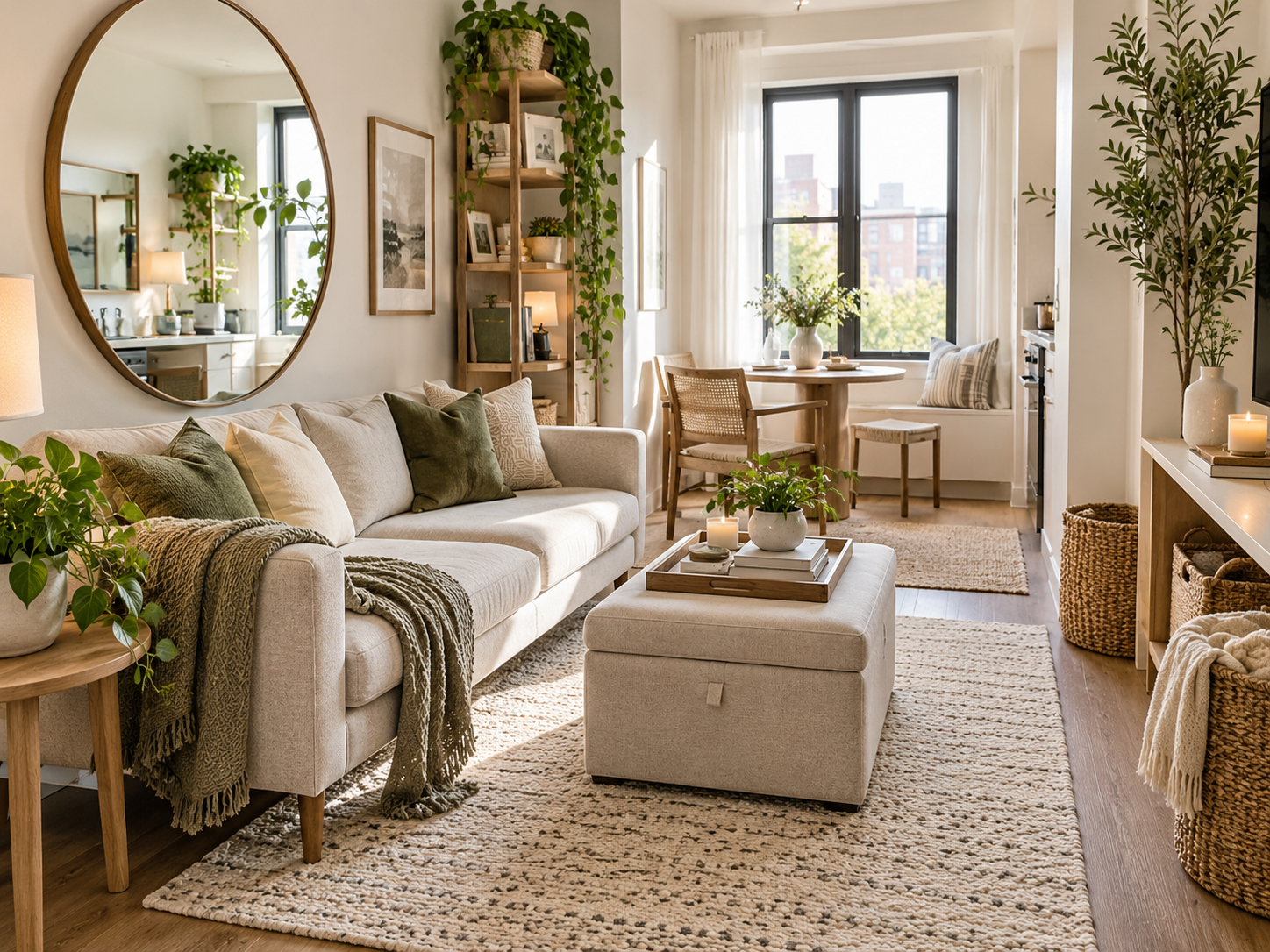
20 Small Space Home Decor Ideas to Make Your Home Feel Bigger and Cozier
A small home feels easier to live in when decoration supports the furniture, storage and routes you already need. Begin with the task the room does poorly: difficult movement, poor evening light, crowded surfaces or belongings without a place. Choose a decorating change that helps that task before buying accessories.
This guide is a whole-home starting point, rather than a detailed layout for every room. Use our small living-room guide or bedroom layout guide when furniture placement is the main problem.
Measure physical space even when a piece looks visually light. Mirrors, raised legs and pale colors can change the impression of a room, but only its actual arrangement determines whether you can move and use it comfortably.
Give the home one visual connection and each room one job
Choose an element already present in several rooms, such as warm wood, a blue textile or a black metal fitting. Repeat it selectively rather than buying a matching set for the whole apartment. Keep each room's main task clear: a dining table must still hold a meal, and a bedside surface must still serve the sleeper.
For an example, a blue-and-orange living-room cushion could connect to a blue kitchen towel and an orange bedroom print. The colors relate without requiring the same proportion or pattern everywhere. Try the connection with objects you own first. If the room still feels crowded, remove an obstruction or simplify a working surface before adding another decorative layer. Visual consistency cannot compensate for furniture that blocks everyday movement.
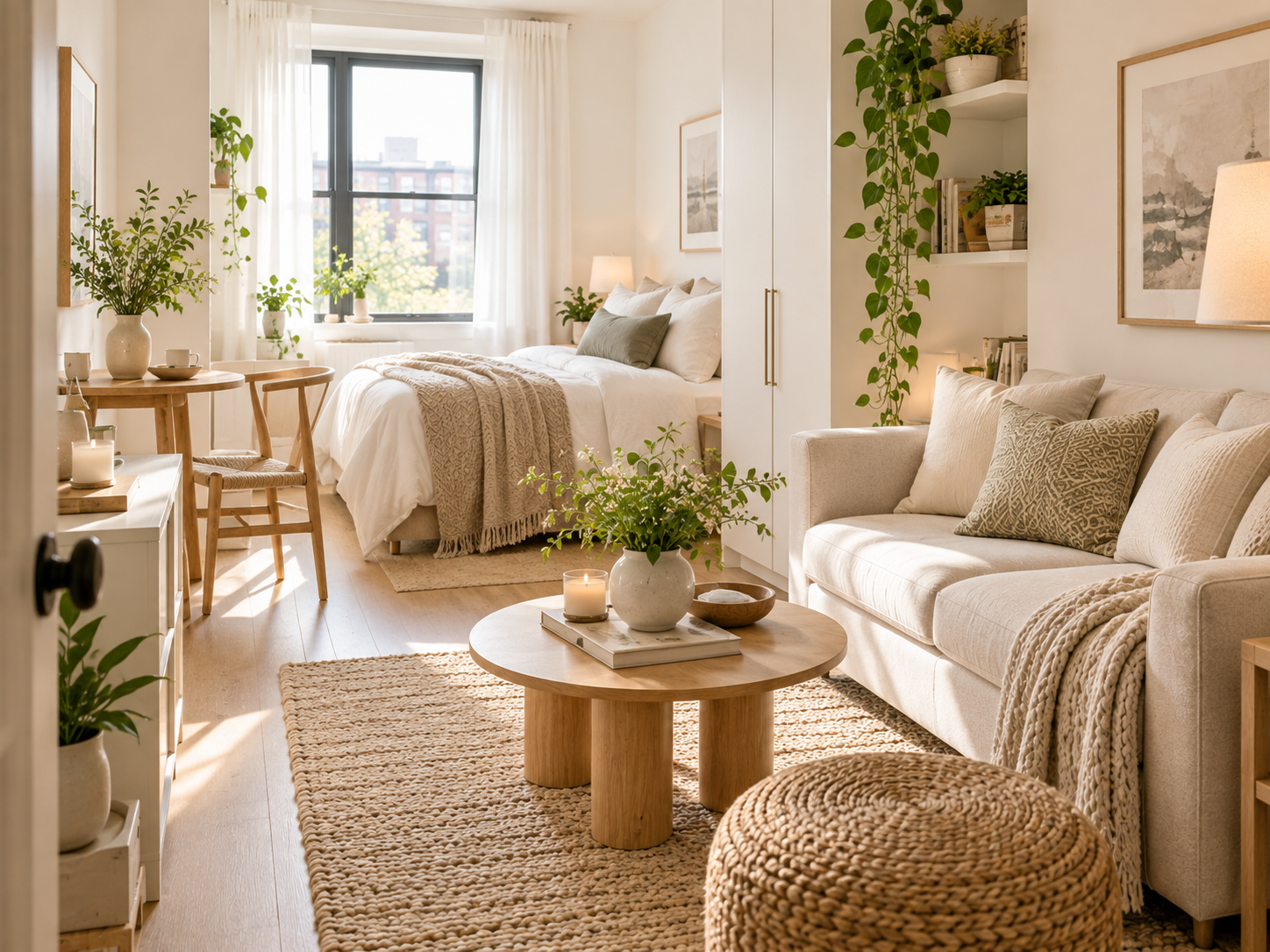
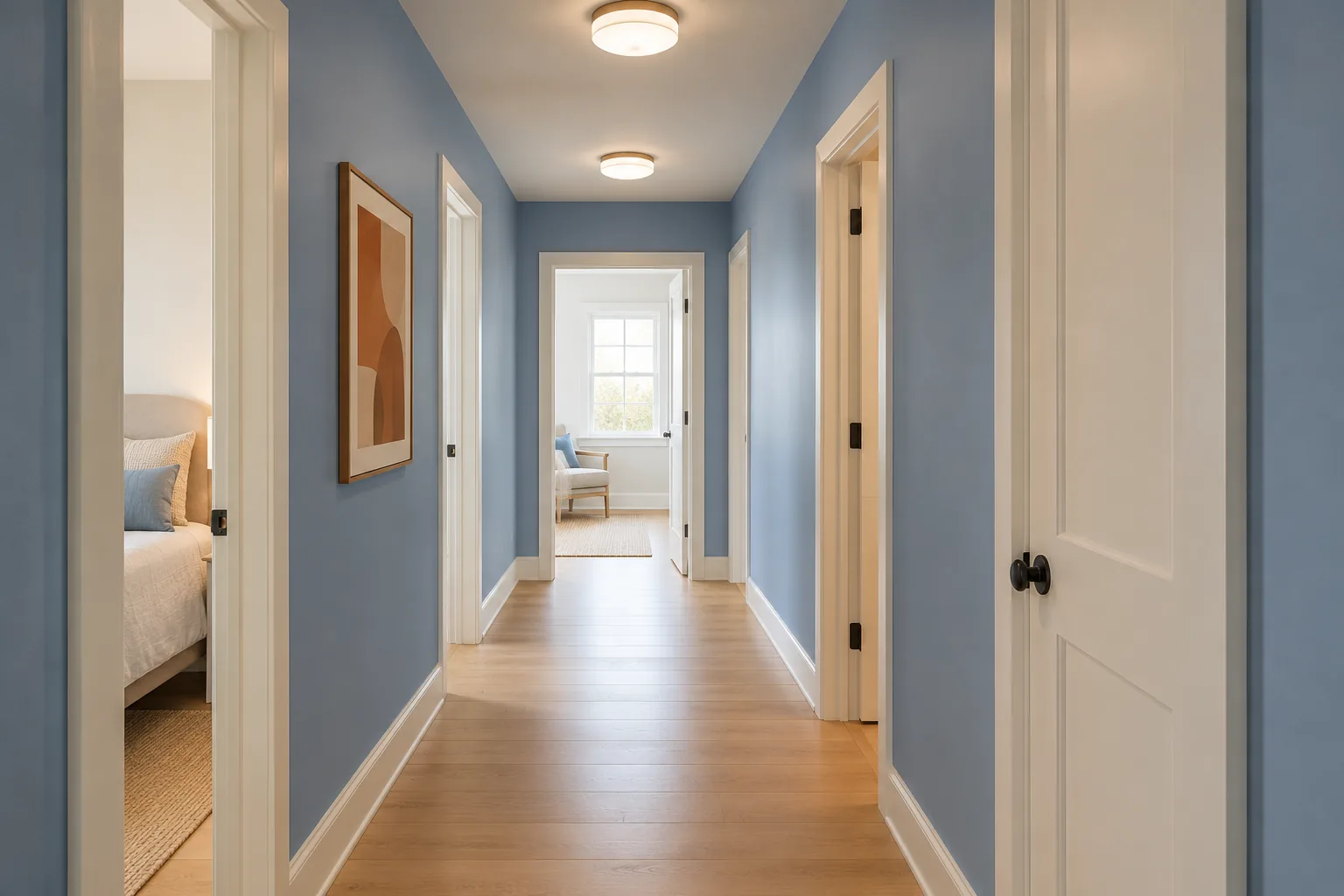
Start with a light color palette
Try a sample against the floor and largest furniture piece, then view it in daylight and evening light. A warm pale background can connect the room, but bright white may feel harsh in some conditions. Keep colors you enjoy rather than treating neutrals as a rule. In a rental, introduce the palette through permitted textiles if repainting is unavailable.
Add warm wood tones
Repeat a wood tone from an existing table or floor through one useful piece, such as a shelf or frame. Check whether the new finish works beside it before adding several items. A wood accent does not need to match every surface. Prioritize durability and suitable care for the room, especially near water or regular food preparation.
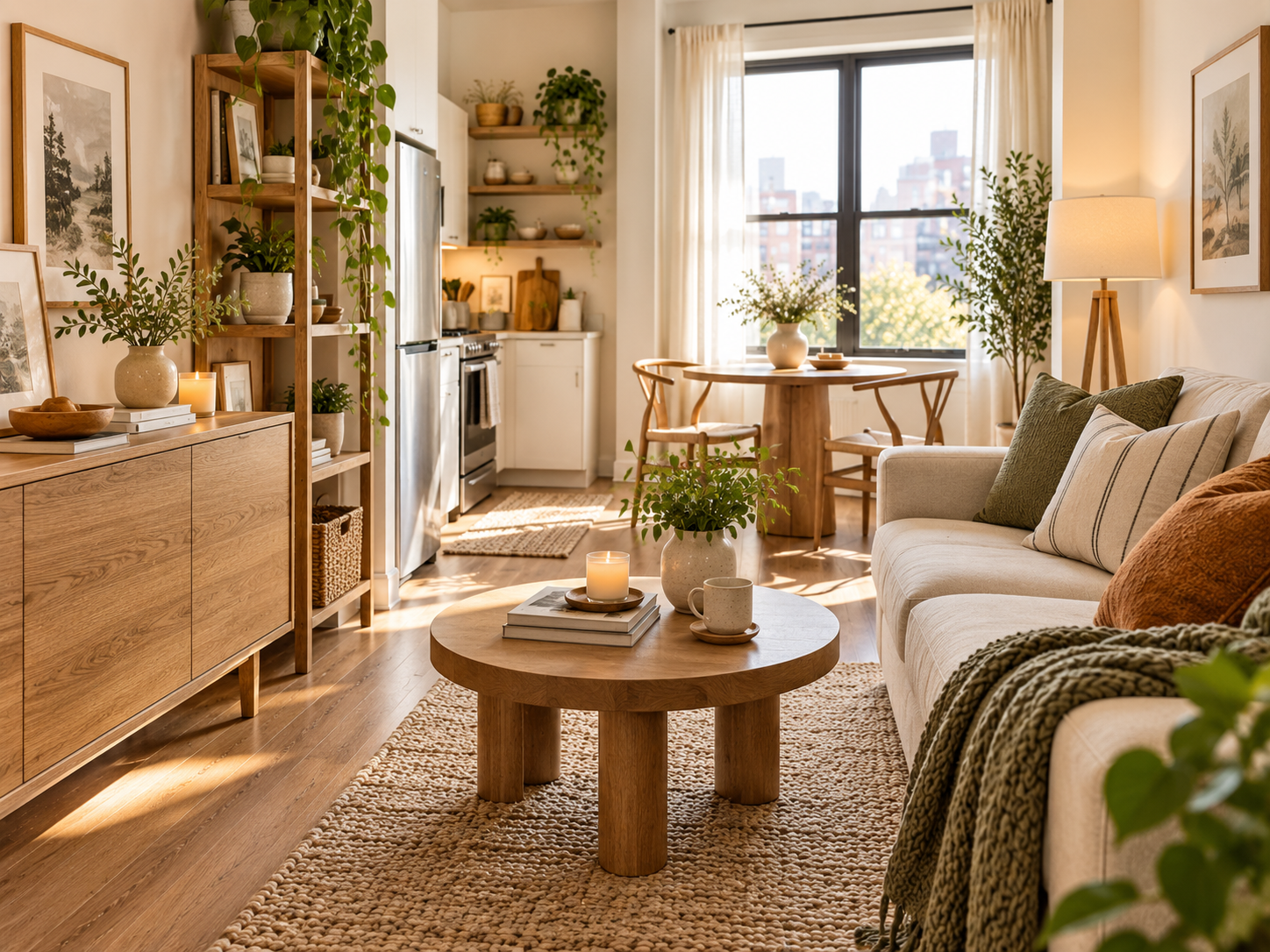
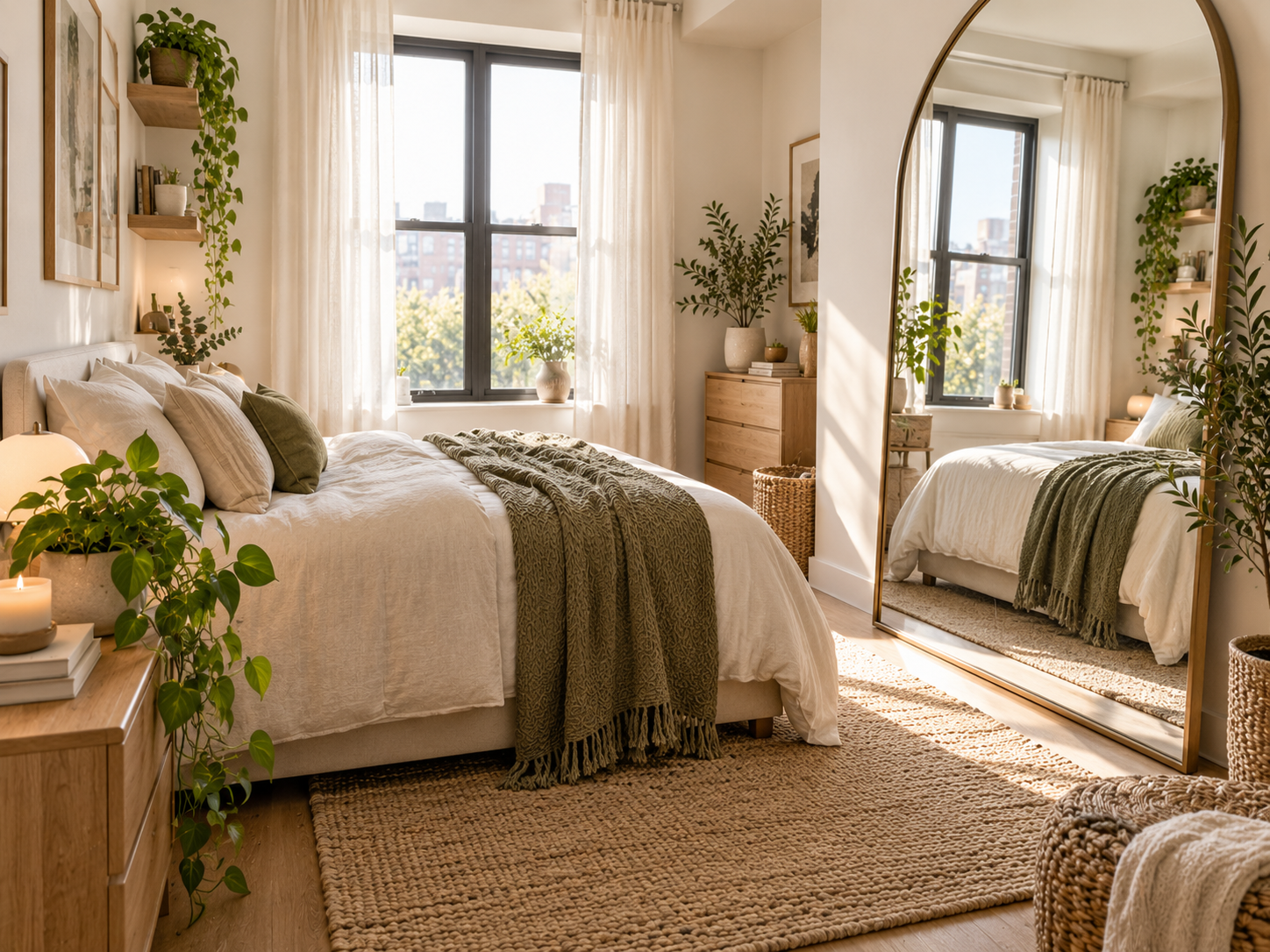
Use one large mirror
Test the reflected view from the doorway and your usual seat before deciding on position. A mirror can reflect daylight, but it can also emphasize clutter or cause glare. Follow its mounting and securing instructions for the actual surface. Choose a smaller suitably secured mirror when a large one would require uncertain fixings or occupy a needed access point.
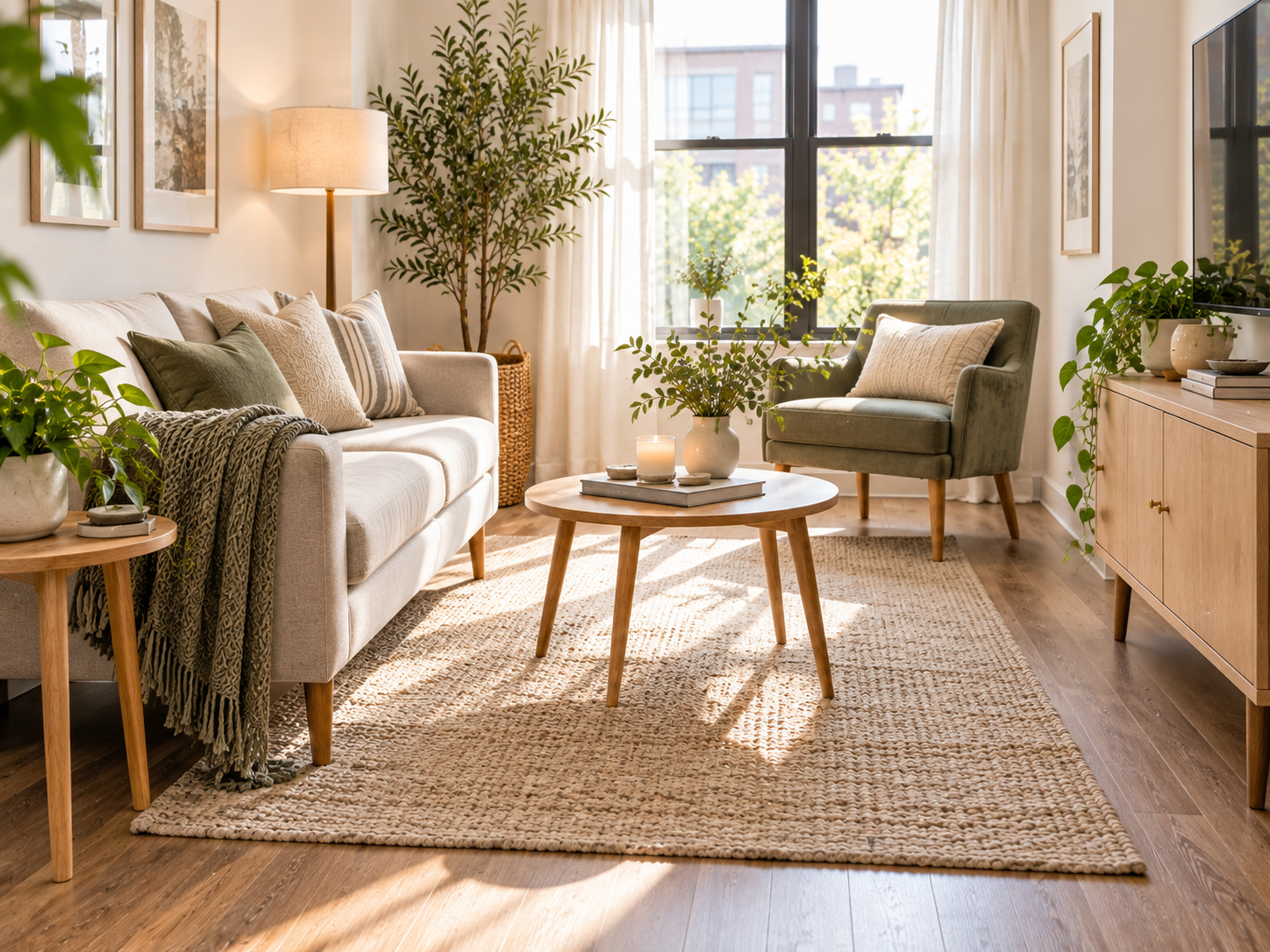
Choose furniture with visible legs
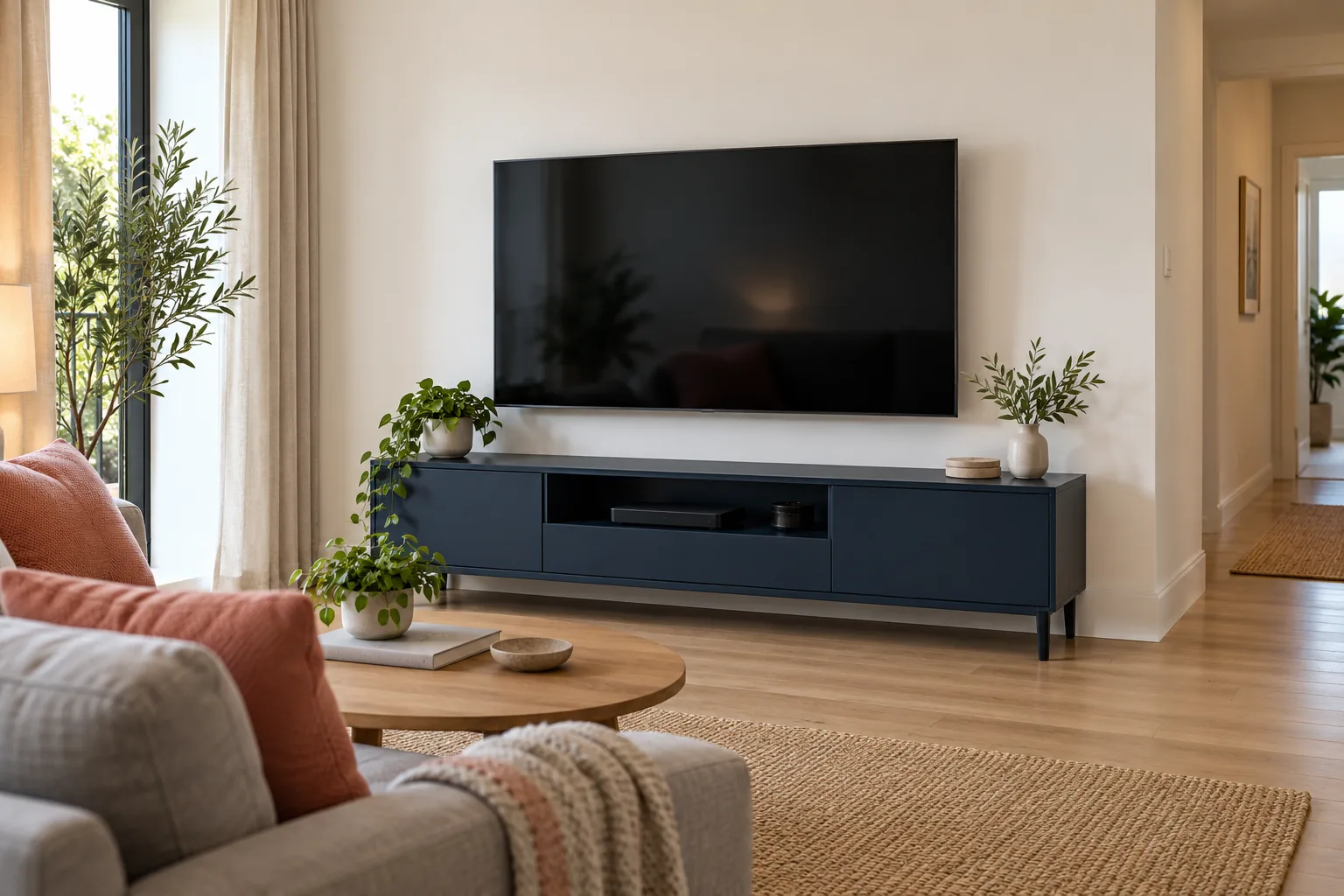
Visible floor beneath a piece may help the arrangement feel lighter, but check the real footprint and cleaning access. Compare comfort and storage capacity with appearance. If your current furniture works, try removing an unnecessary side piece first. Buying raised furniture is a poor solution when the actual problem is too many objects competing for the same route.
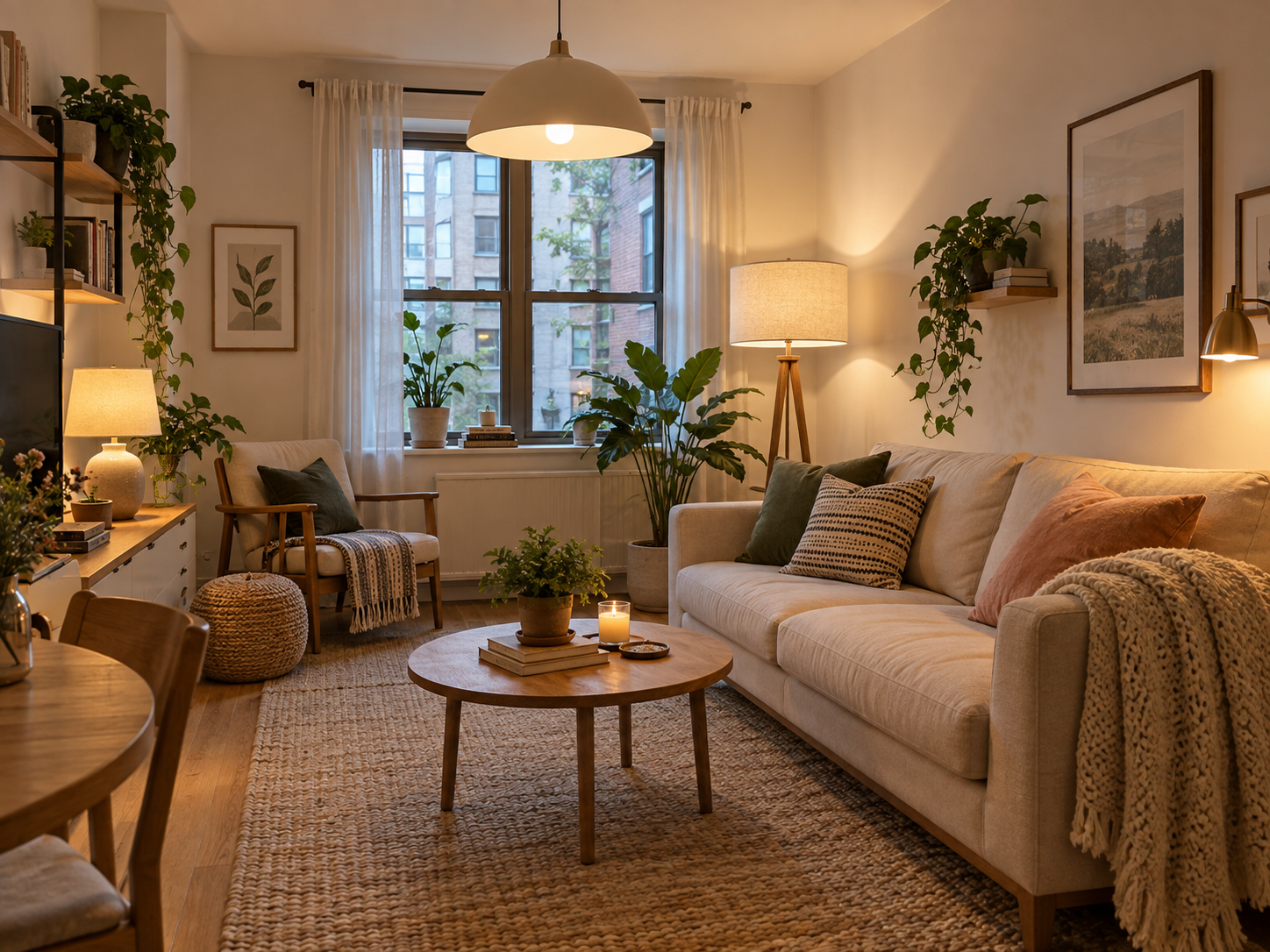
Use multifunctional furniture
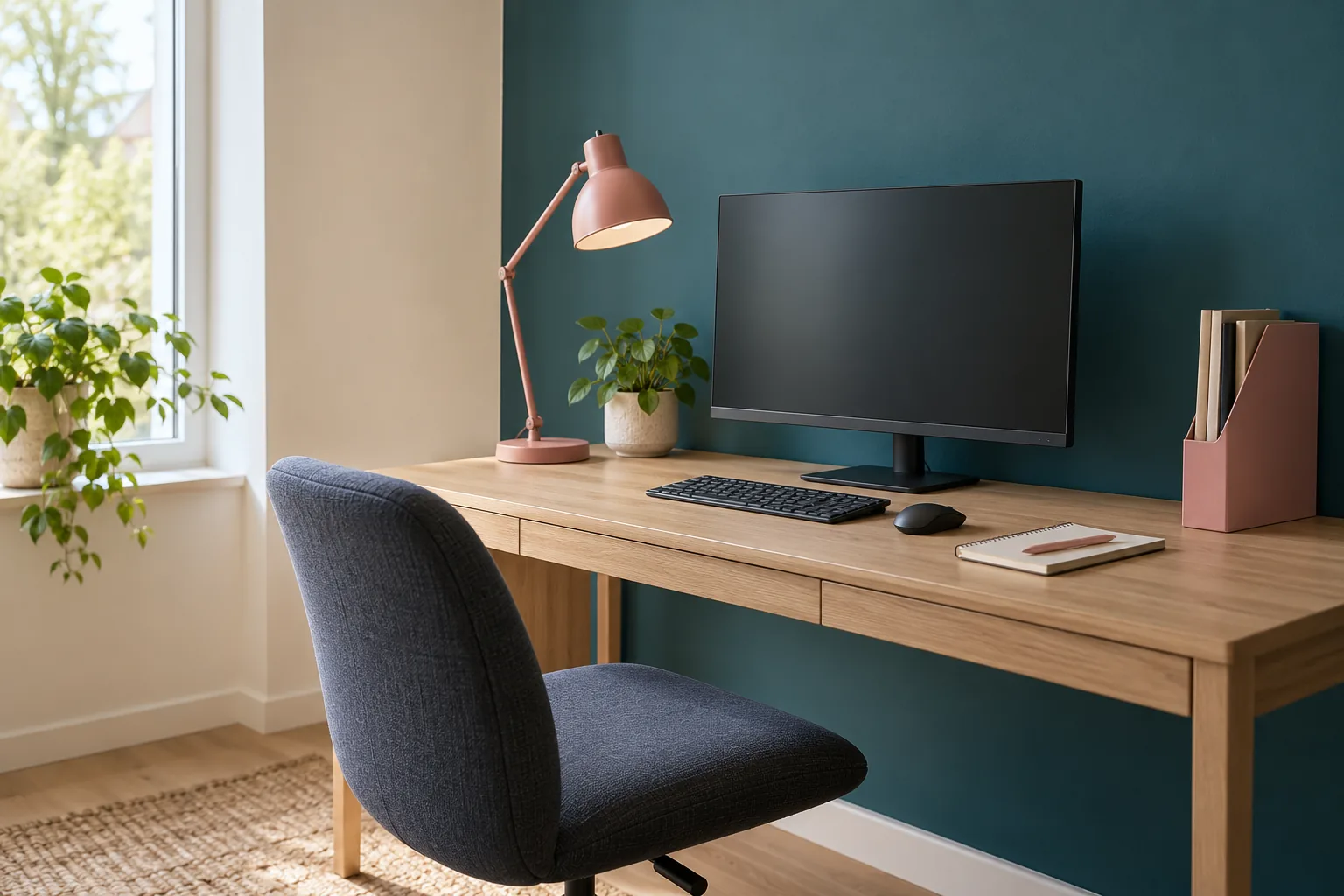
List the two jobs you want the furniture to perform and follow the transition between them. A desk used as a dressing surface needs a place for work materials while cosmetics are in use, then somewhere appropriate for those cosmetics when work resumes. Putting each group on the bed in turn may make the room more awkward.
Try the transition with the belongings already owned. Keep a suitable place for the chair, light and each group of materials. For a lift-top or storage piece, include the mechanism's full operating area and follow its load and use instructions.
Keep the combined role when it removes a real conflict or another unnecessary piece of furniture. If the jobs need the same surface at the same time, a small dedicated storage place may help more than replacing the main furniture. Our small-apartment desk guide compares work locations.
Decorate upward
Use a wall for storage only where the contents remain reachable and the installation can be suitable. Check loaded weight, wall construction, permission and fixing instructions. Tall furniture may need anchoring even when it has a small footprint. Avoid placing heavy items above a bed or frequently used seat just to keep the floor visually clear.
Keep surfaces intentionally simple
Give the surface a daily role before choosing decorations. A bedside shelf may need a phone and lamp; a kitchen counter needs preparation space. Add a small accent only after those uses fit. Clear one surface for a week and note what returns. Those recurring objects need a practical home, rather than being moved out of the photo each time.
Use a large piece of artwork
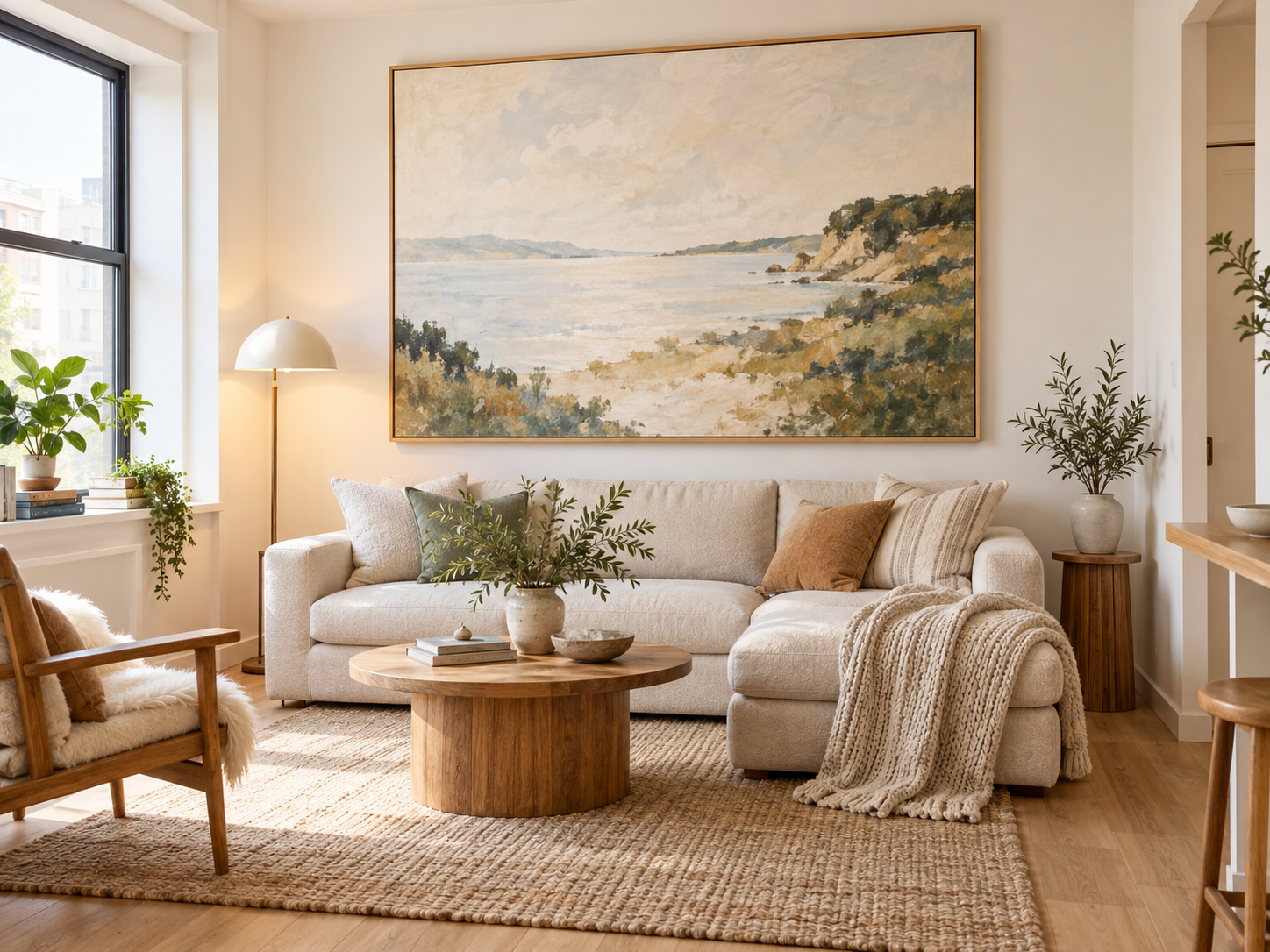
Mark the artwork's full outline, including its frame, and view it from your normal position. Compare one larger piece with a small coordinated arrangement rather than assuming a large canvas always suits a short wall. Our gallery wall comparison can help. Keep suitable mounting and the wall's other functions in the decision.
Layer your lighting
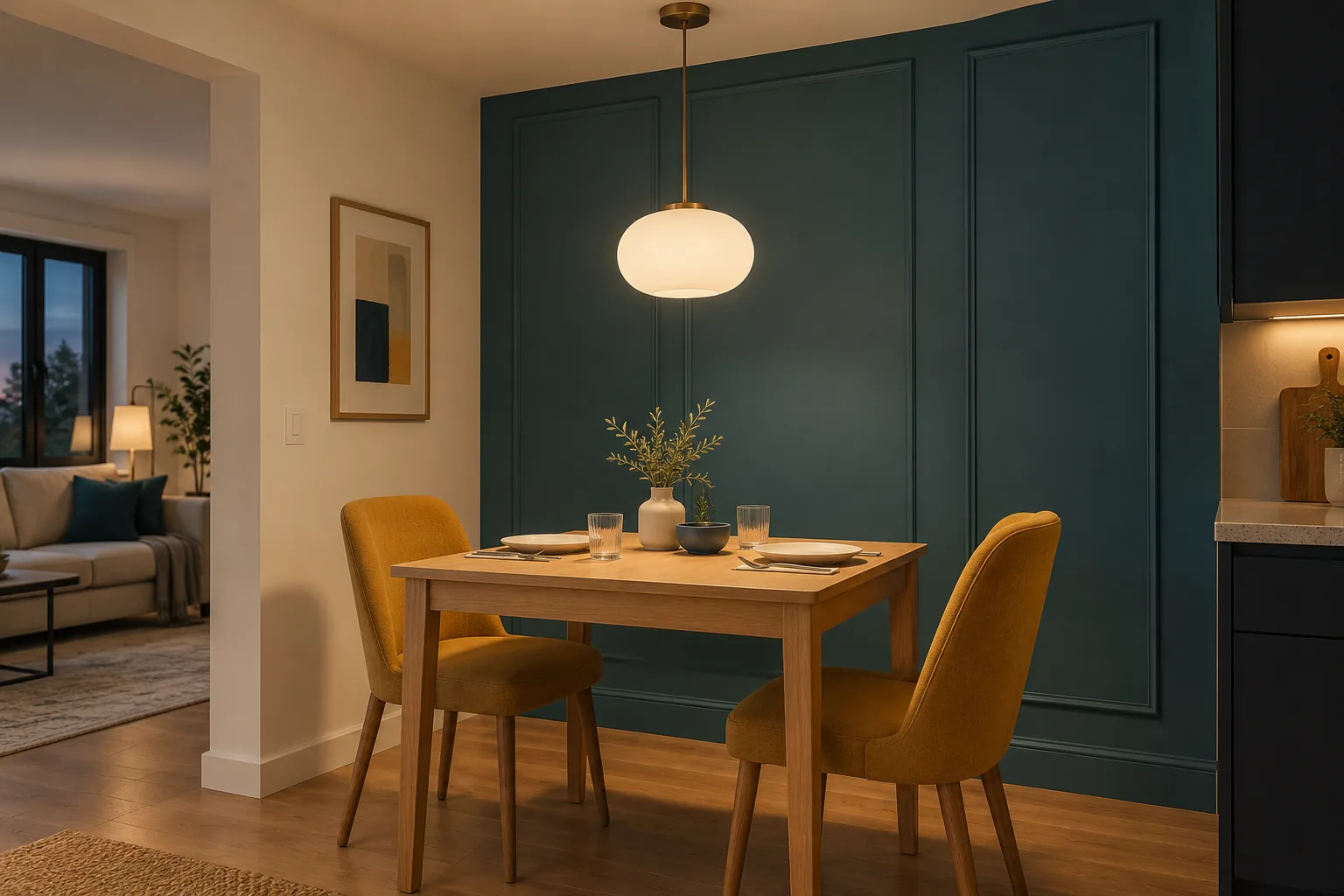
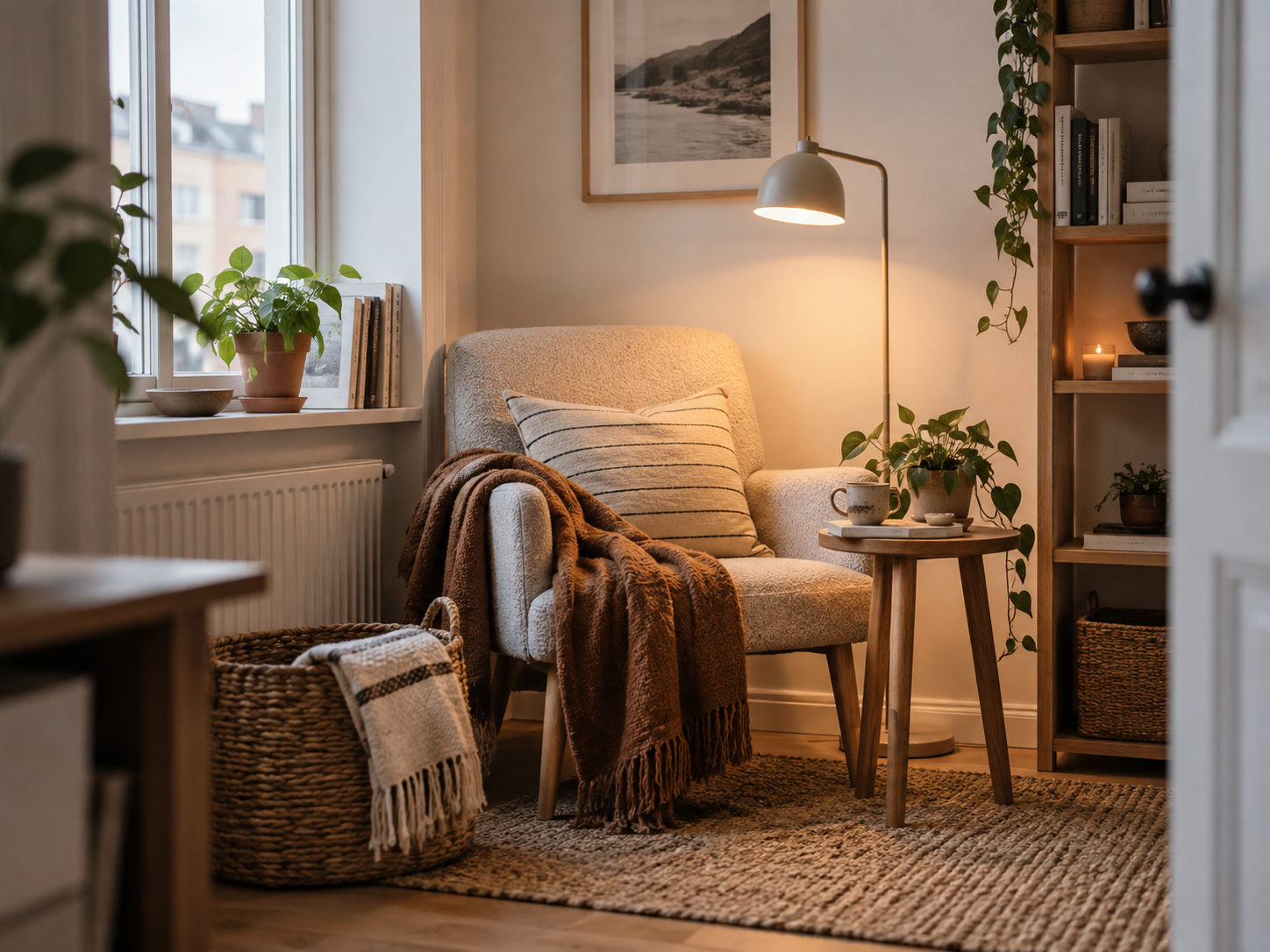
Choose lights by the activities they support: reading, cooking, relaxing or finding something in storage. Position an existing lamp first, then identify any remaining dark area. Use fittings, bulbs and cable routes appropriate to the equipment. More lamps are not automatically better; a useful adjustable light may solve a task that several decorative lights leave dim.
Use rugs to define different zones
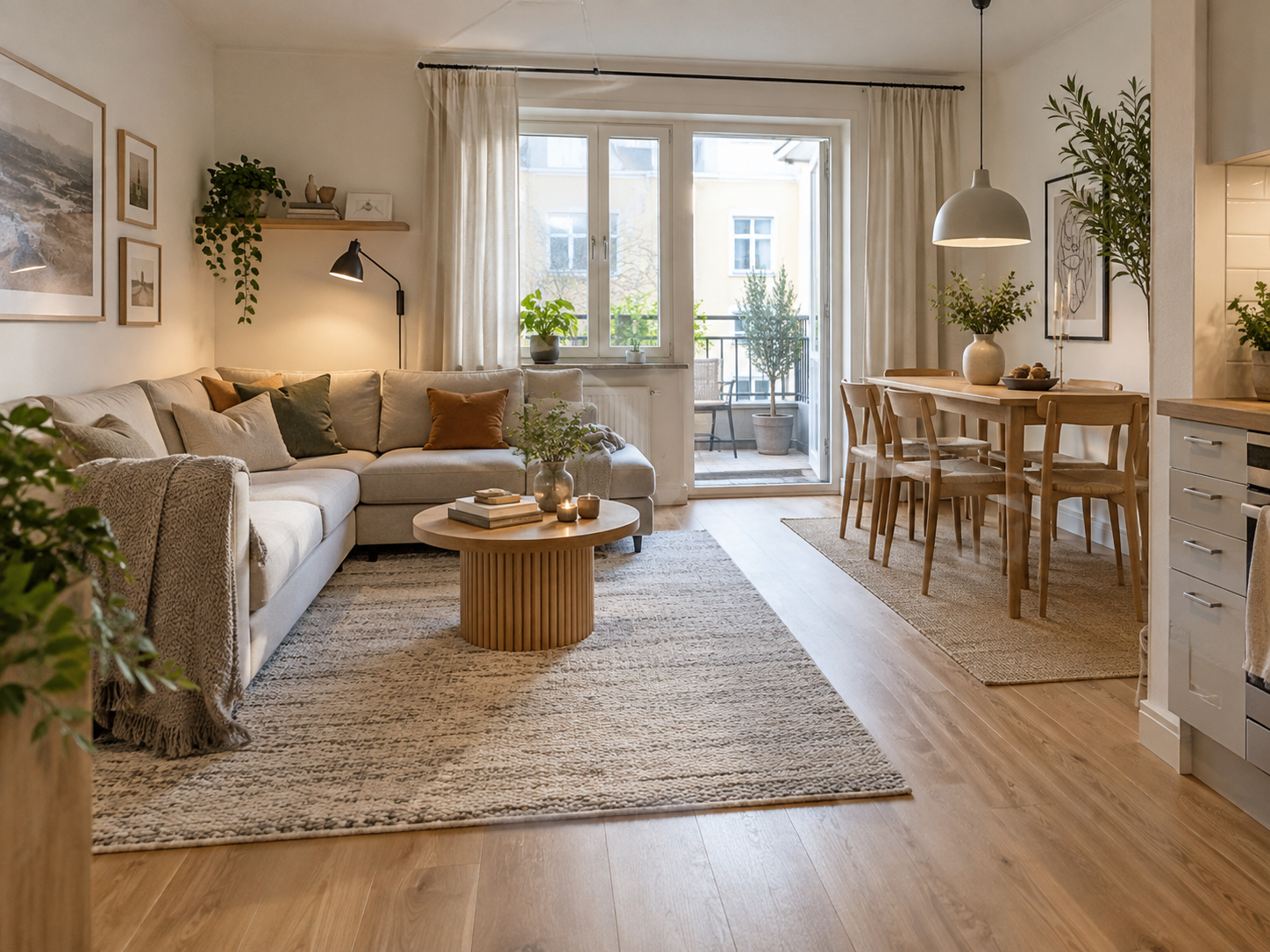
Mark the rug boundaries around furniture in use, checking door clearance and walking routes. A rug can signal a seating zone without forming a physical barrier, but its edges still need to lie flat on a suitable floor surface. If a small rug interrupts the main passage, define the zone through furniture direction or lighting instead.
Repeat a limited color palette
Choose a palette from something you plan to keep, such as a painting, sofa or patterned textile. Repeat a few shades in useful items rather than purchasing matching decorations for every shelf. Let adjoining spaces share one color if you want continuity. A limited palette is an organizing option, not a requirement to remove meaningful colorful objects.
Add plants strategically
Select the plant for the available light and your care routine, checking household suitability where children or pets are present. Put it where watering and cleaning are manageable and protect the surface beneath it. Keep growth out of the route. One healthy plant can add interest without the work and space of a collection you cannot comfortably maintain.
Choose curtains that reach the floor
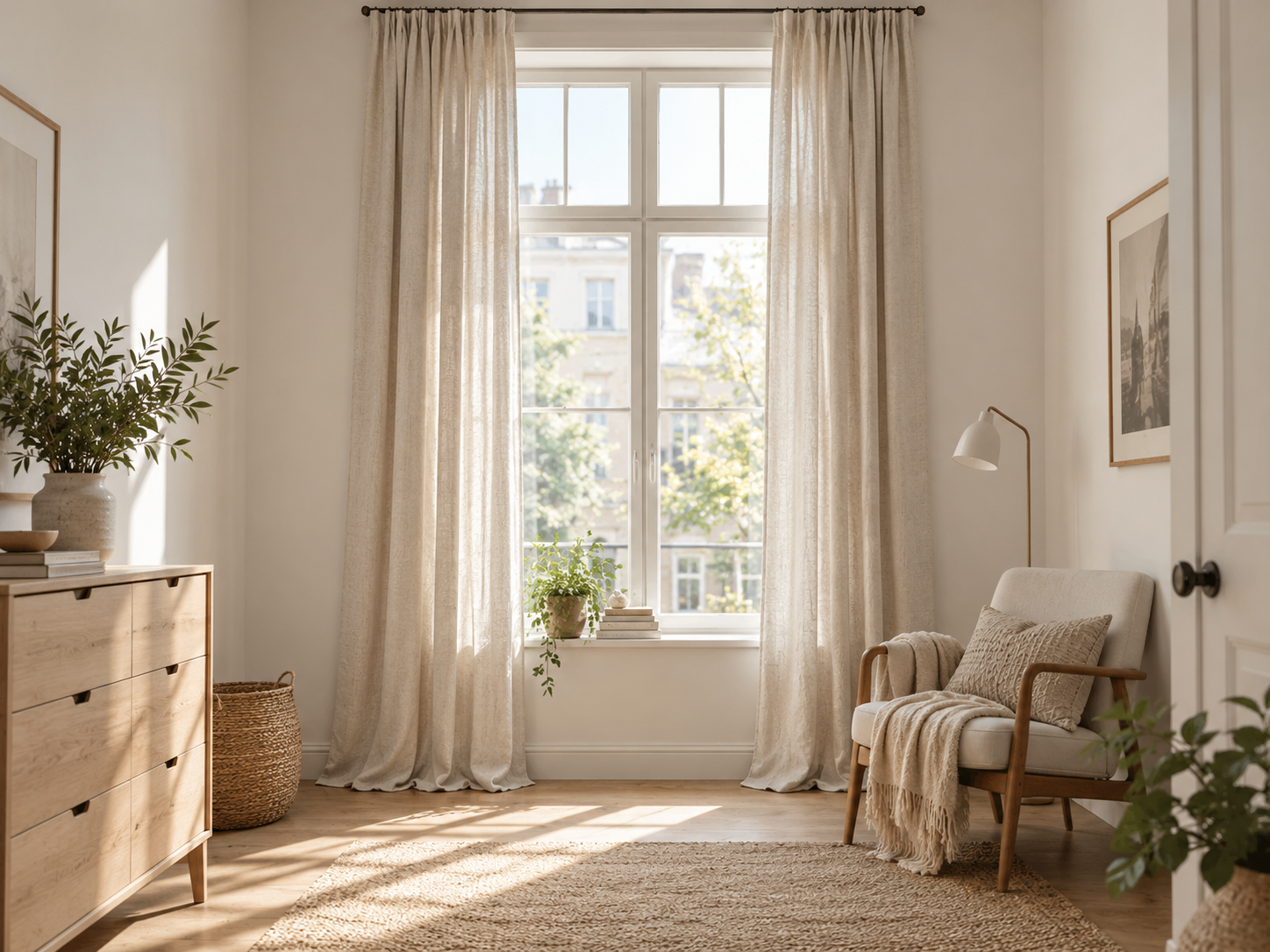
Measure the curtain length and the space needed for the panels to open. Floor-length fabric should suit the room's use and stay away from heaters or equipment as directed. A shorter window treatment may be more practical near a desk or counter. Check mounting permissions and compare the real window needs before choosing a dramatic curtain length.
Use baskets as attractive storage
Choose baskets after grouping the belongings and measuring their storage location. Check that the opening is wide enough to return items easily and that the loaded basket is manageable. Use dry textiles or accessories appropriate to woven storage. A basket without a category quickly becomes a hidden mixed pile; give it a clear job and a limit before styling it.
Create one cozy corner
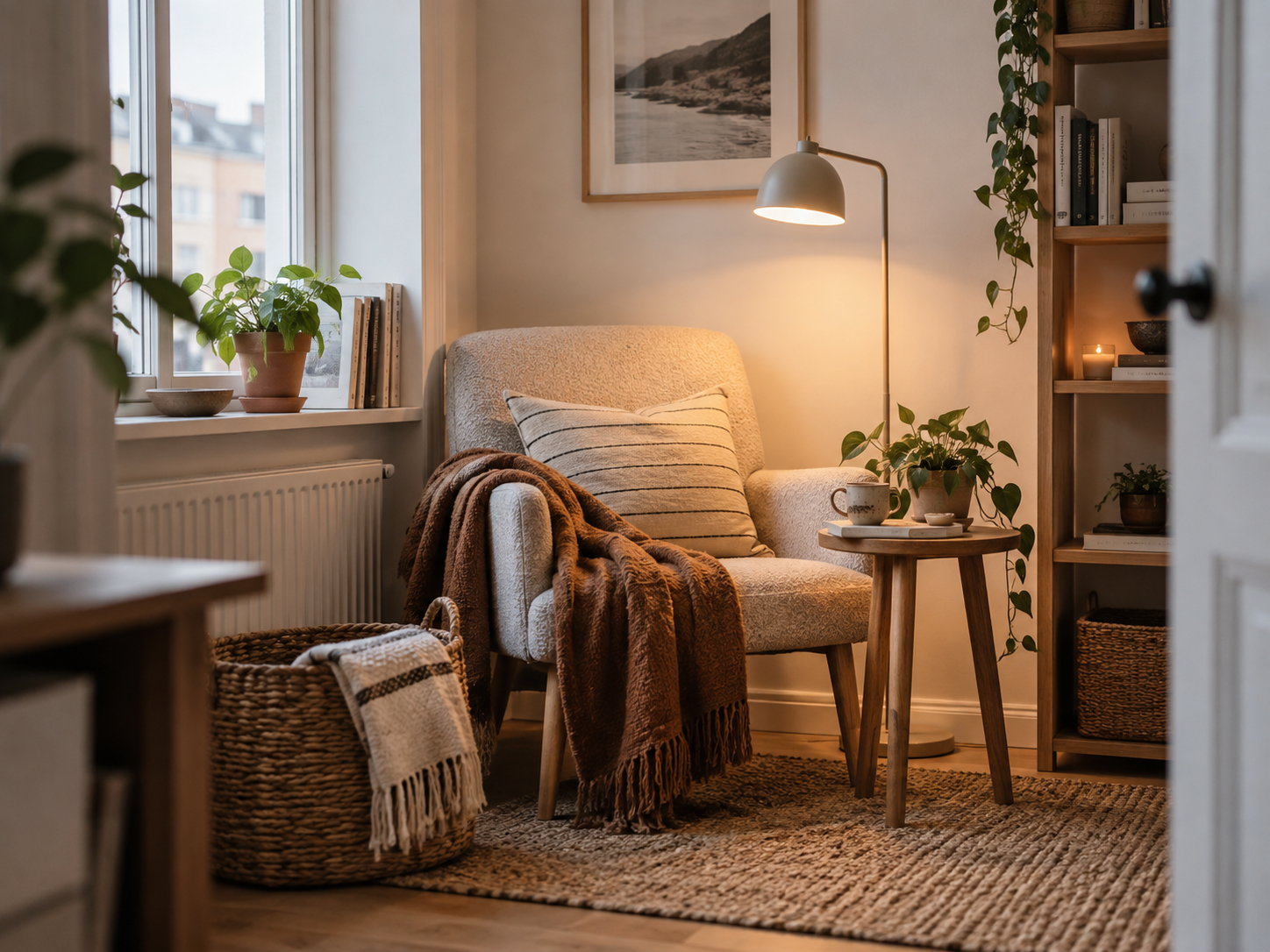
Improve an existing seat's light and nearby surface before adding a new chair. Sit there with your intended activity and check the space for feet, movement and a drink. A cozy corner is useful only when it does not block another everyday task. Our reading-nook guide develops that setup in detail.
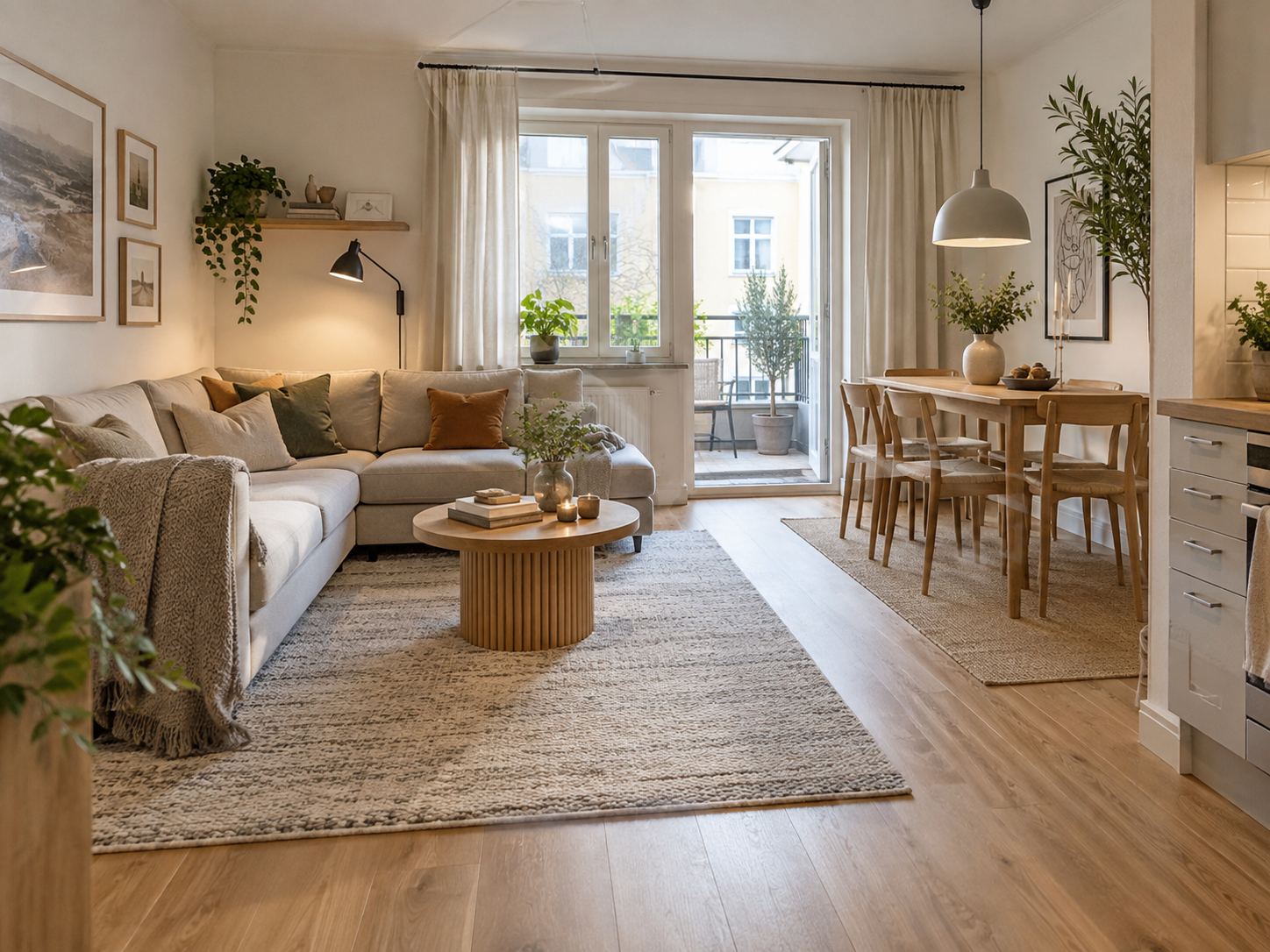
Try a round coffee table
Compare the whole table with the gap between the actual seats, not with an isolated room photograph. Include legs, handles or anything projecting beyond the top. A rounded outline can soften the view while still taking up too much of a narrow room.
In a hypothetical comparison, a circular top with an 80 cm diameter needs 80 cm of width in every direction. A rectangular top measuring 90 × 45 cm is longer in one direction but narrower in the other. Neither is the universal space-saving choice; place each full footprint in the intended orientation and check reaching and walking with the seats occupied.
Use a removable outline suitable for the floor finish, then include the maker's operating requirements for any nesting or lift-top mechanism. Keep the table that supports the household's cups, books or other ordinary tasks. The shape alone does not decide that.
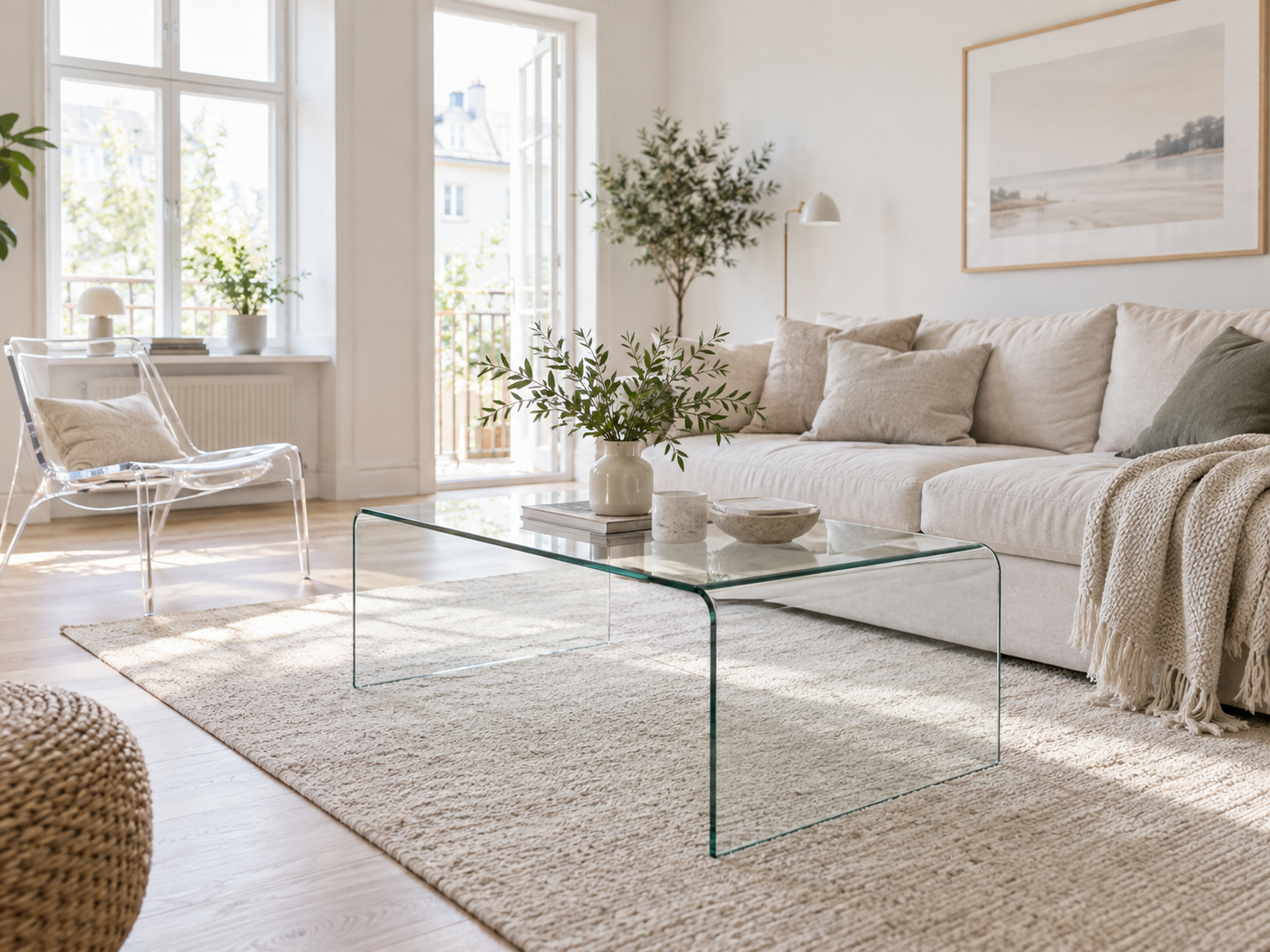
Use transparent or visually light furniture
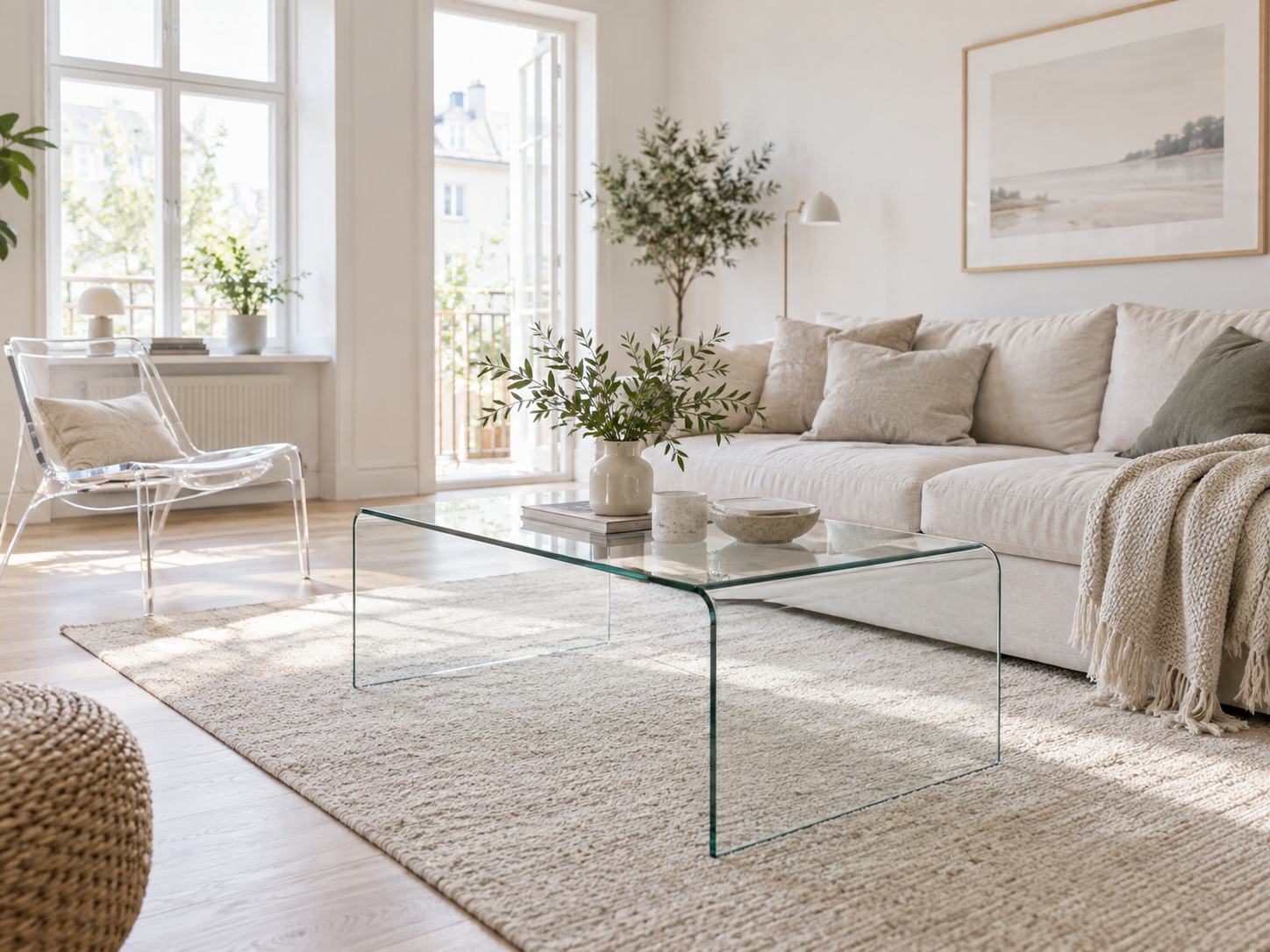
Glass or open-frame furniture can reveal more of its surroundings, while still occupying the same physical area. Check edges, stability, cleaning needs and household suitability before choosing it. Open shelving also exposes everything it holds. If concealed storage is the real need, a shallow closed unit may make the room feel calmer than a transparent piece with no place for clutter.
Lean artwork instead of hanging everything
Use a stable surface and follow securing instructions for the frame or mirror. Leaning is not automatically safe around children, pets or a busy route. Keep artwork clear of edges and moving doors. Small tabletop frames can provide flexibility where appropriate securing of a large leaned piece is not possible; do not rely on a wall angle alone to keep it in place.
Leave some empty space
Choose an empty area that supports movement, light or a useful view through the room. Remove one object and assess whether the daily task becomes easier. You do not need to make the home sparse. Keeping part of a shelf or wall unfilled can simply give a meaningful object room to stand out while reducing the number of things to clean.
Prioritize things you actually love
Keep useful or meaningful pieces visible and assess new purchases against them. Ask where the item will live, what it replaces and how it will be maintained. If those answers are unclear, wait before buying. A personal small home can include collections, strong color and heirlooms; the challenge is arranging them within the space you can comfortably use.
Decide what one useful change should achieve
Choose one visible problem and decide what result would count as improvement. For a crowded route, the result might be reaching the wardrobe without moving a chair. For a dark reading seat, it might be a comfortable page and an accessible switch. For scattered belongings, it might be returning the daily group directly to its home.
Try one change with those ordinary tasks before choosing another. A personal note such as “keys now go straight into the existing drawer” is more useful than a shopping list of decor. If the first change does not help, adjust it or put it back rather than adding another object to compensate.
When the practical problem is resolved, choose a color or meaningful piece you enjoy seeing there. An edited room can still be lively, full of character and different from the room next door.
Use room-specific guides for the details
Choose the rental decorating guide for reversible installations or our entryway storage guide for the daily arrival routine. A whole-home decorating idea is most useful when it leads to a practical decision in the room where you need it.
A beautiful small space is not about having more. It is about making what you have work better. — Spacelya