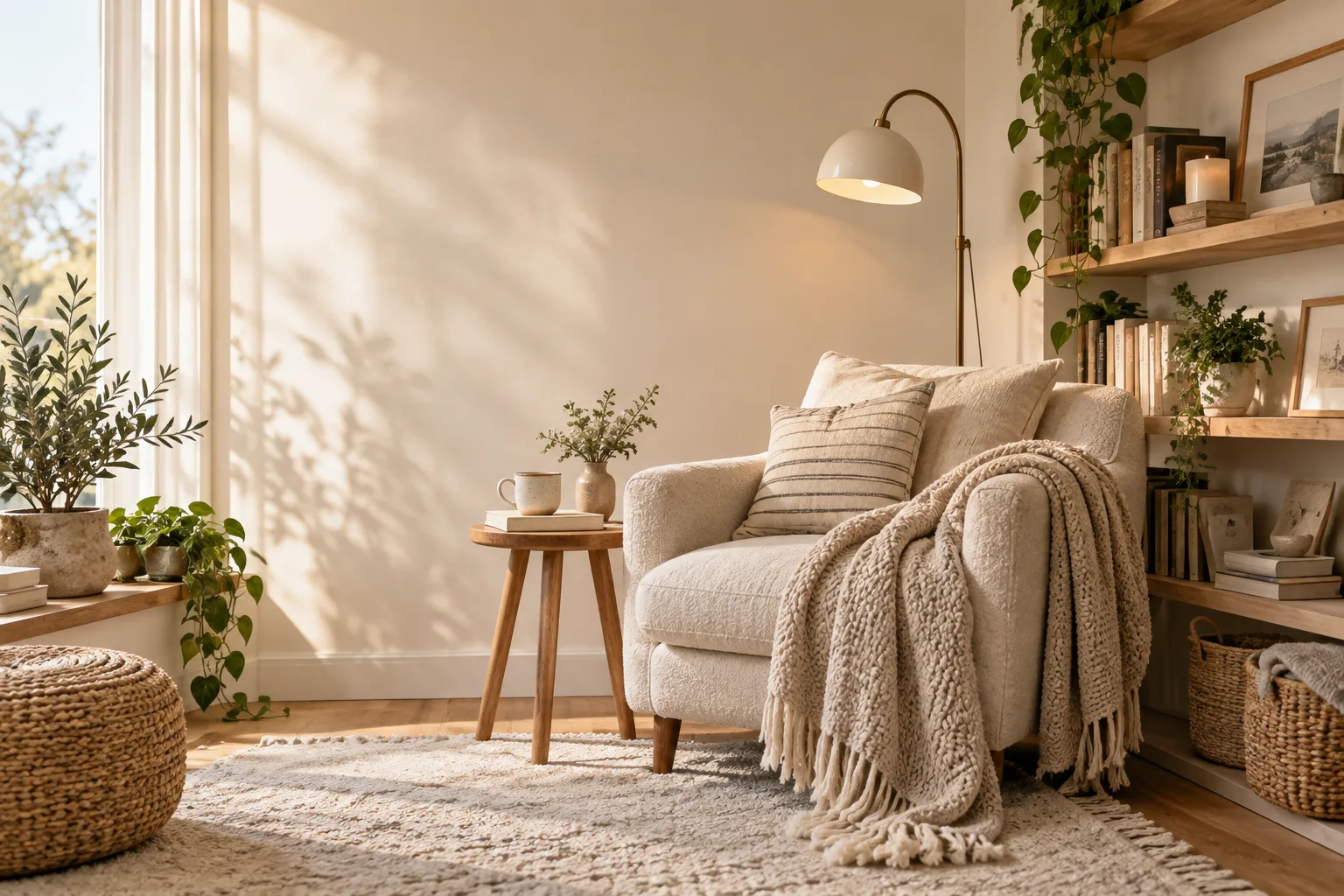
15 Cozy Reading Nook Ideas for Small Spaces
A reading nook works when you can sit comfortably, see the page and put a book or drink down without rearranging the room. You may already have the right seat; improving its light or nearby storage can be more useful than buying another chair.
Identify a quiet spot that does not block a door, heater, window access or everyday route. Measure the chair's full footprint and the space your feet need. Try reading there at the time you normally have available, because a bright morning corner may feel very different in the evening.
Use these ideas selectively. A chair, suitable reading light and small landing surface can be a complete nook. If it must share a work area, our small-apartment desk placement guide helps compare the competing uses.
Try the reading position before choosing the accessories
Start with an actual reading session in an existing seat. Check support for your feet, useful light on the page and a stable reachable place for a book or drink. Note which of those functions is missing before buying a chair and accessories as a set.
Next, map the whole arrangement. Imagine a hypothetical 110 cm-wide recess where an 82 cm-wide chair and a 30 cm-wide table must sit side by side across the same section. Their combined width is 82 + 30 = 112 cm, so they overlap the available span by 2 cm before any handling gap. The chair fits by itself; the complete proposal does not fit that particular side-by-side arrangement.
Moving the table behind or in front of the chair is a different layout, not a free saving. Test its reach, your feet, the standing movement and the route past it. A floor lamp also needs its loaded base footprint and cord route included. If an existing reachable surface can serve the seat, you may be able to improve the lighting without adding another table.
The numbers above are assumed for the comparison, not chair recommendations or clearance standards. Open nearby storage and windows with the proposed nook in place, and keep controls and required access usable. Choose the combination that works for reading and for the room's other jobs. A comfortable existing seat with better light can be a complete result.
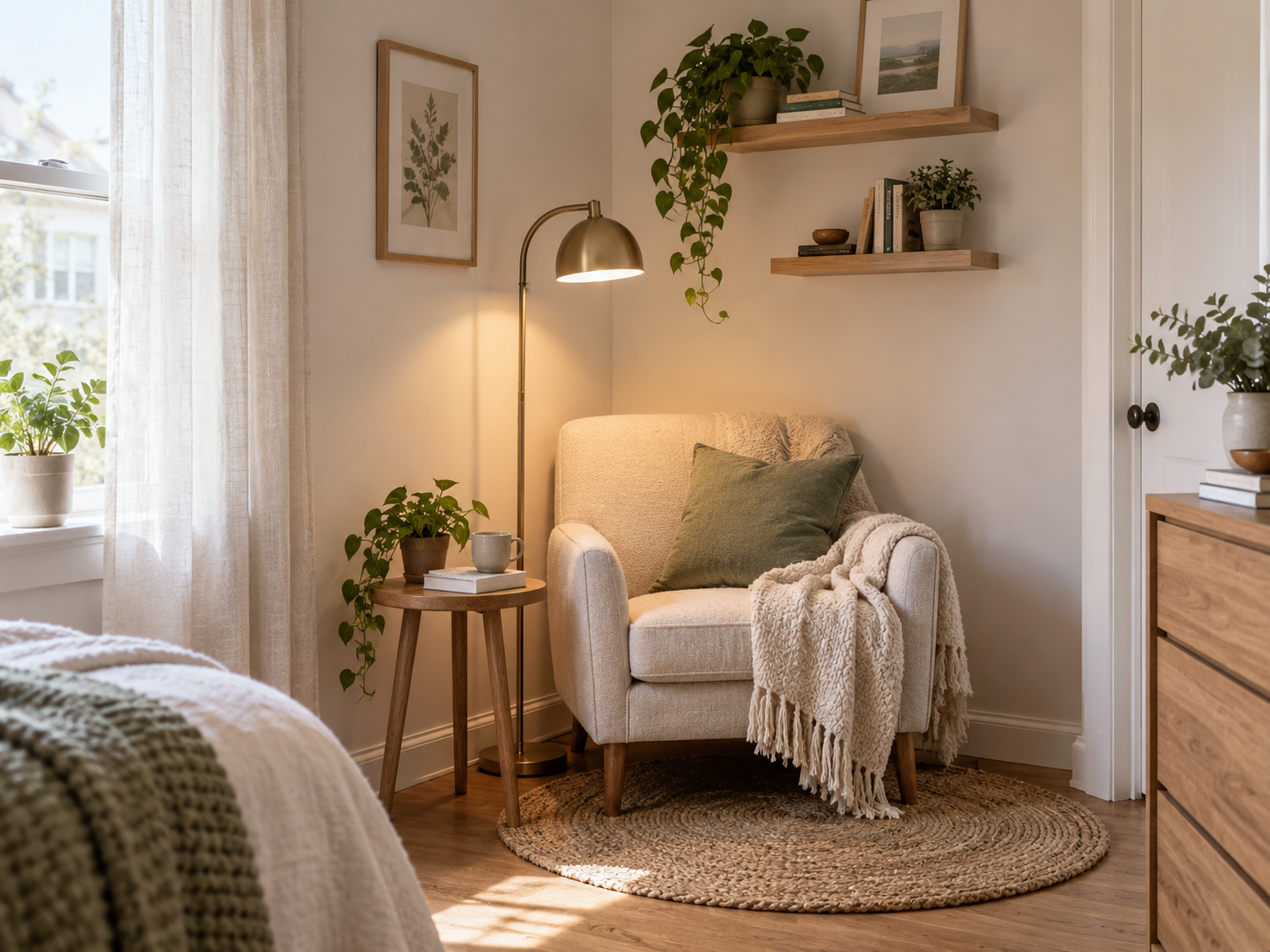
Use an empty corner
Place a chair temporarily in the corner and sit with a book before adding anything else. Check whether your elbow, feet and the chair back fit without brushing nearby furniture. Keep the route to the rest of the room usable. If the corner is actually a busy passage, improve the light beside an existing seat instead of forcing a separate nook into it.
Place your nook beside a window
Use daylight from the side where it illuminates the page comfortably, then check reflections and glare at your normal reading time. Keep the window, blind controls and any necessary exit access usable. A nearby lamp is still helpful after dark. If direct sun overheats the seat or washes out a screen, adjust its angle or shading rather than choosing the position for the view alone.
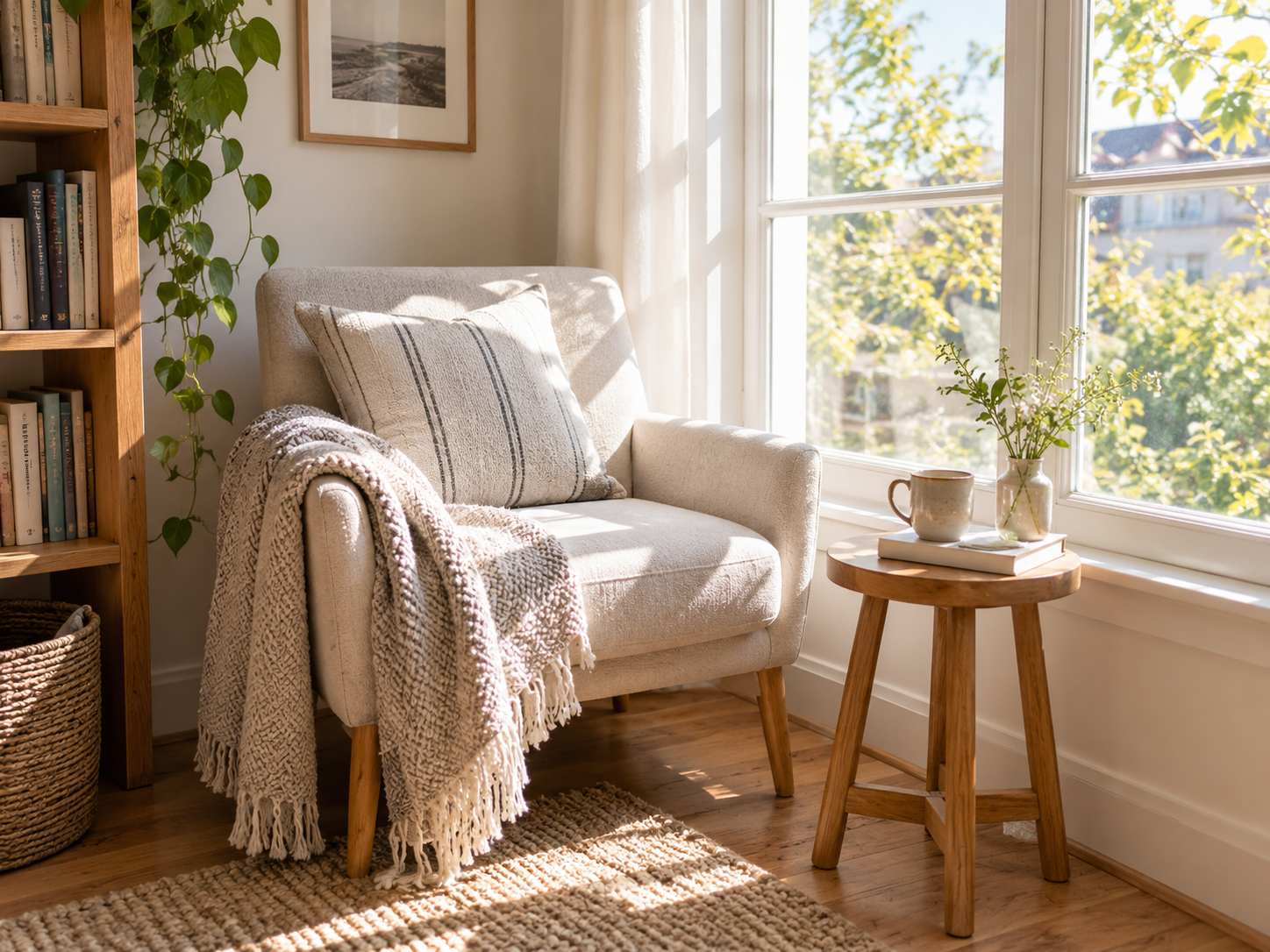
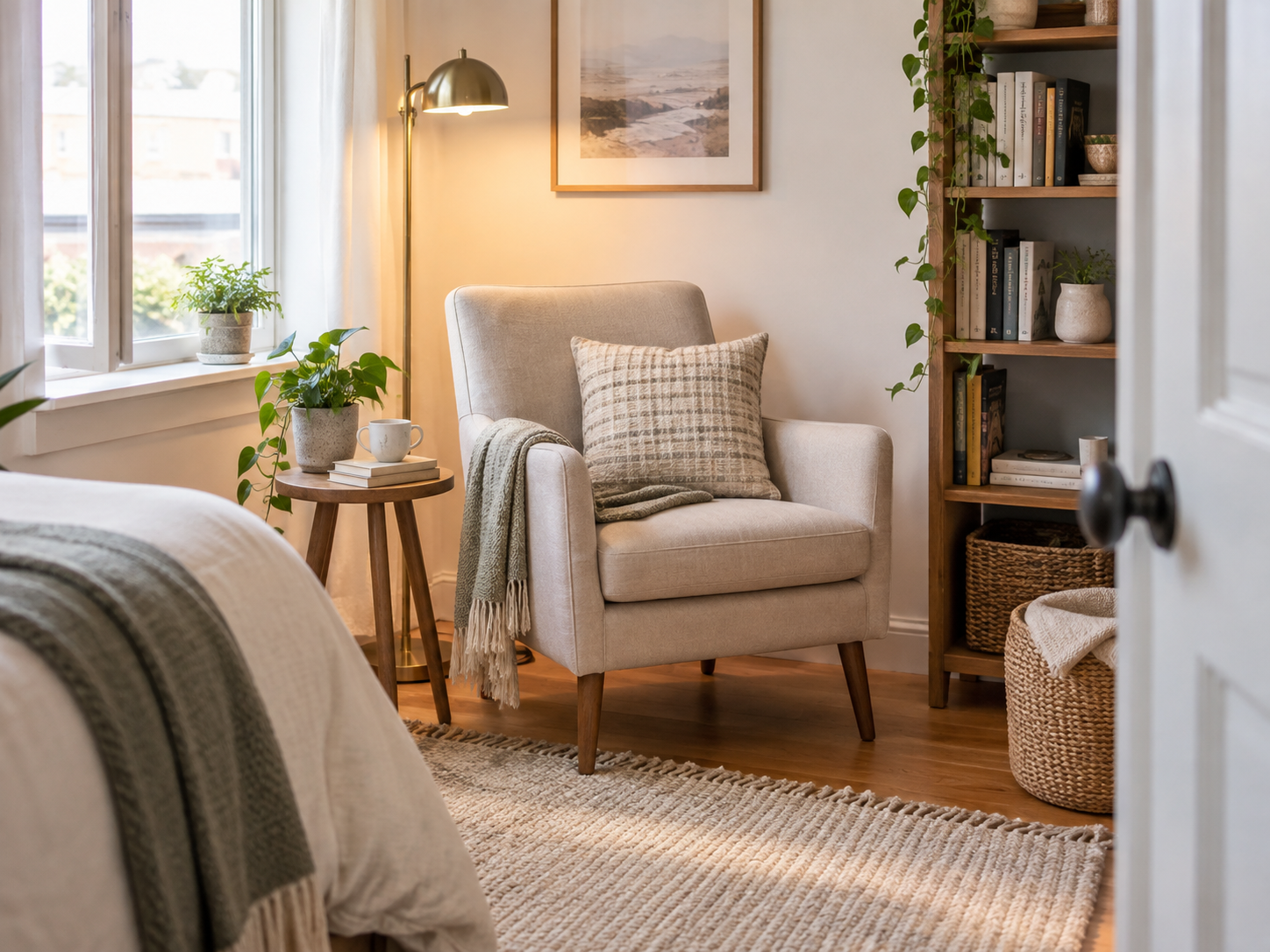
Choose a compact armchair
Compare the seat depth, back support, arm height and complete chair width, not just the product's description as compact. Sit in the chair when possible and consider how easy it is to stand up. A small chair that is uncomfortable will not become useful through styling. For reclining designs, include the fully extended footprint before deciding that the chair fits.
Add a small side table
Choose a surface at a comfortable reach from the seated position. Check that it is stable with a drink on top and that its base does not intrude into your foot space. A small existing table may be sufficient. A decorative stool should serve as a table only when its surface and stability suit the task; do not perch hot drinks on an uneven woven lid.
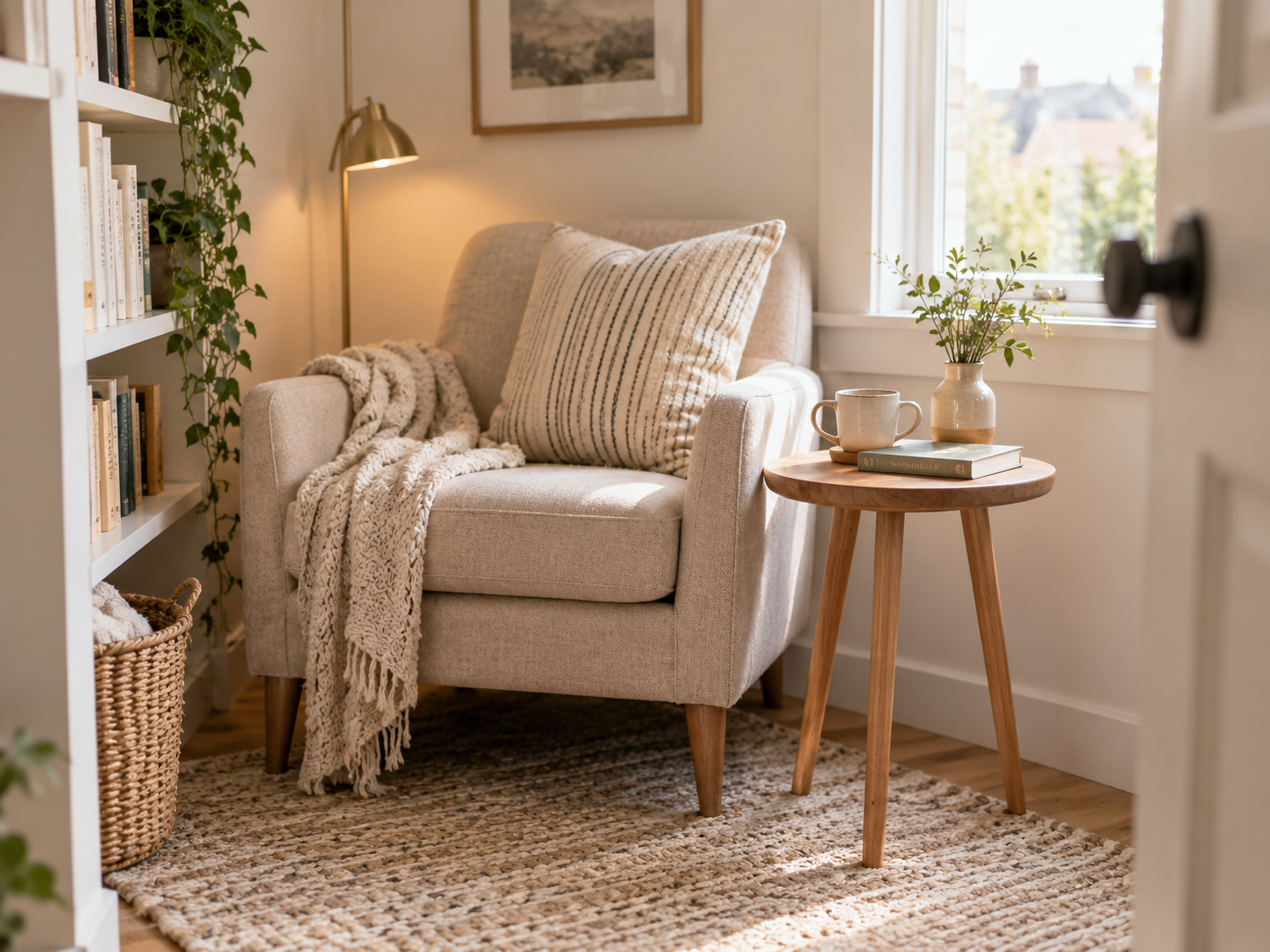
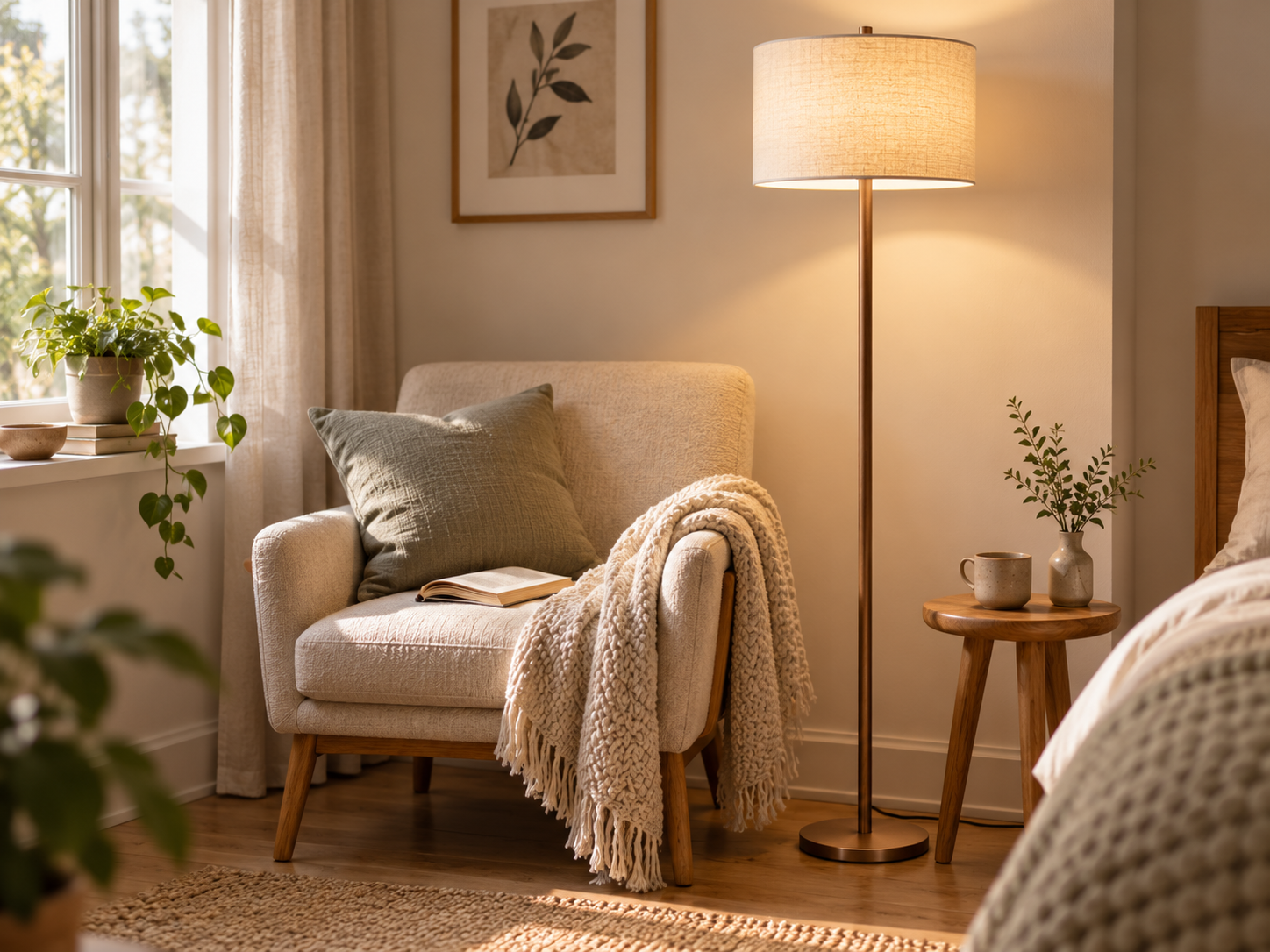
Use a floor lamp instead of a large table lamp
Position the lamp so its light reaches the page without shining directly into your eyes. Test the base footprint and cable route before buying. Keep cords out of walking areas and use the bulb and fitting specified for the lamp. A floor lamp saves table space only if its base fits comfortably; otherwise a suitable compact table light may give a better layout.
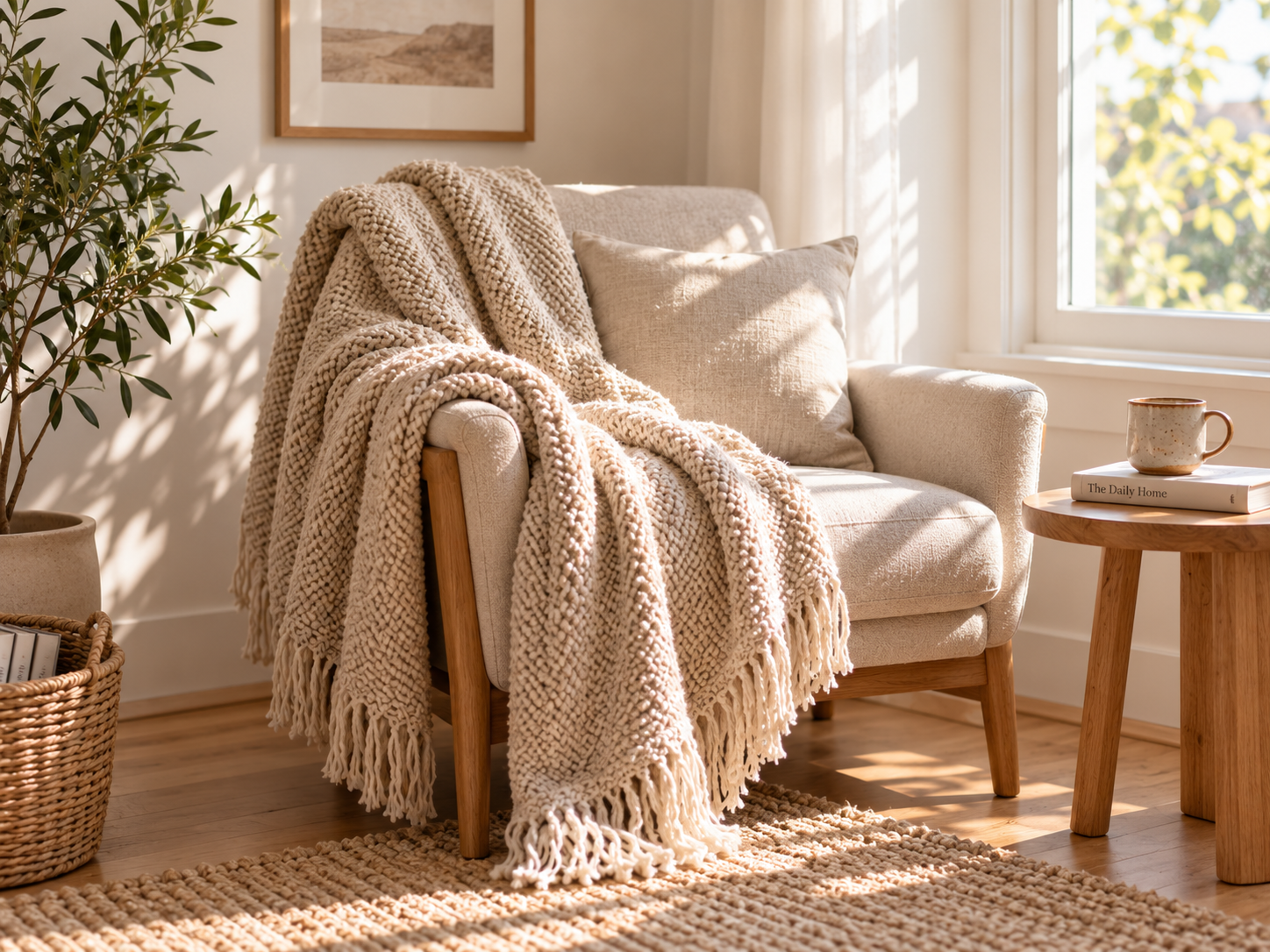
Add one soft throw blanket
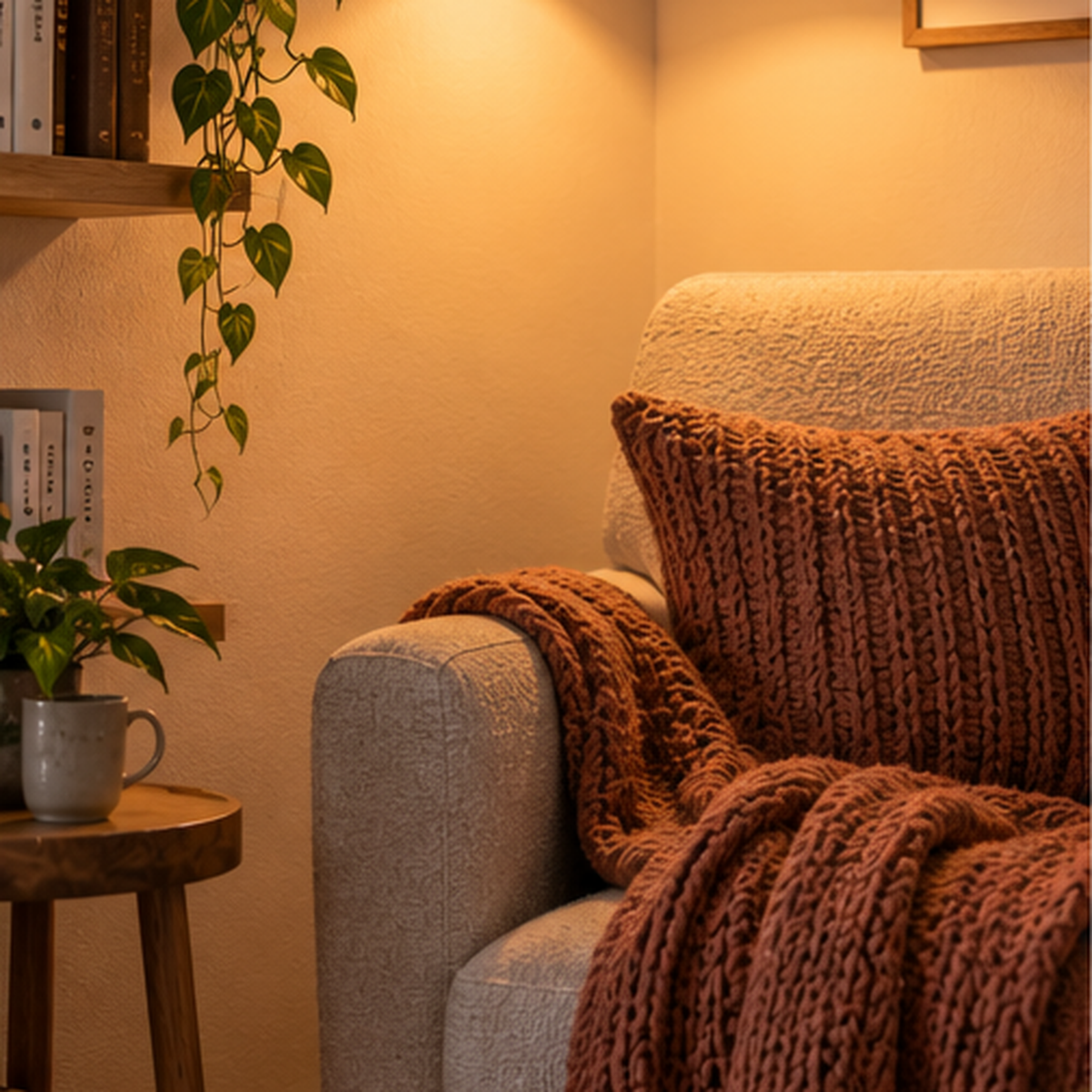
Choose one washable throw suited to how warm you like the seat. Fold it over an arm or keep it in nearby storage when reading so it does not occupy most of the cushion. Check whether a textured fabric sheds or catches on clothing. A throw should make the seat more comfortable, rather than require you to remove a decorative pile before sitting down.
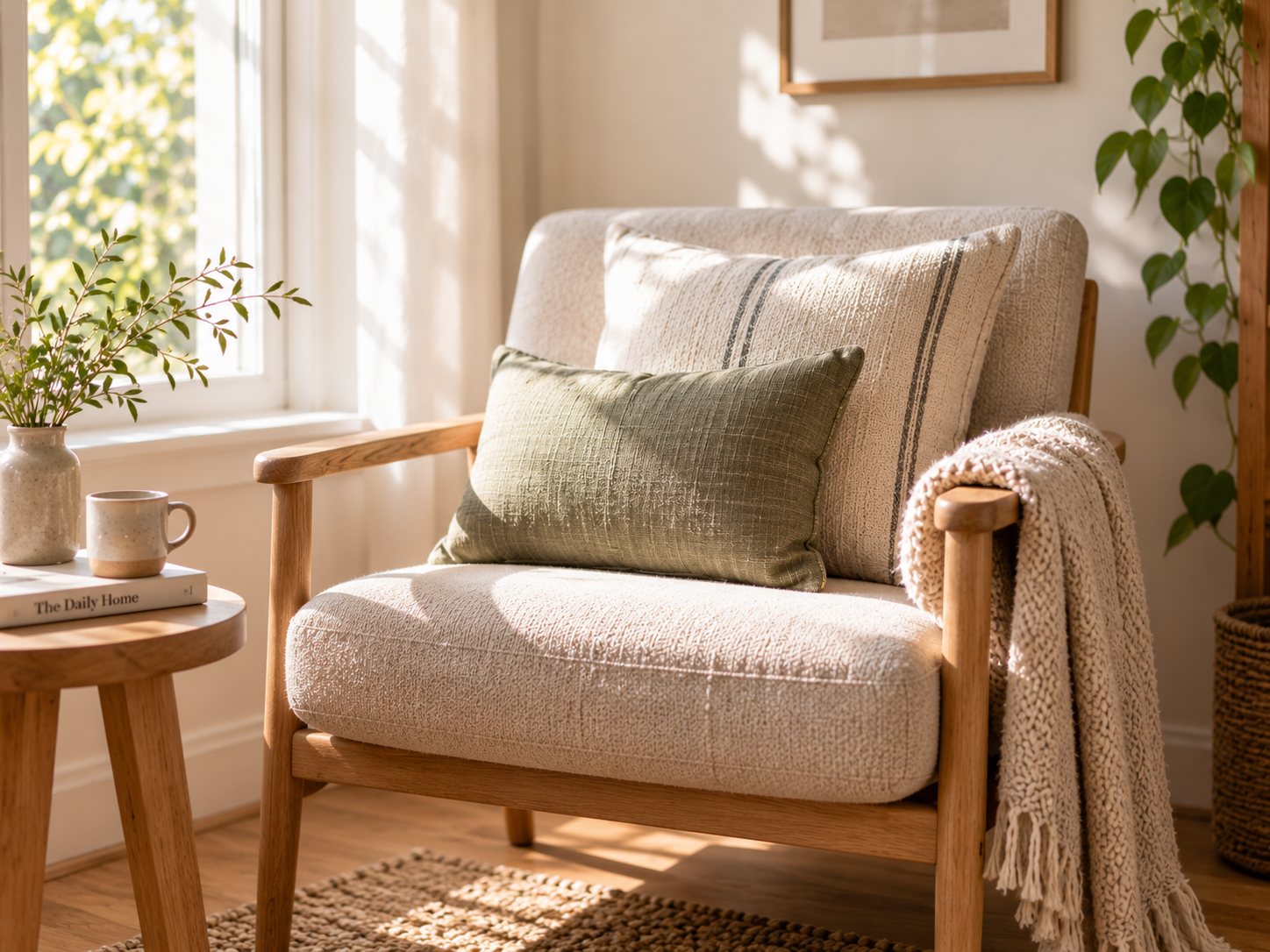
Use one or two cushions
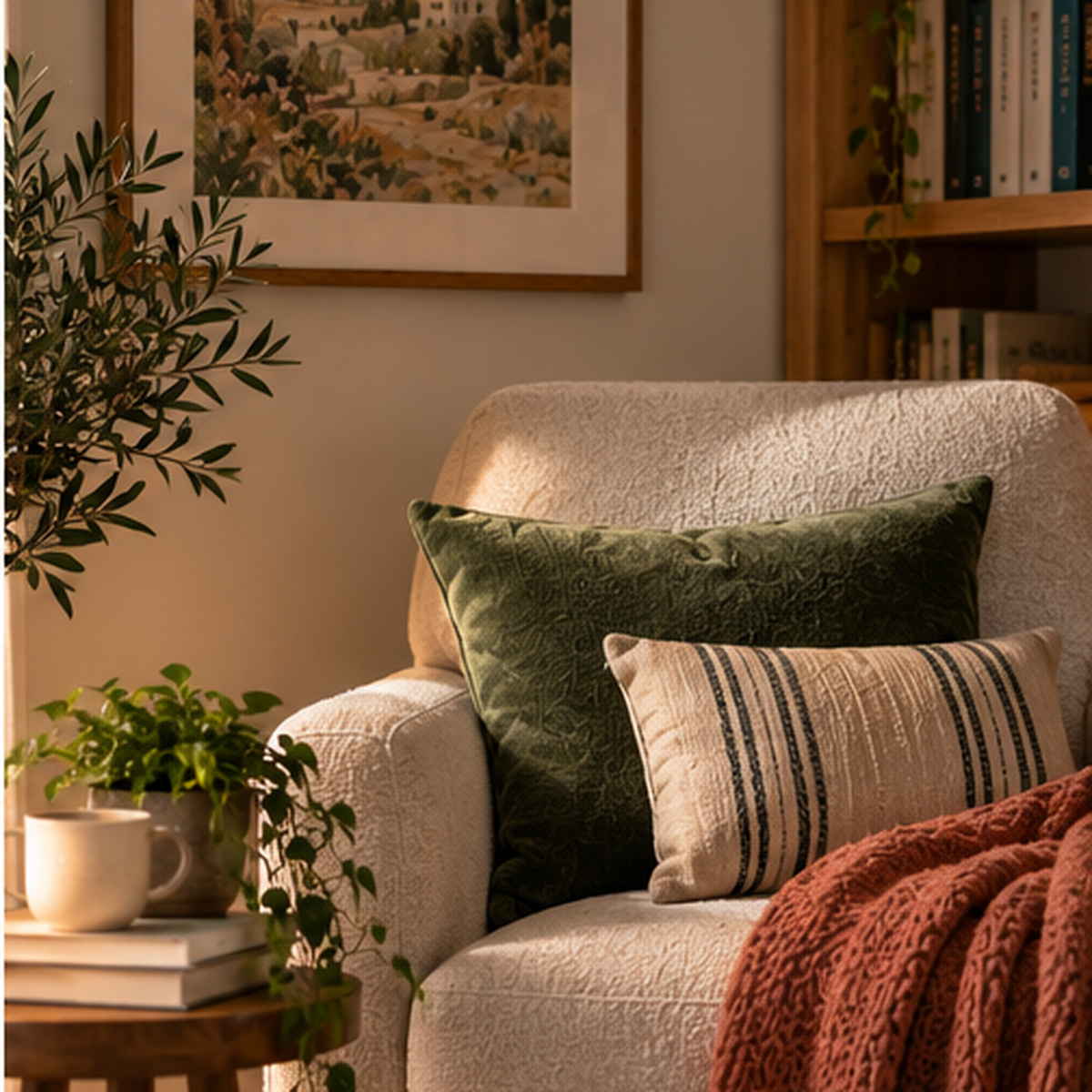
Try a single cushion in the seat first and notice whether it gives support or pushes you too far forward. Adjust its thickness to the chair and your body rather than copying a styled photo. Use another cushion only if it has a clear purpose. Keep the cover easy to clean, especially where the nook is also a household or pet seating area.
Add floating shelves for books
Books are heavier than small decorative objects, so check the shelf and fixing instructions for their intended load. Place storage where you can reach it without twisting over the chair or standing on furniture. Keep heavy objects away from overhead positions. If mounting is unsuitable, a low stable bookcase or small nearby basket gives you accessible books without adding wall-installation problems.
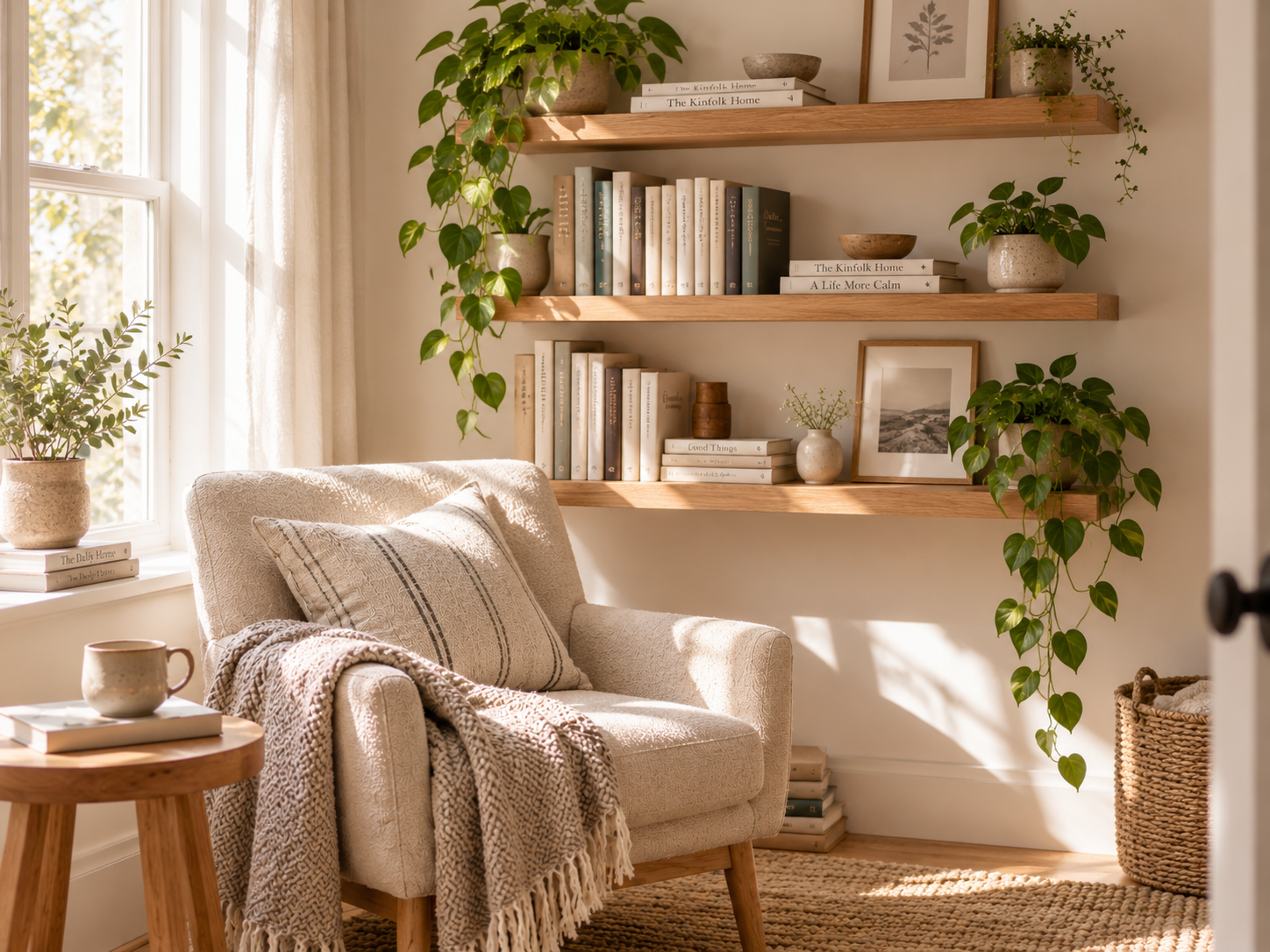
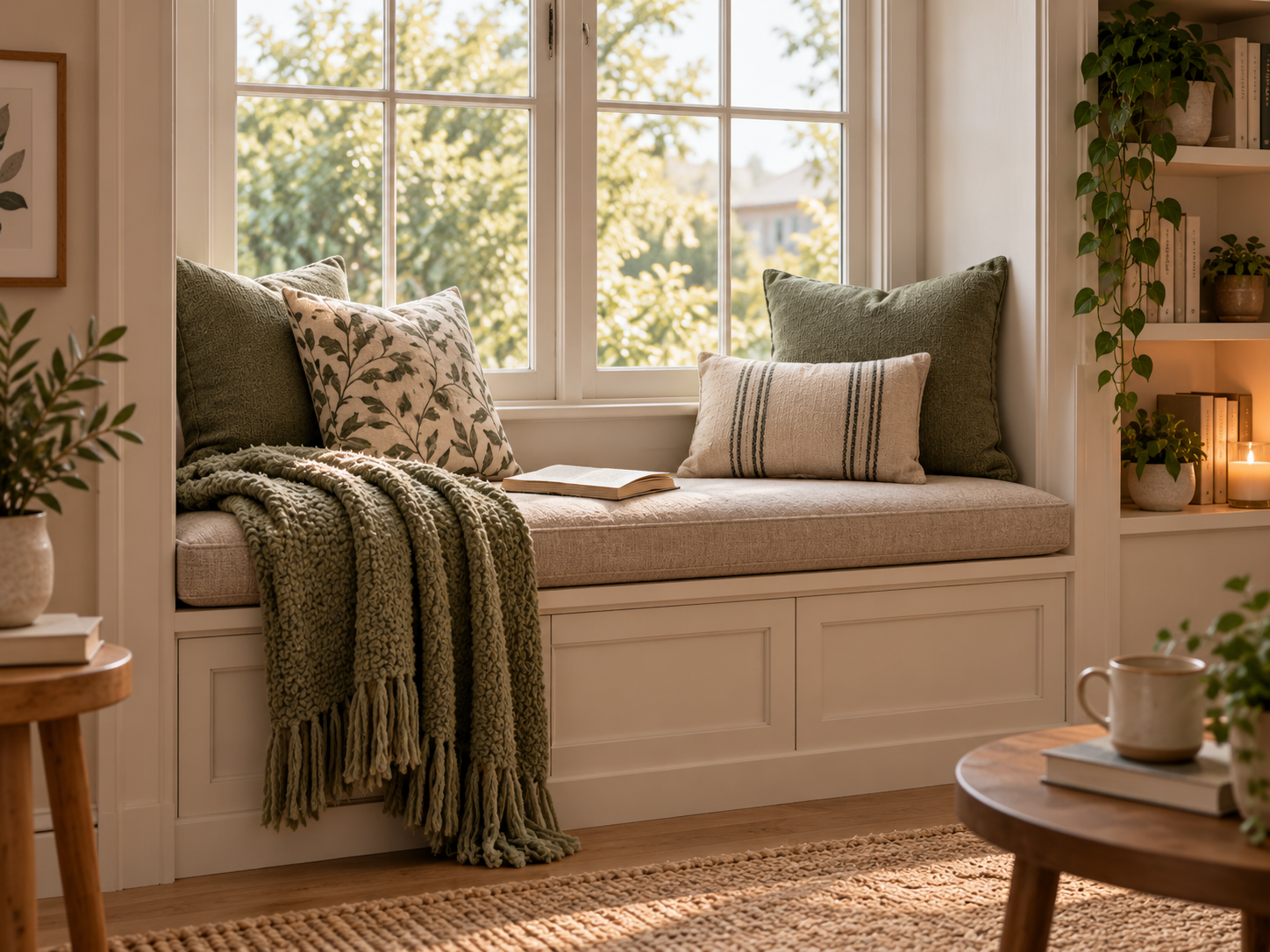
Create a built-in window seat look
Use a bench designed to support seating; a storage cabinet beneath a window is not automatically a seat. Follow the bench's assembly, anchoring and load instructions and keep window access clear. Test the height and cushion thickness before styling. Avoid setups that create a climbing route to an unsafe window. A regular chair may be the better choice when the existing unit is only intended for storage.
Use a storage ottoman
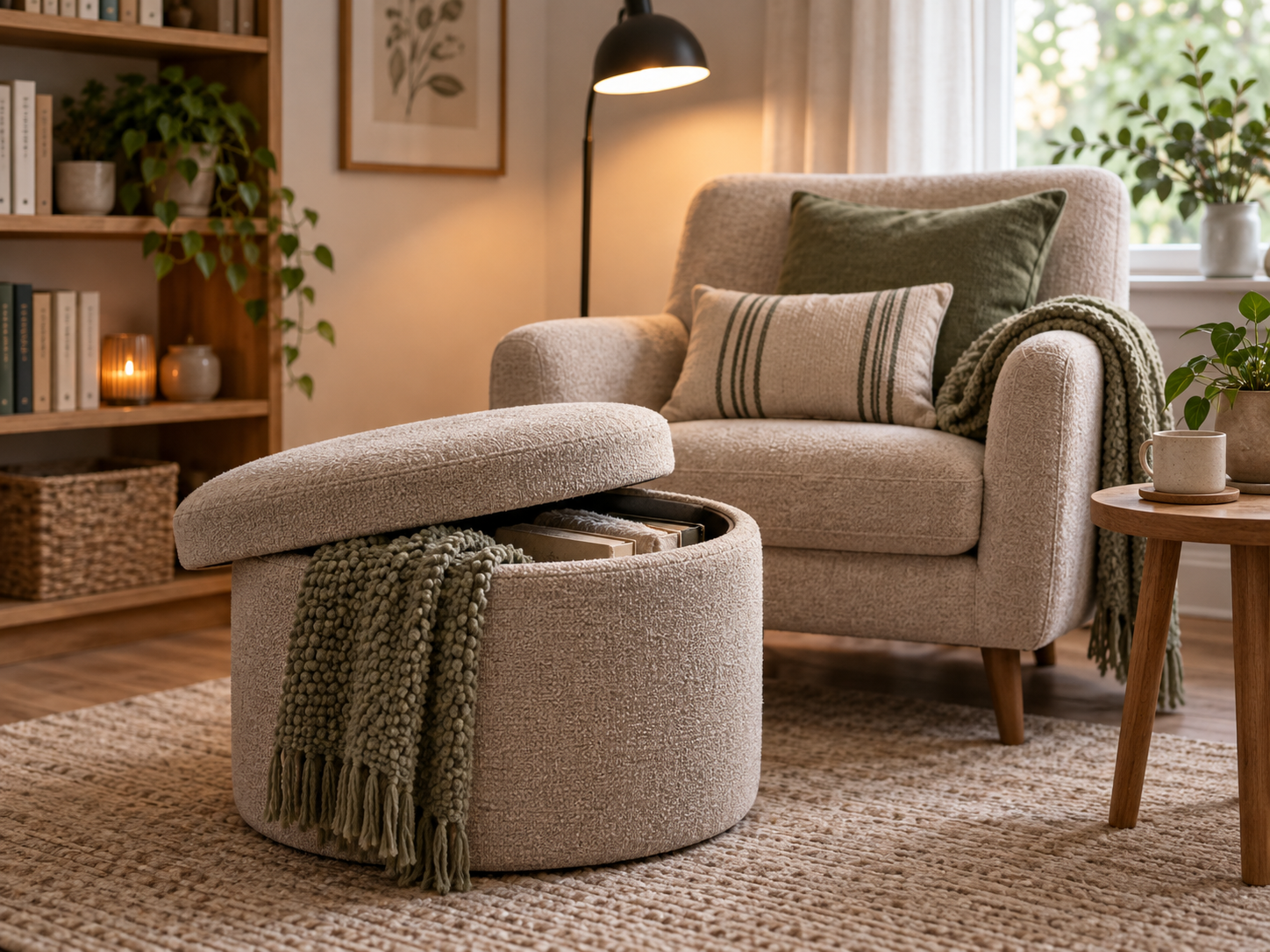
Measure the ottoman both in use and where it will live when your feet are down. Check that its height feels comfortable beside the chair and that opening storage does not block the route. Store dry textiles or a few books that you can lift easily. Follow lid and seating instructions; a storage ottoman is useful only if its second function does not make the nook harder to use.
Add a warm rug underneath
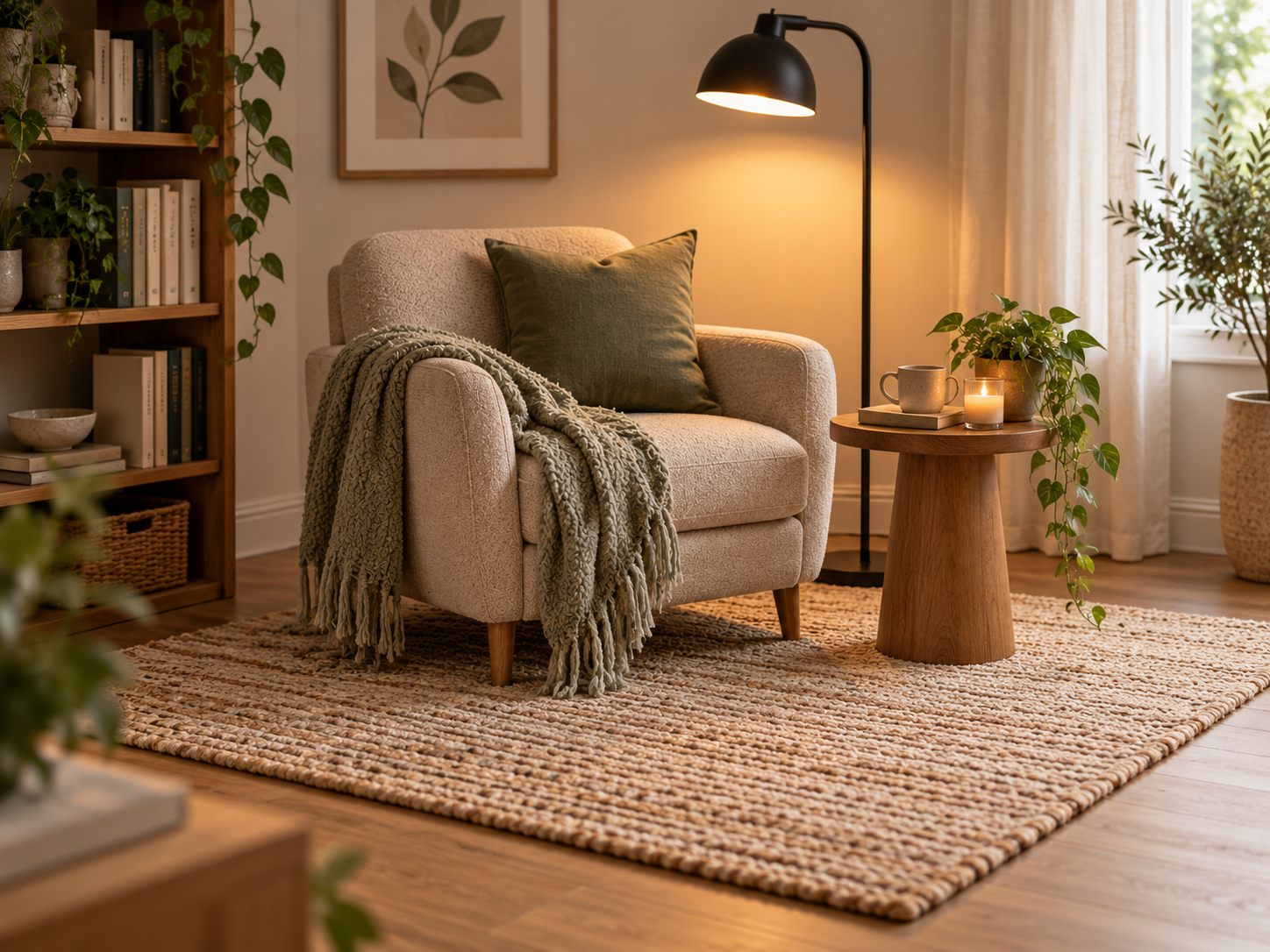
Mark the rug's edges and move the chair slightly as you normally would. Choose a backing or suitable underlay for the floor and keep edges from becoming a trip point. A rug can define a nook in an open room, but it is optional if it breaks up a tight passage. Make sure doors nearby still move freely over it.
Bring in one plant
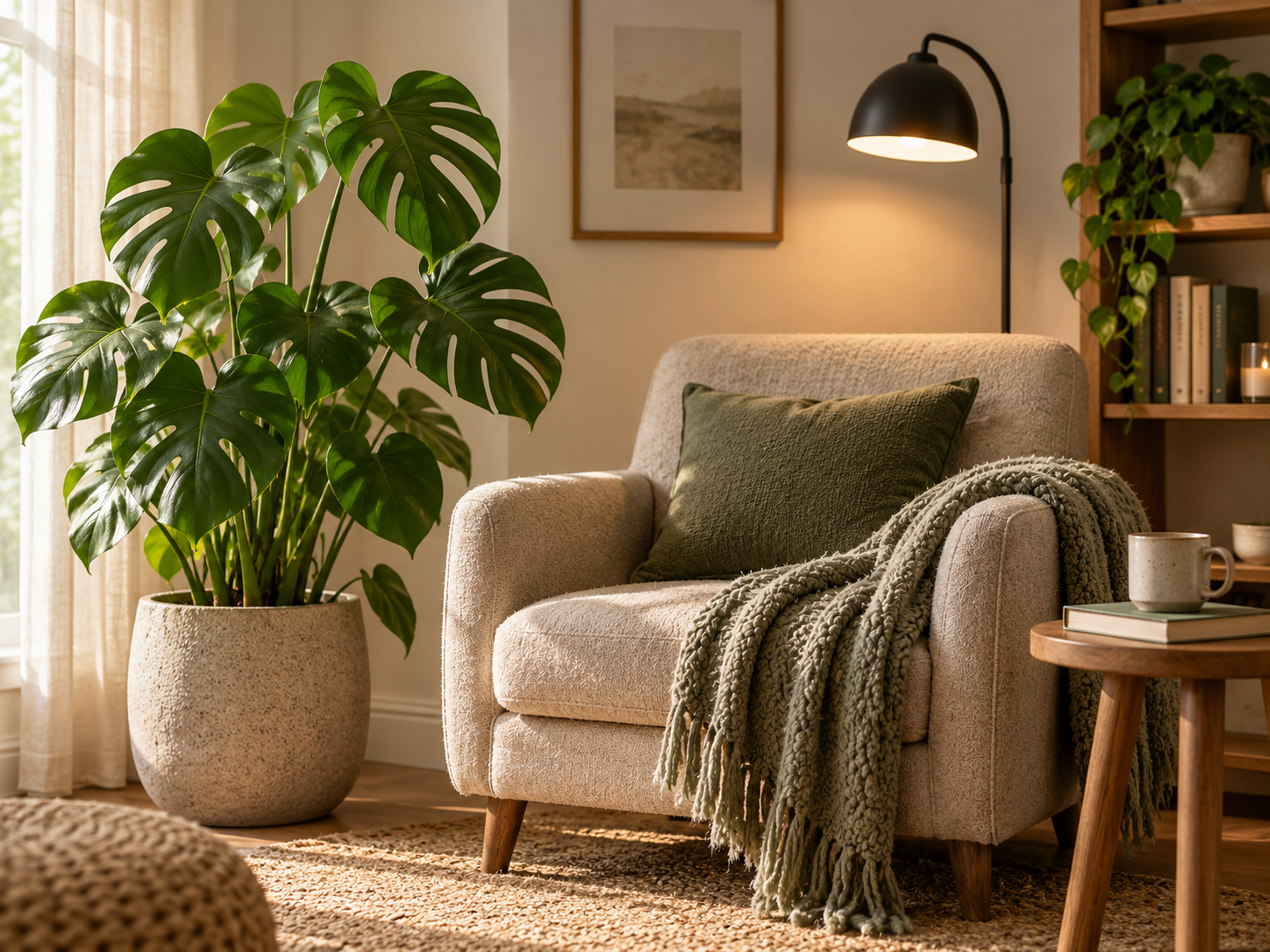
Choose the plant for the available daylight and how regularly you can care for it. Check suitability for your household, including children and pets, before bringing it home. Keep watering away from books and electrical fittings, and protect the surface beneath the pot. One manageable plant in a stable position is more useful than several pots you must move every time you read.
Use wall-mounted lighting
Select a wall light intended for the available mounting surface and power arrangement. Plug-in models still need secure installation and a clear cable route; hardwired work needs the appropriate professional and rental permission. Test the proposed light position from the chair to avoid glare. If mounting is not suitable, a small adjustable lamp can provide focused light without changing the wall.
Keep books in a nearby basket
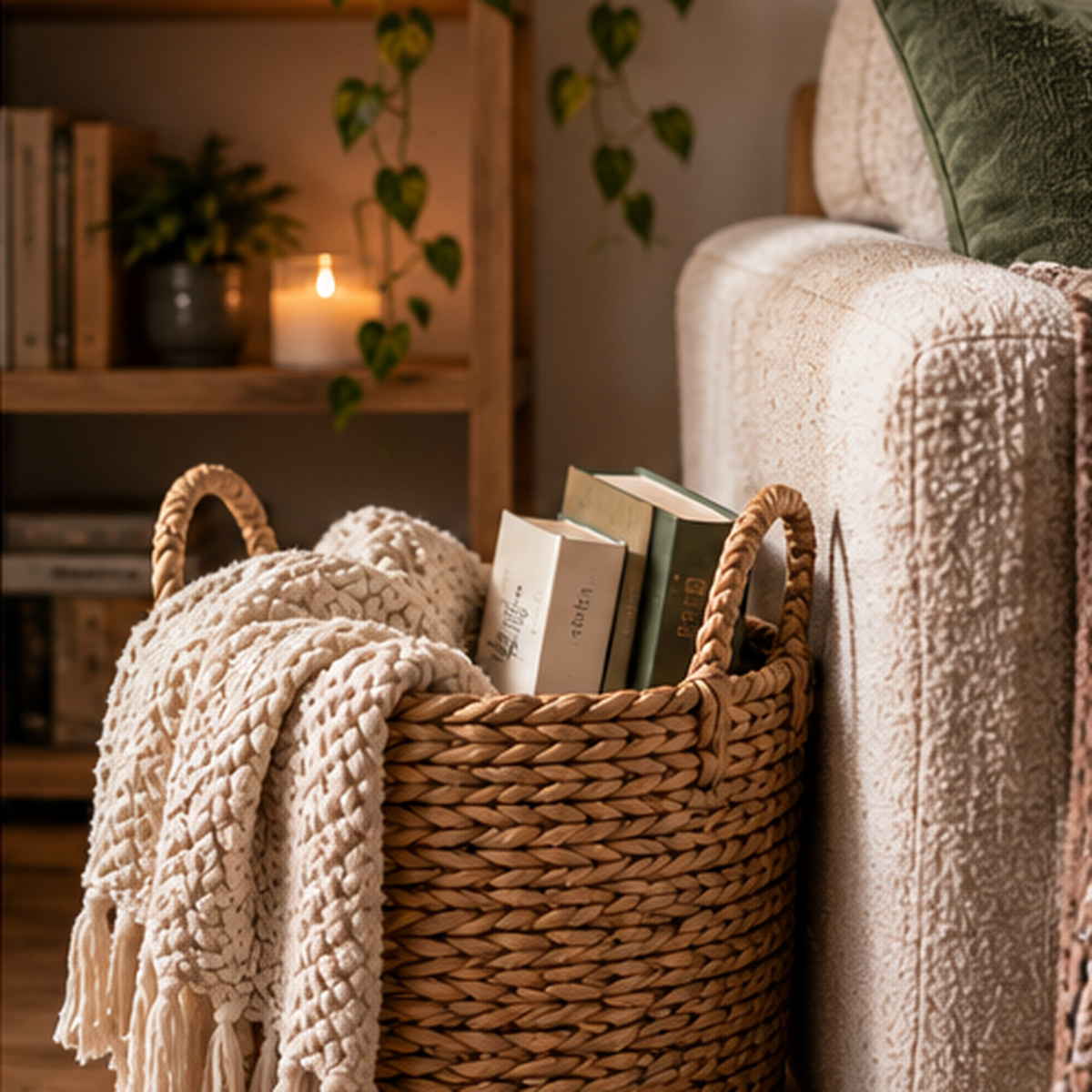
Keep the books you are currently reading in a shallow basket close to the seat. Check its loaded weight and leave room to lift a book without pulling out the whole collection. Store the rest elsewhere so the basket stays useful. Do not mix damp plant tools or drinks with paper storage. A small selection often serves a reading nook better than another full bookcase.
Make the nook feel personal
Choose a detail with a reason to be there: a favorite print visible from the chair, an object you value or a book you want to read next. Keep the stable drink surface available rather than turning it into a display shelf.
For a color starting point, borrow two tones from a book jacket or print you already enjoy. A teal seat with a small saffron textile gives one possible combination; a plum cushion with a pale peach throw offers another. These are design suggestions, not required purchases or claims about how a color will make you feel. Try a textile you already have first, and judge it in the light you use for reading.
Keep the comfortable seat, useful light and clear route as the fixed parts of the nook. A cushion cover or visible book can change its character without adding another piece of furniture. The most personal detail is one you want to keep seeing after the seasonal styling comes down.
Try the nook before buying a chair
Use an existing seat for several reading sessions. Note whether the real issue is poor light, noise, no drink surface or an uncomfortable chair. Change that issue first and test again. If the bedroom is the only available location, compare arrangements in our small-bedroom layout guide.
Keep it easy to use between seasons
Return books to their basket, fold the throw and clear the drink surface after use. For an autumn change, our fall bedroom guide offers textile ideas that can work near an existing reading seat. Seasonal styling should leave the seat ready for its everyday purpose.
A beautiful small space is not about having more. It is about making what you have work better. — Spacelya