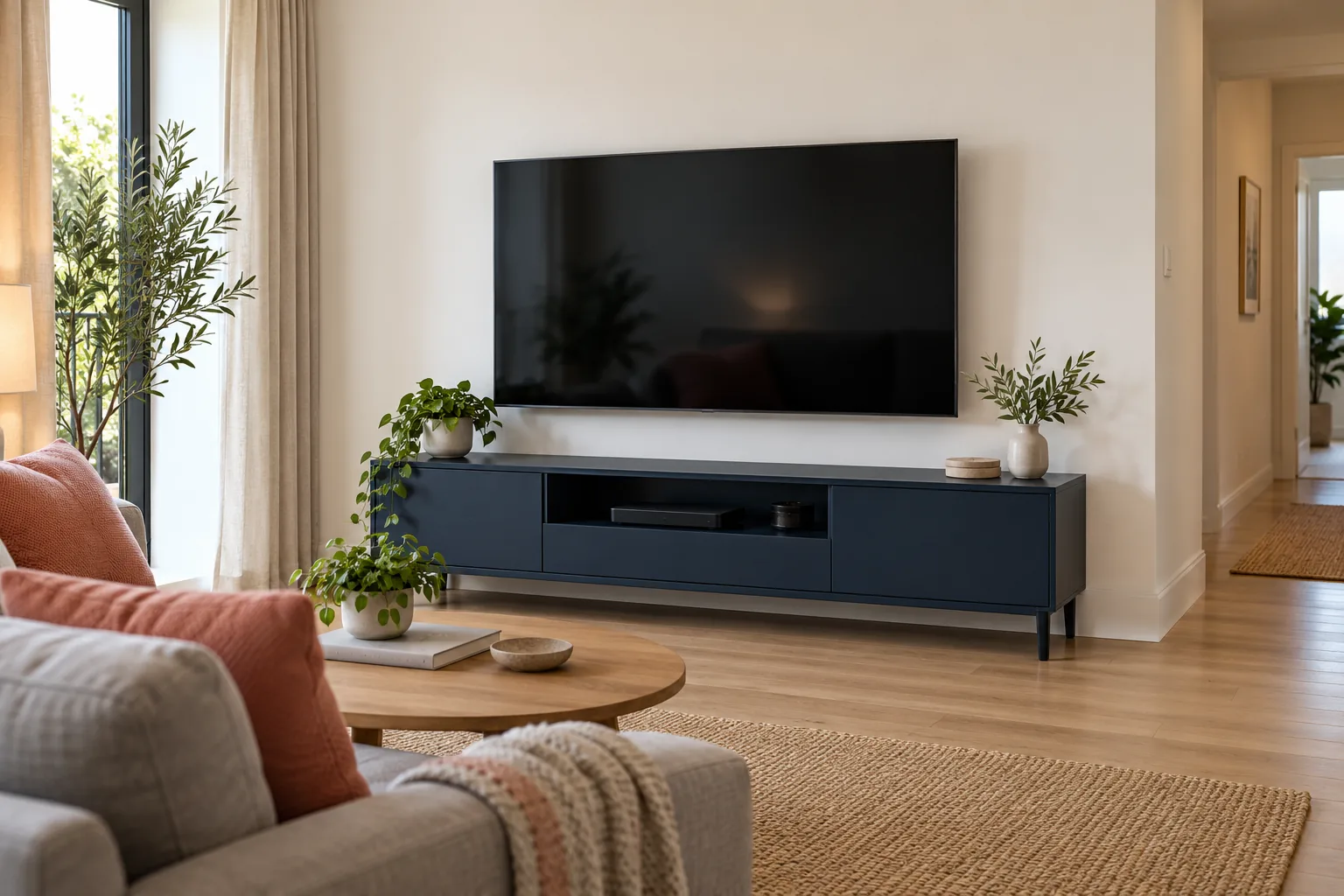
A TV Wall for a Small Living Room: Screen, Cables and Storage
You sit down, switch on the television, then reach across a heap of chargers to find the remote. Meanwhile, a cabinet that looked slim online leaves a squeeze beside the sofa. A useful TV wall has to solve these small everyday problems as well as look good when the screen is off.
The most useful small living room TV wall ideas begin with the viewing position, then fit the console, equipment and cables around it. Decor comes after those decisions. You can often improve the arrangement without covering the wall in fitted cabinetry. These six checks help you build a compact TV zone that remains easy to use and maintain.
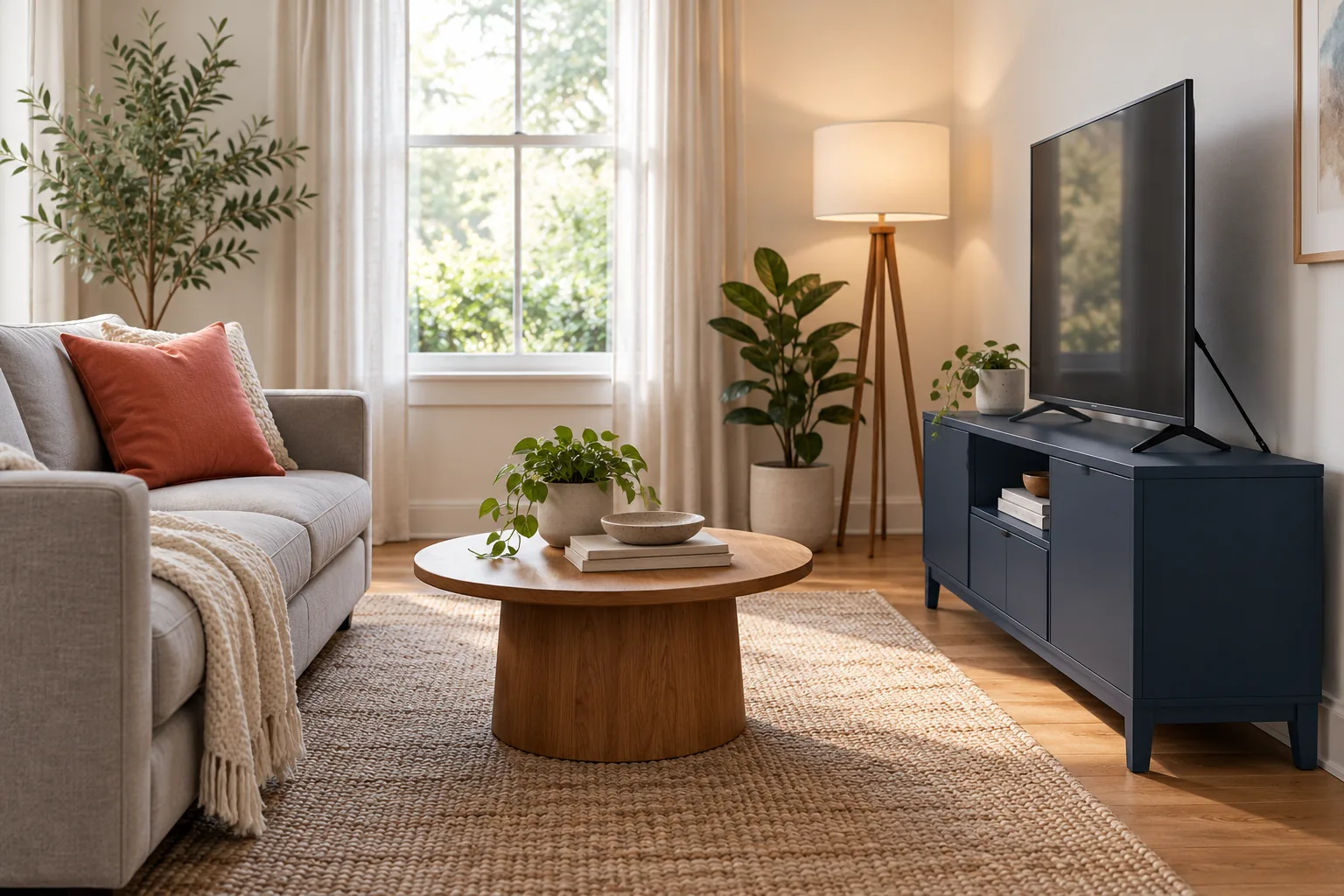
Start with the seat-to-screen view
Begin in the seat where you actually watch television. Sit as you normally would, rather than sitting upright at the edge of the cushion for a quick check. Look toward the proposed screen position and notice whether you have to lift your chin, twist sideways or lean around another piece of furniture. Repeat the check from the other regularly used seat.
Before buying or mounting anything, compare a paper outline of the proposed screen against the wall. Keep it clear of switches and test any temporary attachment on the wall finish first. A template makes the size easier to judge than the diagonal measurement on a product listing. Try the position in daylight and after dark; a window opposite the screen or a nearby lamp may create reflections that were invisible during the first look.
There is no single mounting height that suits every sofa, viewer and screen. Follow the actual television and mounting-system guidance, and have wall support and installation assessed appropriately. Avoid raising the screen simply to make room for a decorative console arrangement underneath.
If the main difficulty is the sofa's relationship with the room, settle that first with our narrow living-room layout guide. The screen should follow a workable seating arrangement, rather than forcing an awkward one.
Keep the console shallow
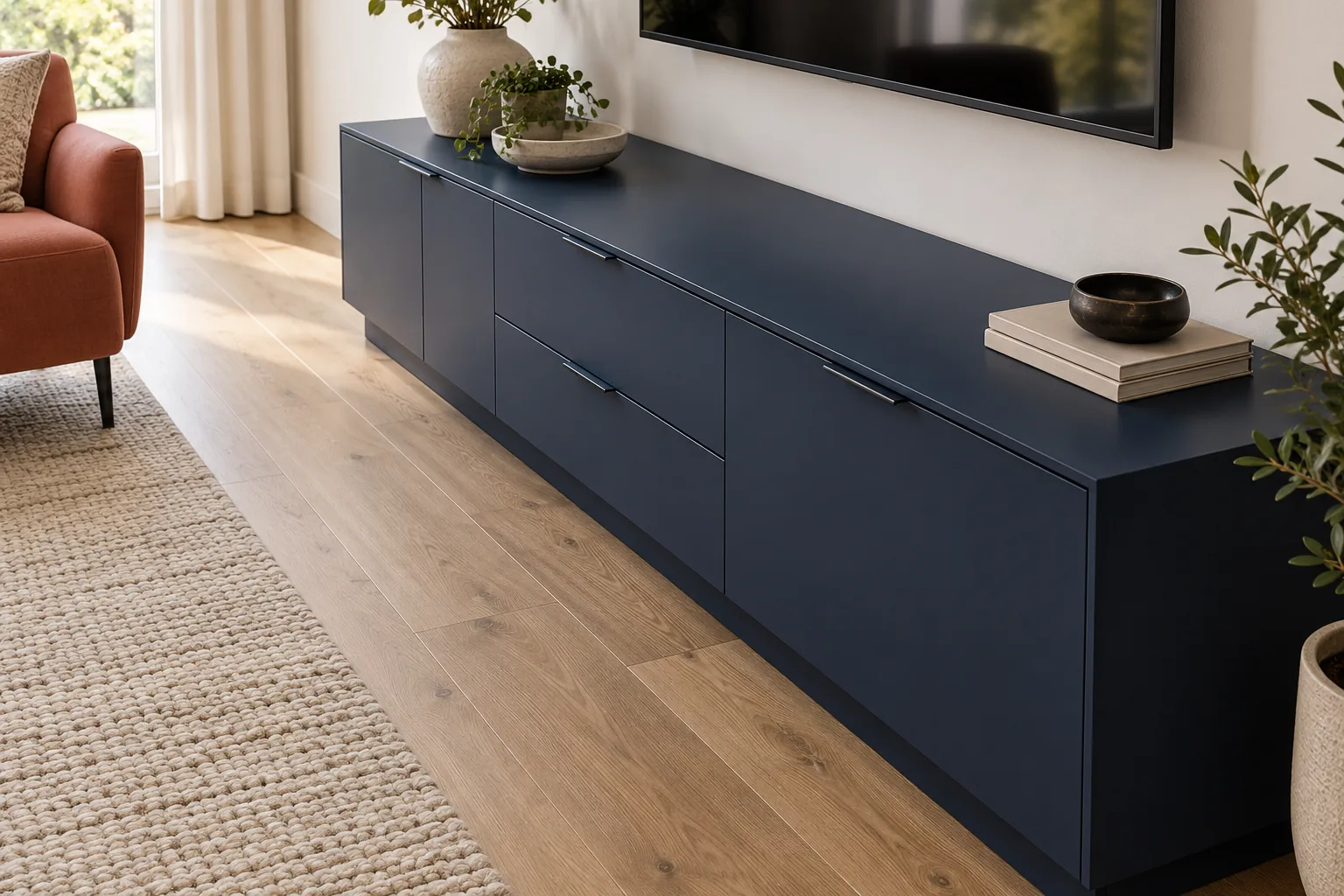
A shallow console can free space beside the seating, but advertised cabinet depth is only the beginning. Add the projection of handles, plugs and connected leads behind it. Check skirting boards too: they may stop the unit sitting as close to the wall as the product photograph suggests.
Compare the complete setup with the route people use through the room. Include an open drawer or door and enough room to reach its contents. If a drawer takes over the passage every time someone looks for a controller, that storage is less convenient than its capacity suggests. A small number of accessible compartments can be more useful than a much larger unit squeezed into the wrong spot.
For a television standing on furniture, check the manufacturer's requirements, the complete stand-foot footprint and the furniture's intended use and load. The CPSC's Anchor It guidance recommends furniture designed for televisions and securing the TV and furniture according to their instructions. A console looking wider than the screen does not establish that it is suitable.
A midnight-blue front can give a plain wall a strong, calm base. Repeat coral in a cushion or nearby textile so you get color without adding more objects to the console top.
Give equipment breathing room
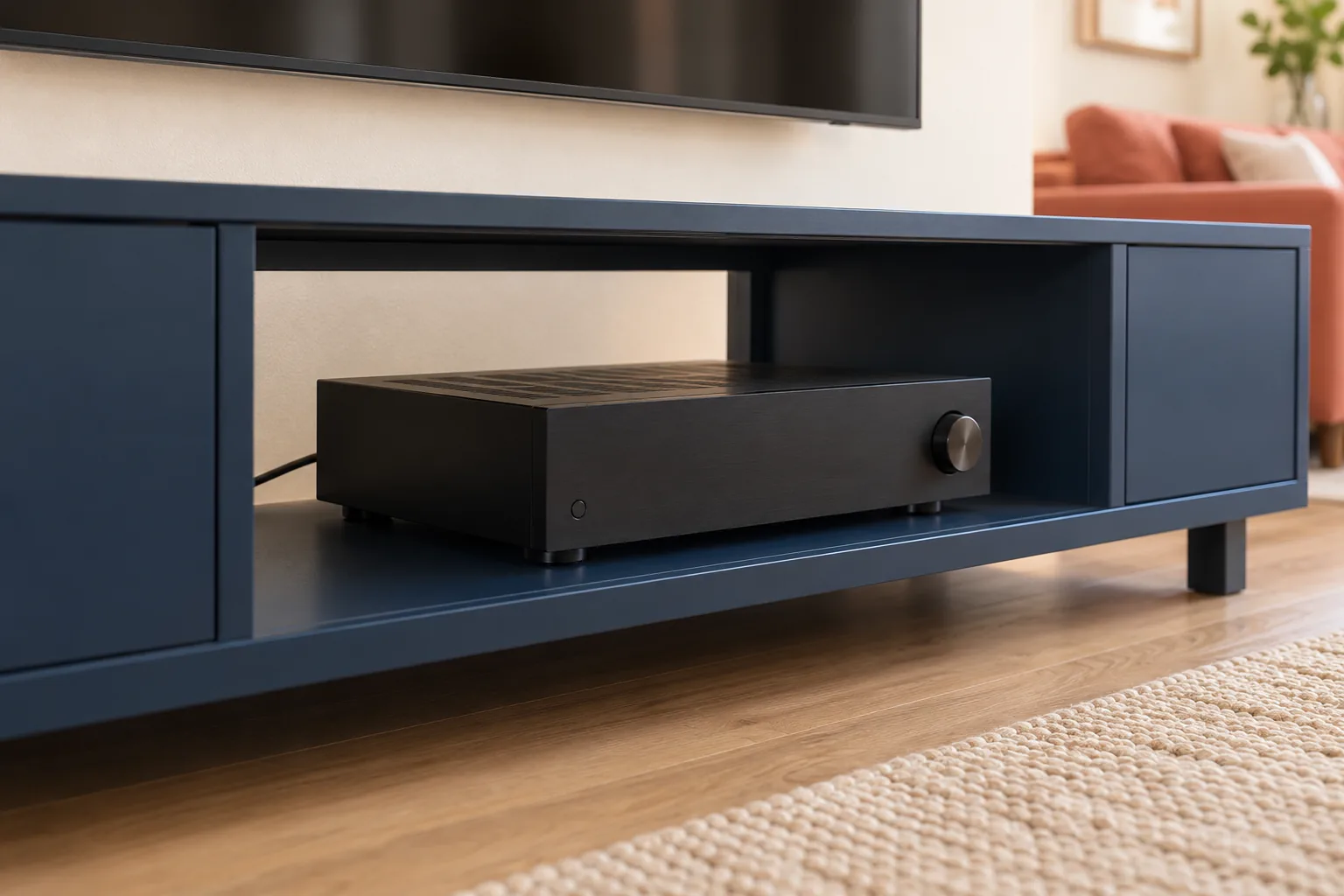
List the devices that are staying: perhaps a streaming box, a games console, a receiver or a soundbar. Check their current manuals before assigning compartments. Each has its own ventilation, placement and connection requirements. A roomy-looking open bay in a photograph cannot confirm the clearances needed by your particular device.
Measure the usable interior after accounting for shelves, door hardware and the connected plugs. Check which surfaces contain vents, where cables enter and how the device is intended to stand. Do not stack another box over ventilation openings or assume a missing cabinet back solves every airflow problem. Sony's TV ventilation guidance likewise directs owners to their model's instructions for specific requirements.
Think about operation as well as storage. Can the remote communicate with the device through the proposed door? Can you reach a control or disc slot? If equipment needs an open door while working, include that open door in the room's usable footprint. A closed compartment may be better reserved for accessories instead.
A simple open equipment bay with closed storage beside it is often worth comparing with an entirely closed cabinet. Choose the configuration that lets the equipment work properly, even when that leaves one ordinary box visible.
Plan a supported cable route
Before tidying the cables, understand where each one goes. With equipment safely switched off as instructed, identify the power supply and the signal connections you actually use. Remove redundant leads only when you know they are no longer needed. A photograph of the existing connections can help you put the working arrangement back together.
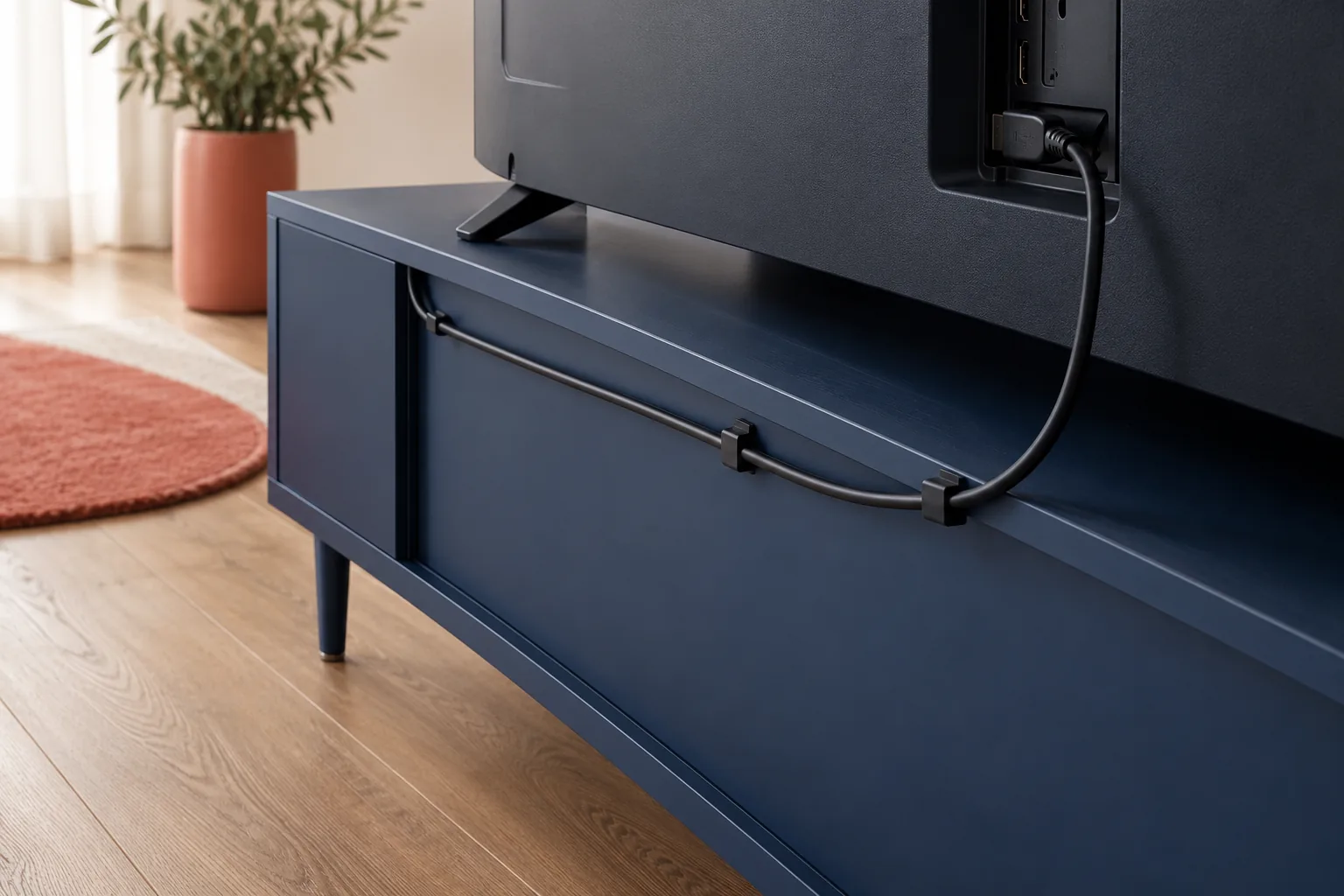
Use suitable cable-management products in line with their instructions and the requirements of the leads and equipment. Keep routes clear of sharp edges, pinching doors, moving drawers and foot traffic. Leave enough service slack to reach the connection without pulling on a port; tidy does not have to mean tightly stretched. Keep plugs and connections accessible for the normal maintenance the equipment requires.
A short, orderly visible route is easier to understand than a decorative panel that has to be dismantled whenever something stops working. You might manage signal leads along the rear edge of the console while leaving a clear service area behind it.
Do not put an ordinary power lead inside a wall to make the installation look wireless. Have in-wall arrangements or additional outlets planned by an appropriately qualified professional under the applicable requirements. The Electrical Safety Foundation's guidance also explains why extension cords should not replace permanent wiring or be routed through walls and doorways.
Use closed storage for small accessories
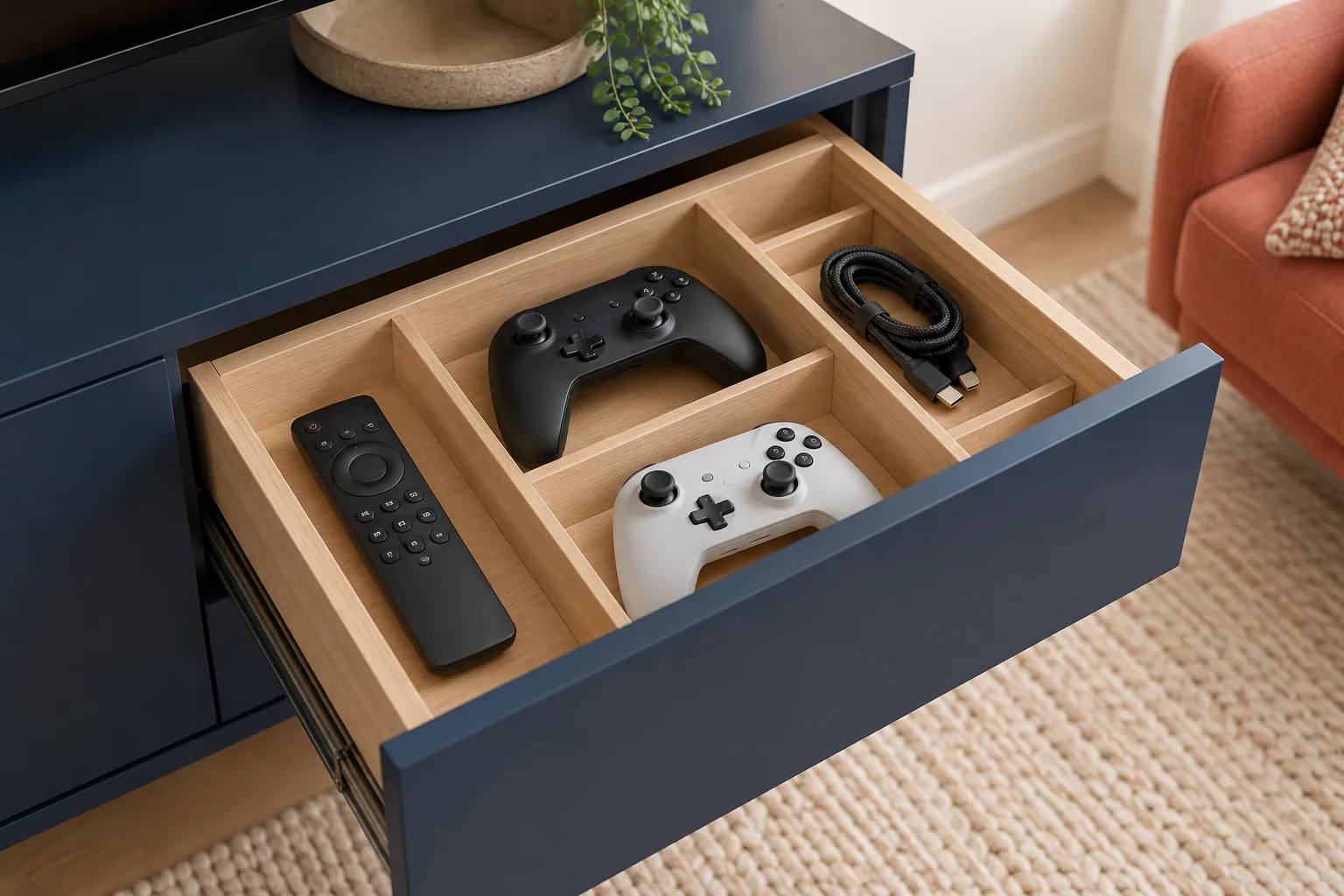
Give one drawer a limited job: the remotes, controllers and a few relevant accessories used in this room. Begin with what is already collecting on the console, then separate current equipment from obsolete adapters and unidentified spare leads. Moving everything into a new drawer without sorting it only moves the search out of sight.
Arrange the drawer around how you pick things up. A shallow compartment for the remote and a wider one for controllers may be enough. Leave finger space beside each item, and check the drawer closes without pressing buttons or catching a strap. Reuse a suitable small divider before ordering a complete organizer set.
Keep charging separate from loose storage unless the furniture, device and charging arrangement are specifically intended to work together. Do not hide operating chargers in a crowded closed drawer. Batteries and small components also need storage appropriate to the household, especially where young children are present; an ordinary low drawer is not automatically child-resistant.
For the rest of the room, our small apartment living-room guide offers broader storage and layout options. The TV console can stay much smaller when it does not also have to hold paperwork, shoes and every spare household cable.
Keep decor outside the screen edge
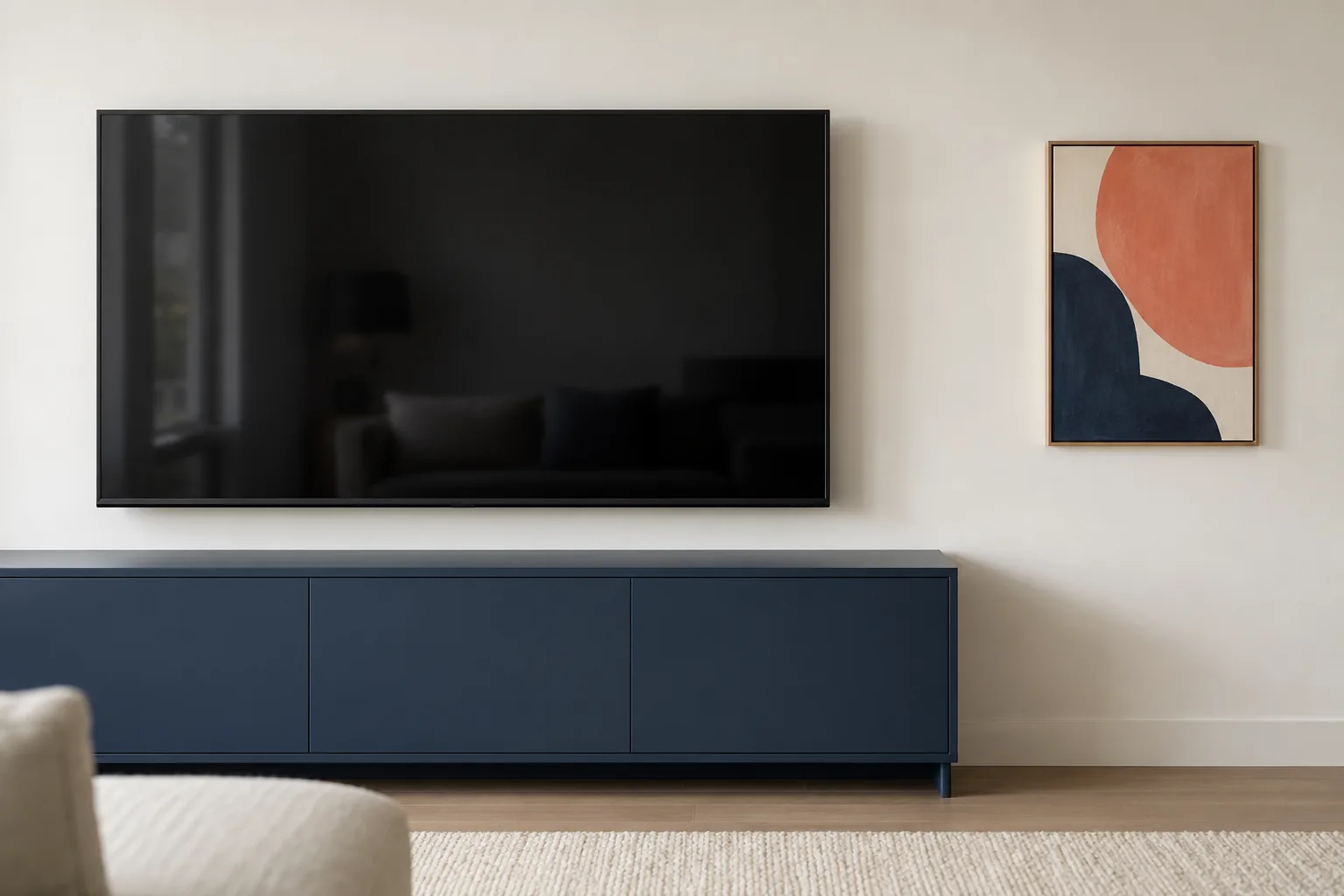
Look at the television as a large dark rectangle that is already part of the wall's composition. You do not have to disguise it with an equally busy display. Leave the picture, controls, sensors and equipment ventilation unobstructed, and keep the surfaces needed for access usable.
If you want artwork, try one modest piece beside the TV with a comfortable stretch of blank wall between them. Check it from the sofa as well as from the doorway. An artwork that looks balanced in a straight-on photograph may feel distracting from an angled seat. Use mounting appropriate to the piece and wall, and avoid putting heavy objects above the screen simply to fill space.
Carry color through a few elements that already have a job. A midnight console, coral cushion and small related artwork can connect the area to the room without a row of ornaments around the picture. There is no need for every color to appear on the same wall.
Finish with an ordinary-use check: watch from both seats, open the accessory drawer and reach the equipment connections. Then walk past with the TV off. The finished arrangement should support all of those moments, not just the photograph of the wall.
Does a small living room need a wall-mounted TV?
No. A television on suitable media furniture can work when the stand, support, anchoring and viewing position meet the actual product requirements. Wall mounting is a separate installation decision. Compare both arrangements using the full footprint and obtain suitable help with support and fixing; the visually smallest option is not automatically the right one for your wall.
Can I hide every device behind cabinet doors?
Only if each device can operate in the proposed compartment according to its instructions, including ventilation and connection needs. Check remote operation, access and the space taken by open doors. Keep non-operating accessories behind closed fronts and give working equipment a more suitable position when necessary.
Should the TV wall be a dark color?
It can be, but it does not have to be. A dark console against a lighter wall already creates a defined TV zone. If you want to paint the wall, sample the color with the screen on and off and under the room's different lighting conditions. Choose the result you enjoy rather than relying on a claim that one paint color always hides a television.
Make the wall work from the sofa outward
Start with the view, choose furniture that fits the passage, and give equipment and accessories their own workable spaces. Once those decisions are settled, a little color can make the wall feel considered without making it crowded.
Images are AI-generated design illustrations of different arrangements, not installation diagrams or verified product setups. Use the actual equipment specifications and suitable professional advice for mounting and electrical work.
A beautiful small space is not about having more. It is about making what you have work better. — Spacelya