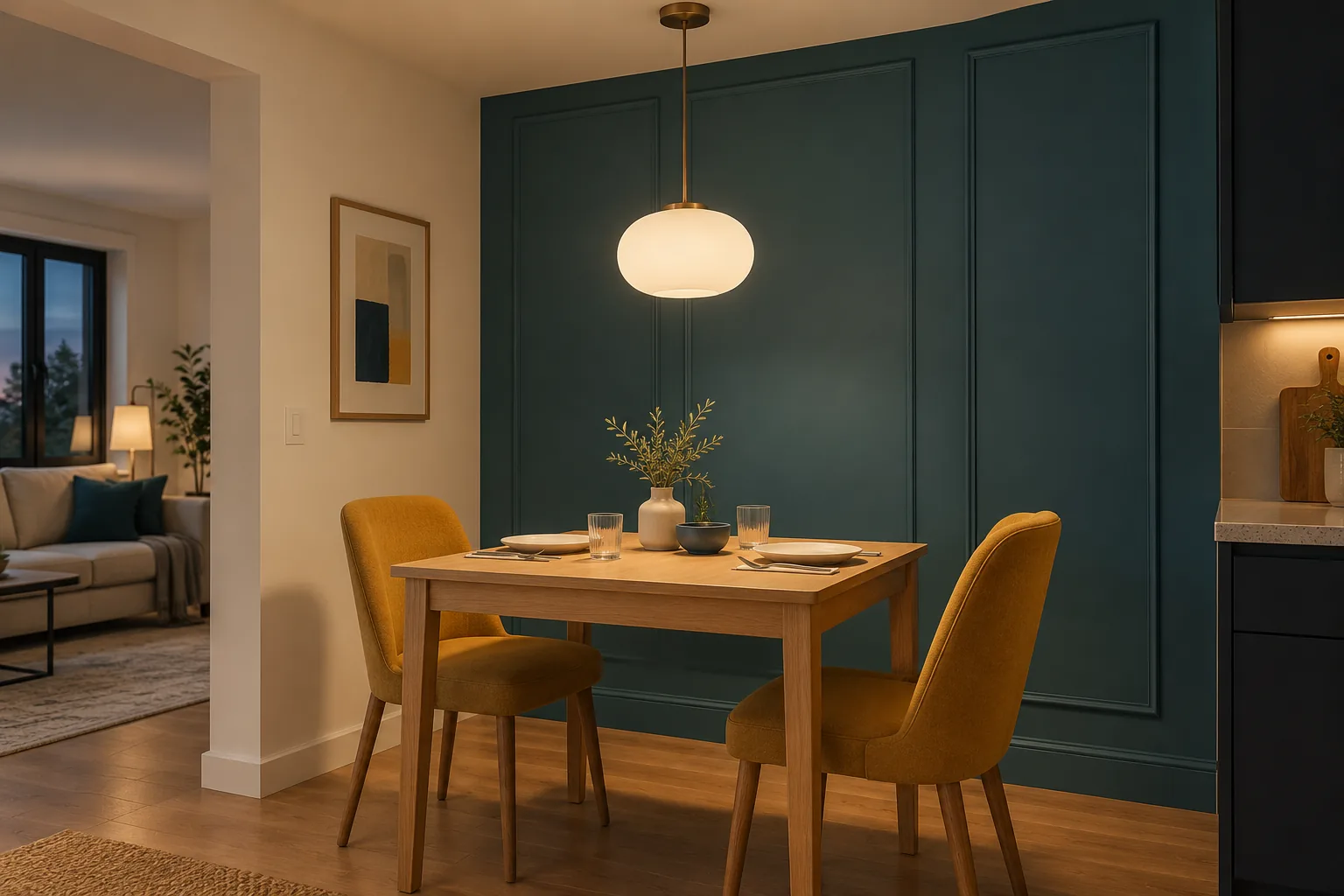
Lighting a Small Dining Area Around the Table You Have
The ceiling light may be in the middle of the room while the dining table lives against a wall. That small mismatch matters when you sit down: one place setting is bright, another feels dim, and the fitting that looked lovely online is directly in your view of the person opposite.
Good small dining room lighting ideas start with the table's everyday position and the jobs it does. Before choosing a pendant, check the existing light at mealtime and during any homework or paperwork. You may need a better-positioned fitting, a more suitable light source or a useful second layer of light. You may also discover that the fitting you own works well once the table position is settled.
Start with the daily table footprint
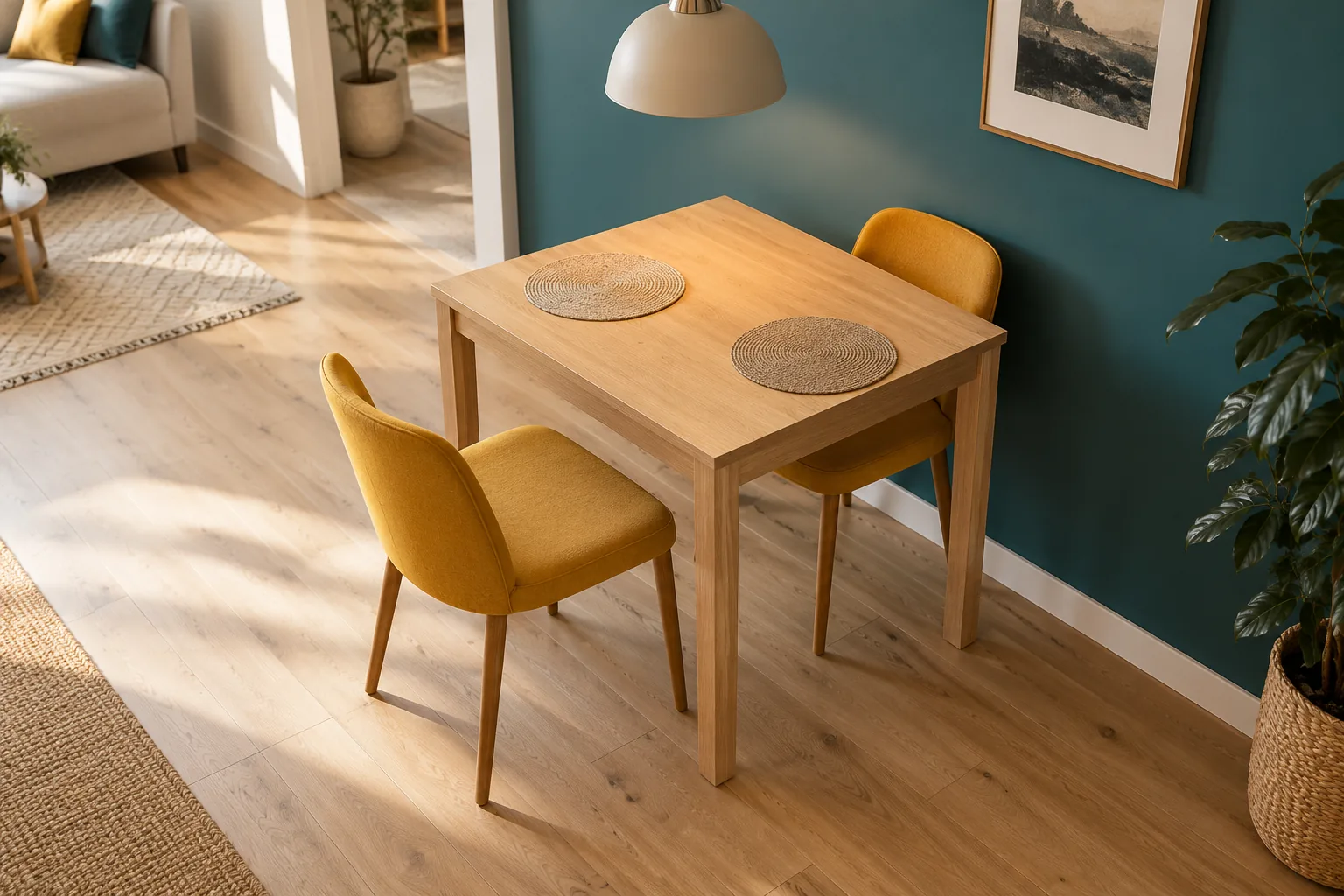
Look at the arrangement used on an ordinary weekday. If a drop-leaf table stays folded most of the time, use that footprint as the starting point. An extending table does not have to dictate the whole lighting plan in its largest occasional form. Note how it changes for guests, but give the daily setup proper attention.
Include the chairs as people use them. Pull one out, sit down and notice the route behind it. Check whether someone carrying a plate would pass beneath the proposed fitting when the table moves. A low-hanging light belongs in a position where it can work with the room's movement, not where it becomes an obstacle after a furniture rearrangement.
Make a short list of what happens here besides meals. Reading printed letters, using a laptop and doing a child's craft project ask different things of the tabletop. Put the actual objects on the table while assessing the existing light. That reveals more than looking at an empty, polished surface.
If the dining corner itself is still moving around, our studio dining-area layout guide can help settle its location first. Choosing a new light is easier once you know where the table usually belongs.
Center light on the table use
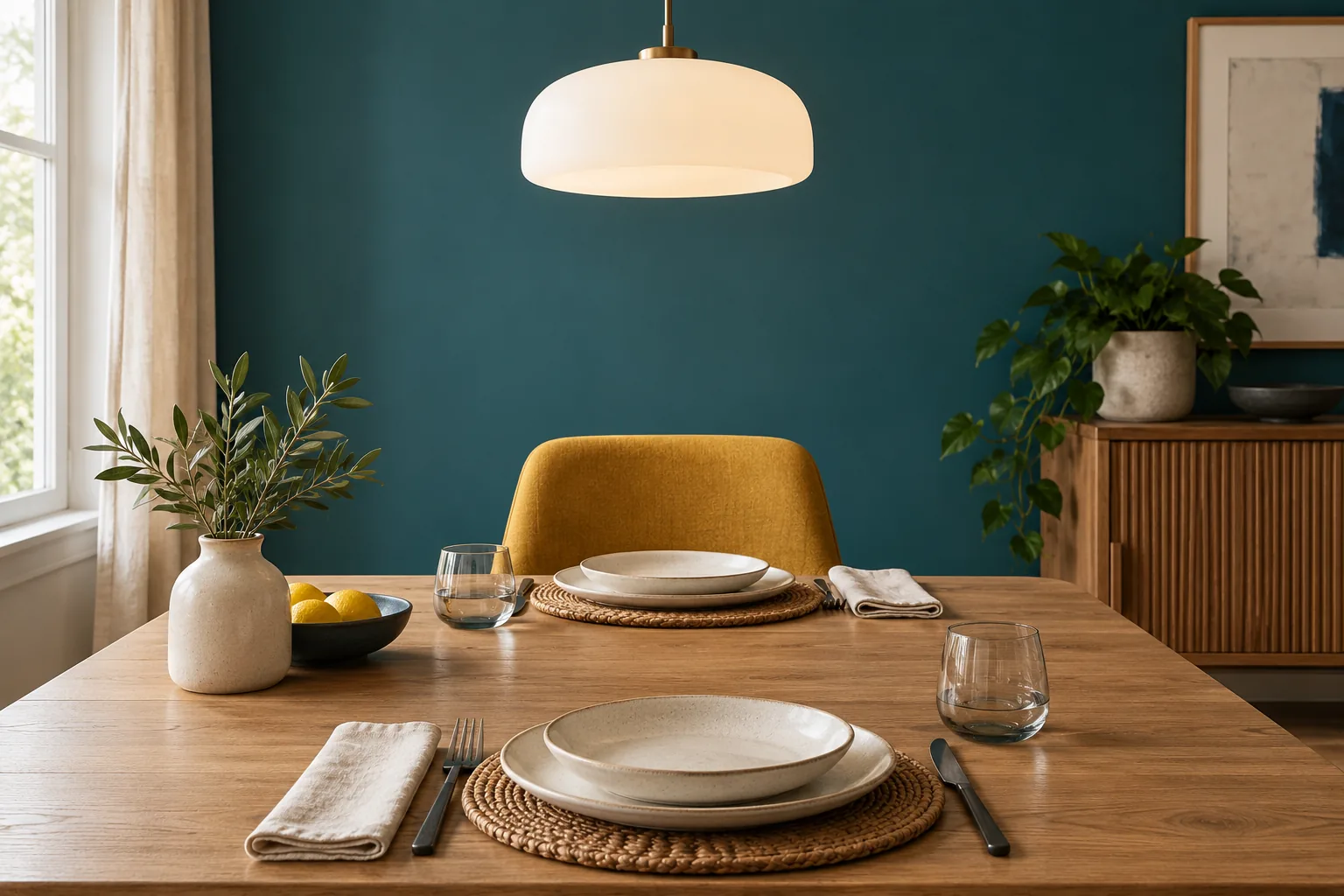
Judge the fitting's position against the eating surface. In a room with several functions, the middle of the ceiling and the middle of the table may be different places. A pendant can visually define a small dining corner when its position relates to that corner, but it needs to work from the seats and the adjoining room as well.
Check the fixture's complete dimensions, including the shade, ceiling fitting and available suspension adjustment. A shade that seems modest in a product close-up can extend beyond a tiny table or crowd a nearby wall. Look at the drawing alongside your table measurements. Include any requirements in the manufacturer's installation guidance rather than relying on a universal hanging-height formula.
For an existing fitting, assess a modest table adjustment only if it preserves comfortable use of the room. Do not solve the ceiling alignment by moving a chair into the walking route. If the electrical position needs to change, discuss the options with an appropriately qualified installer; support, wiring and local requirements belong in that decision.
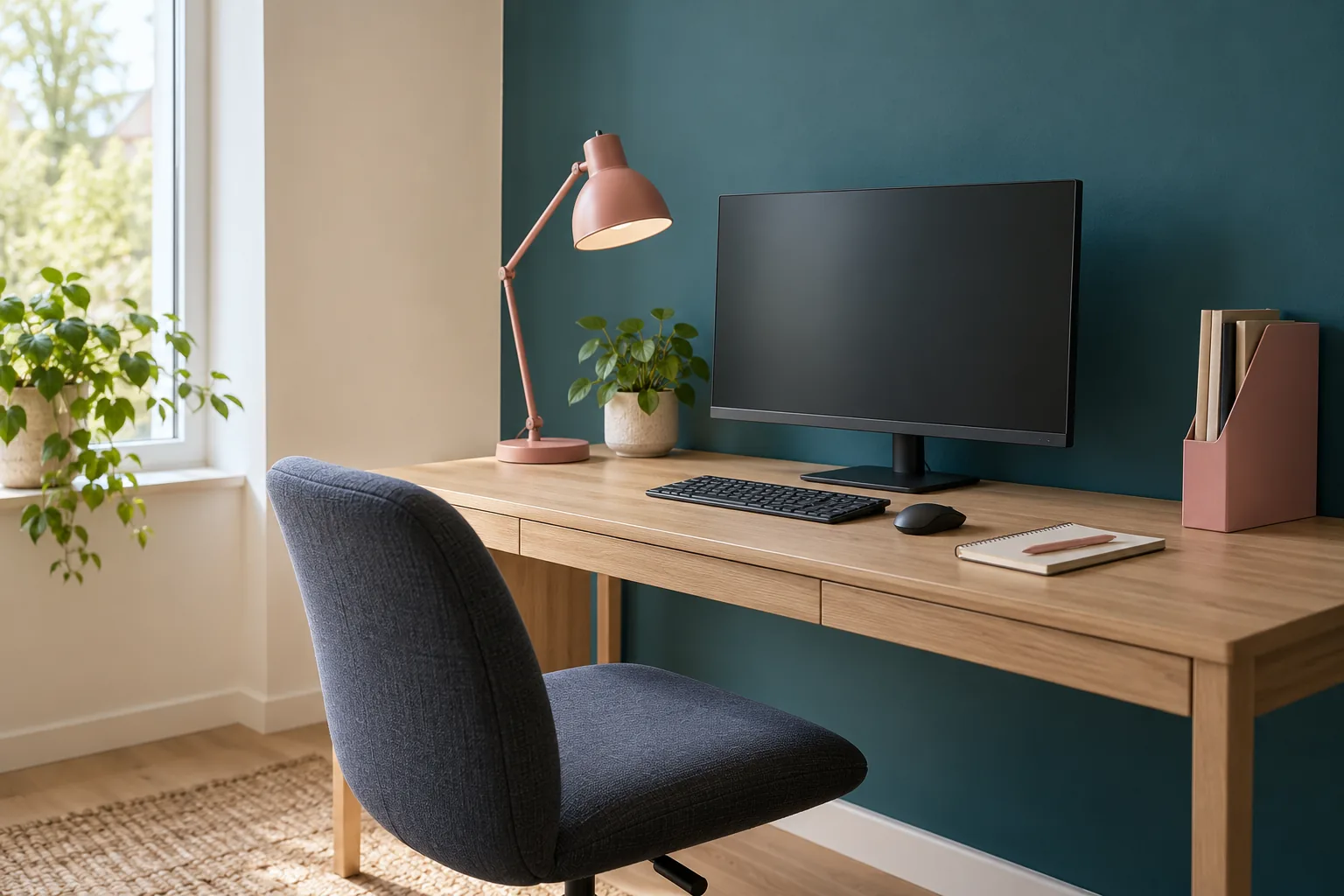
Keep the visual relationship simple. A small opal pendant above an oak tabletop can provide a calm shape, while saffron chairs and a peacock wall carry the color. The fixture does not have to supply every decorative detail.
Use diffused light for a shared work table
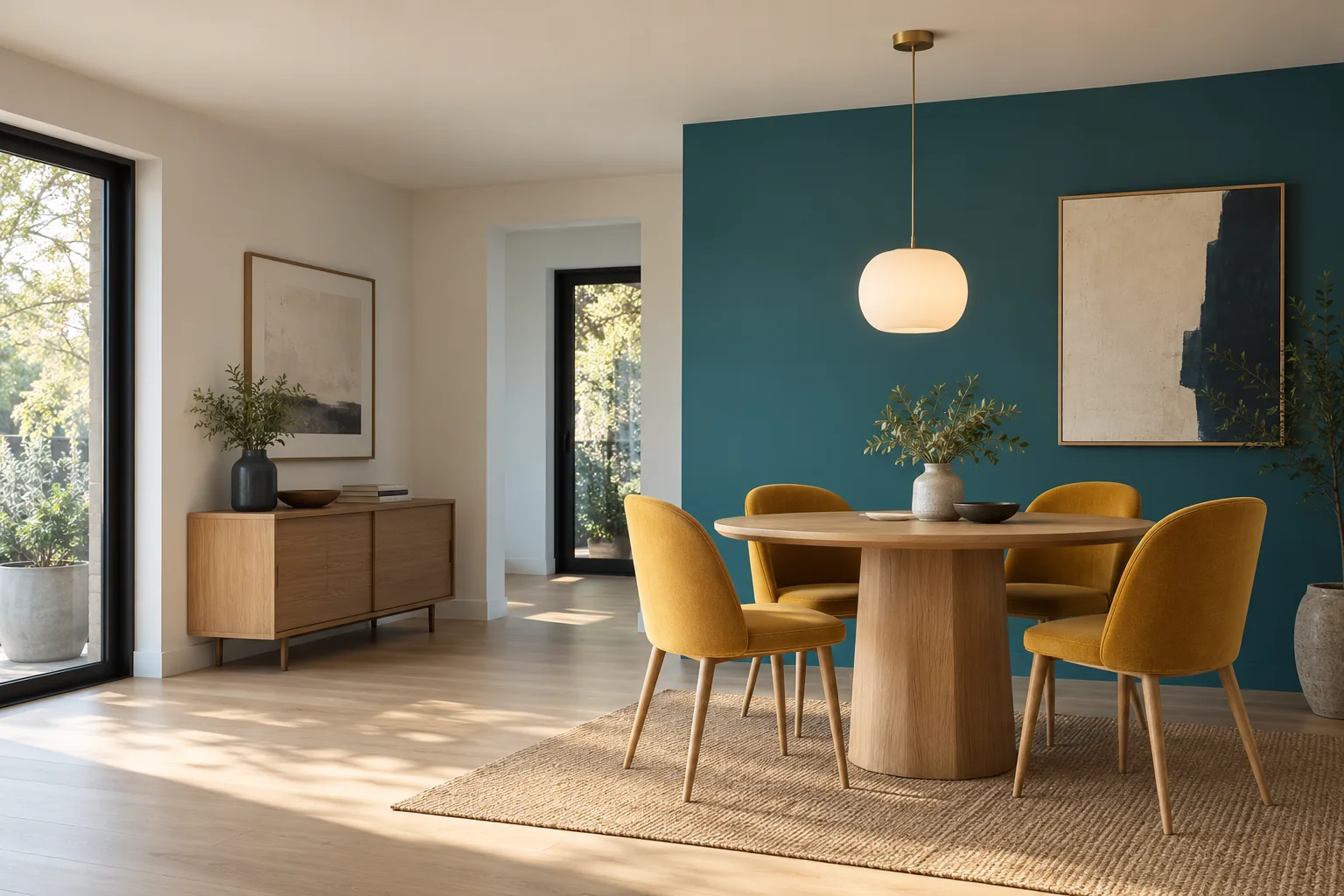
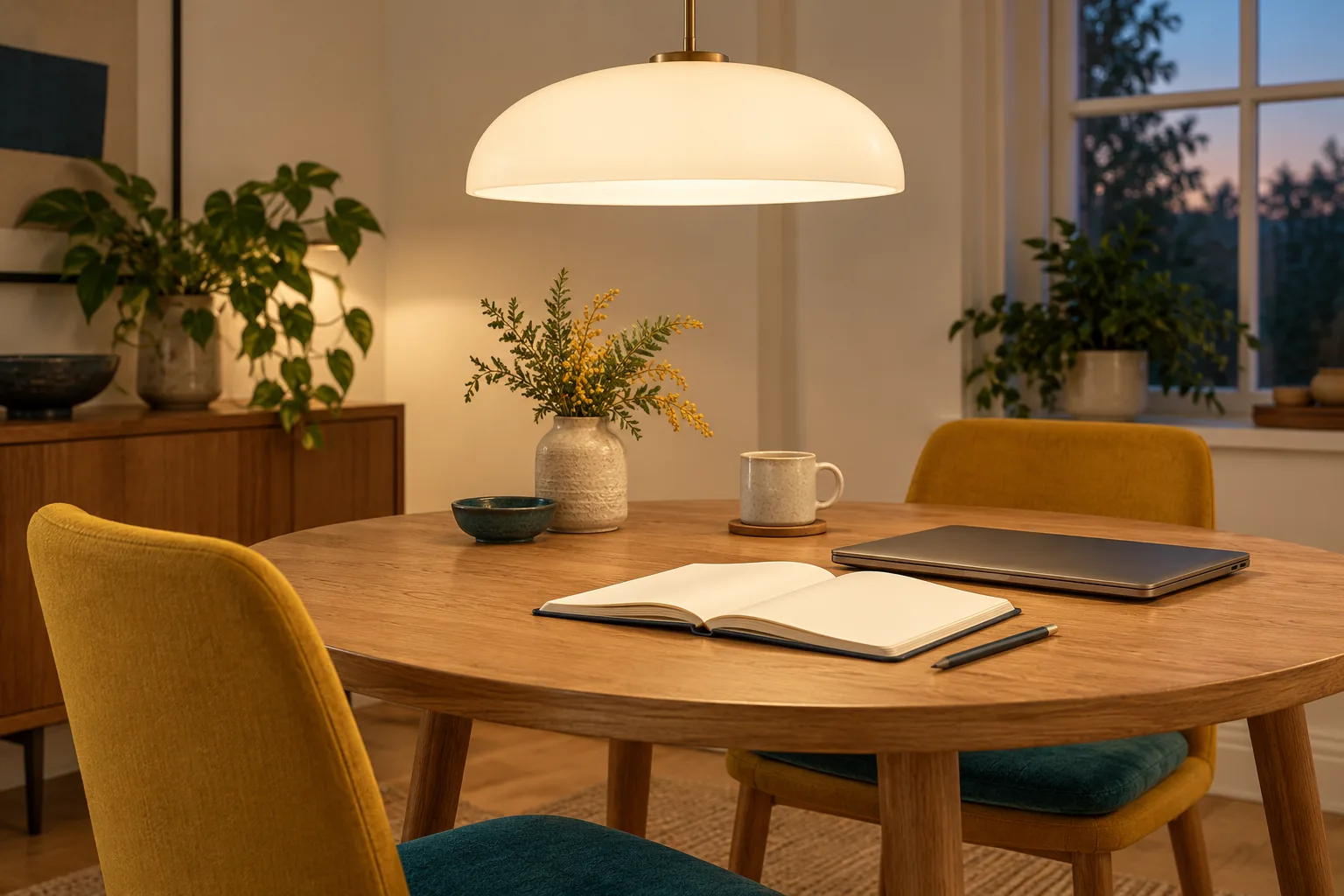
When the table doubles as a work surface, notice the quality of the light as well as its appearance. An exposed bright source can feel uncomfortable from a seat, while a suitable diffuser or shade may soften the view. Different shades distribute light differently, so an attractive opaque shade is not automatically a useful task light.
Try a sheet of ordinary print in the places people actually sit. Notice whether your body casts a shadow over the writing area or whether the table reflects a bright spot toward your eyes. Repeat with the laptop open if you work here. A photograph showing a soft pool of light cannot establish whether your own table is sufficiently lit for these tasks.
Consider suitable adjustment where the table has several roles. Philips' dining-table lighting guidance describes matching the light to the activity and using compatible dimmable lighting for flexibility. Check the compatibility of the specific lamp, light source and controls before buying; a dimmable bulb alone does not make every arrangement dimmable.
Compare the light with the surrounding room, too. A beautifully lit tabletop in an otherwise uncomfortably dark corner may need a second appropriate source nearby. Aim for a setting in which meals feel relaxed and the table's working jobs remain practical.
Check the view from seated positions
Sit in each normal chair, including the one nearest the wall. Look across to the opposite place setting and then toward the doorway. Notice whether the fitting interrupts a conversation, puts a bare light source in your direct view or makes one end of the table feel noticeably different from the other.
Do this in the evening as well as in daylight. A window can make an arrangement seem adequate at lunchtime while the same corner feels quite different after sunset. Turn the existing room lights on separately, then together, to understand which source is doing what. Keep the assessment focused on what you can see and use comfortably rather than trying to judge brightness from a phone photograph.
Check reflections in nearby glass, framed art and glossy tabletops. Sometimes a small, workable change in the table's position or the direction of an adjustable fitting helps. Sometimes the shade or source is the problem. Make adjustments only within the product's intended range and instructions.
This is also a useful point to simplify the tabletop. Tall decorative stems or a large centerpiece can obstruct the view even when the lighting is well placed. Leave enough clear space to see the person opposite and pass food without rearranging the display.
Use an existing nearby lamp when suitable
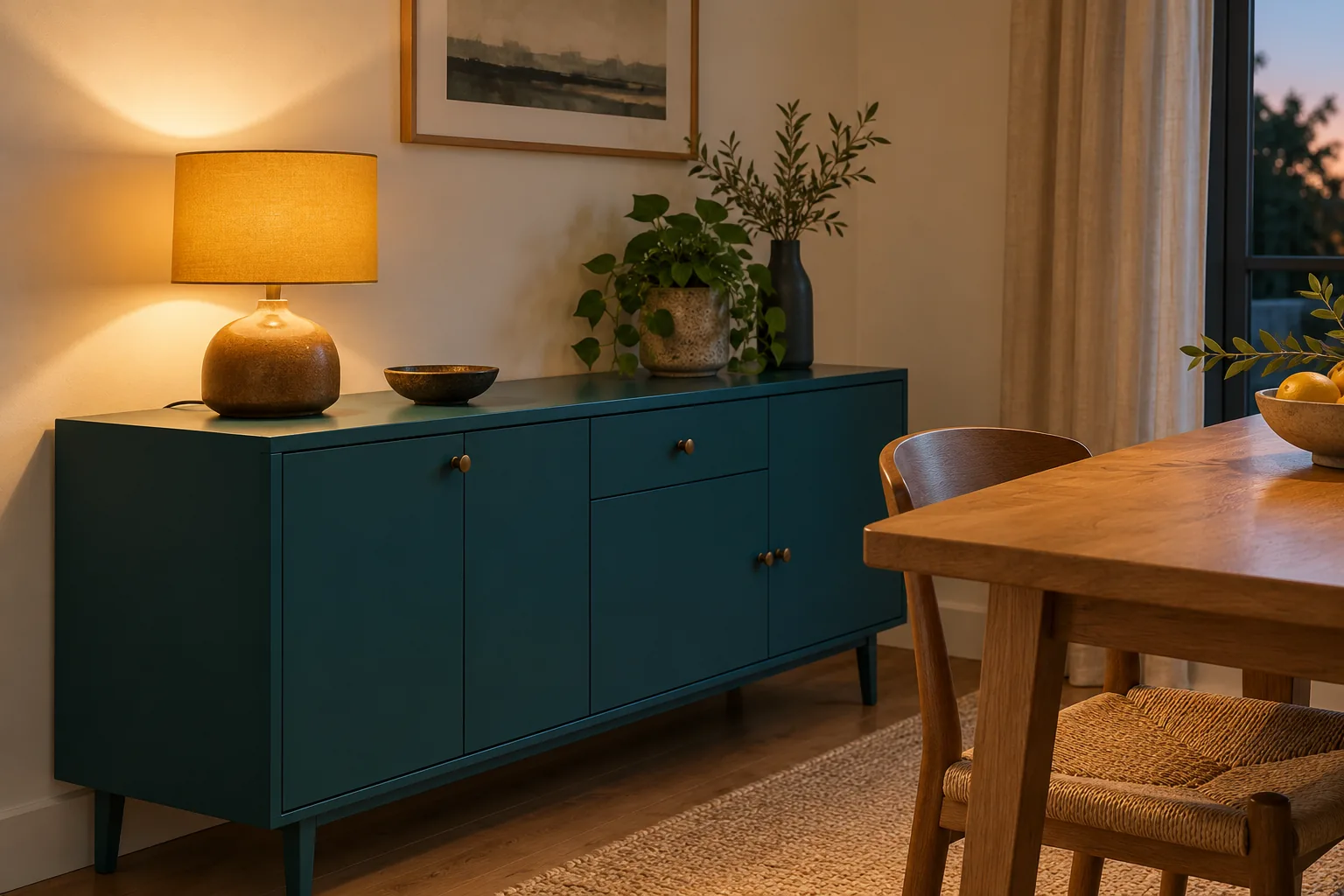
A suitable lamp on furniture you already have may add a pleasant second layer of light. Start with a stable surface beside the dining area, outside the chair and walking space. Check the lamp's base fits fully on that surface and that the shade and surrounding materials have the clearances required by its instructions.
Think about where the light goes. A shaded lamp that softly lights the wall may make the corner more inviting while contributing little to the center of the table. That can be a useful role, provided you keep adequate light for the meal or task itself. Judge it with the other sources in use rather than assuming a nearby glow replaces them.
Avoid buying a sideboard just to accommodate a small lamp if the room has no spare floor space. Our dining-area storage guide can help assess an existing nearby surface and clear its ordinary clutter. One lamp on a useful piece of furniture is a more manageable arrangement than another piece squeezed behind a chair.
If the socket position makes the lamp impractical, leave that option out. The electrical route is part of the fit, just as much as the size of the shade or base.
Keep cords and fittings out of movement
Check the full dining routine with the lighting in place. Pull the chairs out, use any table extension and walk between the eating area and kitchen. Notice where a chair back, door or passing shoulder could meet a fitting, lead or switch. Small dining spaces often change shape through the day, and a tidy empty-room arrangement can miss those movements.
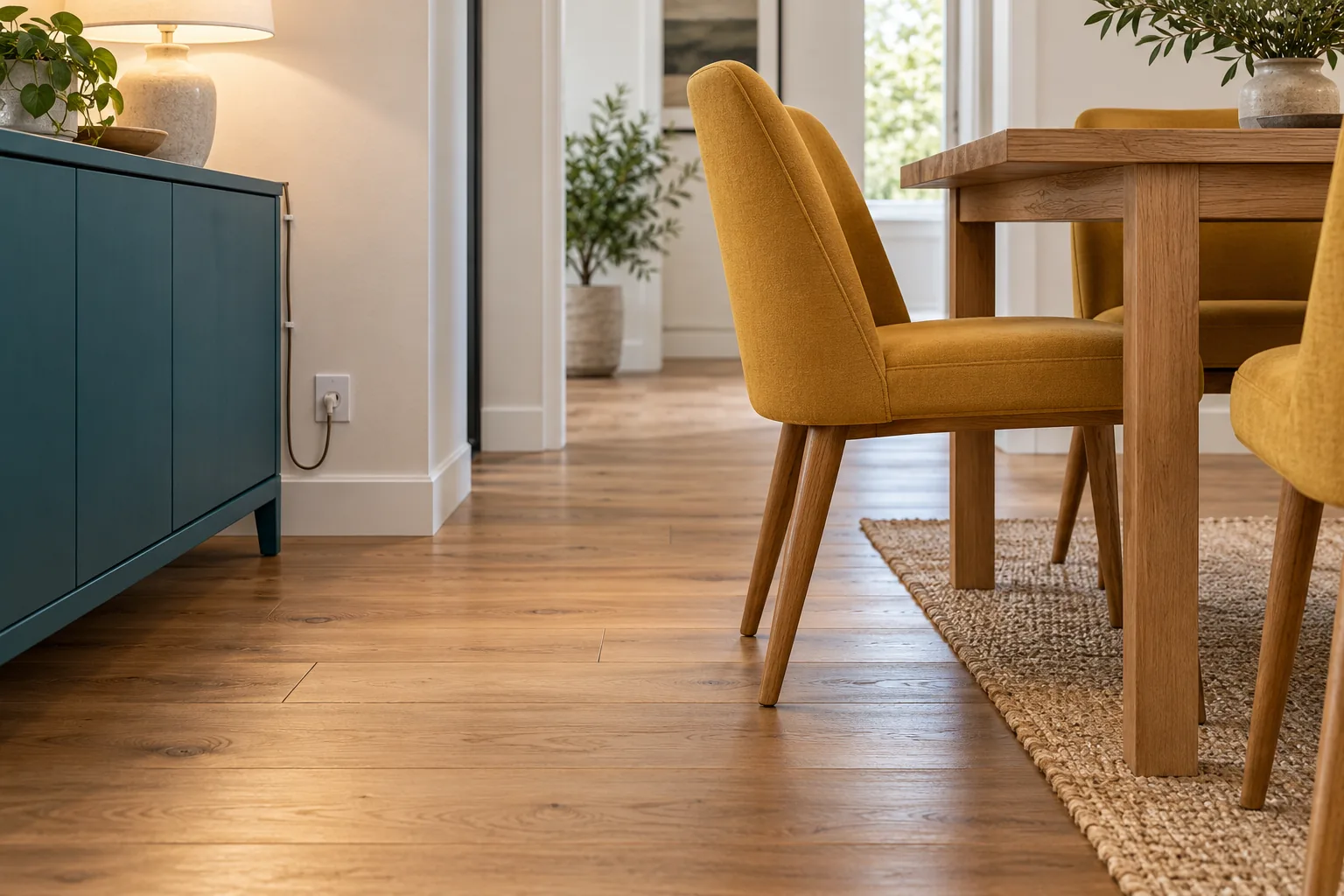
For a plug-in lamp, choose a position with a suitable nearby outlet and a cord route that stays clear of traffic, furniture movement and pinching points. Follow the lamp and cable-management instructions. Do not hide a loose lead beneath a runner or let it cross the space behind a chair.
The Electrical Safety Foundation treats extension cords as temporary solutions rather than substitutes for permanent wiring. If the only workable position depends on an improvised long-term extension route, ask an appropriately qualified professional about suitable electrical provision or choose another lighting arrangement.
Keep controls useful, too. You should be able to switch the appropriate light on without moving a chair, reaching behind a crowded cabinet or walking through a dark room. Finish the plan by considering that ordinary arrival at the table, not only the appearance of the fitting once everything is already switched on.
Does a small dining area need a pendant?
No. A pendant is one way to define and light the eating surface. A suitable existing ceiling fitting, appropriately positioned adjustable light or combination of sources may work better in your room. Assess the tabletop and seated views before choosing the fixture type, and include the table's movement in the decision.
What if the ceiling connection is off-center?
First confirm the table's best everyday position. Then ask a qualified installer about suitable products and installation options for that position. Do not improvise a suspension hook or wiring route to copy an online photograph. If moving the connection is impractical, an appropriate ceiling fitting with a different distribution may be worth comparing with a pendant.
Can one light work for meals and homework?
It may, if its output, distribution and controls suit both activities in the actual room. Check ordinary reading and writing at each used seat, then assess the setting for meals. Compatible adjustable lighting can add flexibility; a nearby lamp may contribute surrounding light without replacing the illumination needed at the working surface.
Choose the light from the chair
Settle the table, examine the seated view and test the everyday tasks. Those checks give you a useful brief before you shop or arrange installation. A simple fitting can then sit comfortably among the room's colors, leaving space for the meal and the people around it.
Images are AI-generated lighting and styling concepts, not measured lighting assessments or installation instructions. Use current product guidance and appropriately qualified advice for electrical changes.
A beautiful small space is not about having more. It is about making what you have work better. — Spacelya