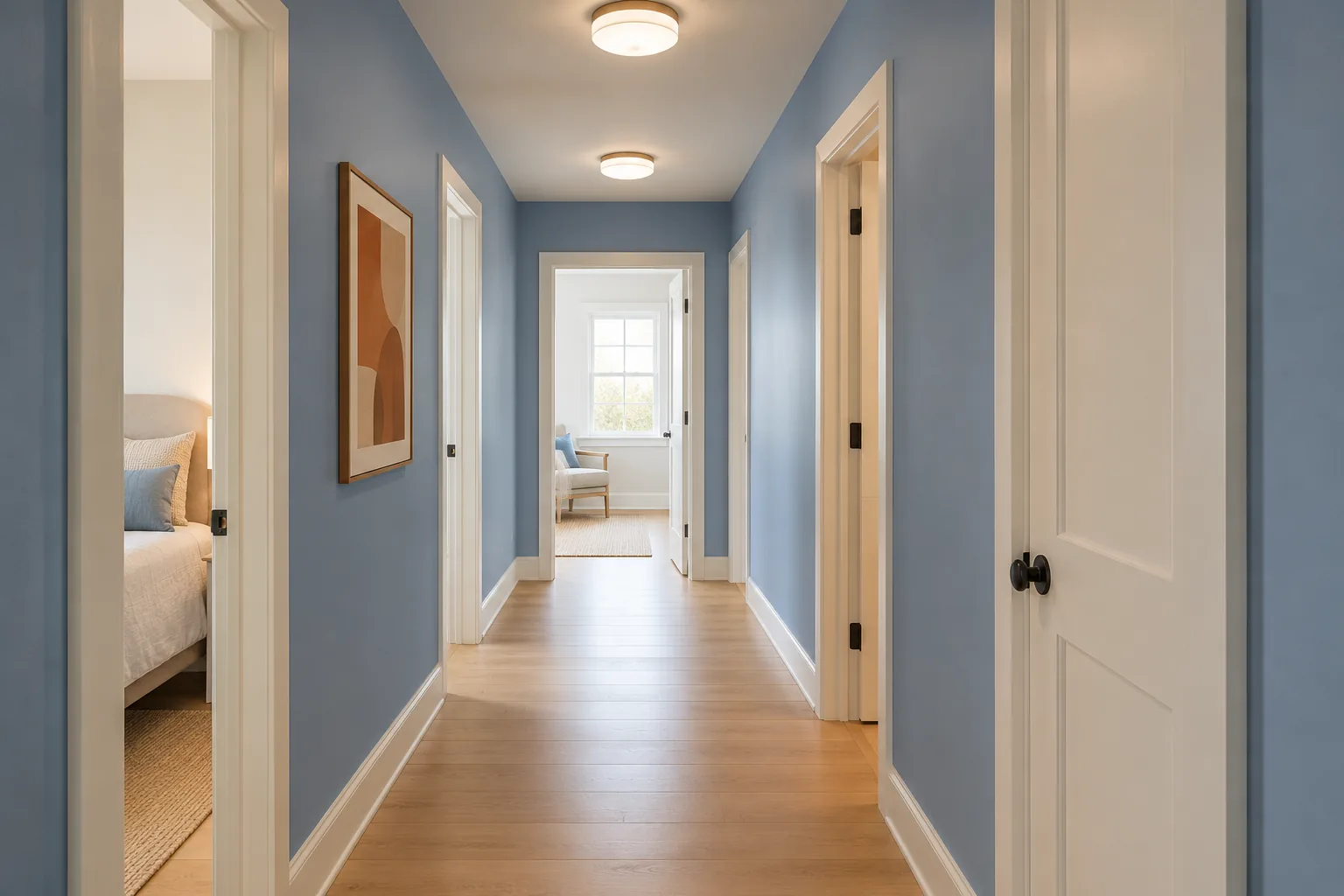
Narrow Hallway Decor That Keeps the Route Clear
A hallway can be the only place in a small home that gets used by everyone, many times a day, yet it is often decorated with whatever did not fit elsewhere. A spare basket becomes a shoe pile. A console fits against the wall but catches your bag on the way past. The space starts to feel narrower even though the walls have not moved.
The most useful narrow hallway decorating ideas put character on the walls and leave the route easy to use. Begin with door movement, light and the tightest point in the passage. Then choose the color, art and optional floor detail that work around them. This guide focuses on an internal corridor; it does not need to take on every storage job of a front-door entryway.
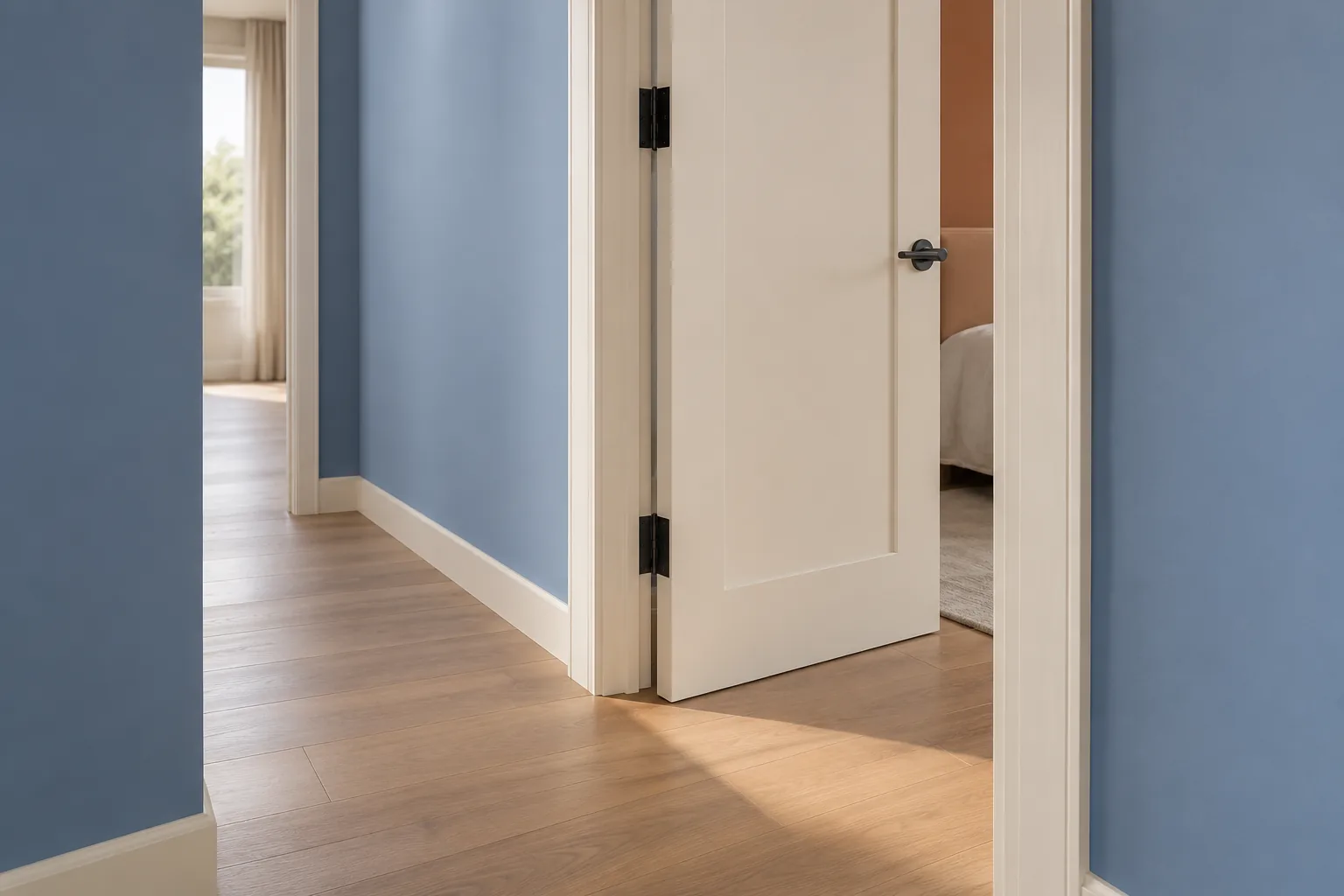
Follow the narrowest walking point
Walk the corridor in both directions before choosing furniture. Look at the narrowest point, which may be beside a door handle, radiator or awkward corner rather than between two flat walls. Note the doors that are usually open and what happens when someone comes out of a room as another person passes.
Include ordinary carried objects in the check: a laundry basket, shopping bag or the vacuum you move between rooms. If somebody uses a mobility aid, include their actual access needs from the beginning. Do not treat a decorating photograph or a generic width suggestion as proof that the route is suitable. Keep required access and escape routes clear under your building's applicable requirements.
Move freestanding clutter to an appropriate location before considering another organizer. Our small entryway storage guide can help put arrival items closer to the front door. An internal passage often works better when it does less storing.
Use these observations as a boundary for the decorating plan. A console that technically fits beside the skirting may still be the wrong piece if its handles or open drawer intrude where people turn. You can add plenty of personality without putting another object on the floor.
Use one quiet wall color
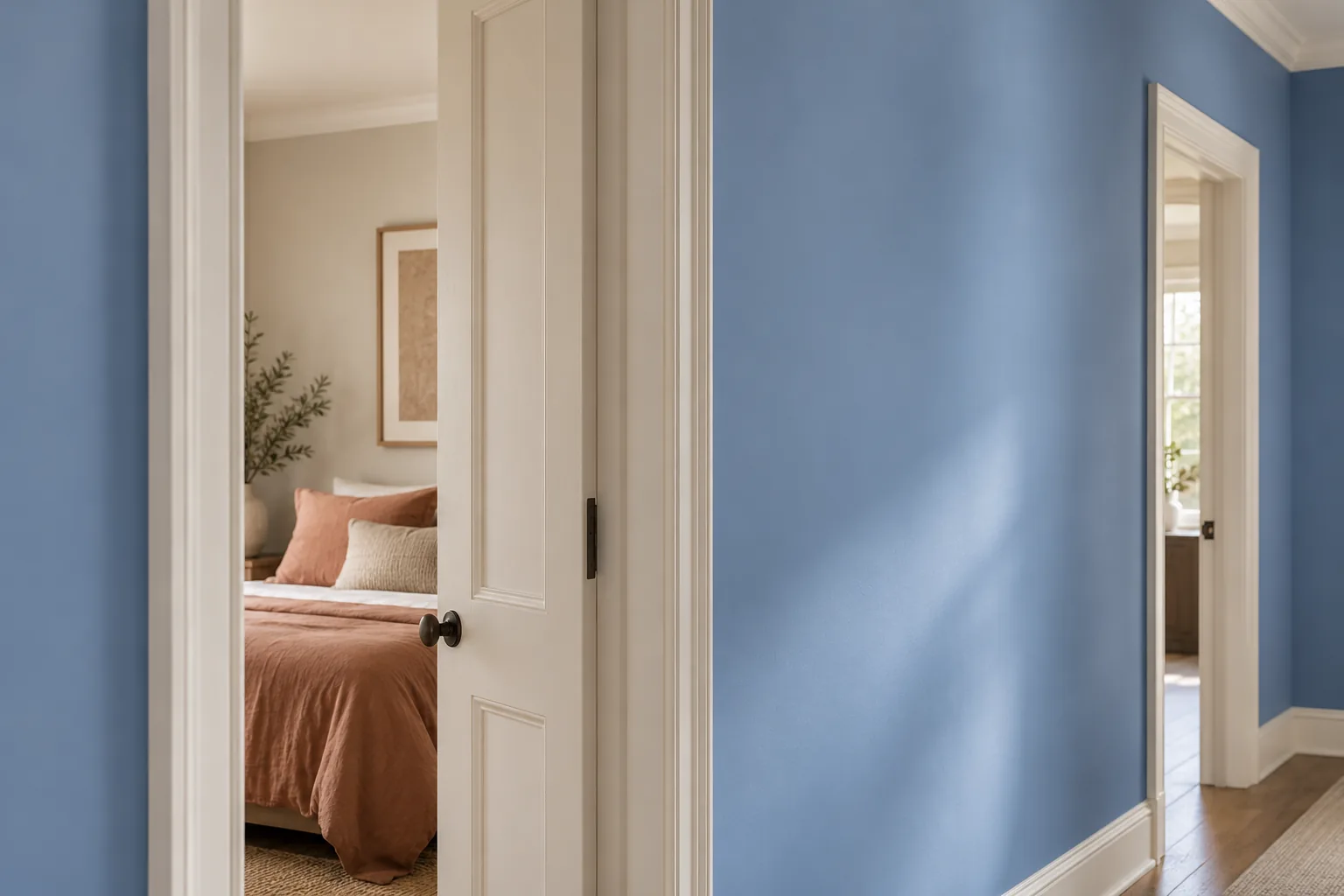
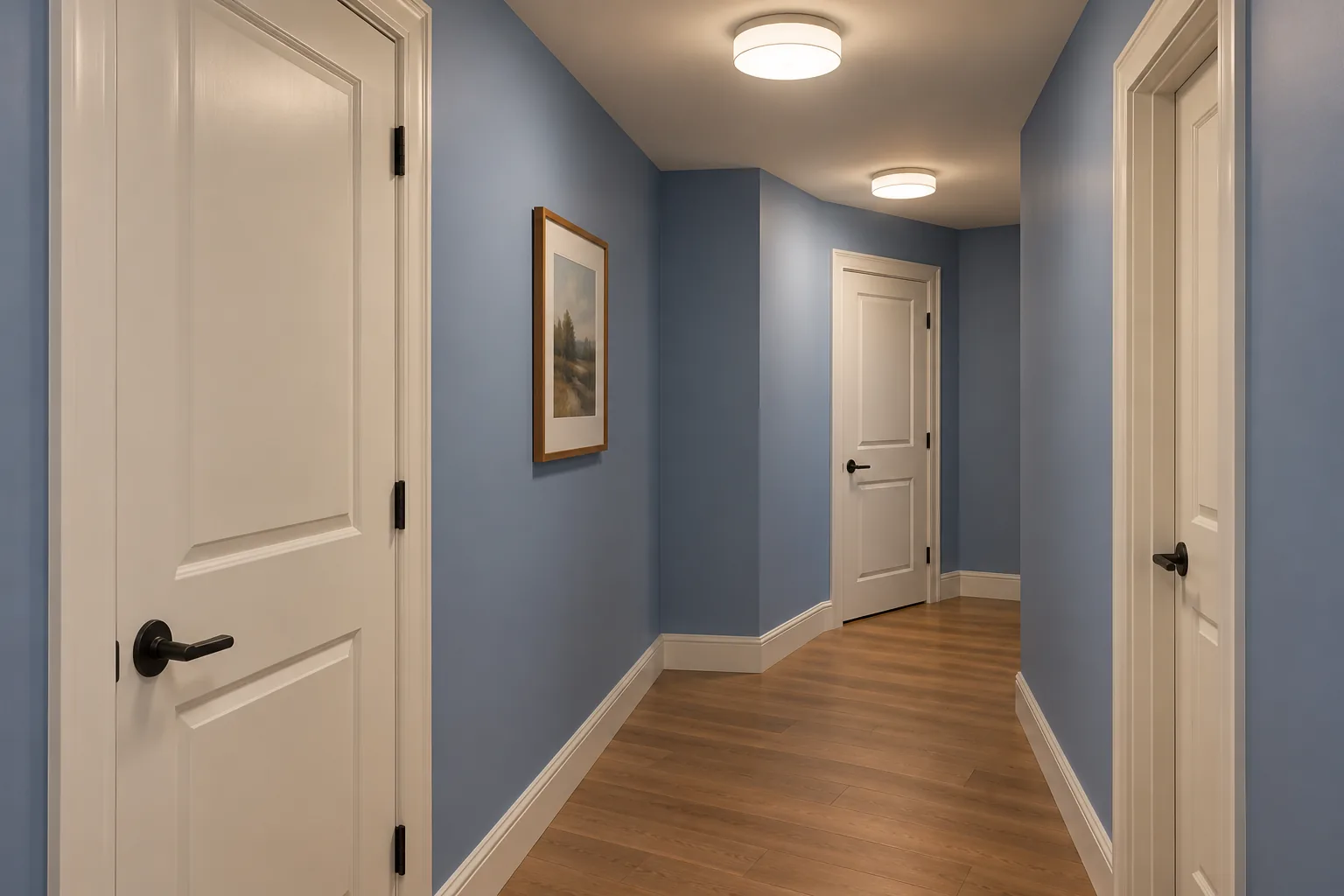
A consistent color can connect the short wall sections between doorways. Cornflower blue is one cheerful direction: it has enough presence to feel deliberate, while warm-white trim gives the doors a clear outline. A clay accent in one artwork or an adjoining textile can add warmth without turning each wall section into a separate project.
Compare physical paint samples at several points along the corridor. Look near the borrowed daylight, in the darker middle and under the existing lights at night. Judge the color beside the actual floor, door finish and skirting. The same paint can appear different as those surroundings and lighting change.
Decide where the color stops before painting. Following the hallway's existing corners and door casings usually gives a clearer plan than stopping halfway along an unbroken wall. Check the view into adjoining rooms, too; the corridor should feel connected when doors are open, not just attractive when they are all closed.
Use a finish suitable for the wall, routine cleaning and manufacturer's preparation guidance. If painting is not an option in a rental, leave the existing wall color and introduce cornflower and clay through a small, suitable artwork instead. Color is a useful part of the design, but repainting is not a requirement for making the hallway feel cared for.
Choose flush wall art
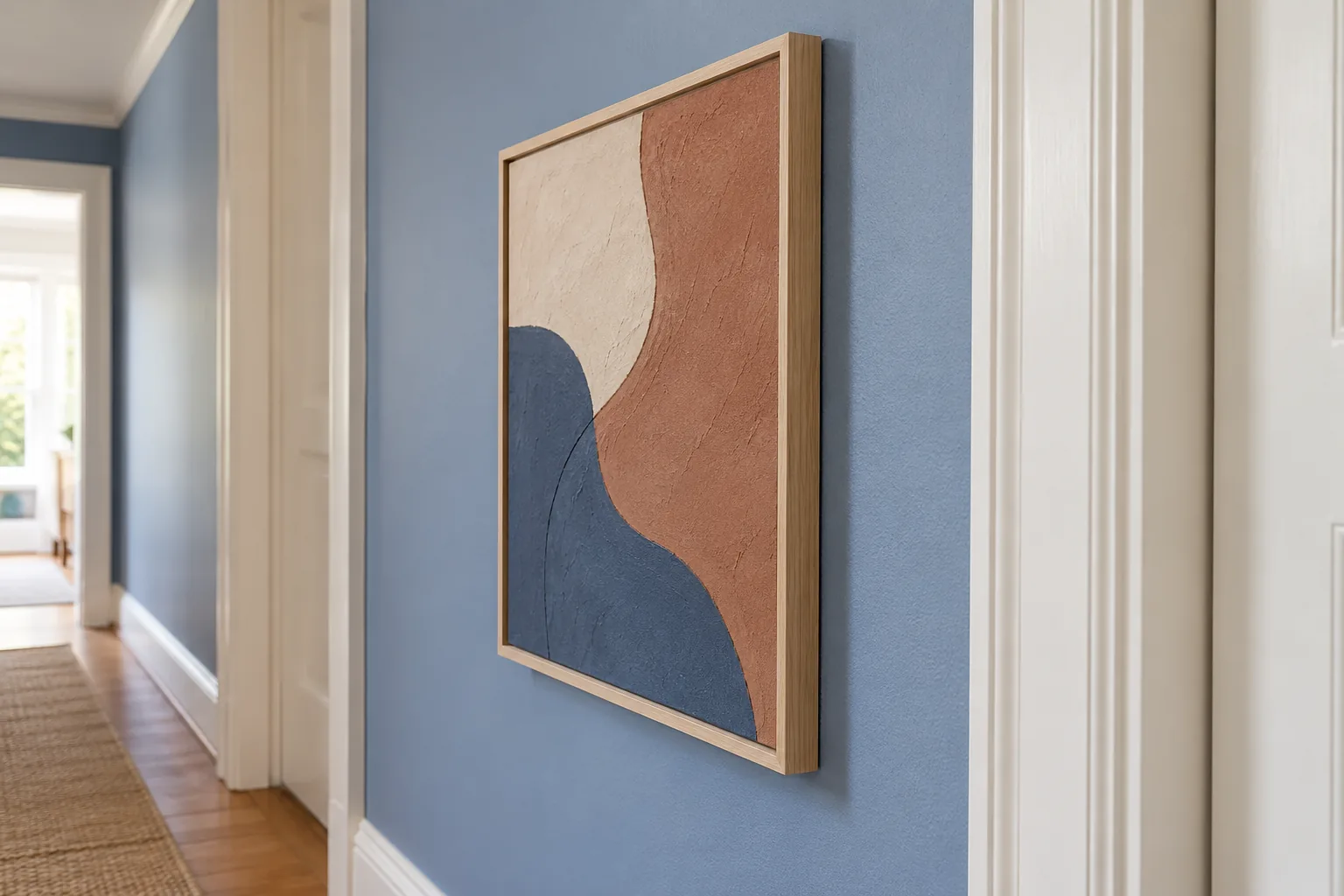
Pick the wall with the clearest view and the fewest conflicts. One modest artwork may be easier to enjoy than a long series squeezed between every door. A shallow frame keeps the profile quieter, but check its full depth, corners and location against the way people pass with bags and coats.
Look at the position from both ends of the corridor before fixing it. A grouping might be readable from the entrance yet disappear behind an open door from the other direction. Leave switches, controls and door movement unobstructed. At a tight turn, even a small projection may be inconvenient, so use a less confined stretch of wall instead.
Choose support appropriate to the frame, its weight and the actual wall surface, following the fixing product's guidance. An adhesive fixing is not automatically suitable for every painted surface or frame. Rental permission and the condition of the finish matter as well. Avoid leaning a framed picture on a tiny ledge in a busy passage.
For the image itself, a simple clay-and-blue abstract, familiar print or personal photograph can be enough. The subject should feel like something you want to see each day. You do not need a matching decorative object underneath it to make the wall feel finished.
Keep a runner appropriate to the floor
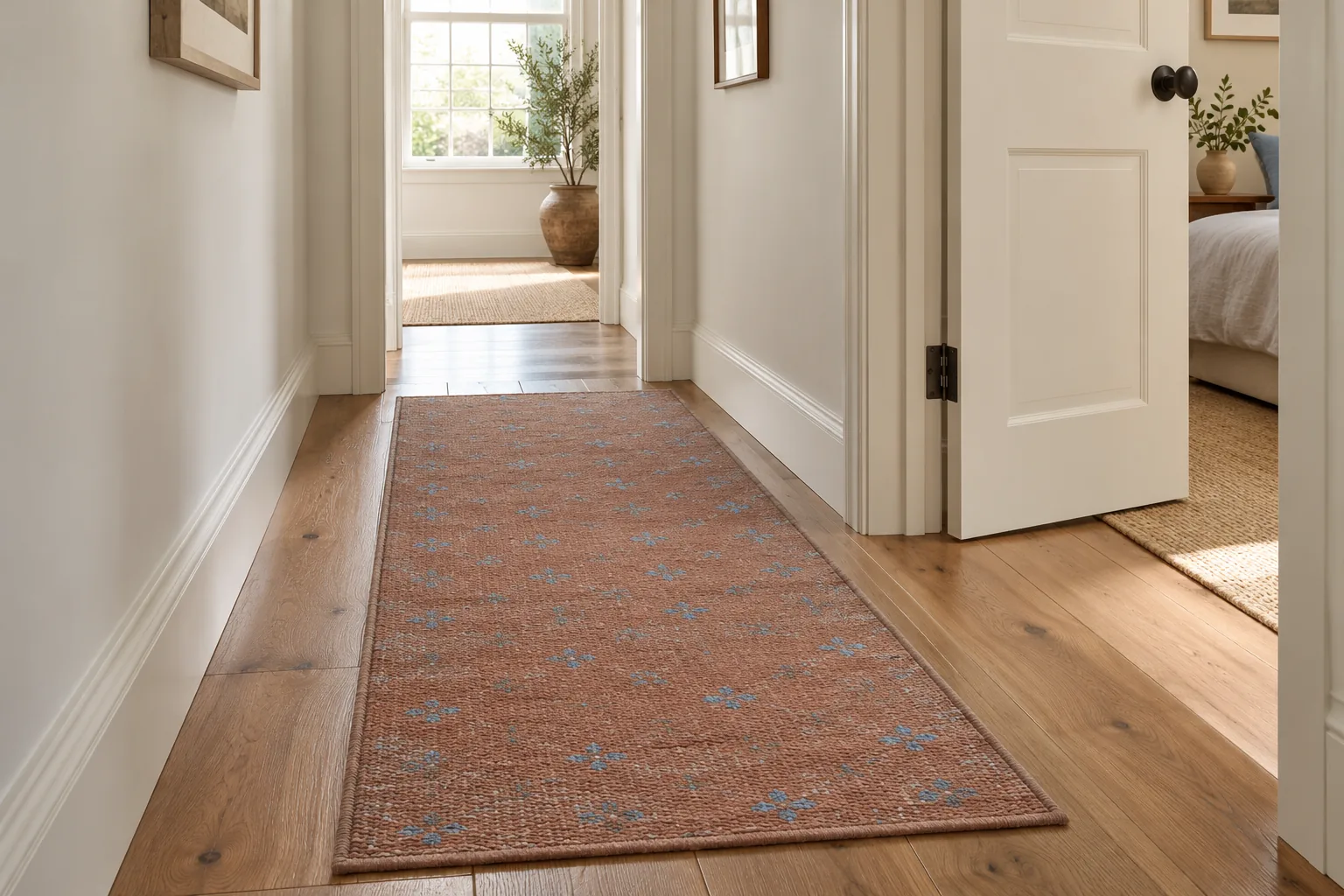
A runner is optional. It can connect the corridor's colors and soften the appearance of the floor, but it also adds edges and another surface to maintain. Start by deciding whether it suits the floor, doors and household rather than buying one to fill the empty middle.
Check the rug's intended use and care instructions, and use a suitable compatible grip or underlay when required. Confirm compatibility with the flooring finish too. Assess the complete thickness, including any underlay, where a door passes above it. A low-pile description on its own does not confirm clearance or that the runner will stay in place.
Choose a position that leaves the edges easy to see and avoids an awkward end directly at a tight turn or doorway threshold. Once laid, check it stays flat during normal movement and that no edge curls or catches. If it shifts, bunches or interferes with a door, resolve the problem or remove it; keeping it for its color is not a good trade.
A restrained clay pattern can sit comfortably with cornflower walls. For a corridor with complicated door swings or a household that needs an uninterrupted floor, use the wall color and artwork for warmth instead. A clean, visible wood or tiled floor is already a complete decorating choice.
Use existing light to guide the route
Assess the hallway after dark, when daylight from adjoining rooms is no longer helping. Notice whether the floor, door handles and changes in direction remain easy to see. Include the point where you first enter the corridor and the switch you reach for; a pleasant glow at the far end does little for a dark turning point near your feet.
Begin with the existing suitable fittings and the light sources they are designed to use. Follow the fixture's lamp type, rating and other instructions when replacing a bulb. If a light has become noticeably dimmer, check the appropriate maintenance guidance rather than immediately adding another lamp on the floor.
For changes to fittings, wiring or controls, use an appropriately qualified professional and the applicable local requirements. Keep fixtures proportionate to the actual route. A projecting wall light that looks delicate in a large hallway may be awkward beside a door in yours. A suitable compact ceiling fitting can preserve more usable space.
For an entry that opens directly into a living room, our front-door layout guide covers that different transition. In an internal corridor, keep the focus on comfortable movement and accessible controls. Do not introduce a loose floor cable just to light a decorative corner.
Leave tight corners empty
An empty corner may be doing an important job. It lets someone turn with a laundry basket, keeps a door accessible or gives the eye a pause between several openings. Filling it with a plant or narrow stand can remove exactly the space that makes the corridor comfortable.
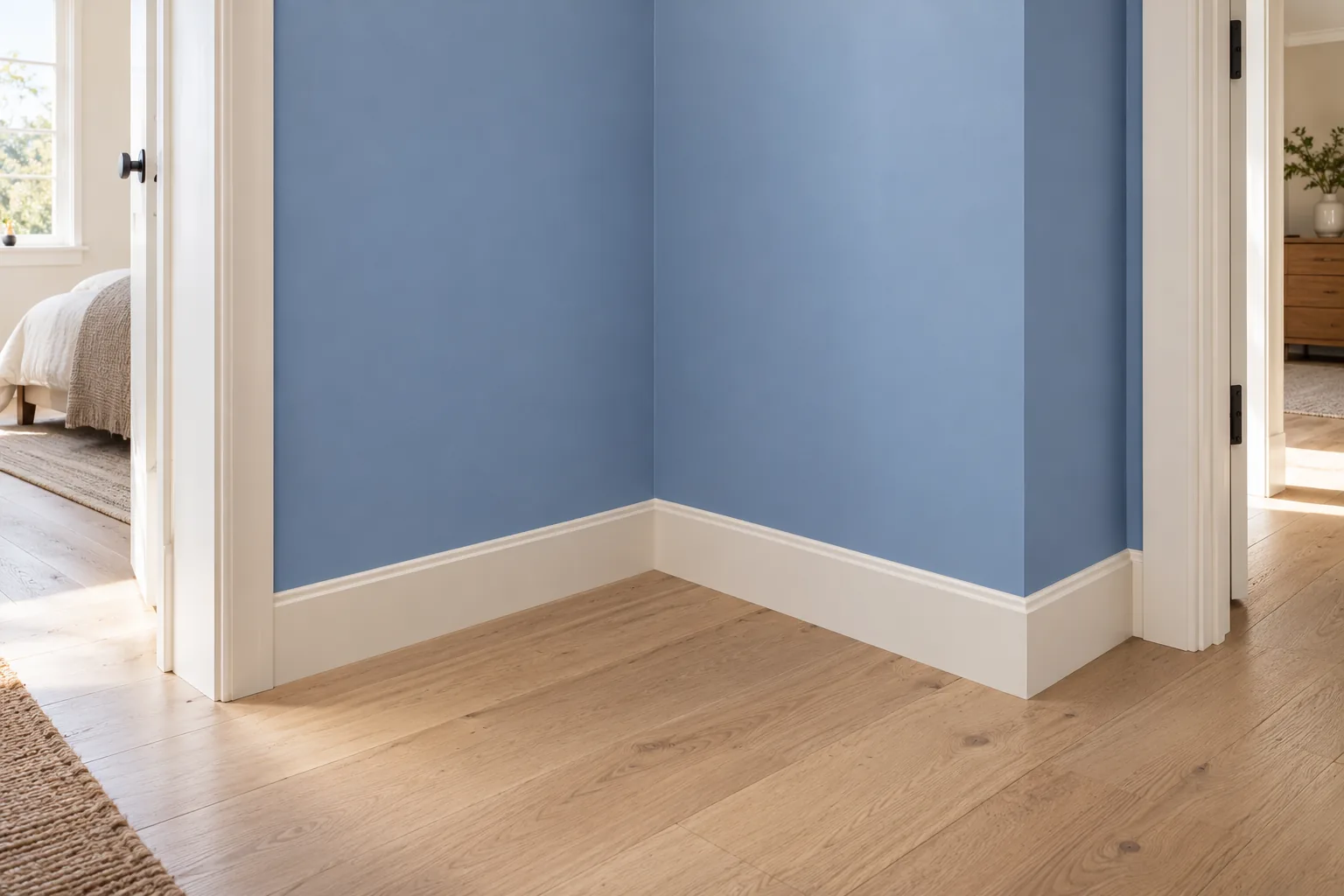
Look at the corner's finish instead of searching for an object to put there. Consistent paint, clean skirting and a visible floor edge can make a plain turn feel deliberate. Carry the hallway color around the turn where the architecture supports it, then place any artwork on the more generous wall beyond.
If objects repeatedly collect here, trace where they are coming from. Shoes waiting to return to the entryway, bags waiting to go into a bedroom and cleaning tools without a home are different problems. Move each category to an appropriate existing storage spot instead of creating a permanent corner basket that fills the passage.
Finish with the hallway in everyday use. Open the relevant doors, walk both ways and carry the objects you normally carry. Check again after a few days, when the initial tidying has worn off. The most successful decorative choice may be the one that still leaves the turn completely clear.
Can a very narrow hallway have a console table?
Only if the full furniture footprint, handles, opening movements and ordinary use leave the required route clear and comfortable for the household. Many internal corridors work better without one. If its only purpose is displaying a vase or holding items that belong elsewhere, wall color or suitable flat artwork may do the decorative job with less intrusion.
Does a narrow hallway have to be white?
No. Choose a color you enjoy and assess physical samples under the hallway's own lighting. Cornflower, a softer green or another connected color can give the passage character. Keep the floor, trim and adjoining rooms in the comparison; no paint color can compensate for an obstructed route.
What can I do if I cannot paint or drill?
Begin with clearing the floor and using existing light appropriately. A suitable runner is an option only where it can stay flat, grip properly and clear the doors. If you consider removable picture fixings, verify their compatibility with the surface and frame and follow the instructions and rental agreement. Leaving the walls as they are is also a valid choice.
Put personality where it fits
Choose one clear wall treatment, one suitable artwork and only the floor detail the route can comfortably accommodate. Then stop. A hallway feels considered when its small number of decisions work together and people can move through without thinking about the decor.
Images are AI-generated styling illustrations of different corridor arrangements, not measured access plans or evidence that a particular installation meets local requirements.
A beautiful small space is not about having more. It is about making what you have work better. — Spacelya