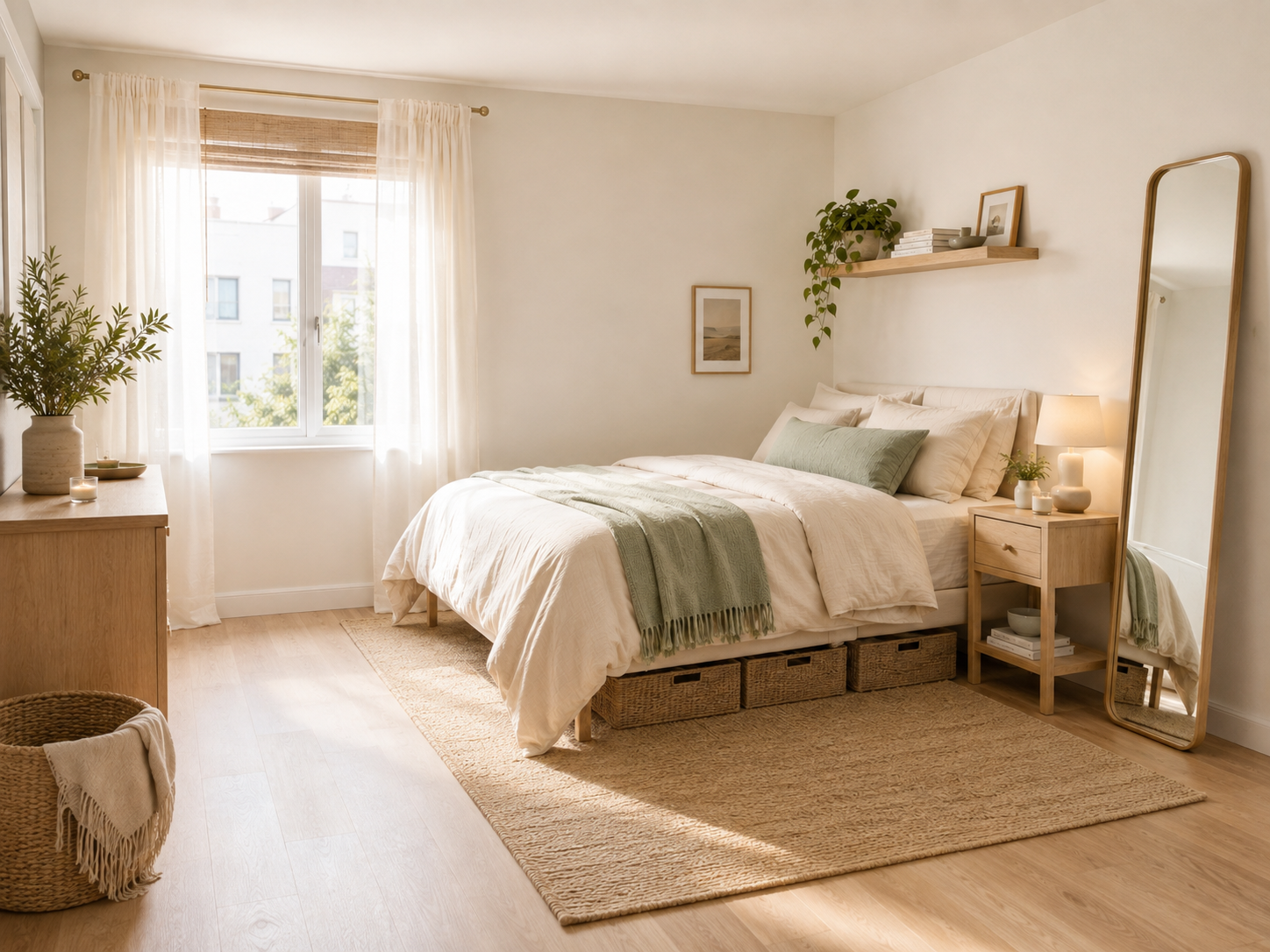
21 Small Bedroom Ideas for a More Open, Comfortable Room
A small bedroom does not need to look empty or stay entirely white. It needs a clear route, furniture that supports sleep and dressing, and a few choices that stop the room feeling visually crowded. Those changes can make it feel more comfortable without pretending they add floor area.
Look at the room from its doorway and from the bed. What interrupts the view: a chest beside the door, curtains covering most of the glass, or several small objects on every surface? Choose the strongest obstruction first. Changing everything at once can hide which adjustment actually helped.
These ideas concern visual openness and comfort. Our bedroom storage guide covers where belongings go, while the layout guide compares furniture positions.
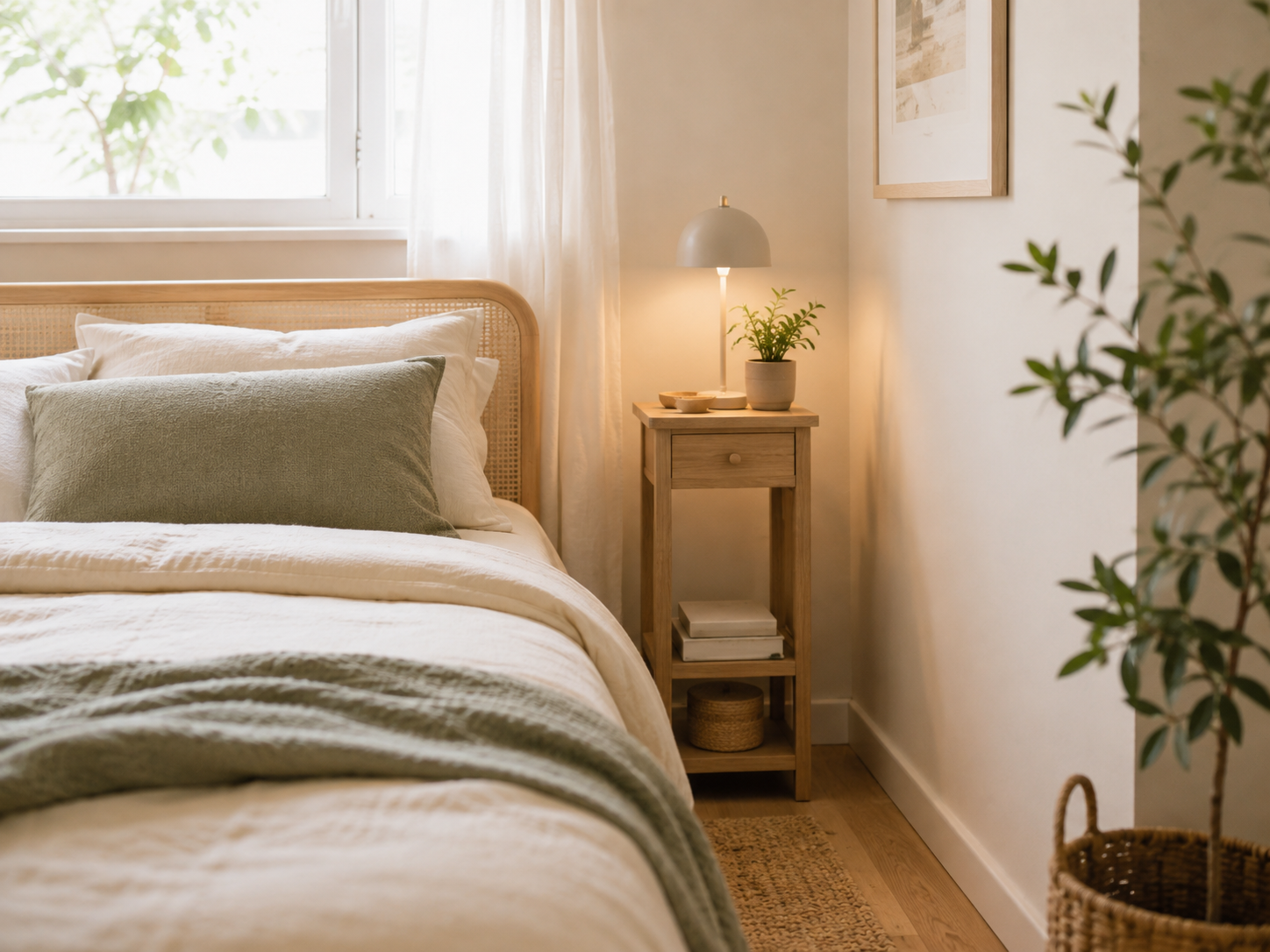
Test lighter wall colors in the room's real light
Compare large samples beside the flooring, bedding and largest furniture piece. Look in daylight and with the lamps you normally use. A pale color can appear gray or stark in a dim corner, while a warmer cream or muted peach may feel gentler.
Choose a color because you like its appearance in that room, not because every small bedroom supposedly needs white. Keep the existing ceiling and trim in the comparison. A related palette can feel connected without painting every surface the same shade.
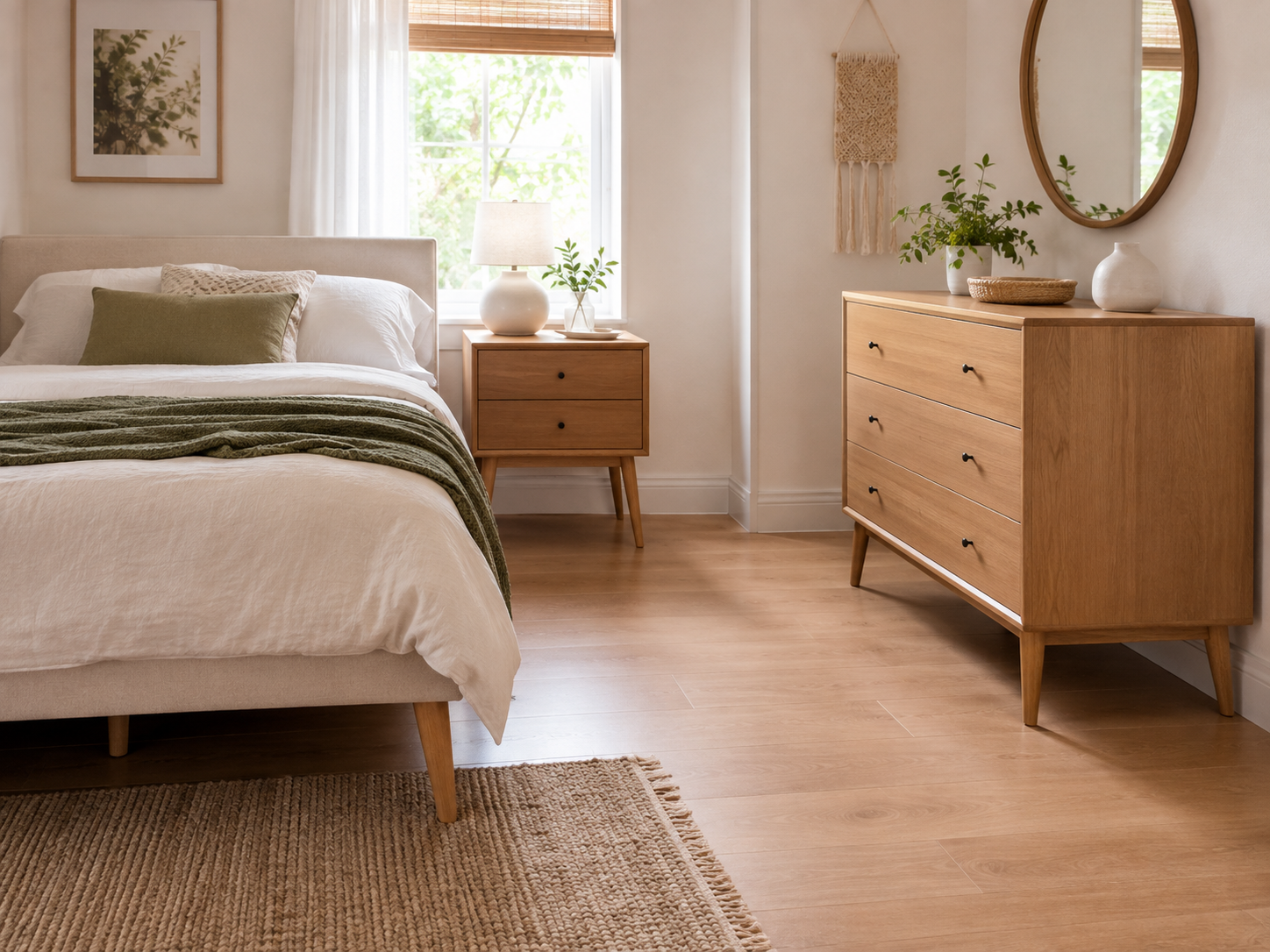
Use visible legs where they improve the sightline
A raised bedside table or chair lets you see some floor beyond its front edge. That can make a tight arrangement look lighter, but it does not reduce the furniture's footprint. Compare its full depth with the alternative before buying.
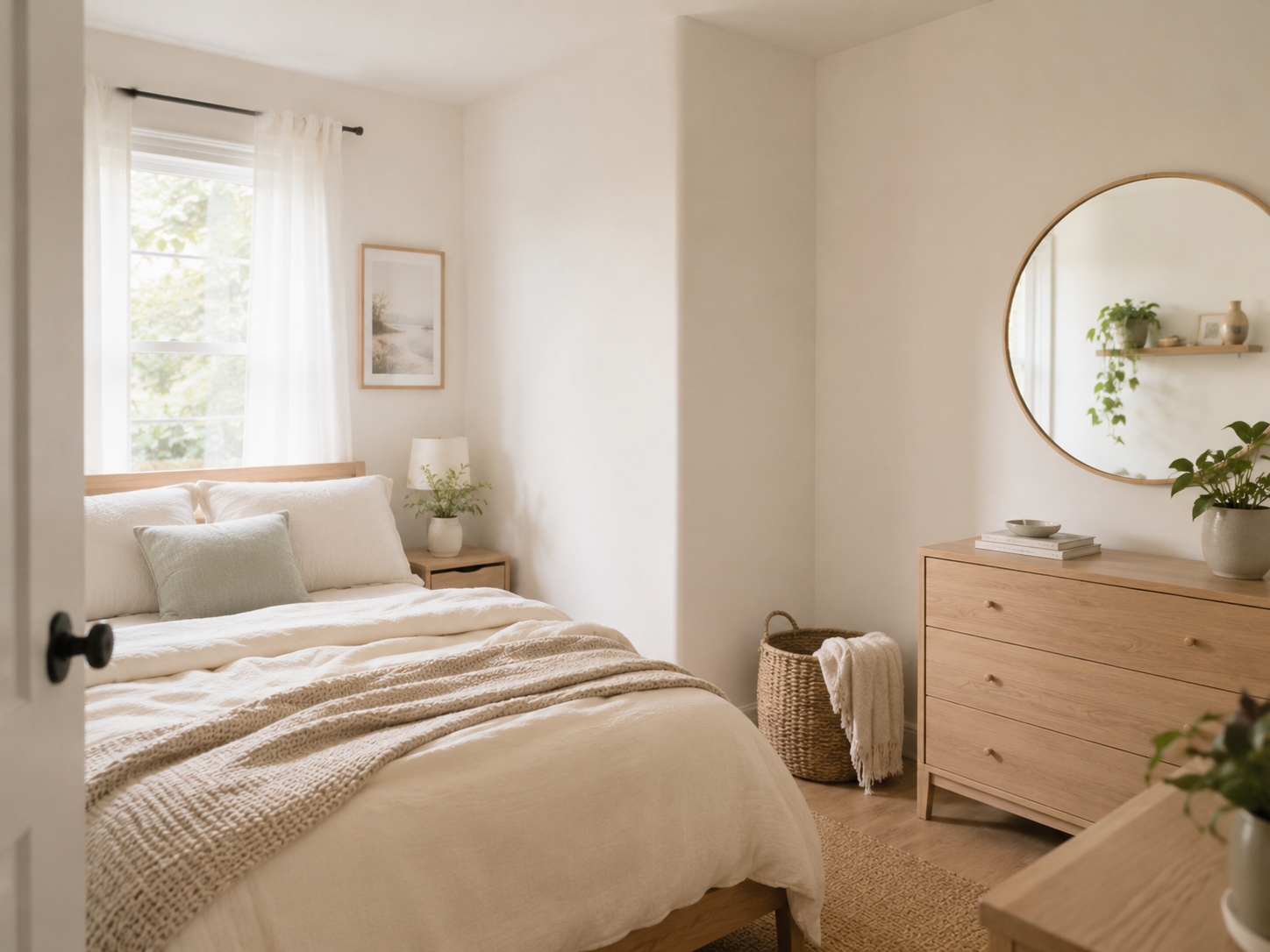
Leave the revealed space reasonably clear so it does not become a display of cables and boxes. You need not replace a useful solid-front dresser just to expose more floor. One lighter-looking piece near the doorway can be enough to improve the first impression.
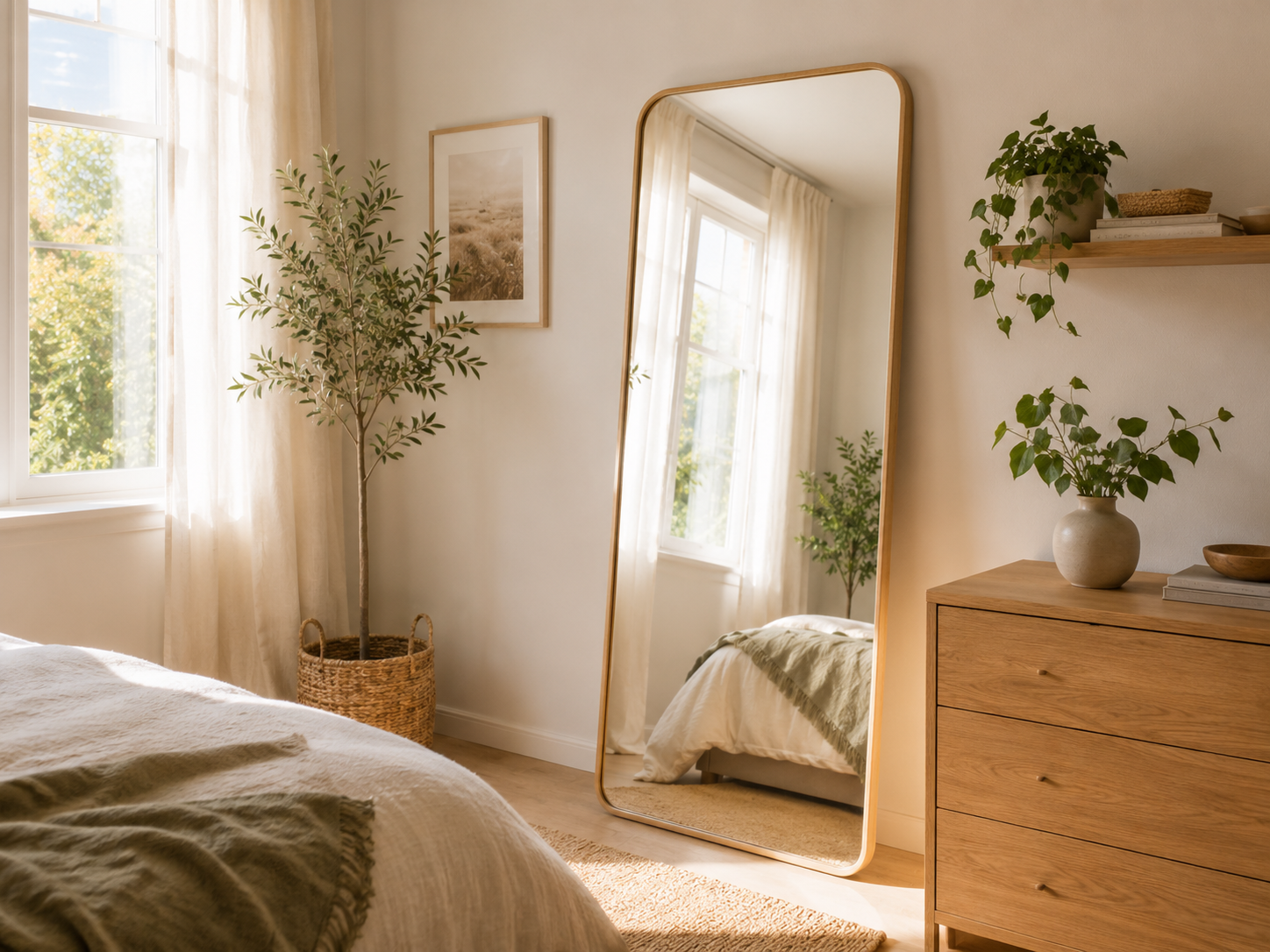
Place a mirror for a worthwhile reflection
Look at the proposed reflection from the positions you actually use: entering, sitting on the bed and dressing. A view that looks open from the doorway can reflect a crowded wardrobe top from the pillow. Check daylight and evening glare too. Choose the reflection you enjoy most; reflecting the window is not a requirement.
Make a frame-sized paper outline to compare positions before buying or moving a heavy mirror. This checks the visible footprint, not the fixing. The mirror still needs appropriate support or restraint according to its instructions and the actual wall or furniture.
A mirror changes the view rather than the room's floor area. If the only available position is behind a moving door or relies on an uncertain lean, keep an existing artwork or leave that wall open. It is reasonable for a small bedroom to have no additional mirror.
Concentrate vertical storage on one useful wall
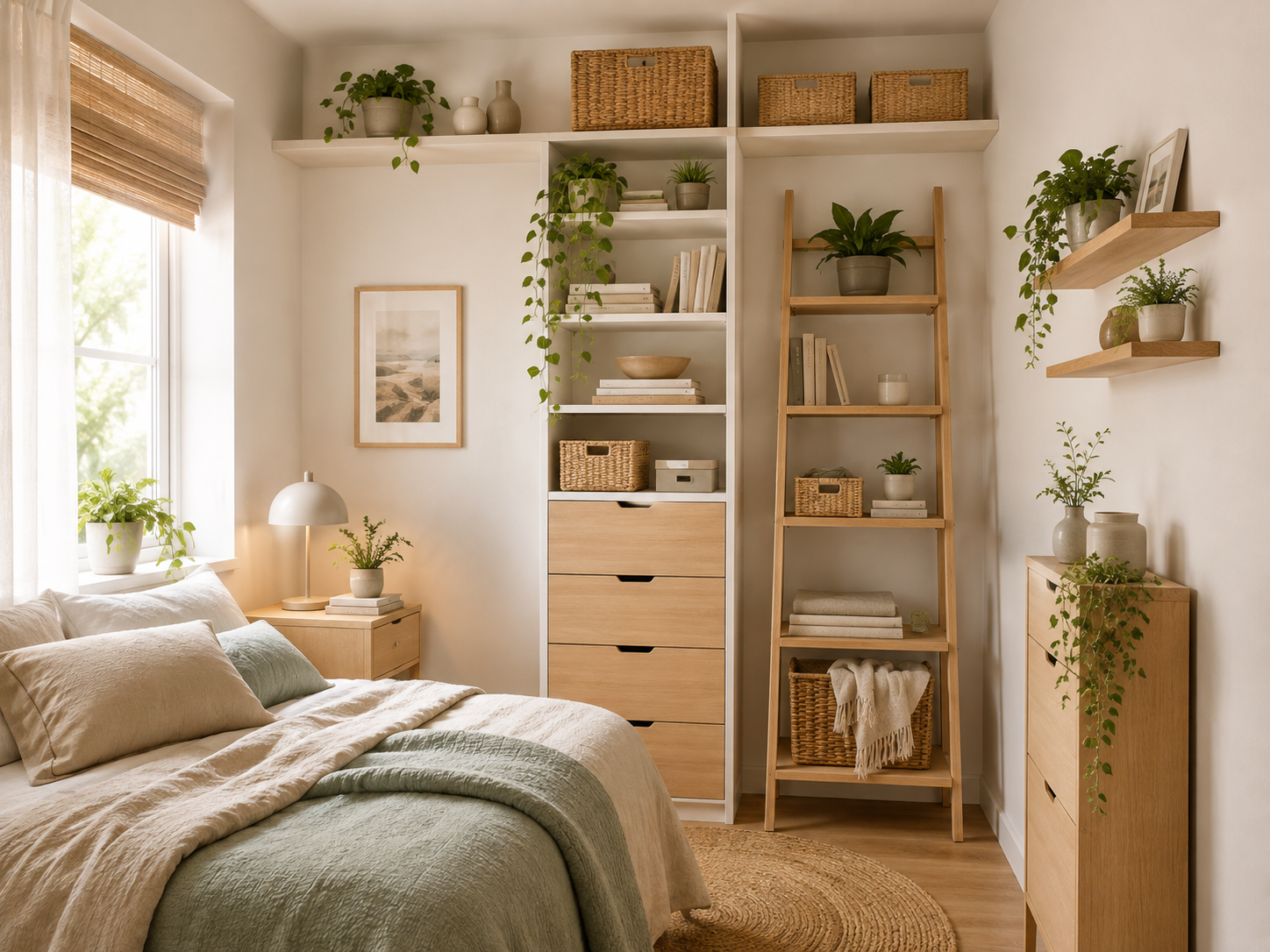
One well-positioned tall unit can leave the rest of a room less fragmented than several low pieces. Check the door opening, approach space and shelf reach. A narrow unit that is too deep may project into the room more than the dresser it replaces.
Keep heavy belongings low and follow anti-tip instructions. The CPSC's furniture tip-over guidance is a useful starting point. Decide which existing item the unit will replace; adding height everywhere can make a small room feel busier.
Size the nightstand to the bedside routine
Identify the minimum useful top: perhaps a lamp, glasses and a water glass. Check that they sit securely without balanced edges or trailing cords. A narrow drawer can contain the smaller items that otherwise spread across the surface.
Consider comfortable reach from the mattress and the route beside the bed. A wall shelf is not automatically better if it needs unsuitable fixing or projects into the same route. Keep the piece that works, and remove the bedside objects that do not need to live there.
Use under-bed space without exposing a row of clutter
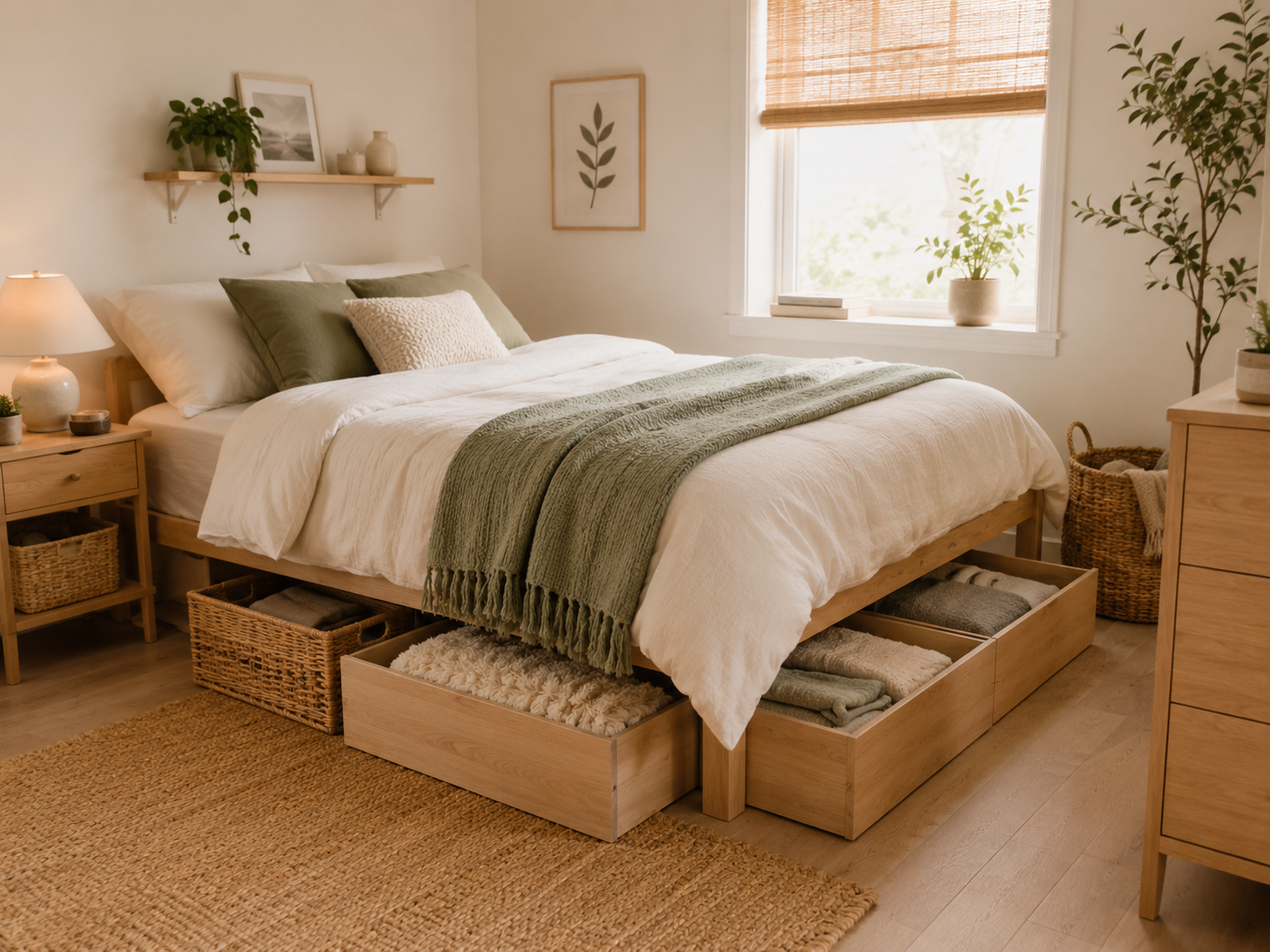
Choose containers that can be retrieved from the actual open side, accounting for supports and nearby furniture. Keep contents appropriate to the location and follow care instructions for stored textiles. Store things fully dry.
If exposed storage creates a busy view, a small number of coordinated containers may help. Do not add fabric around the bed in a way that interferes with ventilation or heating. A more open-looking bed is useful only when it remains easy to clean and the storage does not block ordinary access.
Keep the main walking strip visibly clear
Follow the route from the door to the bed, wardrobe and window. Remove objects that make you sidestep, including baskets that have gradually become permanent. Check the route with drawers and doors in ordinary use, not only when everything is closed.
This does not require an empty floor everywhere. A chair can earn its place if you actually sit there and can move past it comfortably. Prioritize a continuous, usable route over scattered patches of empty floor around furniture that is hard to approach.
Make a floating shelf earn its projection
Test a paper outline on the proposed wall and consider the view from both ends of the room. A shelf over a desk can consolidate useful objects; a row of shallow shelves on every wall may simply create more display surfaces to maintain.
Choose suitable support for the load and wall, with rental permission where needed. Do not treat removable adhesive as a general shelf-fixing method. If the shelf would hold only objects moved from another already useful surface, it may not improve the room.
Repeat colors in different useful materials
Start with an existing piece you like, such as patterned bedding or a rug. Choose two or three colors from it and repeat them in functional items. Deep blue in a duvet and a lamp base can connect a room without making every object match.
Vary the scale of the color: one large calm surface, one medium accent and a small detail. This is a styling method, not a fixed rule. A colorful bedroom can feel coherent when the colors relate and the important routes stay clear.
Compare the bed frame, not only the mattress
Compare the outside dimensions of complete bed frames for the same mattress. An upholstered headboard and a projecting footboard can add different amounts in different directions. A listing's mattress size is not the outline you will move around.
In a hypothetical comparison, a 140 × 200 cm mattress sits in a frame measuring 146 × 210 cm. The frame is 6 cm wider and 10 cm longer than the mattress, so mark 146 × 210 cm when testing the position. Those differences are not necessarily split equally between the two sides or ends; use the manufacturer's actual drawing.
Include bedding, wardrobe movement and any storage opening in the check. The figures are an illustration, not a recommended bed size or access clearance. If the current bed is comfortable, try removing an unnecessary neighboring piece before replacing it.
Hang curtains around the window's actual use
Plan the rail and curtain stack so fabric can move away from the glass when open. A higher rail can emphasize wall height, but its support must be suitable and the curtains must avoid heaters, vents and the opening path.
Check the curtain length in the real position instead of ordering from a room-height guess. In a rental, use an existing rail or a compatible approved system. Our no-drill curtain guide explains the limits of different options.
Recover daylight before adding reflective decor
Open the normal curtains and look for objects blocking the window: a tall cabinet, a large plant or a collection on the sill. Move an avoidable obstruction and compare the room before buying new lamps or mirrors.
Keep privacy and the ability to darken the room for sleep. You may need an existing blind plus curtains rather than one sheer layer. Keep controls reachable, and preserve the window's required opening and escape function. Better daylight should support the room's daily use.
Choose multifunctional furniture with compatible jobs
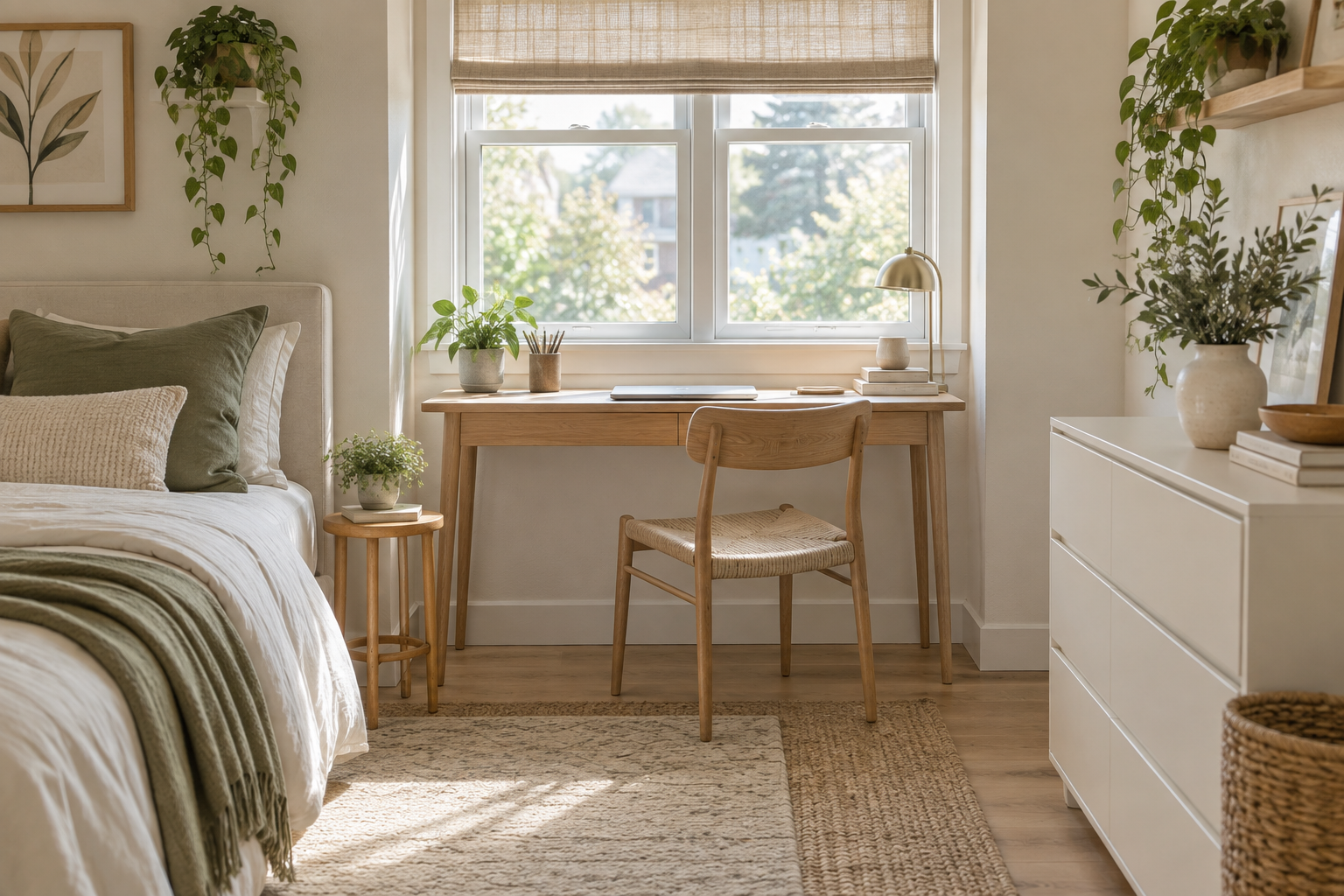
A desk can serve as a dressing surface if its height, light and storage work for both tasks. It becomes less useful if work equipment must be piled onto the bed every evening. List what must stay set up before combining uses.
Consider the complete daily transition: where does the chair go, where are cosmetics stored, and can the work surface be cleared easily? One piece doing two compatible jobs can simplify a small room. One piece doing two conflicting jobs can create permanent clutter.
Reduce visual clutter by grouping, not hiding everything
Start with the surface most visible from the doorway. Return unrelated belongings, then group the items that truly belong there. A shallow tray can contain daily small objects, provided it does not become a second layer of miscellaneous storage.
Leave space around the group so each item is easy to lift and return. You can keep personal photographs, colorful objects and favorite books. The aim is a readable arrangement, rather than stripping the room of the things that make it yours.
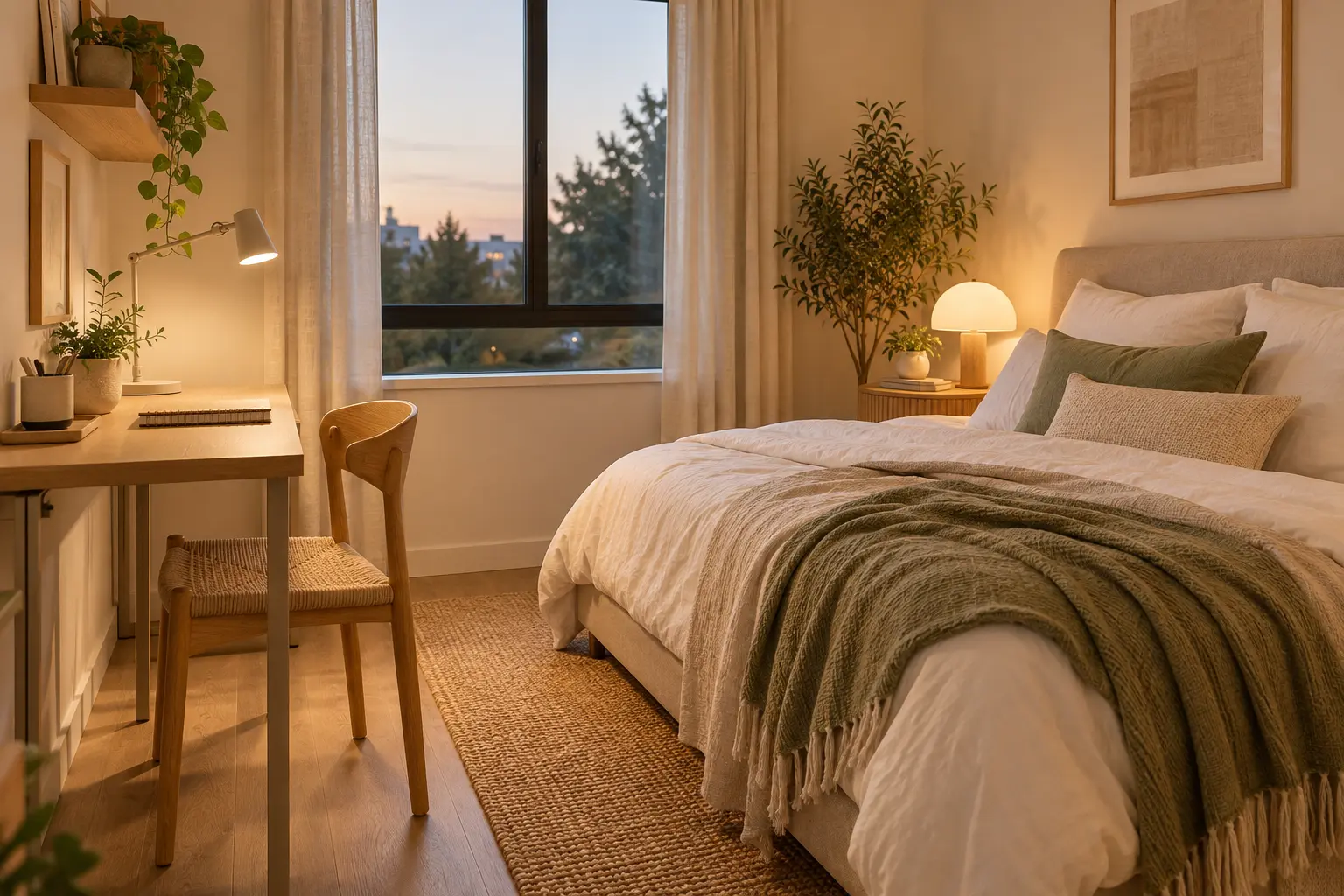
Choose bedside lighting around support and reach
A wall light may free a tabletop, but it adds fixing, cable and switching decisions. Check the position while seated in bed and route any cable so it cannot catch. Use a suitable installation method rather than improvising a support.
A compact table lamp may be simpler if the surface already exists. For a rented bedroom, compare options in our bedside lighting guide. The most useful light is one you can operate comfortably without making the bedside area awkward.
Let one feature lead the room
Choose the main visual emphasis: colorful bedding, an artwork or a painted wall. Keep neighboring details quieter so the feature can be recognized. If a patterned duvet already draws the eye, another strong pattern on every nearby surface may compete with it.
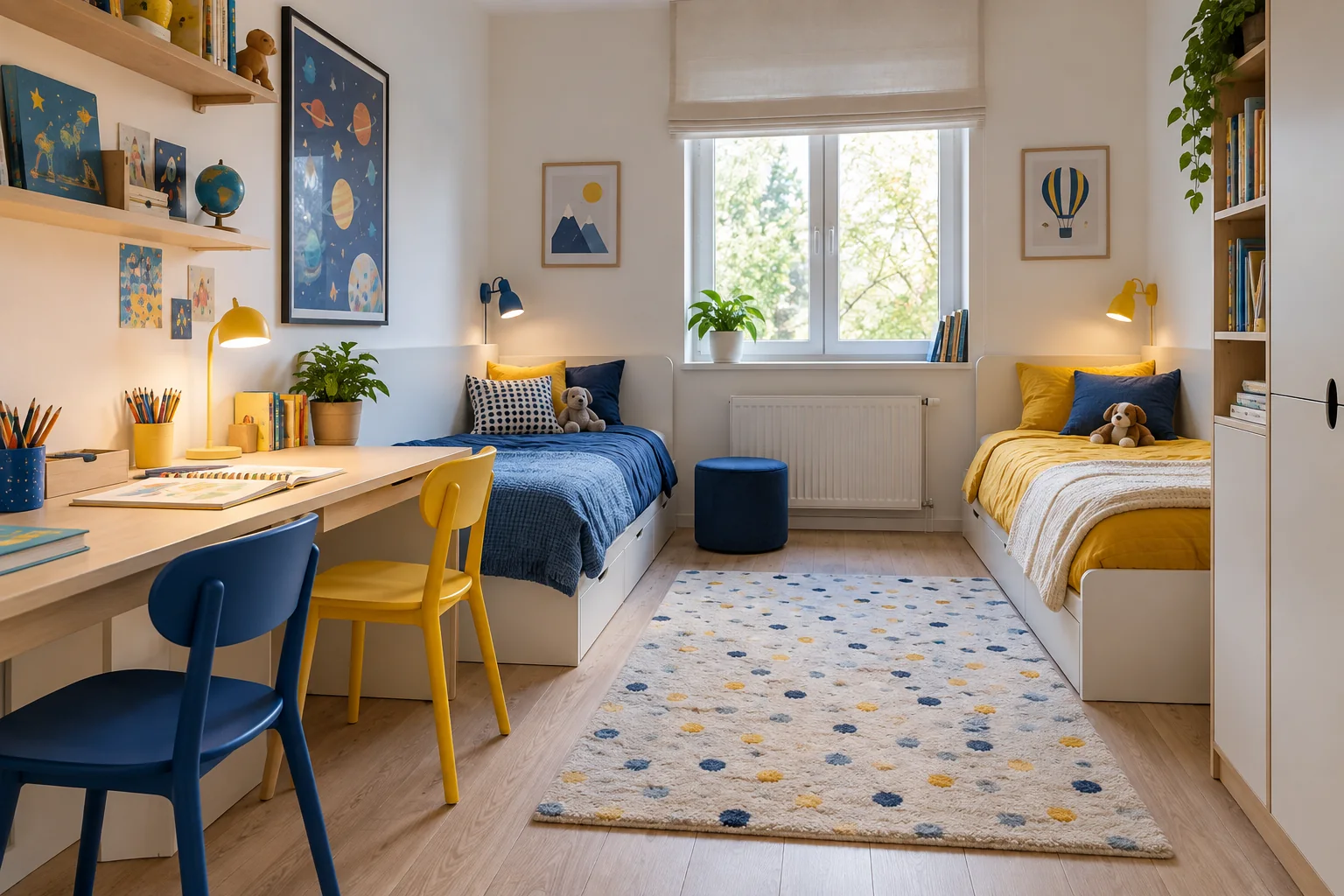
The feature need not be expensive or permanent. A cobalt duvet against warm white walls can create a joyful room; an olive wall with terracotta bedding can feel enveloping. Use the combination that fits your light and preferences rather than a universal small-room palette.
Use baskets to contain a real loose category
A basket can hide a blanket or hold worn-but-wearable clothing, but it occupies floor space and can grow into a pile. Put it where its task occurs and choose a capacity that can be lifted or carried comfortably.
If small items collect beside the bed, a drawer may work better than a floor basket. If the basket has no defined contents, skip it. Closed storage makes a room look calmer only when its contents remain easy to find and return.
Compare furniture depth as carefully as width
A dresser can look narrow from the front while projecting far into the room. Note its outside depth, handles and open drawers. A slightly wider, shallower alternative may leave a better route, depending on the actual wall.
Make a simple scaled sketch, then test the outline on the floor with removable markers appropriate to the finish. Include the wardrobe doors and any chair in use. Use the sketch to compare two options, rather than assuming every small bedroom needs miniature furniture.
Leave the headboard wall quiet when storage is unnecessary
The space above the bed does not have to be filled. An uncluttered wall can give a small room a visual resting point, especially when the bed already has patterned textiles or a substantial headboard.
If you want decoration, consider a properly secured flat piece instead of overhead shelves and heavy objects. Keep installed items suitable for their position and follow fixing instructions. When the room needs storage, first examine the closet, an accessible side wall and under-bed options before adding weight above sleepers.
Choose greenery for the actual light and care routine
One appropriately sized plant can add color, but check whether the room's light and temperature suit it. Use a stable position and protect the furniture from water. Consider toxicity if children or pets can reach the plant.
Do not occupy the only bedside surface or narrow a walking route just to add greenery. A botanical print or green textile can provide a similar color note where a living plant would be difficult to maintain. The room's function comes first.
Keep the changes that improve ordinary use
After a few days, check the same doorway view and daily routine. Can the wardrobe open, is the bedside reachable, and does laundry have a home? Keep the changes that resolve those problems before buying the next accessory.
If a change only improves a photograph after everyday belongings have been moved out of sight, rethink it. A bedroom should remain workable when occupied. The most convincing sense of space comes from a room that is comfortable to use, with a few deliberate visual choices around that routine.
Will dark colors make the bedroom feel too small?
Not necessarily. Light, contrast, furniture and personal preference all affect the result. Test a large sample and compare daytime and evening views. Our dark and cozy bedroom guide shows ways to use deeper colors deliberately.
What should change first on a small budget?
Clear the main route, open the window covering fully where appropriate, and simplify one busy surface. Those changes help reveal whether paint, lighting or furniture would address a remaining problem.
A beautiful small space is not about having more. It is about making what you have work better. — Spacelya