
Sofa Bed or Murphy Bed for a Small Multipurpose Room?
A closed sofa bed and a closed wall bed can both look compact. The more useful comparison is the room when each is prepared for sleep, and the room during the days between visits. Include installation, operation and storage rather than choosing from the folded outline alone.
Use the specific products' instructions, verify current recall information and obtain the appropriate qualified installation. Wall-bed attachment and mechanisms require particular care; this is not an installation tutorial.
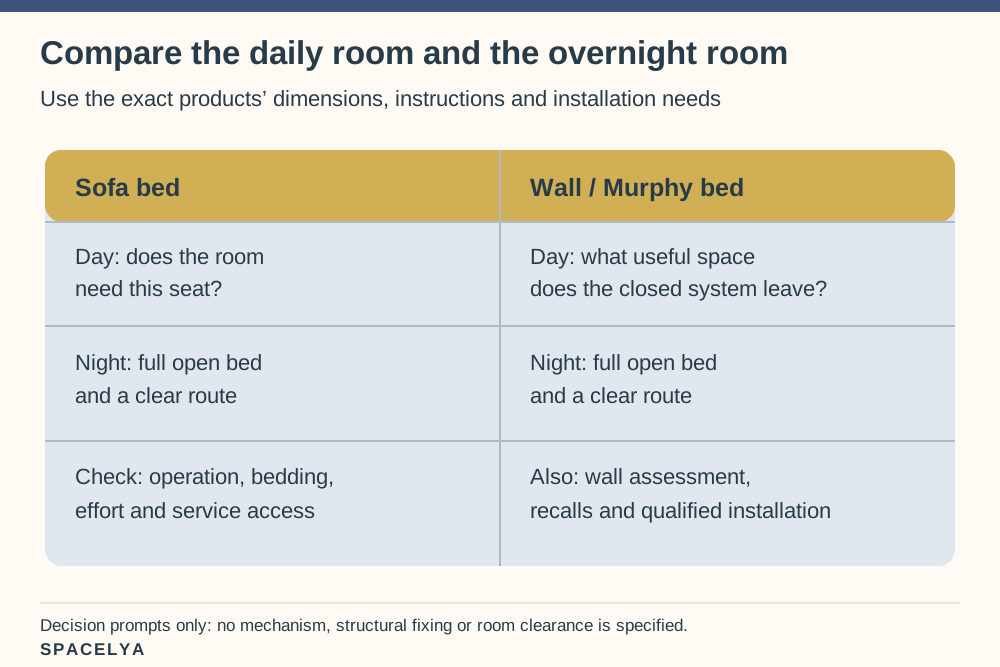
Map the fully open sleeping footprint
Use the complete operating dimensions and support requirements from the manufacturer. Include legs, panels and the path of any moving parts. Mark a clear route to the sleeping position with other furniture in place.
Our desk-location guide can help assess equipment that shares the room. Do not plan to move an essential chair or table into a required exit whenever the guest bed opens.
Make two separate drawings for each candidate: the daily room and the complete overnight setup. Use the chosen product's actual dimensions, not a generic bed-size label. Show where the desk chair, coffee table and visitor's bag go. If any item has to live in the hallway while the bed is open, confirm that its proposed position is a real usable storage place and leaves necessary routes clear.
Compare daily seating needs
A sofa bed may suit a room that genuinely needs a sofa every day. Assess its actual seated comfort as well as the sleeping arrangement. A wall bed may leave a different kind of floor area available, depending on the system.
Keep the comparison tied to daily use. A decorative sofa occupying valuable workspace is not automatically useful because it can occasionally become a bed. Navy and ochre textiles can coordinate either suitable choice afterward.
A daily living room may benefit from a sofa that also hosts an occasional guest. A room used for floor-based hobbies may value the space a suitable wall-bed system releases when closed. Compare the frequency of those real tasks. The smaller closed outline is not a useful saving if it removes the comfortable seat used every evening or blocks the desk during the working day.
Check a professionally installed wall bed position
Have the actual wall, structure, fixings and system requirements assessed by a qualified installer. Check the lease or other permissions where relevant before committing to that installation. A wall bed should not be treated as ordinary freestanding storage or moved into position as a trial piece of furniture.
The CPSC recall of certain Bestar wall beds describes beds detaching from the wall and falling. The notice applies to identified products, so check the model and current official recall information rather than judging a used bed from its appearance. If a product is recalled, follow its current notice; a decorating plan is not approval to keep using it.
Follow the chosen manufacturer's installation, operation and maintenance instructions with qualified help. Do not copy a fixing pattern from another model or improvise an attachment. Keep required inspections and access possible after the room is furnished.
Include bedding and mattress storage
Check what the product permits to remain in place when closed. Mattress thickness, bedding quantity and accessories can affect a mechanism's intended operation. Keep removable bedding in a suitable dry position according to its care needs.
For a different bed decision, our storage bed comparison examines everyday bedroom storage. Do not assume a guest-bed mechanism also provides spare storage simply because the closed form resembles a cabinet.
List what must move before the bed closes: pillows, a thicker duvet or other items the instructions do not allow inside. Give them a suitable dry home with enough room for the complete guest set. Include the mattress required by the mechanism when comparing products; choosing a different thickness later can change the suitability of the whole setup.
Check effort and service access
Try the operation where possible, following the product guidance. Consider who will prepare the bed and whether the task is manageable for them. Include space for maintenance and access to the relevant parts.
Moving mechanisms should remain clear of unsuitable objects and household access as instructed. A product chosen for occasional use still needs to operate correctly on the occasions it is used.
Compare the room between visits
Sketch the ordinary work, hobby or living arrangement with each option closed. Notice which daily functions improve and which become crowded. Keep the transition steps realistic rather than relying on storing several pieces elsewhere without a plan.
Choose the system that serves both the daily room and a complete overnight setup within verified constraints. More concealed hardware is not automatically more useful; the best choice depends on what the room needs most often.
Write the changeover in ordinary actions: clear the table, park the chair, prepare the bed and put the guest's bag in its reserved position. Then reverse it. If the sequence is unrealistic for the person who will do it, change the furniture choice or the room's jobs. Our guest-room and home-office guide explores that daily transition in more detail.
Is a Murphy bed always the smaller option?
No. The cabinet depth, opening footprint, installation and clearances vary by model. Compare complete manufacturer dimensions and room use. A closed wall outline alone does not show the space needed when the bed is occupied.
About the illustrations
The reused AI-generated SPACELYA cover illustrates the space occupied by ordinary daily seating; it does not identify the pictured sofa as convertible. The original comparison graphic is a decision worksheet, not a mechanism drawing, structural installation plan or evidence of tested room clearances.
A beautiful small space is not about having more. It is about making what you have work better. — Spacelya