12 Dark and Cozy Small Bedroom Ideas That Still Feel Open
Dark color can make a small bedroom feel settled and intentional, but the room still has to function in daylight, at bedtime and during the morning rush. The useful goal is not to make every surface dark. It is to decide where depth helps, where contrast is needed and which areas must stay visually clear.
These twelve rooms use navy, olive, burgundy, charcoal, teal and warm brown in different ways. Some rely on paint; others get the mood from bedding, curtains or furniture. Each idea keeps the bed, walking route and storage in view, so the color supports the room instead of becoming another layer of clutter.
Test the room before you commit to a dark palette
Look at the bedroom with the curtains open in the morning, during the dullest part of the day and under the lamps you actually use at night. Note where shadows already collect. A deep color that looks balanced beside the window may become almost black in a recess, so move a large sample around rather than judging one small patch.
Light Reflectance Value, or LRV, indicates how much light a paint reflects. Sherwin-Williams explains LRV in its neutral-color guidance and notes that darker shades generally have lower values. Use that number as comparison information, not a promise about how a color will look in your room. The window direction, artificial light, sheen and nearby materials all change the result.
If you rent, obtain permission before painting and keep the agreed color and repainting terms in writing. You can create most of the palettes below with removable textiles and freestanding furniture instead.
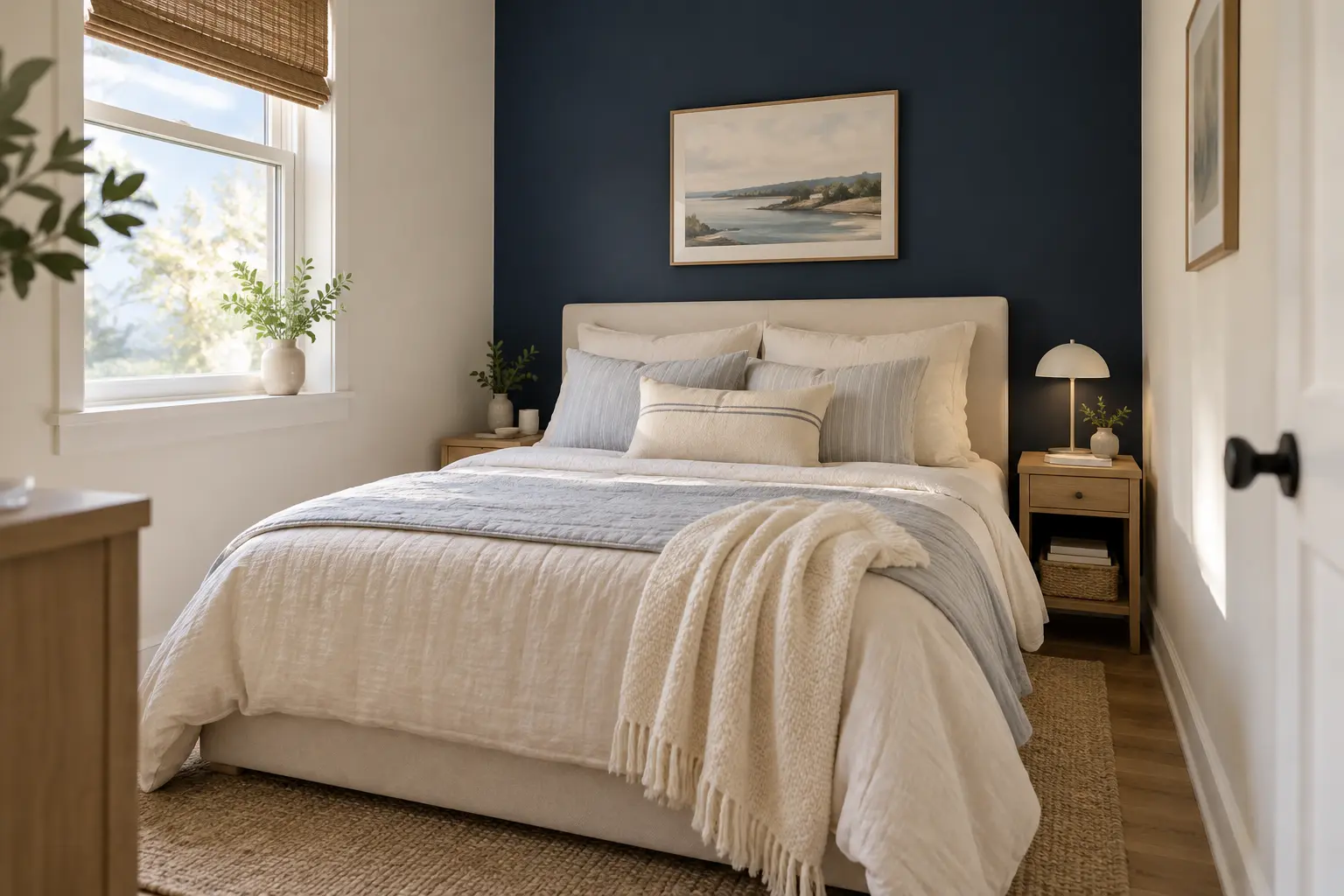
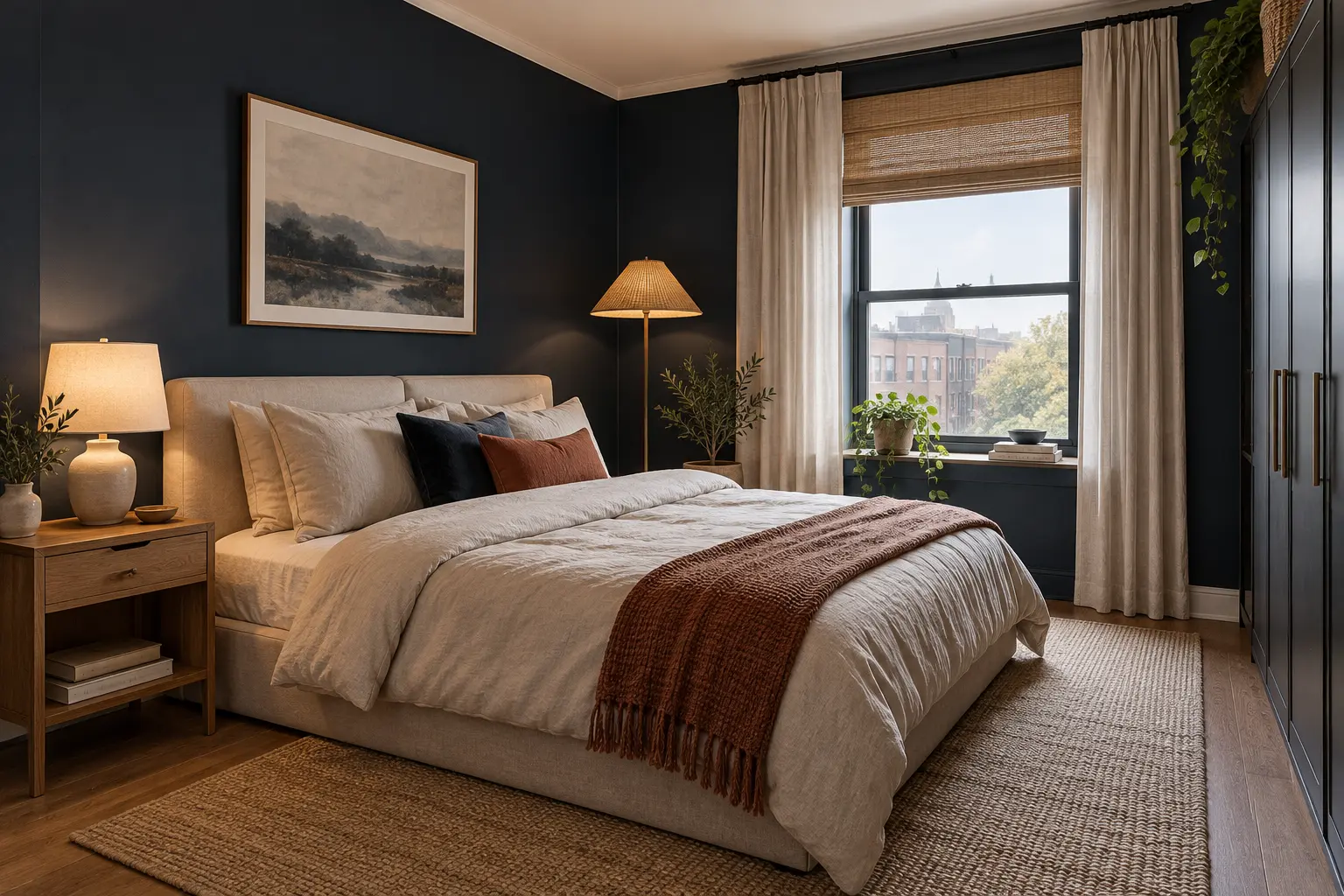
Anchor the bed with navy and keep the bedding light
A navy wall behind the bed gives the room one clear focal point. It works particularly well when the bed already sits on the least interrupted wall, because the dark field can visually collect the headboard, two small lamps and a few simple objects instead of scattering attention around the room.
Keep the largest horizontal surface—the bed—lighter. Ivory, oatmeal or soft gray bedding lifts the middle of the composition, while one navy cushion or narrow throw repeats the wall color. Leave the walkway and window wall free of extra dark furniture. If the room is very dim, test navy on a fabric headboard or large curtain panel before painting the full wall.
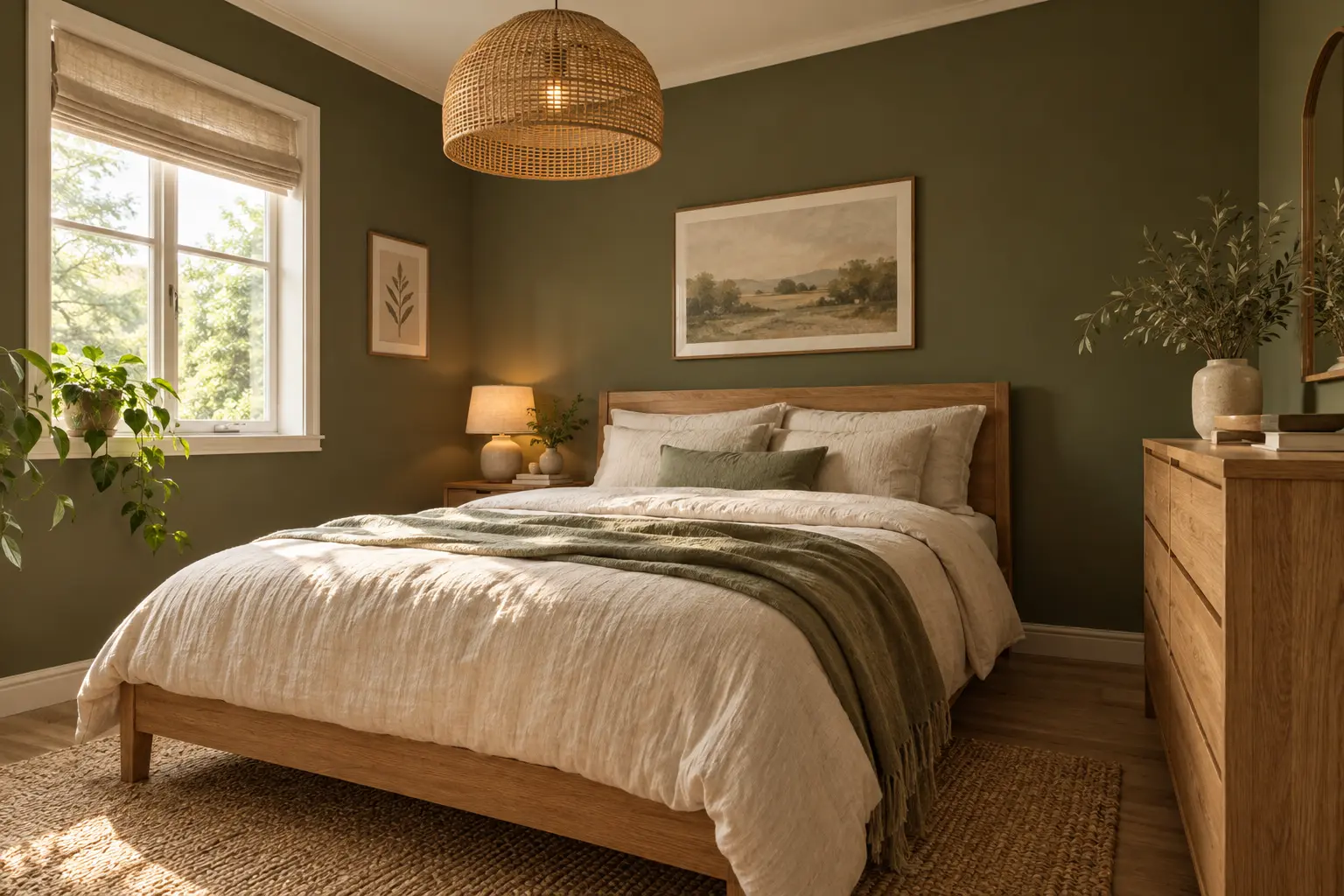
Pair olive walls with warm wood and cream linen
Deep olive feels quieter than a bright green and can cover more than one wall without making the bedroom look like a themed space. The key is to repeat warm, natural materials: an oak headboard, woven shade, cream linen and a small tan rug give the eye lighter points to land on.
Limit the furniture palette. One wood tone used on the bed and a narrow dresser is calmer than several unrelated brown finishes. Keep the top of the dresser mostly clear so the wood reads as a broad warm surface. In a north-facing or already cool room, compare yellow-leaning and gray-leaning olives at different times of day before choosing.
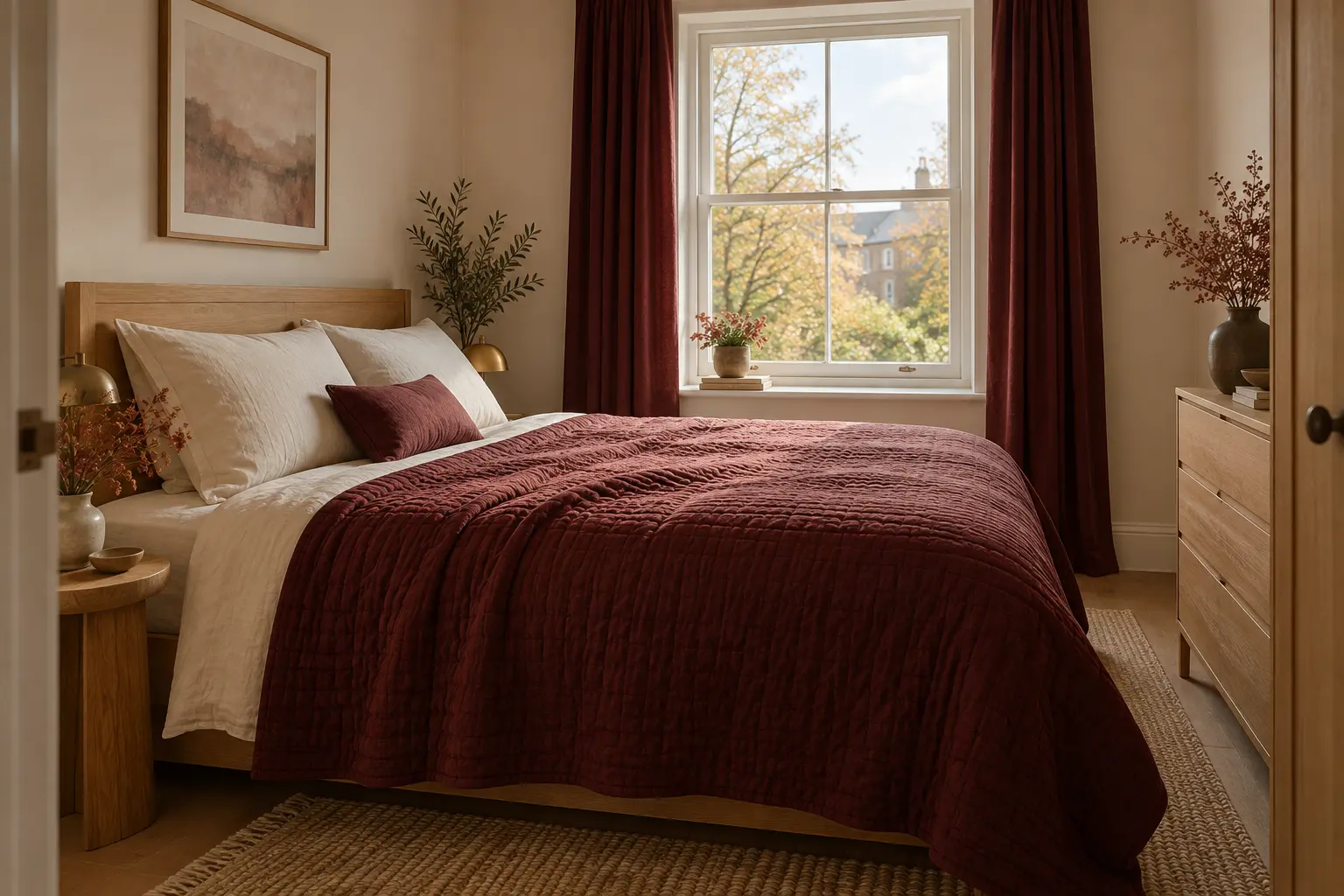
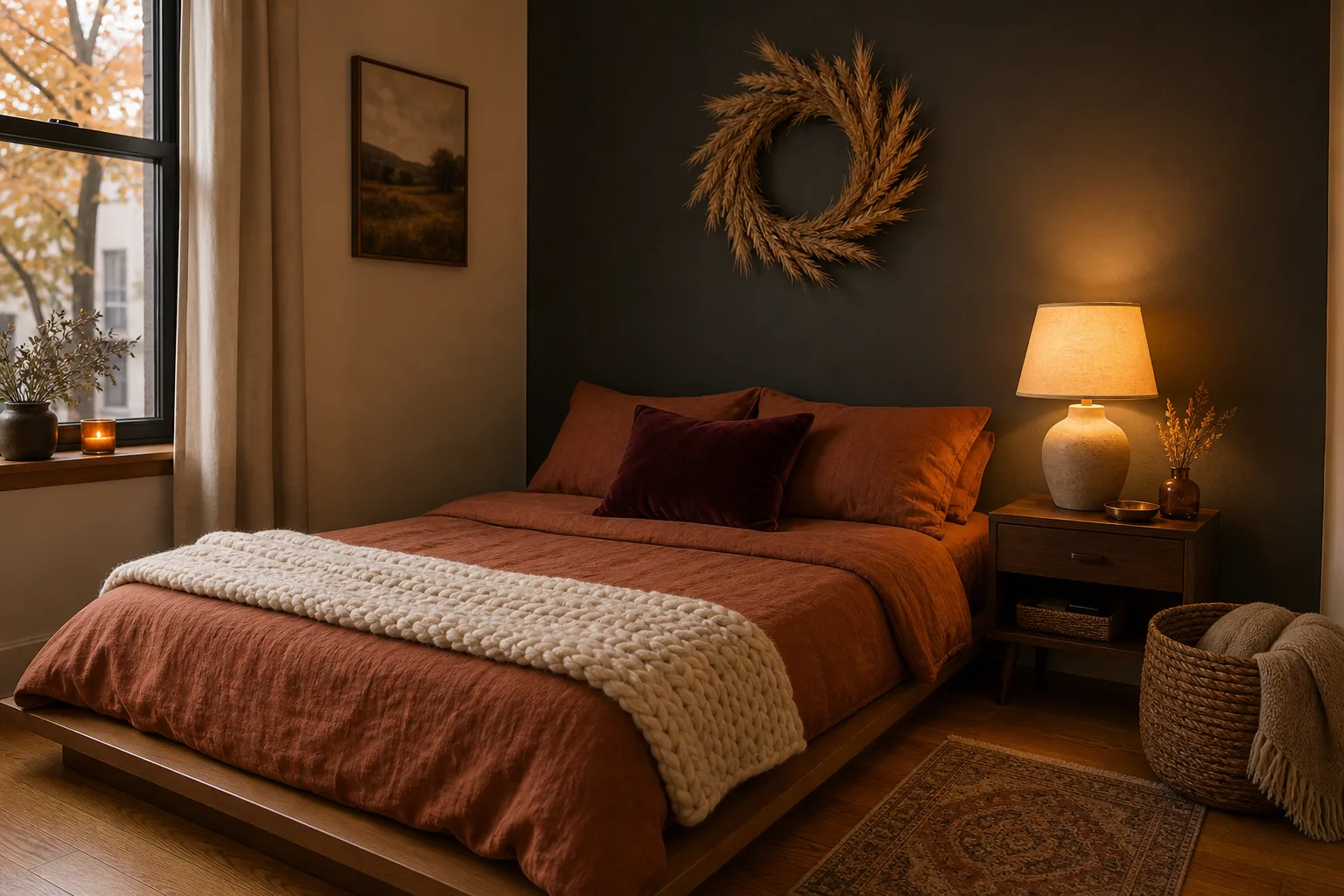
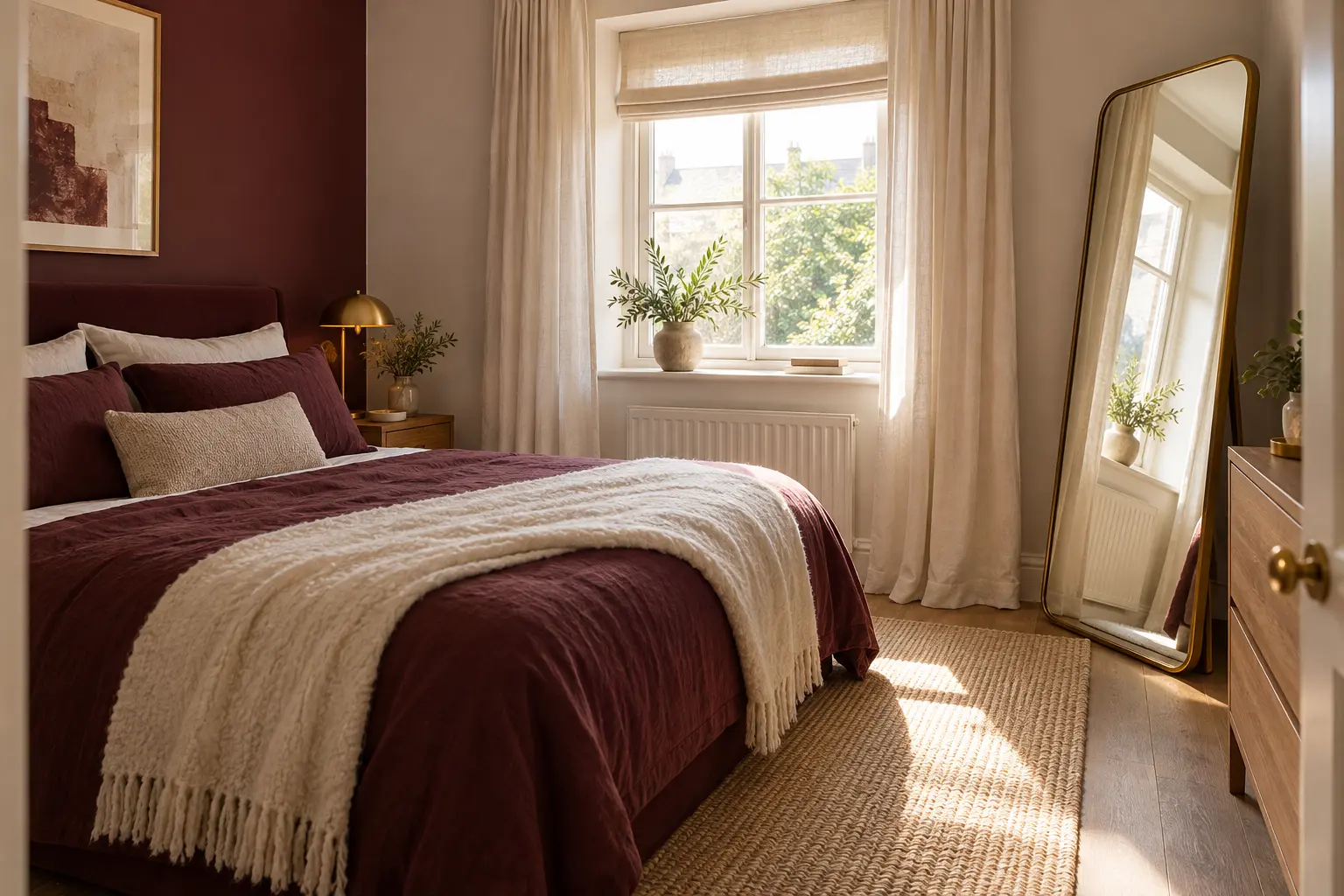
Bring in burgundy through textiles instead of every wall
Burgundy can make a bedroom feel rich without requiring a permanent finish. Start with one substantial textile—a quilt, upholstered headboard or pair of curtains—then add a much smaller repeat in a cushion or bedside object. Cream walls and warm wood keep the result from becoming heavy.
Avoid covering the bed with many small red accessories. A single broad area of muted wine color looks more deliberate and is easier to remove when you want a change. If the curtains are the dark element, pull them fully clear of the glass during the day so they frame the window rather than reducing the opening.
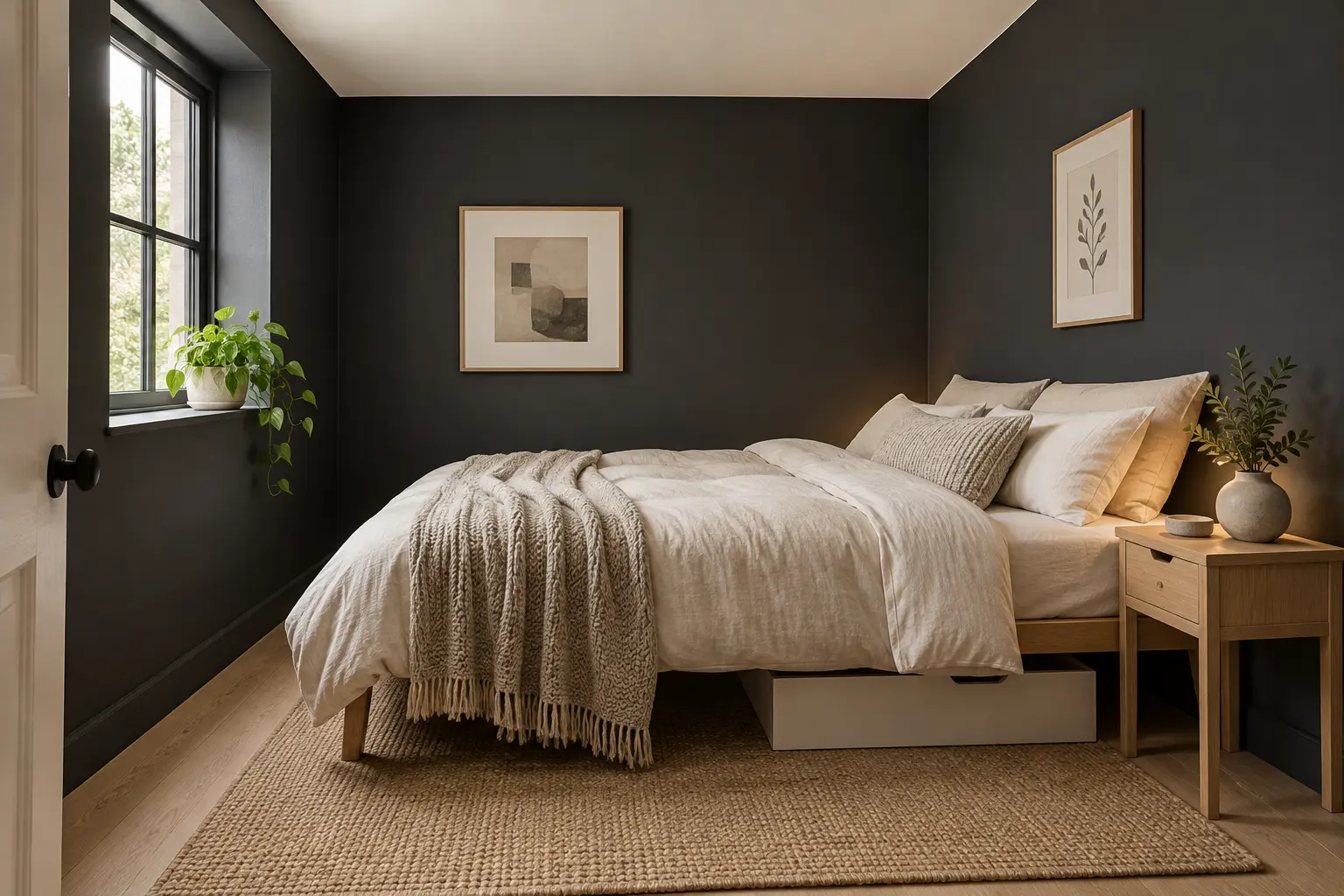
Use charcoal walls with a clearly lighter ceiling
Charcoal can soften the visual edges of a compact room, especially when the walls have awkward corners. Keep the ceiling distinctly lighter and repeat that pale tone in bedding or a small rug. The contrast preserves a visible upper boundary instead of turning the whole room into one dark box.
Choose charcoal carefully: some versions look blue, green or brown once they are beside the floor and curtains. Compare samples next to the existing finishes. A low bed with simple legs keeps more of the wall visible, while a bulky dark headboard can double the visual weight. If you need storage, closed drawers beneath the bed are calmer than several exposed bins.
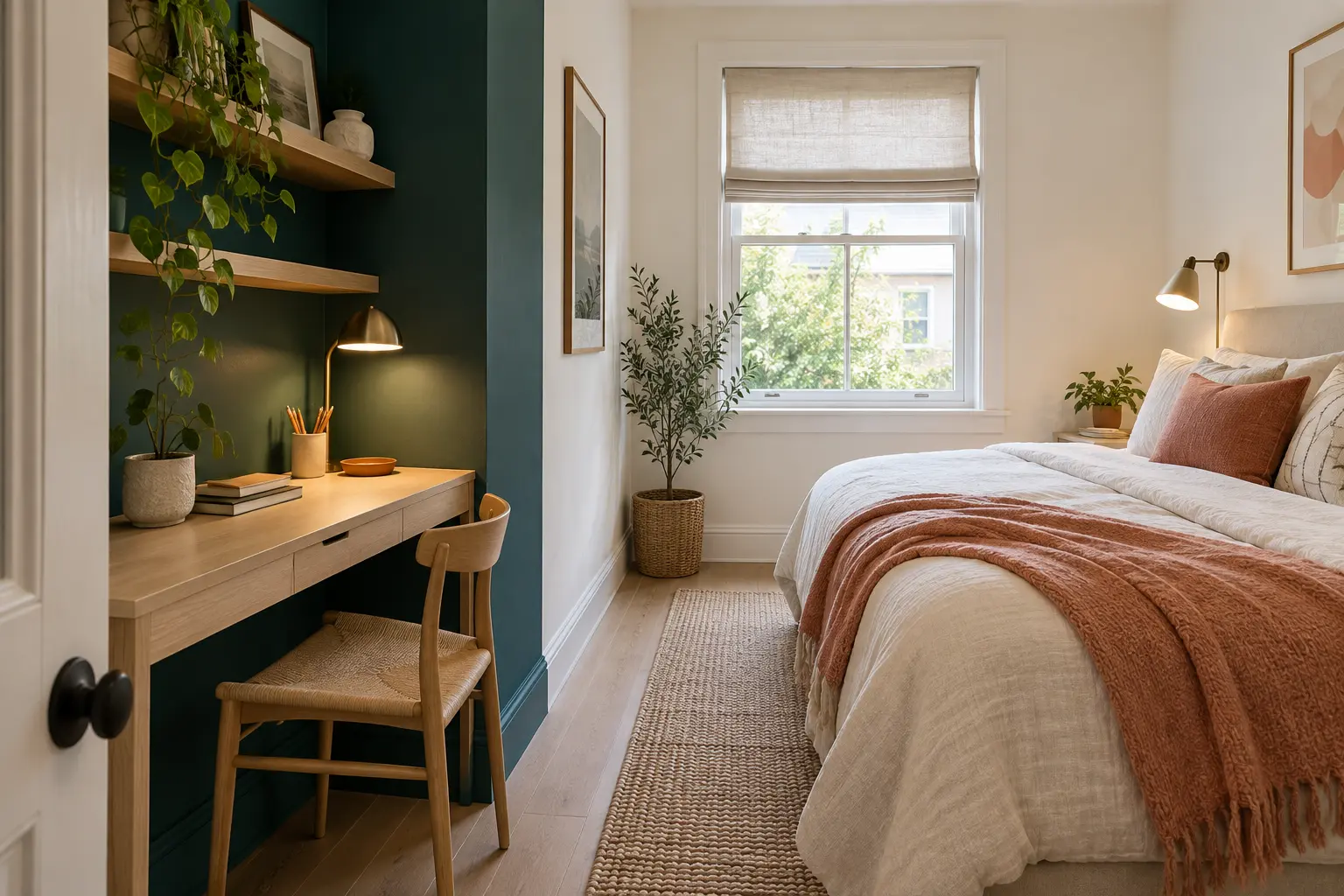
Give one functional zone a deep teal backdrop
A dark palette does not have to follow the bed. Deep teal behind a narrow desk, reading chair or shallow dresser can define a secondary zone without changing the entire room. This is useful when the bedroom also serves as a workspace and you want the functions to feel separate.
Keep the zone compact. Let the teal sit behind one piece of furniture and one good light rather than spreading small teal objects around the room. A pale desktop or light wood shelf creates a crisp working edge. Make sure the chair still tucks in and the setup does not narrow the route from the door to the bed.
Use one dark botanical pattern as the room’s artwork
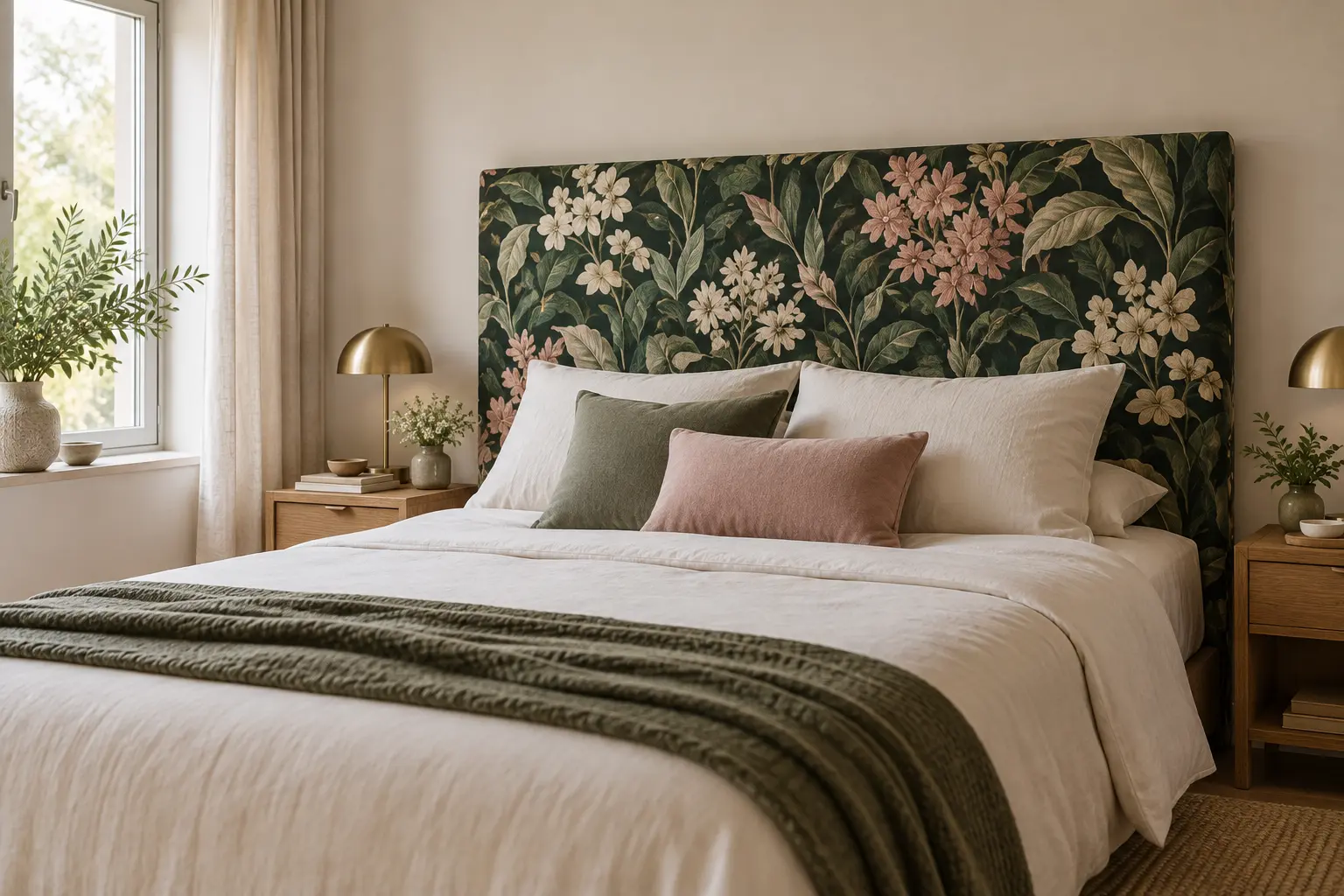
A large-scale botanical print can supply color, depth and a focal point in one move. Use it on a fabric headboard, framed textile or removable panel that is compatible with the surface and tenancy rules. Choose a pattern with visible background space rather than many tiny motifs, which can look busy in a close viewing distance.
Pull only two colors from the print for the rest of the room—for example forest green and dusty pink—then keep the main bedding plain. This gives the pattern room to breathe. Measure the panel against the bed width before ordering; a narrow piece floating above a wide bed may look accidental rather than generous.
Build a warm brown room with texture, not extra objects
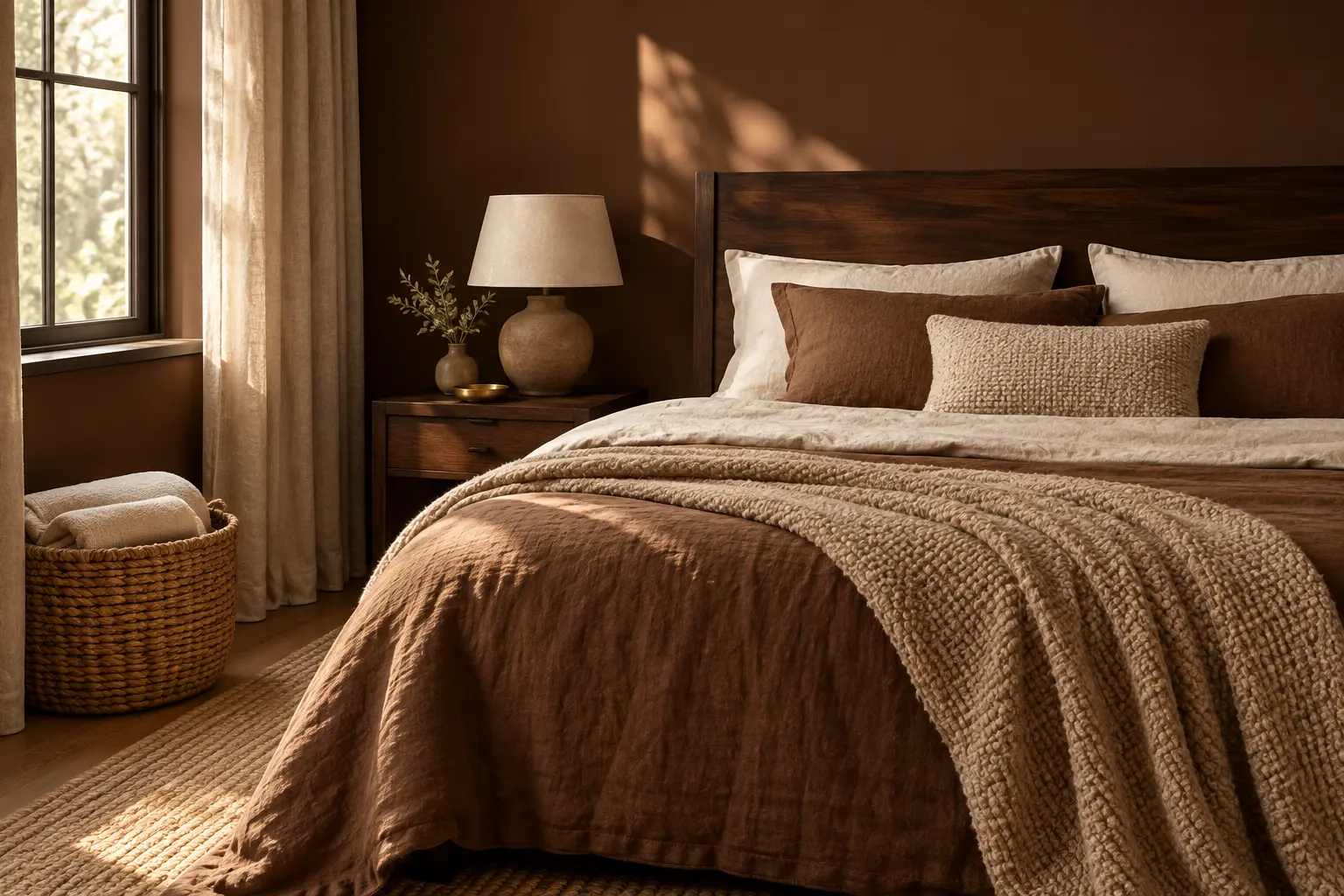
Chocolate, espresso and chestnut can feel cozy when their surfaces are varied. Combine a smooth painted wall or dark wood headboard with nubby linen, a woven basket and a soft wool-like throw. The changing texture stops the palette from reading as a flat block of brown.
Keep the number of decorative pieces low. One basket that actually holds spare bedding is more useful than several small containers on display. Add a light neutral close to the face of the bed—pillows, sheet or coverlet—so the sleeping area remains visually fresh. Brass, clay or muted rust can be a small accent, not another full layer.
Let dark curtains frame the window, not swallow it
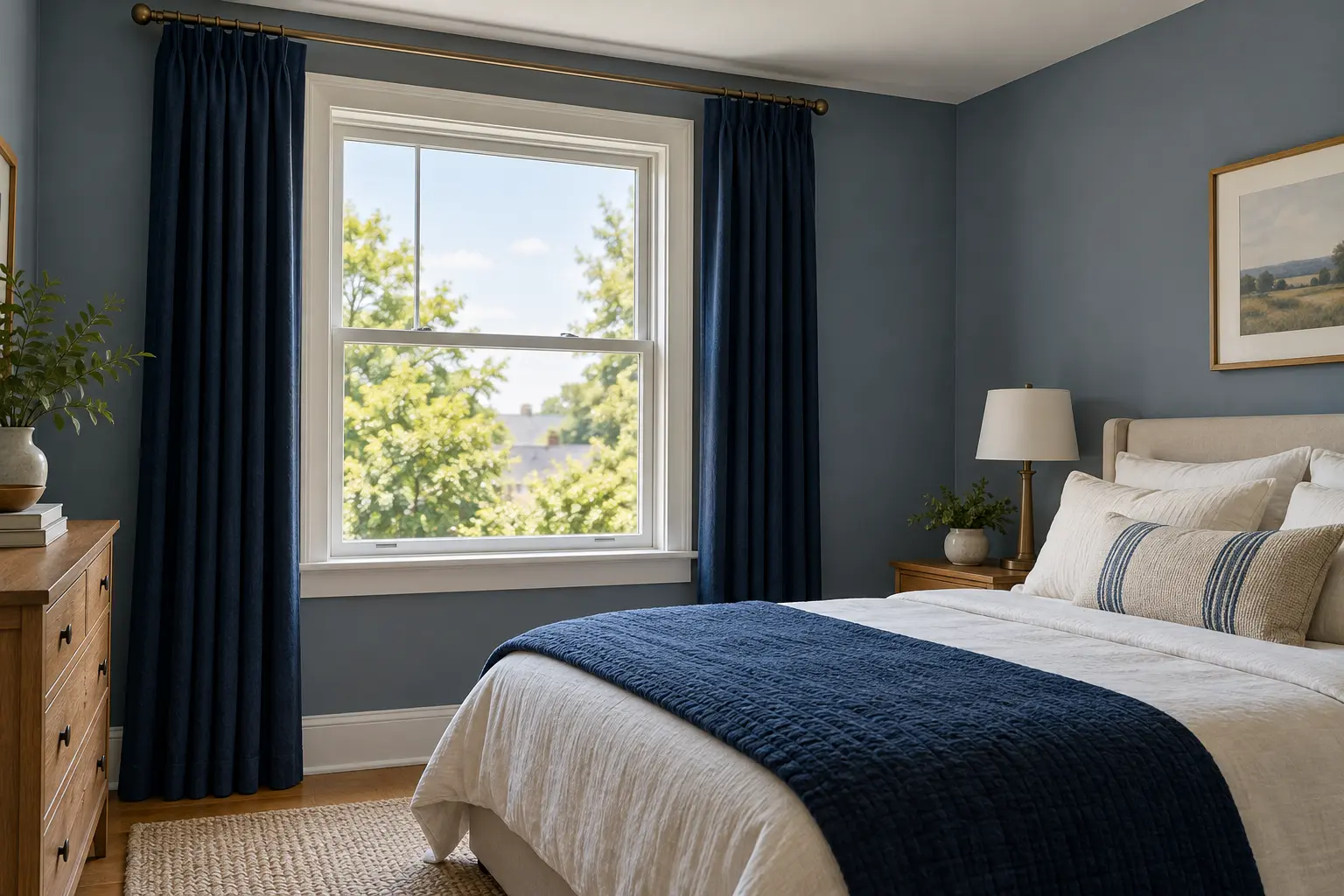
Dark curtains can make sleep hours feel sheltered and can visually lengthen a window when hung at an appropriate existing support. During the day, however, the fabric needs somewhere to stack without covering much of the glass. Measure both the window and the available wall beside it before choosing a wide, heavy pair.
A curtain color close to the wall reduces the number of contrasting vertical lines. If the walls are light, choose a dark color that already appears on the bed so the curtains feel connected. Check the product’s opacity and care instructions rather than assuming every dark fabric is blackout. For renter-safe mounting options, see our guide to hanging curtains without drilling.
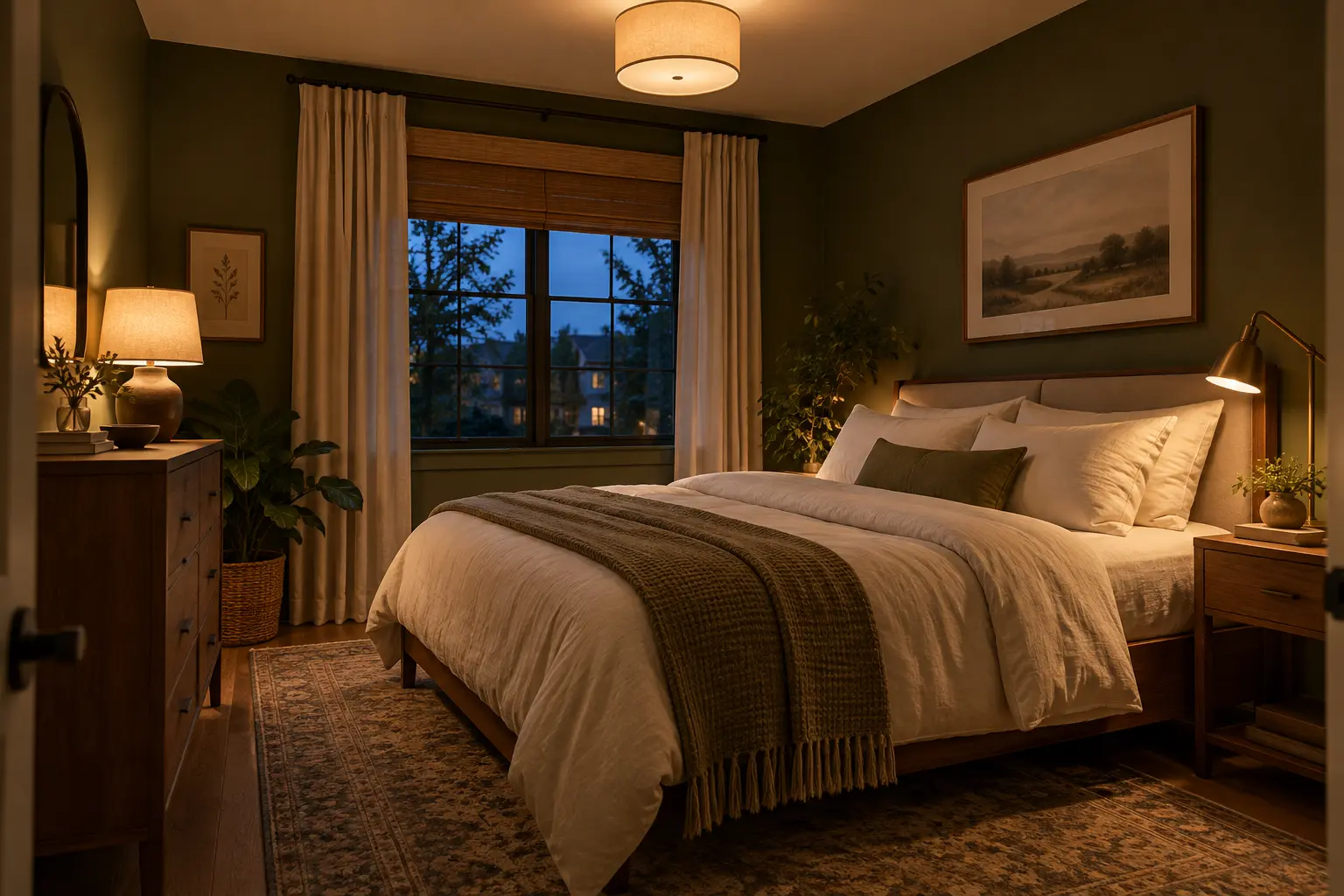
Layer warm light instead of relying on one bright ceiling fixture
Dark surfaces reflect less light, so one central fixture can leave the corners murky while creating glare over the bed. Combine modest ambient light with a focused bedside or reading lamp. A small light on a dresser can illuminate the opposite side of the room without adding another piece of furniture.
Compare bulbs by lumens for brightness and check the correlated color temperature for the appearance of the light. The U.S. Department of Energy’s bulb guidance explains both measures and recommends verifying dimmer compatibility where relevant. Keep lamp colors reasonably consistent so navy, olive or burgundy does not change character from one side of the room to the other. Our bedside lighting guide for renters has compact no-drill options.
Place a mirror where it reflects light, not visual clutter
A mirror can return daylight to a darker palette, but placement matters more than size alone. Stand in the usual doorway and check what the mirror would repeat. A view of the window, a light wall or a simple part of the bed is useful; a reflection of open shelving and tangled cords doubles the visual noise.
Use a secure mounting method appropriate to the mirror, wall and tenancy agreement, or choose a stable leaning or freestanding design intended for that use. Do not balance a heavy mirror on narrow furniture. Keep it outside the tightest passage and away from a position where direct sun creates uncomfortable glare at the bed.
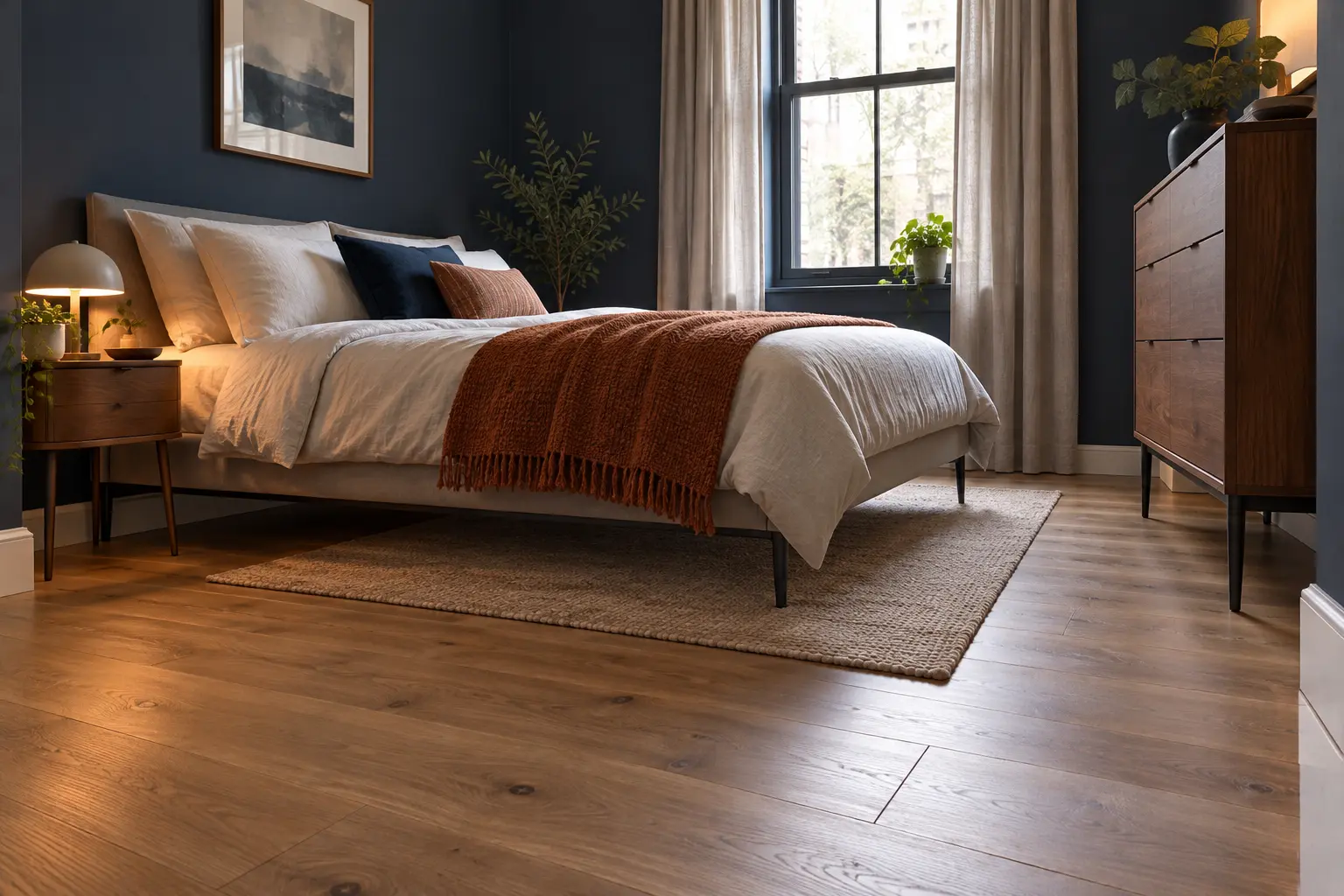
Choose raised, narrow furniture so the floor still reads clearly
A dark room feels calmer when the furniture footprint is easy to understand. A bed and nightstand on visible legs allow the floor line to continue underneath, while a narrow dresser leaves a clear route past the bed. This matters more than adding many light-colored accessories to compensate for oversized pieces.
Measure the bed, open drawers and door swings on the floor plan before buying anything. Keep one route from the door to the bed and wardrobe free of baskets or benches. Our small-bedroom layout guide offers more placement options. If you need extra storage, compare one useful closed piece with several shallow units before filling every remaining gap.
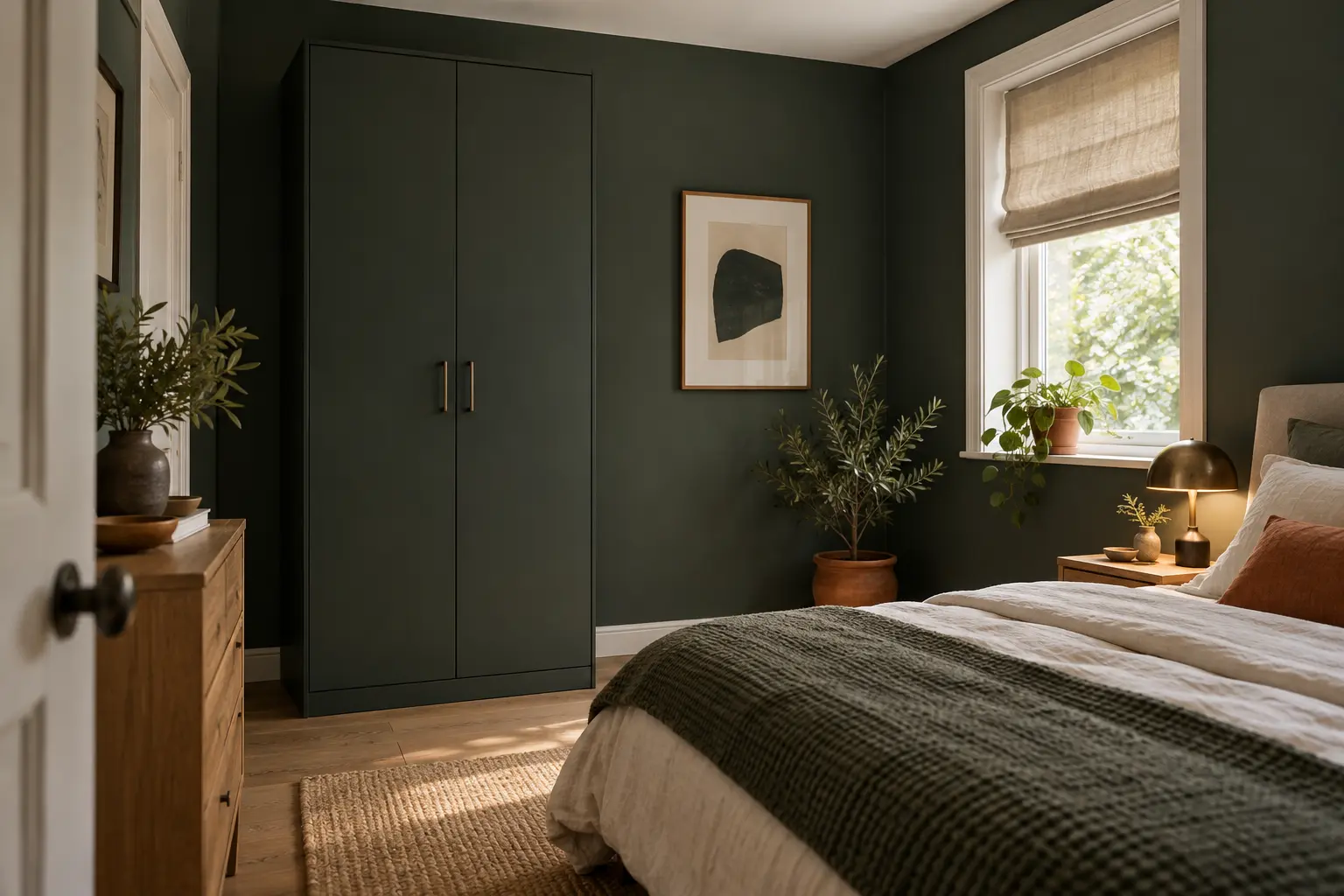
Blend one tall storage piece into the wall color
A wardrobe often dominates a small bedroom because it creates a tall block of contrast. Choosing a finish close to the wall color can reduce that interruption. A charcoal wardrobe against charcoal walls or a deep green cabinet against olive paint lets the outline recede while the handles remain easy to see.
This is not a reason to paint rented furniture or fitted units without permission. Look for a compatible existing finish, or use the idea when choosing a future freestanding piece. Confirm depth, door clearance and stability first. Keep the top free of loose storage that restores the visual clutter you were trying to remove. For lower-cost ways to consolidate belongings, see our budget small-bedroom storage guide.
A simple formula for balancing a dark small bedroom
Give the room one dominant deep color, one broad light neutral and one warm material. For example: navy walls, oatmeal bedding and oak; olive walls, cream curtains and walnut; or light walls, burgundy bedding and woven tan accents. A small metal or clay accent can be the fourth note, but it does not need to appear everywhere.
Repeat each main color in a few substantial places rather than in many tiny accessories. Protect the practical anchors: a clear walkway, an unobstructed window during the day, usable drawer clearance and a reachable bedside control. The room can feel enveloping without becoming difficult to move through.
Dark small-bedroom checklist
View large color samples in morning, afternoon and lamplight.
Check the paint’s LRV and undertone against the floor, ceiling and furniture already in the room.
Decide which surface will carry the darkest color and where the broad light neutral will sit.
Keep the window glass clear during the day and provide both general and focused light.
Measure furniture, drawer openings and the route from the door before adding storage or a bench.
Get landlord permission for paint or fixed mounting, and follow product instructions for mirrors, lights and removable materials.
Questions about dark colors in a small bedroom
Will dark paint always make a small bedroom look smaller?
No. It changes contrast and light reflection, but the result also depends on daylight, artificial light, ceiling color, furniture size and visual clutter. Test the actual color in the room and preserve a clear route and window.
Should every wall be the same dark color?
Not necessarily. One wall can anchor the bed, a deep color can define a work zone, or textiles can carry the palette while the walls stay light. Choose the amount that suits the room and your permission to alter it.
What bedding works with dark walls?
A broad light neutral is the easiest counterweight, but it does not have to be bright white. Oatmeal, cream, pale gray and muted blush can soften navy, olive, charcoal or brown. Repeat a small amount of the wall color to connect the layers.
Can a dark bedroom still be renter-friendly?
Yes. Use bedding, curtains, a fabric headboard, art and freestanding furniture for most of the color. Verify any removable product against the exact surface and follow the landlord’s rules; “removable” does not guarantee damage-free results.
Make the room feel intentional, not simply dark
Start with the element that already occupies the most visual space: the bed, a tall wardrobe or the wall behind the headboard. Give that element a clear relationship to the dark color, then simplify the surfaces around it. Add enough light to read, dress and move safely, and stop before every corner becomes a display.
The room images in this guide are AI-created styling illustrations. They are not photographs of tested paint colors, products, installations or before-and-after projects.
A beautiful small space is not about having more. It is about making what you have work better. — Spacelya