20 Small Bedroom Storage Ideas: Choose What Fits Your Routine
A bedroom can have plenty of containers and still be difficult to use. The problem is often the movement around them: a drawer hits the wardrobe, a basket is too heavy to lift, or the things needed every morning are buried under spare bedding. Good storage begins with those small frustrations.
Choose one category that lacks a home, such as clean laundry, spare bedding or bedside essentials. Count what needs storing, measure its possible location, and test the movement needed to take it out. A useful fit includes the lid, handle, drawer opening and person using it. It is more than the dimensions printed on a box.
This guide compares storage locations and furniture choices. For a room-wide furniture plan, use our small-bedroom layout guide. For sorting an existing wardrobe, see tiny closet organization.
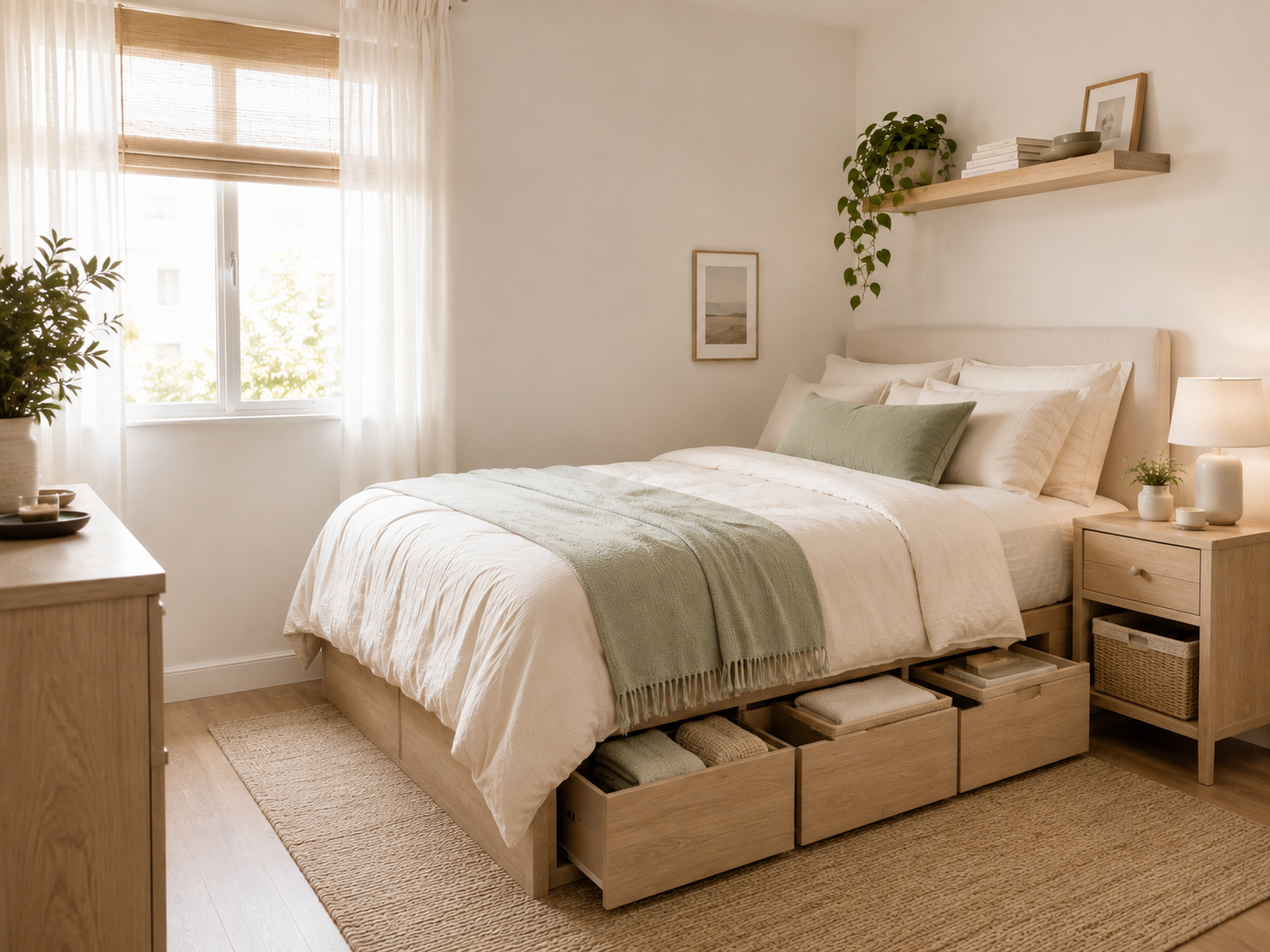
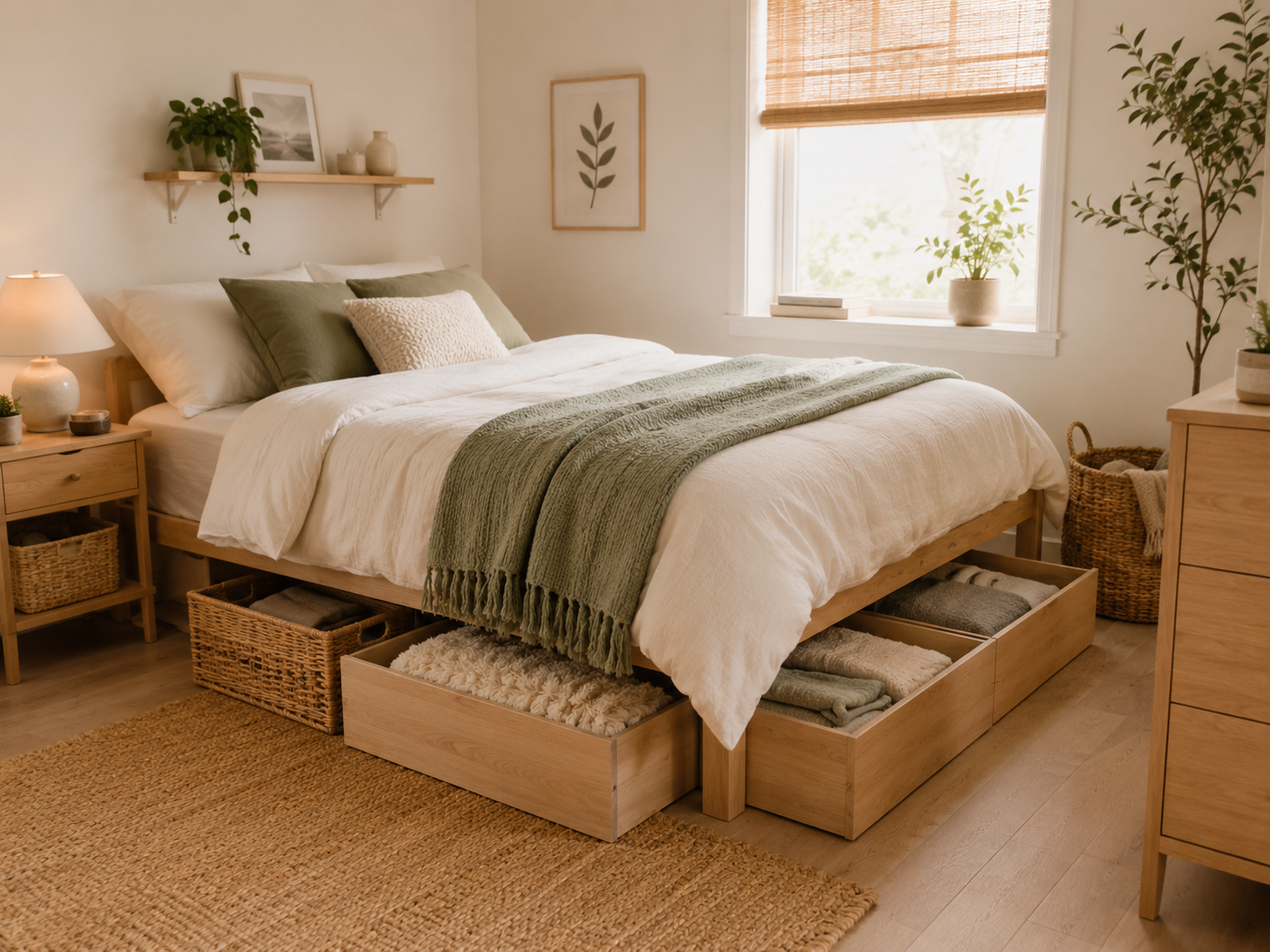
Use low boxes under the bed
Measure from the floor to the lowest obstruction, including center supports, rather than just the visible bed edge. Then check which side can actually open. Two shorter boxes can be easier to retrieve than one large box trapped between a wall and bedside table.
As a measuring example, a 17 cm-high box does not reliably fit an opening that is also 17 cm high: wheels, a bowed lid or an uneven floor can matter. Leave the clearance the product needs, test a sample if possible, and store only clean, dry belongings. Keep the room's ventilation needs in mind.
Choose a bed with usable built-in drawers
Look at the drawers fully extended on the proposed side of the bed. A frame can fit the mattress space while its drawers collide with a wardrobe or bedside table. Internal measurements also matter: a wide drawer with a shallow usable height may not hold the bedding you planned for it.
Make a list of the exact items the new frame would replace elsewhere. If it removes a chest of drawers, the purchase may simplify the room. If it only adds difficult-to-reach capacity, compare it with ordinary boxes using our storage-bed comparison.
Put shelves where retrieval is straightforward
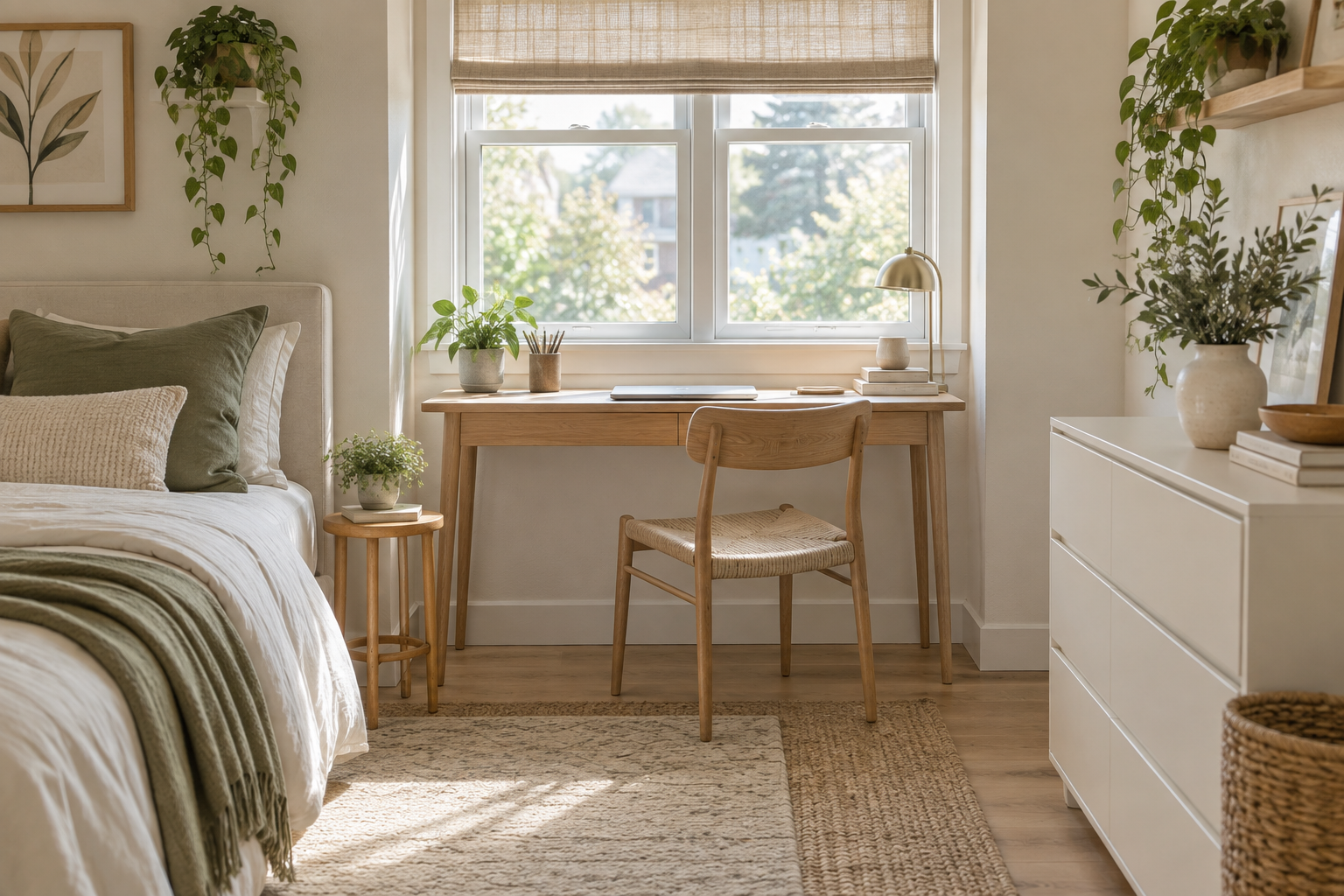
Use an accessible wall beside a desk or dresser before choosing an overhead location. Measure the actual objects, then allow hand room above and beside them. A shelf deep enough for books may project awkwardly into a narrow bedside route.
Follow the shelf and fixing instructions for the wall construction and intended load. Rental permission and safe fixing are separate questions: an adhesive strip is not a substitute for the specified support. Where a permanent shelf is unsuitable, an existing lower bookcase may solve the same storage problem with less disruption.
Treat the wall above the bed cautiously
That wall is visible, but it does not have to become storage. Heavy objects over a sleeping position introduce consequences that a styling photograph cannot evaluate. A flat print or painted detail may be the better use of it.
If an existing properly installed shelf is retained, follow its load restrictions and consider where objects could fall. Do not improvise an overhead shelf using removable hooks. Move everyday books to a reachable side location, and reserve the headboard wall for decoration when useful storage is possible elsewhere.
Check an over-door organizer with the door closed
Measure the door thickness and top clearance, and check whether the organizer's loaded pockets obstruct clothing, the handle or adjacent furniture. A soft organizer holding scarves behaves differently from one filled with shoes.
Open and close the door gently through its full range before committing. Do not force a bracket against a frame, and avoid attaching organizers to a door where its required closing function could be affected. Use a reachable cupboard or drawer instead when the door is already doing enough work.
Choose a narrower bedside table around its contents
Empty the current nightstand and separate sleeping essentials from things stored there by habit. A lamp, glasses and a water glass need a different surface from books, chargers and spare toiletries. Measure that daily group before downsizing.
A narrow table with a drawer can contain small items while keeping its top usable. Check that the drawer opens without hitting the mattress and that you can reach the lamp switch comfortably. A tiny table that forces everything onto the floor has not solved the problem.
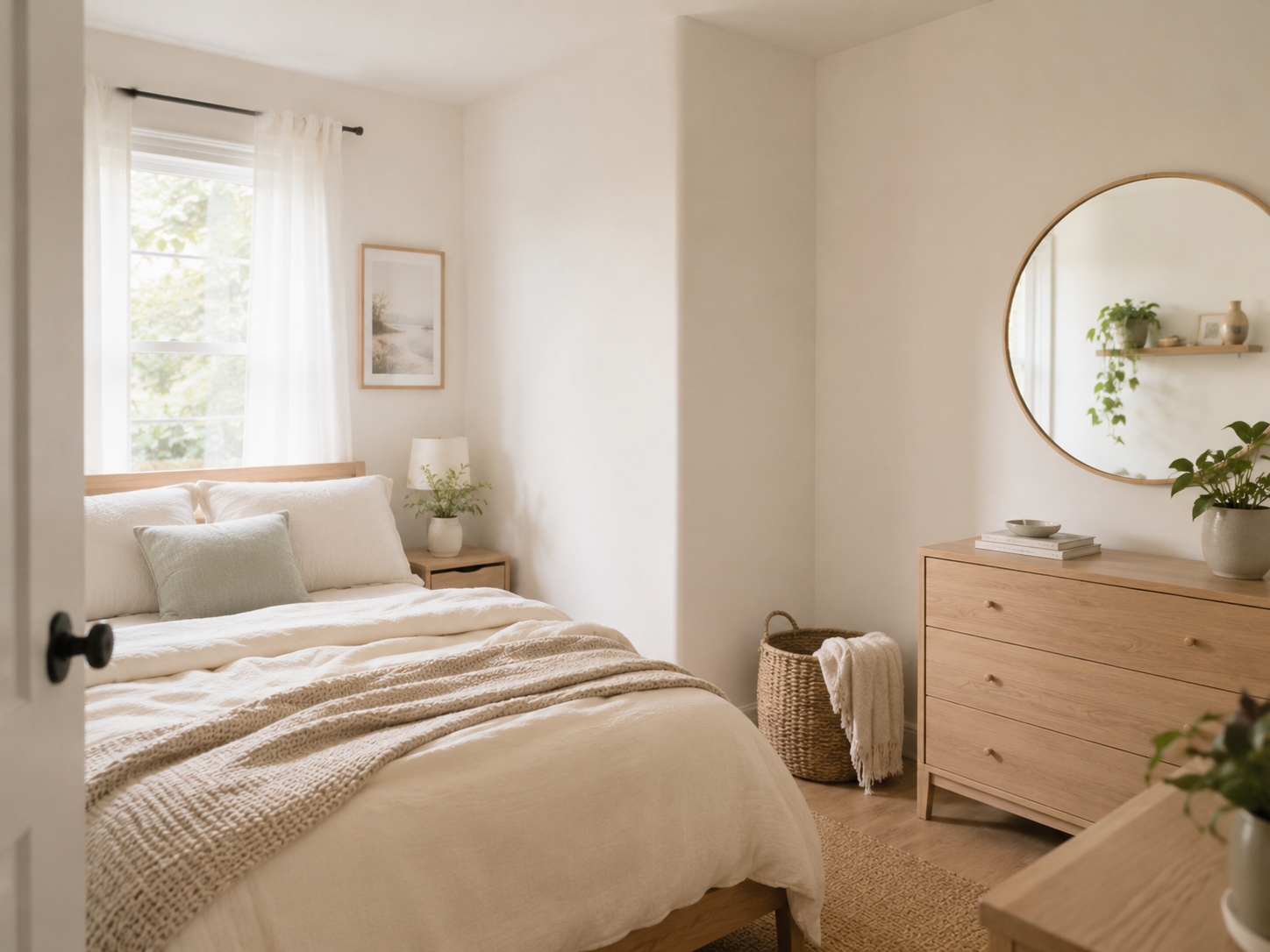
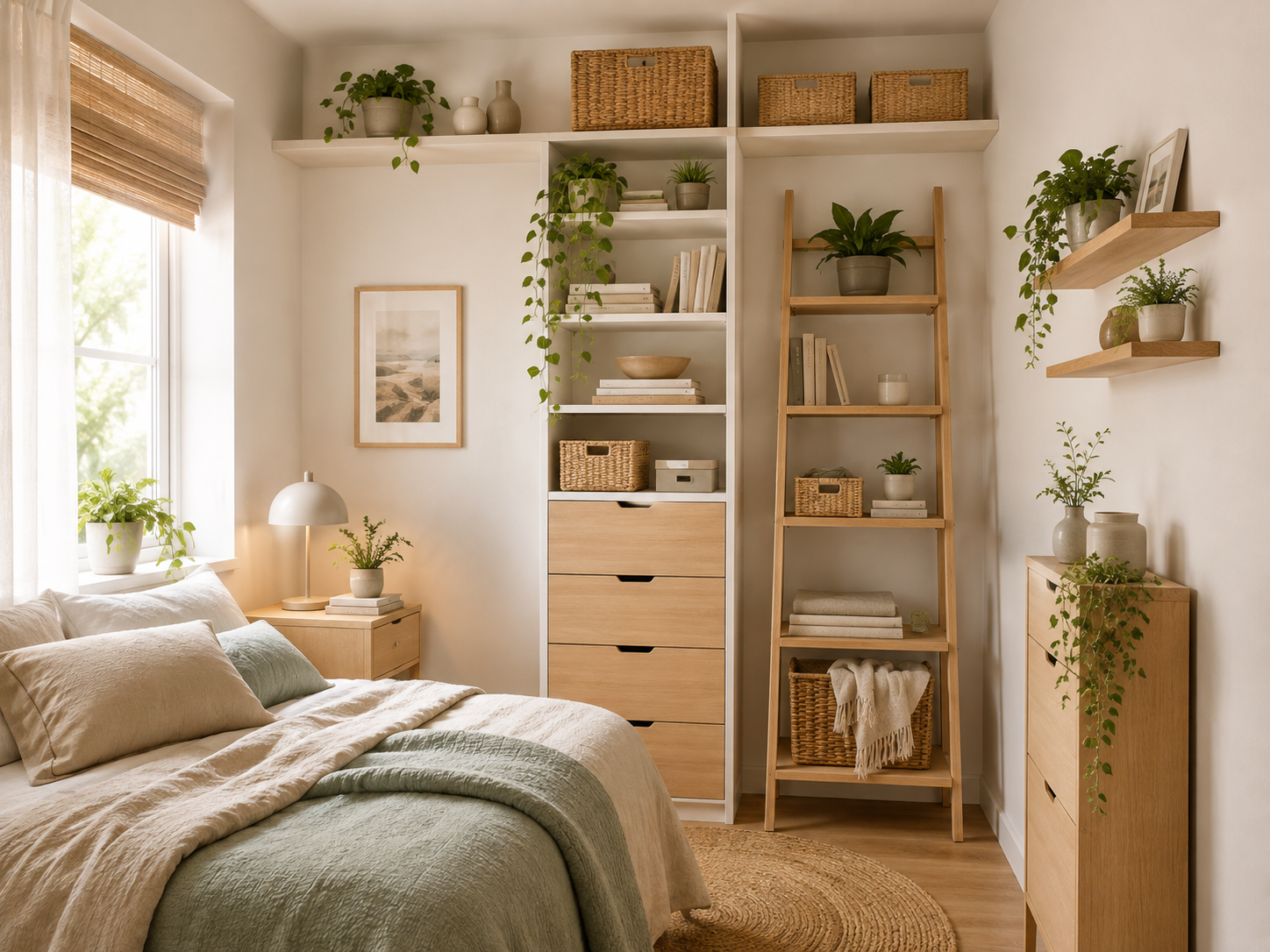
Compare tall storage by useful reach
Tall shelving concentrates storage on one footprint, but the upper shelves may be inconvenient for regular use. Keep frequent items within a comfortable reach and heavy objects low. Leave space to approach the unit rather than squeezing it behind a door.
Follow the manufacturer's anti-tip requirements; placing heavy objects at the bottom does not replace anchoring. The CPSC's Anchor It guidance explains why furniture security matters. If suitable fixing cannot be arranged, choose another storage form rather than treating a tall unit as automatically renter-friendly.
Give each shelf basket a specific category
Baskets help when their contents are awkward to stack, such as scarves or spare cables. They help less when they conceal objects you would otherwise recognize immediately. Choose a container because of the category, not just the shelf's available width.
Include handles in the measurement and make sure a loaded basket can slide out without brushing the shelf above. Keep the load comfortable for its user. One basket for winter accessories is easier to maintain than several identical baskets whose purposes nobody remembers.
Rotate seasonal clothing without hiding daily needs
Move genuinely out-of-season garments to the less convenient location after cleaning and drying them according to their care instructions. Keep transitional pieces accessible if your weather changes frequently. A calendar season is not a reason to pack away the coat you still use.
Label the container with a recognizable category and note its location. Avoid dense, heavy boxes on high shelves. Reassess the category when it returns: storage should preserve clothes you intend to wear, rather than repeatedly conceal a backlog of unsuitable items.
Divide drawers after sorting their contents
Try temporary divisions with small boxes you already own. Place one category in each section and use the drawer for several mornings before buying fitted inserts. This reveals whether socks, underwear and accessories need equal space or very different amounts.
Measure the drawer's internal height as well as its width and depth. Inserts must sit below the closed drawer's clearance. Leave enough room to put laundry away with an ordinary fold; a system that requires perfect folding every time is likely to stop working on a busy day.
Put hooks outside the door's sweep
A hook behind a door is useful only when the hanging item also fits. A coat can be much bulkier than the empty hook suggests. Test the full door movement with a similar garment in position and preserve access to switches and handles.
Choose hardware for the surface and loaded weight, following its installation and removal instructions. Use the hook for a defined item, such as tomorrow's outfit or a robe, rather than an expanding pile. If the door no longer opens properly, choose another location.
Use a storage bench only if circulation survives
Measure the bench itself, the remaining route and the space needed to open its lid or drawer. Do not count the gap at the foot of a bed as free furniture space when it is the route to the wardrobe or bedroom door.
An existing bench can hold light spare bedding, provided its mechanism and contents are suitable. Follow the manufacturer's instructions, particularly where children may access a lid. When the route is tight, under-bed storage or an edited wardrobe is often a better choice than adding another piece of furniture.
Judge hidden-storage furniture with everything open
An ottoman, side table or upholstered bed may promise hidden capacity, but its opening can require moving the things placed on top. Act out a normal retrieval before buying: where does the lamp, cushion or tray go while you open it?
Use awkward-to-open compartments for appropriate occasional belongings, not items needed several times a day. Compare the inside volume with an existing drawer rather than assuming the furniture's full outside dimensions are usable. Hidden storage earns its place when it replaces another piece or resolves a recurring problem.
Fit storage below hanging clothes carefully
Hang the longest garments in their normal positions, then measure below them. A drawer that technically fits can still snag sleeves or prevent clothes hanging freely. Test both the storage opening and the wardrobe doors.
Keep the new unit clear of damp shoes and any ventilation openings. A shallow container for bags may be more useful than a miniature chest whose drawers are blocked. Leave a place to return an item without rearranging the rail each time; everyday access matters more than filling the last centimeter.
Try a bedside shelf when its support is suitable
A small shelf can release floor space, but it needs the right fixing and sufficient room for the objects used at night. Draw its outline on paper first, then compare the bed height, comfortable reach and nearby door movement.
Do not assume a lightweight appearance means a low loaded weight: books, a lamp and a glass add up. Where wall installation is unsuitable, a purpose-made clamp accessory is an option only if compatible with the furniture. Keep charging cables routed so they cannot catch as you get up.
Make a rolling cart prove its parking place
A cart is flexible when there is somewhere to leave it without narrowing the route. Measure the cart with handles and anything projecting from its shelves. Test access to every tier while it is parked.
Use it for one useful group, such as sewing supplies or a compact work setup. It should not have to be moved every time you open a wardrobe. If the only available spot blocks a doorway or heater, the room needs another approach; wheels do not make an obstructive footprint disappear.
Check the outside fit and the inside fit separately
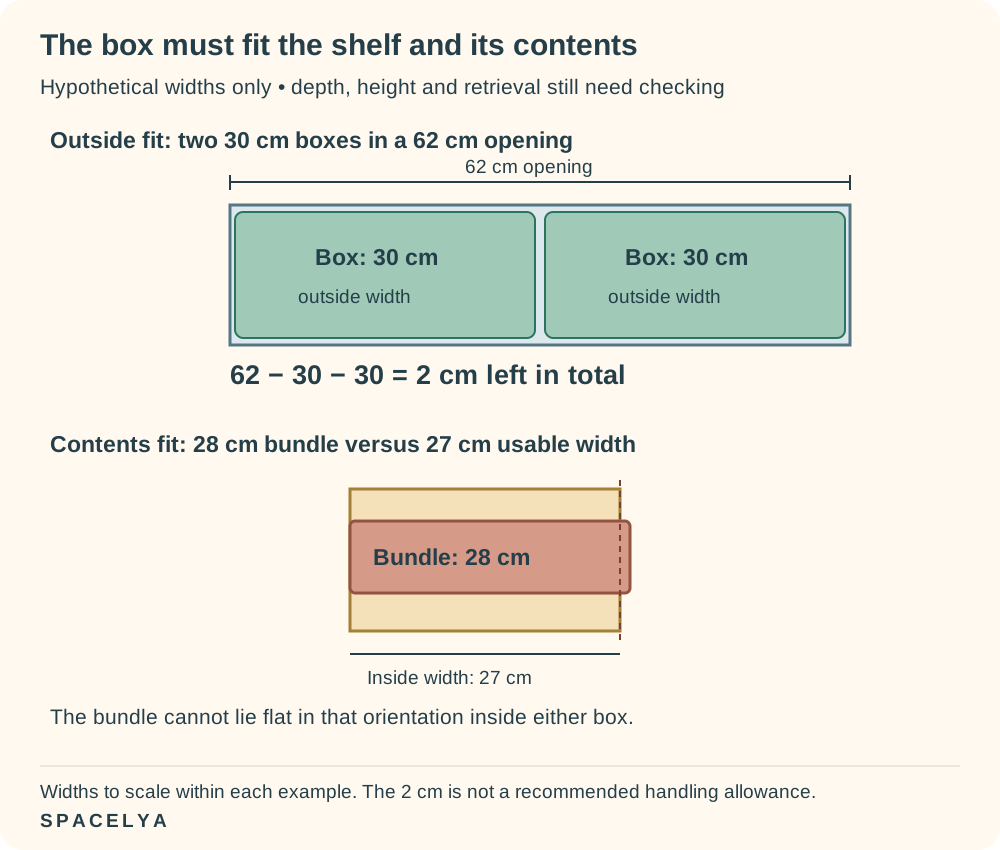
Measure the shelf opening and the container's outside dimensions first, including handles, lid and any part that must pass through the opening. Then compare the usable inside dimensions with what will be stored. These are two separate fits.
For a width-only example, an assumed shelf opening is 62 cm wide. Two boxes that are each 30 cm wide outside occupy 60 cm, leaving 2 cm in total. If each box is only 27 cm wide inside, a folded bundle measuring 28 cm across cannot lie flat in that orientation inside either box. The fact that both boxes fit on the shelf does not solve the contents fit.
Depth, height, opening movement and comfortable retrieval still need checking; the 2 cm is not a recommended handling allowance. Try an existing box with the intended contents before buying a matching set. Different container shapes can work together when their labels and purposes are clear.
Separate accessories into visible, manageable groups
Lay out belts, jewelry, watches and hair accessories before choosing a storage shape. Long flexible items may need hanging space; small pieces may suit a shallow divided tray. Avoid one deep catch-all where the smallest things sink to the bottom.
Keep valuable or delicate items in storage appropriate to their materials and security needs. Place the organizer near where you actually dress. Start with broad categories, then divide only a group that remains difficult to find or return; excessive compartments can create more work than they remove.
Reserve the easiest location for the real daily routine
Follow an ordinary morning rather than choosing the easiest shelf by appearance. Where do underwear, work clothes and a bag get picked up? A seldom-used blanket should not occupy the drawer you reach before leaving every day.
Then look at the chair in the evening. If it holds a cardigan that will be worn again, create a small defined return place for that category, such as a suitable hook outside door movement. Keep freshly washed clothing in its own normal storage and damp clothing in an appropriate drying arrangement. One mixed “clothes basket” is unlikely to serve all three jobs.
Try the arrangement through laundry return as well as dressing. The useful location is the one where an item is easy to put away without rearranging the rest of the category. If a group repeatedly overflows, adjust that group's space or contents instead of adding an unnamed box.
Remove a storage problem before buying its container
Begin with one drawer, one shelf or one clothing category rather than emptying the entire room. Separate things to keep, repair, relocate and let go, and finish that small area before starting another. This keeps the bedroom usable while decisions are unfinished.
Measure the remaining belongings, choose a location, and buy only for the gap that remains. The most useful result may be a half-empty drawer with a clear purpose. More containers are worthwhile only when they make the things you keep easier to use.
A practical first change
If spare bedding occupies a daily clothing drawer, measure one accessible under-bed position and test a suitable container there. Move the bedding only after checking that the box can be retrieved and the bedding is fully dry. Reassign the freed drawer to the clothes that were collecting on a chair. That links a storage purchase to a visible improvement in daily use.
Does a small bedroom need a storage bed?
No. Compare what its compartments would replace, how they open and whether you can use them comfortably. Ordinary boxes, a better wardrobe arrangement or removing an unused piece of furniture may resolve the same problem.
Where should a beginner start?
Start with the item group that interrupts the day most often. Complete one workable home for that group, then review the result before organizing the rest of the room.
A beautiful small space is not about having more. It is about making what you have work better. — Spacelya