17 Tiny Closet Organization Ideas That Actually Save Space
A tiny closet becomes easier to use when its contents fit your routine and each section has a clear job. Start with the belongings, then choose organizers for the specific things you want to keep. Buying a set of matching boxes first can leave less usable space than you started with.
Measure the door opening, shelf interiors, hanging drop and any drawers with them fully open. Closet corners hidden behind sliding doors may need a different arrangement from the accessible center. Put regularly used items where you can reach them comfortably and keep heavy objects low.
These ideas focus on the inside of a closet. If clothing also needs a place in the room, compare our small-bedroom clothes storage ideas before adding furniture.
Test one shelf before organizing the whole closet
Choose the category that is hardest to return after laundry. Place that category on one reachable shelf without organizers and measure the space it actually uses. Then test a temporary divider or existing box for several ordinary returns. You may discover that two low stacks are easier to use than one tall compressed stack, even though the tall stack looks smaller in a photograph.
For a sliding-door closet, repeat the test with the door in its usual open position. A wide box may fit the shelf but fail to pass through the available opening. Note that opening separately from the interior width before shopping. If the category remains difficult to reach, move it rather than trying to force a more elaborate organizer into the same inaccessible position.
Declutter before organizing
Sort clothing into keep, repair, donate and undecided groups, without leaving everything on the bed overnight. Start with one category if the full closet feels overwhelming. Try on uncertain pieces and consider your actual work, weather and leisure needs. Remove the outgoing items before measuring for storage so you are organizing the clothes you intend to use, rather than paying to contain an old backlog.
Group similar items together
Group clothes in a way that supports getting dressed: by type, outfit or the occasions you use most often. Keep shared items separate from each person's clothes where that helps. Place duplicates together before deciding how much shelf space to allocate. A useful category is one you can recognize and put away quickly; a very detailed sorting system can become harder to maintain than the original closet.


Use slim hangers
Try a few hangers with the clothes they need to support. Thin hangers can reduce the hardware's bulk, but the garments still occupy rail length. Check shoulder shape, grip and garment care before replacing a whole set, particularly for substantial coats or delicate pieces.
For a made-up 90 cm clear rail, suppose each shirt group position averages 3 cm when hanging without being forced together, and each jacket position averages 7 cm. Eighteen shirts use 18 × 3 = 54 cm; four jackets use 4 × 7 = 28 cm. Together they occupy 82 cm, leaving 8 cm along the rail. Adding six more shirts would require another 18 cm, bringing the assumed total to 100 cm—10 cm beyond the available length.
The result changes with the clothes. If those same eighteen shirts actually average 4 cm rather than 3 cm, the original mix already uses 18 × 4 + 4 × 7 = 100 cm. A thinner hanger alone does not establish enough capacity. These averages are hypothetical, not hanger-spacing standards or a forecast for your wardrobe.
Measure a representative group of your own garments in a comfortable, uncompressed arrangement, then test taking one out and returning it. Leave the handling room you need rather than treating every remaining centimetre as a spare position. Check the rail's rated load and support separately; a width calculation does not establish the weight it can carry. If the useful mix still exceeds the rail, move suitable occasional items or change the storage allocation before buying more hangers.
Add a second hanging rail where it makes sense
Measure the longest garment in each short-hanging group, including the hanger above it. A second rail works only if both groups hang clear of the floor or storage below. Check the rail's load and mounting instructions before filling it. Keep a full-height section for coats or dresses, and skip double hanging when reaching the upper or lower rail would be difficult for its user.

Use shelf dividers
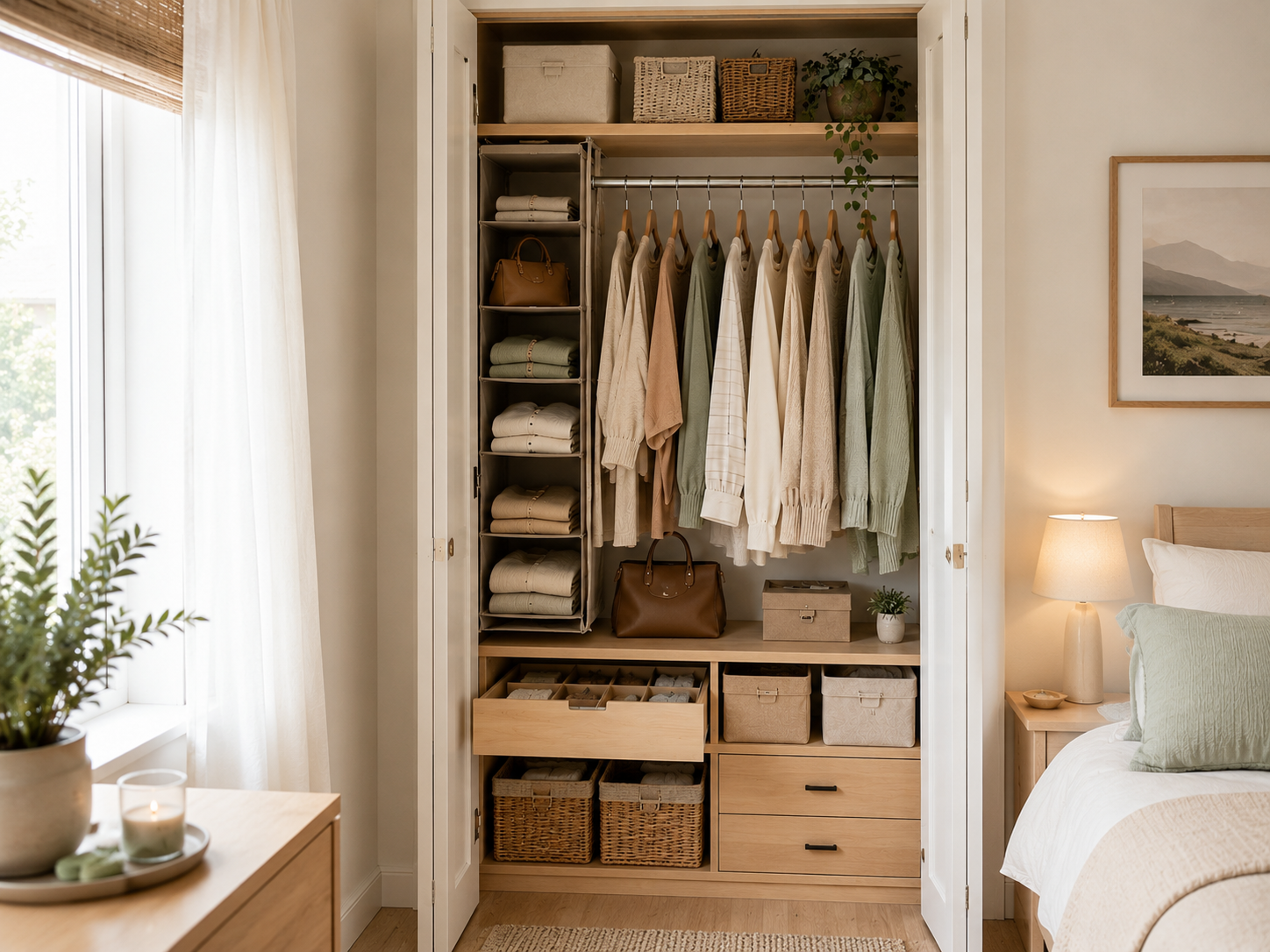
Use dividers where folded stacks actually fall into one another. Check shelf thickness and the divider's fixing method so it does not damage the surface or become loose. Lower stacks are usually easier to lift from than tall compressed piles. Start with one shelf and see whether the divider helps; several rigid compartments can waste space if your clothing sizes and categories frequently change.
Store seasonal items higher up
Store clean, thoroughly dry seasonal items in containers suited to their materials and care instructions. Write a clear label and keep an accessible list if several boxes look alike. Choose light loads you can retrieve appropriately. Heavy luggage or dense clothing boxes are better kept lower; high storage is not useful if reaching it means climbing on a chair or pulling weight down over your head.

Use the back of the closet door
Check the door's thickness, upper clearance and full movement before using over-door storage. Leave the handle, lock and adjacent clothing accessible. A shallow organizer may hold scarves or small accessories, while shoes can make the setup much bulkier. Do not force the door closed against the bracket. If the organizer catches garments or the frame, choose storage inside a reachable shelf instead.
Add a low shoe rack
Measure shoes on the rack, including boots and heels, rather than relying on the empty rack's dimensions. Test access beneath hanging garments with the doors in their normal positions. Keep footwear dry before putting it in enclosed storage. A small daily selection often fits better than every pair you own; move occasional footwear to another suitable place when the closet floor is needed for easy access.
Put small items in labeled bins
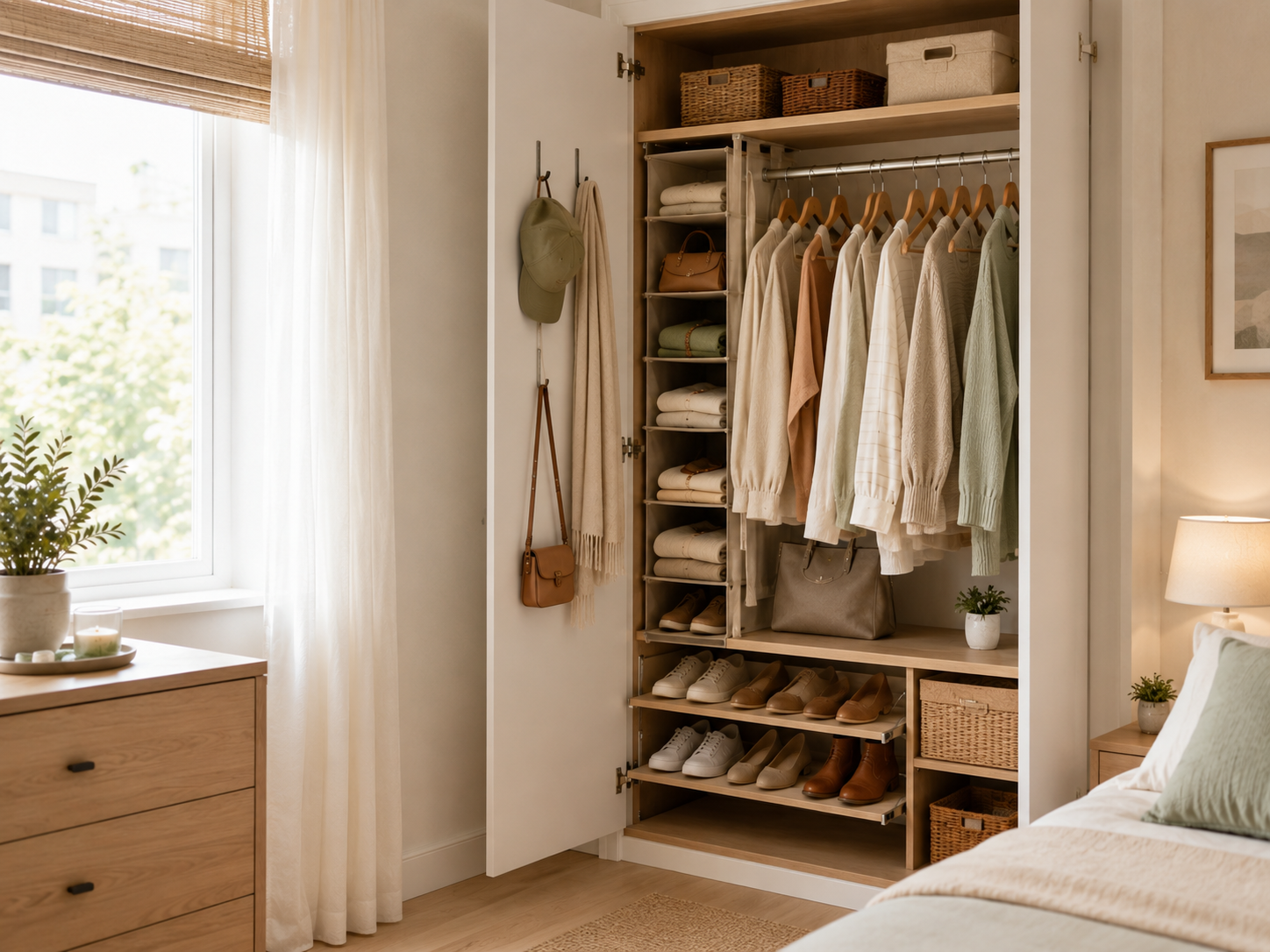
Choose bins after measuring the shelf opening and grouping the contents. Include handles and the space your hand needs to pull the bin out. A label helps with opaque storage, but avoid several nearly identical bins containing just one tiny item each. Keep accessories that are used together in a reachable container so the organizing system reduces searching without multiplying the number of separate boxes.
Use the space below hanging clothes
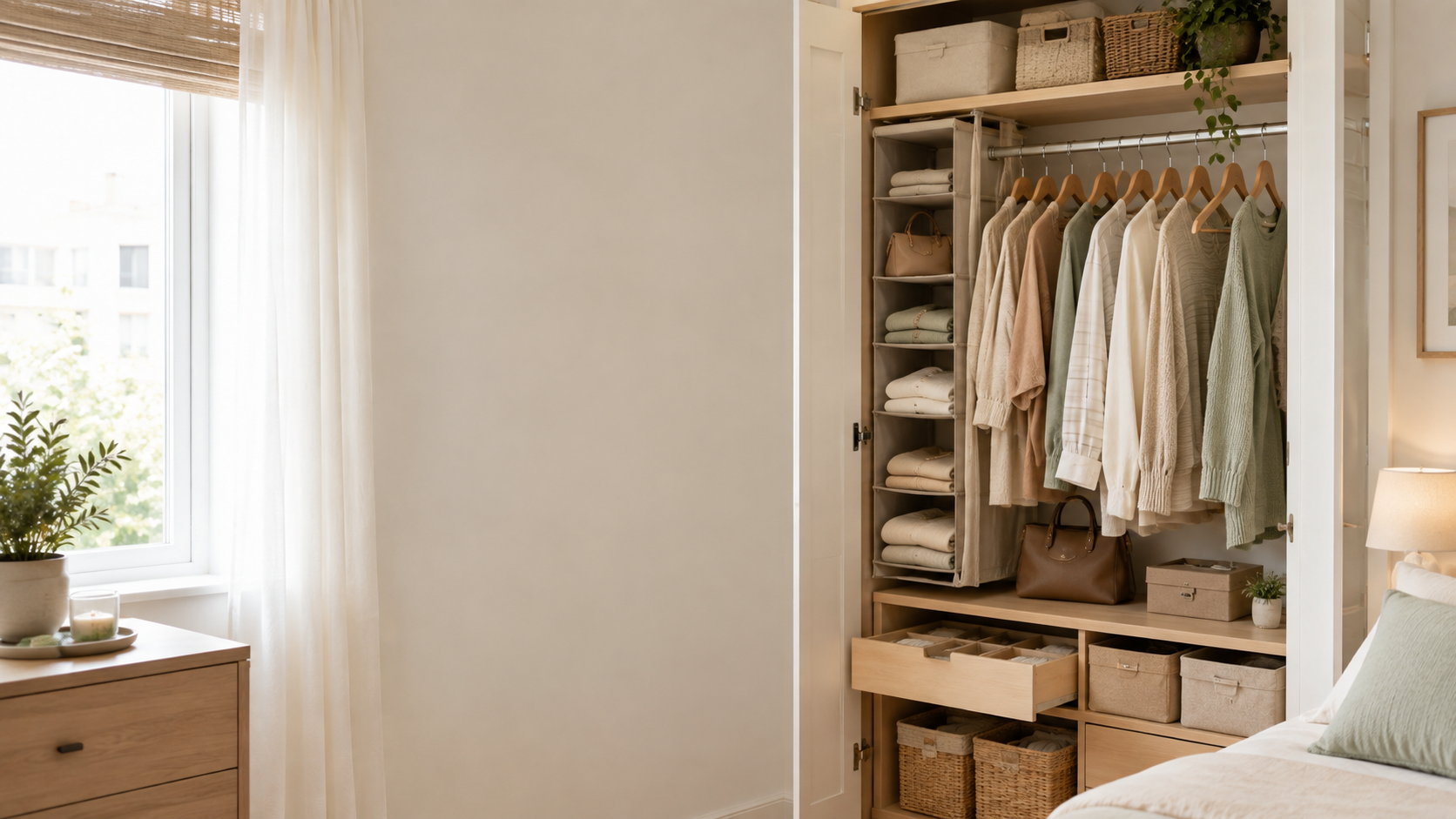
Hang the clothes first, then measure the remaining drop to the floor. Check the drawer or basket in use, not just when closed. It should pull out without dragging hems or preventing a sliding door from moving. Keep the stored items light enough to handle comfortably. Leave this area empty when filling it makes reaching the hanging clothes or cleaning the floor harder.
Keep everyday pieces at eye level
Place daily clothing at the easiest reach for its user, which may be below conventional eye level. Arrange frequently used pieces so labels or folded edges are visible without lifting a stack. Give each household member access to their own items. Move occasional accessories out of this prime area; reorganizing a closet around the tallest adult can make it less usable for everyone else.
Fold bulky pieces instead of hanging them
Follow garment care instructions when choosing folded or hanging storage. For suitable knitwear, use a small, stable folded stack rather than pushing many sweaters into one tall pile. Fold to the usable shelf depth and keep the frequently worn pieces reachable. If you cannot remove a sweater without disturbing the whole stack, divide the category or move a few pieces rather than compressing it further.
Use hooks for bags
Use hooks that suit both the bag's weight and the mounting surface. Empty heavy contents before storing a bag, and avoid stretching delicate handles where the item's care guidance advises against hanging. Leave space between bags so you can remove one without lifting the others. A low shelf or bin may work better for large backpacks than a row of overloaded hooks.
Try drawer organizers
Measure the drawer's inside width, depth and usable height before buying inserts. Group socks or accessories, then choose compartments that leave room for your hand. A tray that slides every time the drawer moves can be more irritating than helpful. Test the arrangement with containers you already have; add dividers only where items repeatedly mix together or become difficult to locate.
Leave a little breathing room
Try taking out a garment, replacing it and sliding neighboring hangers without force. That everyday test tells you more than a fixed number of hangers per rail. Leave some usable space in drawers as well. If the closet is still tightly packed after sorting, rotate genuine seasonal pieces or find another suitable storage zone rather than buying slimmer organizers indefinitely.
Create a small donation area
Keep a small designated bag for clean items you have decided to donate, with a plan to take it out of the home. Follow the receiving organization's guidance about what it accepts. Keep repairs separate so they do not drift into the donation category by accident. If the bag remains in the closet for months, schedule its removal before adding another container.
Reset the closet for five minutes each week
Use a short regular reset to return misplaced clothes, remove empty packaging and check whether a category is overflowing. Choose a timing that fits your routine rather than treating five minutes as a guarantee. Notice the repeated problem: an awkward bin, inaccessible rail or too many items. Change that part of the system instead of tidying around it every week.
Match the system to the closet opening
For sliding doors, put daily clothes behind the side you can open most easily and avoid bins that must travel across the hidden center. In a reach-in closet, shallow shelf containers may be easier than deep drawers. For a wardrobe with mostly short clothes, a suitable second rail can help if its installation and access work.
Our budget bedroom storage guide offers options when the closet cannot reasonably hold everything.
Check the system after a normal week
Can you get dressed without unloading a shelf? Can clean laundry go straight to its place? If one category causes repeated work, simplify its storage before reorganizing the entire closet. The useful result is a closet that supports getting dressed and putting things away.
A beautiful small space is not about having more. It is about making what you have work better. — Spacelya