Laundry Detergent Storage in a Small Home
Laundry products do not need decorative jars to look organized. Their original packaging carries information and protective features that belong with the product. In a small home, choose storage around appropriate access first, then make the bottles easy to identify and return.
The quantity can remain modest. A useful working group and an appropriately stored refill are often easier to manage than several open containers crowded above the machine.
Keep original labels with products
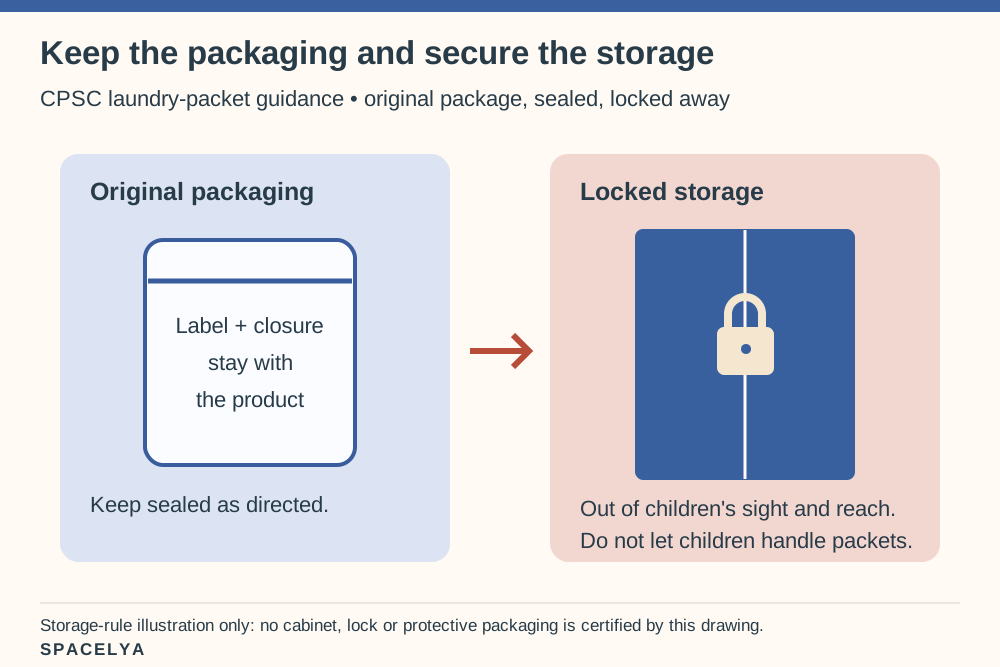
Keep detergent and other laundry products in their original packaging and follow the labels for storage and use. Do not transfer laundry packets into food-style jars or leave them loose in an open basket for display.
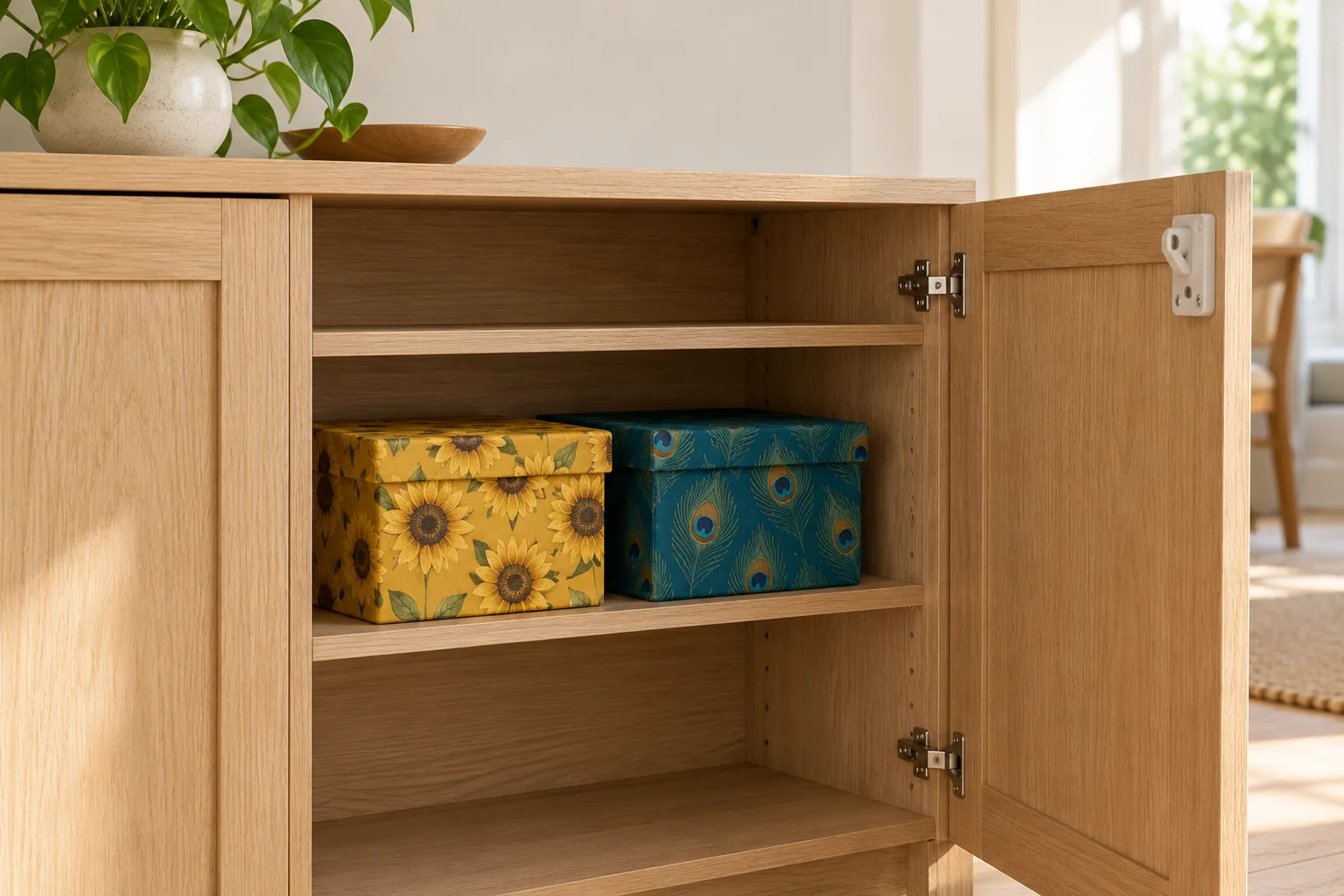
Turn the identifying information toward the opening while keeping containers properly closed. A suitable cabinet with cobalt and poppy accents can make the area cheerful without changing the product packaging. The visual scheme should come from furniture or labels around the storage, not disguising its contents.
A bottle's label also helps another adult identify the right product. Leave its instructions readable and keep any supplied closure with the container. Organizing labels on the cupboard can say “laundry products,” but they should not replace the manufacturer's information or cover warnings. Decorative jars for pegs or dryer balls serve a different job from chemical-product storage.
Choose secure storage for the household
Plan storage that restricts children's access, including during a visit from younger family members. CPSC's safety alert on liquid laundry packets advises keeping packets sealed in their original packaging, locked away and out of children's sight and reach. Do not let children handle the packets. A high open shelf alone is not the secure arrangement described by that guidance.
Choose a position adults can use without leaving the product unattended in an accessible place. Include closing the original packaging and securing the storage in the normal laundry routine. If a door or lock is awkward, fix the arrangement rather than leaving it open for convenience.
Fit containers to the real bottle sizes
Measure bottles with their caps, handles and any pump in the intended storage position. Check shelf support and the loaded weight of the group. Place substantial containers where adults can handle them comfortably without an awkward high lift.
Leave enough room to remove and return one product. A cabinet can appear spacious while a projecting bottle handle prevents its door closing. Follow the furniture and product instructions rather than squeezing an extra refill into the last gap.
Try the real unopened replacement as well as the bottle currently in use. A larger pack may be taller or wider even when its label looks similar. Check the route through the cupboard opening and whether the adult using it can lift and return it comfortably. Do that fit check without leaving the product outside secure storage afterward. Do not remove a closure or change packaging just to make a shelf fit.
Separate laundry supplies from food
Keep laundry products in their own appropriate storage, distinct from food, drink and food containers. Do not use a pantry shelf as overflow simply because it has space. Avoid repurposing beverage packaging or serving vessels for laundry materials.
Our laundry-room organization guide can help define a separate utility zone. If the machine is in the kitchen, that separation needs to remain understandable within the shared room, including when someone else puts supplies away.
Keep only a modest reserve
Choose backup quantities around available suitable secure storage and how the products are used. Large bulk purchases can concentrate weight and obscure the products already open. Check the reserve before shopping.
Keep labels and any relevant product information with the stock. Review leaks, damaged packaging or other product concerns according to authoritative and manufacturer guidance. Do not hide a questionable container behind the next purchase.
Make the reserve easy for an adult to check before shopping. One currently used pack and one necessary replacement may be enough for a particular household; that is a stock example, not a quantity every home needs. The available secure space sets the limit. If buying a bigger pack means leaving it beside the machine, the purchase has outgrown the storage plan.
Leave the machine area clear
Maintain the machine's specified access and clearances, including controls, doors and service areas. Do not assume its top is intended as a permanent detergent shelf. Check the appliance instructions before assigning any nearby storage.
Our utility-equipment storage guide can help give other household tools their own positions. Keep the laundry-product routine simple: retrieve the needed product appropriately, use it as directed and return it to its secure home.
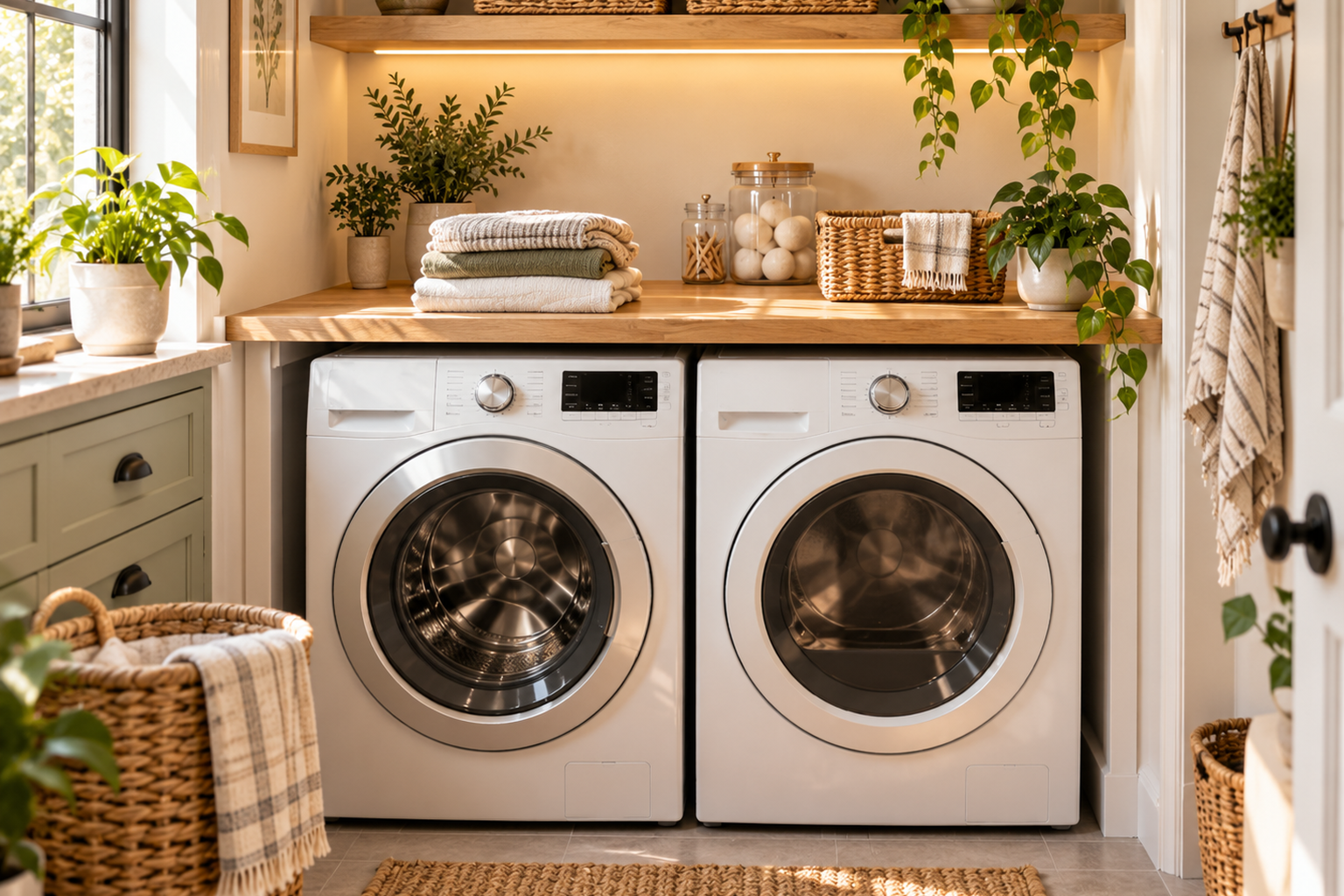
Follow one normal load through the room: get the basket in, access the machine and retrieve the product as its label directs. Then put the closed product back in its secure home. Keep the machine's controls and required access clear throughout. A tray on the worktop can organize dry accessories, but it does not replace secure chemical storage.
Is a clear container acceptable for detergent packets?
Keep packets in their original packaging and follow the safety instructions. A decorative container can lose labeling and protective features or make the contents more accessible. Organize the surrounding cabinet instead of transferring packets for appearance.
About the illustrations
The laundry scene is a reused AI-generated SPACELYA illustration of machines and dry accessories. Jars for pegs or dryer balls are not a model for storing laundry chemicals. The original planning graphic explains the product-packaging and locked-storage rule; it does not certify any cabinet or lock.
A beautiful small space is not about having more. It is about making what you have work better. — Spacelya