Pantry Categories That Make Restocking Easier
A pantry label can look tidy and still leave you wondering where the rice belongs. Categories work when they reflect how the household shops and cooks. Begin with the meals you make and the ingredients that travel together, then choose words everyone can understand.
You can refine the arrangement as you use it. There is little benefit in creating fifteen precise categories before discovering that most groceries arrive in five practical groups.
Start with a few meal categories
Look at a normal grocery list and the pantry foods used over several days. You might begin with breakfast, quick meals, baking and snacks. Another household may find ingredients such as grains, pulses and sauces easier to maintain.
Choose the system that helps you locate food, rather than mixing several methods without a reason. If pasta is stored with quick meals, put its companion sauce nearby when its storage directions allow. Keep the categories broad enough to absorb a new package without creating another label.
Try one system on a small group before labeling every shelf. A household making similar breakfasts might keep oats, cereal and breakfast spreads together when each product's storage directions allow it. A household cooking varied recipes may prefer grains, pulses, tinned foods and baking ingredients.
Pick one main rule and write down any useful exception. Rice cannot be fully stored in both “quick meals” and “grains” unless you deliberately split stock. A simple shelf note can point to its one home. The category should help someone put the shopping away without a long explanation.
Separate open packages from backups
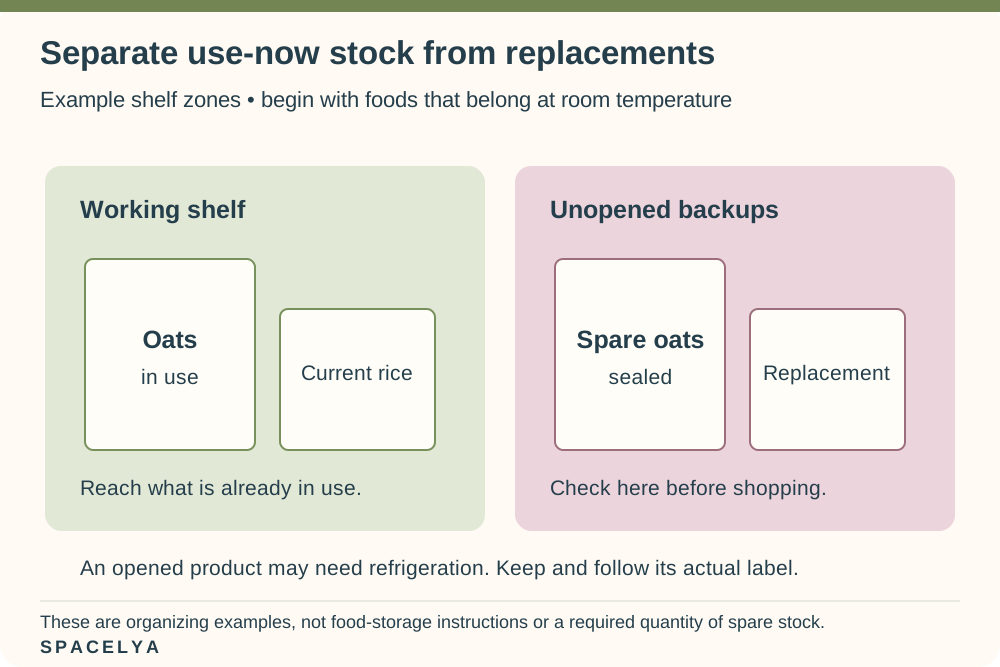
Use a defined position for unopened replacements so the daily shelf tells you what is already in use. Keep relevant dates, ingredients and storage instructions with every product. Follow the product's requirements when deciding where an opened package belongs.
A modest backup area makes shopping easier to check. You can see whether a replacement exists without searching through the working group. Avoid filling it so densely that groceries become hidden behind a wall of duplicates. Restocking should begin with looking at what is there.
This is a pantry arrangement for foods that actually belong at room temperature. An opened jar may need refrigeration even when the unopened version lives on this shelf. USDA's shelf-stable food guidance distinguishes shelf-stable products from those labeled for refrigeration; keep and follow the actual label.
Decide how much replacement stock your household wants before marking a backup zone. One spare packet may be enough for one product and unnecessary for another. Check that zone before shopping, then put new replacements where the existing packages and their dates remain visible. Do not use a refill container to hide ingredient, allergen or storage information.
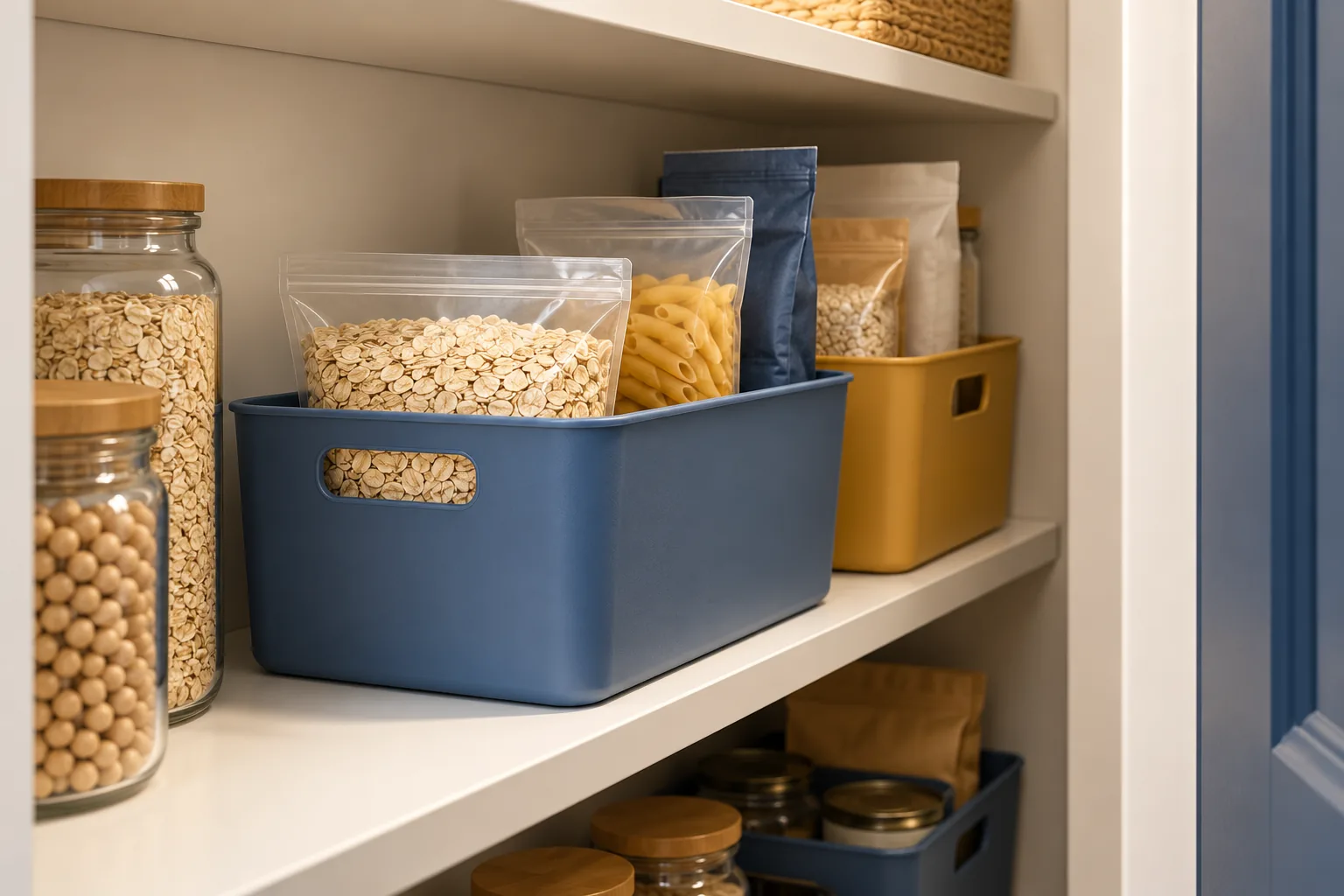
Give everyday meals a reachable shelf
Put ingredients used regularly where the people cooking can reach and identify them comfortably. Consider package weight as well as frequency, and keep heavy stock on appropriately rated accessible shelves.
If the family makes a quick rice meal several times a week, give those shelf-stable ingredients a convenient group. Do not move them to an awkward height merely to arrange packages by color. An olive-green label with a soft rose accent can make the group cheerful while the food remains the focus.
Keep occasional foods together
Seasonal baking decorations or ingredients for an infrequent recipe can share a separate appropriate area. Name the group according to what it contains and keep it visible enough to remember. Avoid calling every uncertain item miscellaneous.
Before storing an occasional ingredient, check whether it remains useful and follow its storage directions. A category is not a reason to retain something unsuitable indefinitely. If the pantry is too crowded for everyday food, reassess the occasional group before adding another container.
Make labels match the household
Use ordinary words at a readable size. Pictures or a second language may help particular household members, but keep the system simple enough to maintain. Label the shelf position or bin, not every object, unless the extra detail helps.
Ask where another person would look for an ingredient before finalizing its home. If everyone repeatedly puts the same item elsewhere, reconsider the category. Our kitchen organization guide applies similar practical decisions to the drawers and cupboards surrounding the pantry.
Label a position only as precisely as the household needs. “Breakfast” may work on a small bin, while two separate labels for oats and cereal would add little. A plain word plus a small olive or rose marker can make categories easy to distinguish without turning the shelf into a set of competing signs.
For a shared pantry, ask another person to put away a few ordinary groceries. Where they hesitate is useful feedback. Change the confusing name or position rather than adding several labels that all describe the same shelf.
Review the categories after a week
Notice which items migrate, which labels create hesitation and which groups overflow after shopping. Adjust those positions before buying matching containers. The trial should include an ordinary restock, not just the first tidy shelf.
For storage beyond a dedicated pantry, see our small kitchen guide for homes without a pantry. Keep the categories consistent where it helps, but allow different spaces to suit different package shapes. The aim is to know what you have before putting the next grocery list together.
Include the fullest shopping day in the trial. A category can look generous before groceries arrive and spill into its neighbor afterward. Reserve enough realistic room for the packages you normally buy, including a taller replacement carton when that is the usual size.
If a category overflows every week, either its location is too small or the stock target needs changing. Buy a container only after that decision. The aim is a shelf you can understand while making a grocery list, not a perfectly matched row that has to be rebuilt after every shop.
Is organizing by meal better than organizing by ingredient?
Neither is universal. Meal groups suit repeated routines, while ingredient groups can work well for varied cooking. Begin with the way you search, then use a small exception where needed. You should not have to remember a complicated rule to put a bag of rice away.
About the illustrations
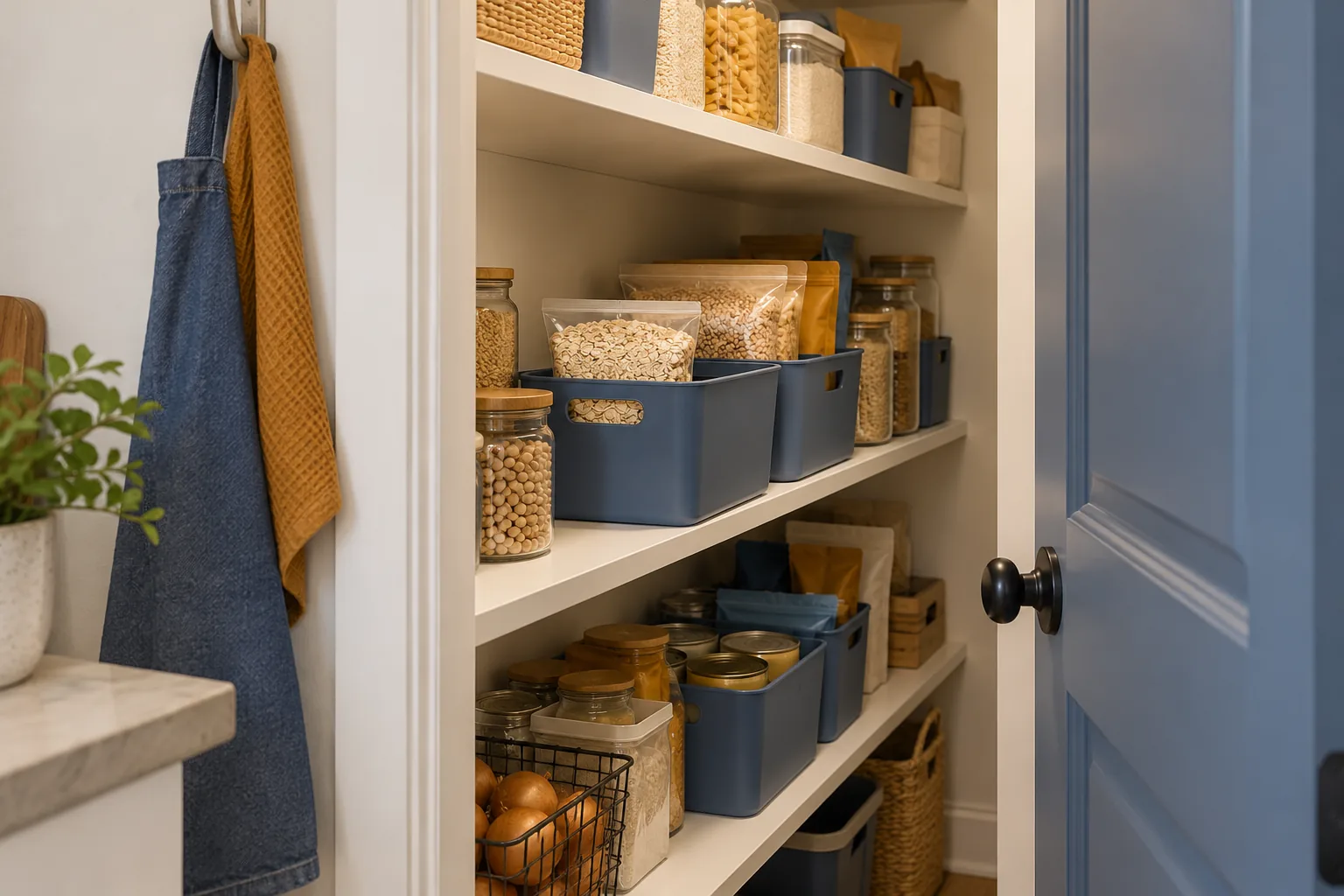
The room and storage scenes are reused AI-generated SPACELYA styling illustrations. They are visual references, not photographs of tested homes or products. The original SPACELYA planning graphic is explicitly illustrative; use the actual room, materials and product instructions when adapting the idea.
A beautiful small space is not about having more. It is about making what you have work better. — Spacelya