Board Game Storage for a Small Living Room
A game collection rarely arrives in matching boxes. There is a broad square board game, a tall expansion and a small card box that disappears behind both. Organize around those real shapes and how often the games are played.
Choose a defined part of existing storage before adding furniture. A shelf that makes games easy to select and return can serve the room better than a larger collection packed tightly out of sight.
Measure the largest box
Include the box's full depth and height in the orientation you intend to use. Check the door opening of a cabinet as well as the shelf inside. A large square game may fit on the shelf only when turned in a way that makes its title hard to identify.
Look at the smaller boxes too. They may need a shallow group container so they do not vanish beside the largest game. Keep the arrangement within the furniture's load and installation guidance, especially when several heavy boxes share one shelf.
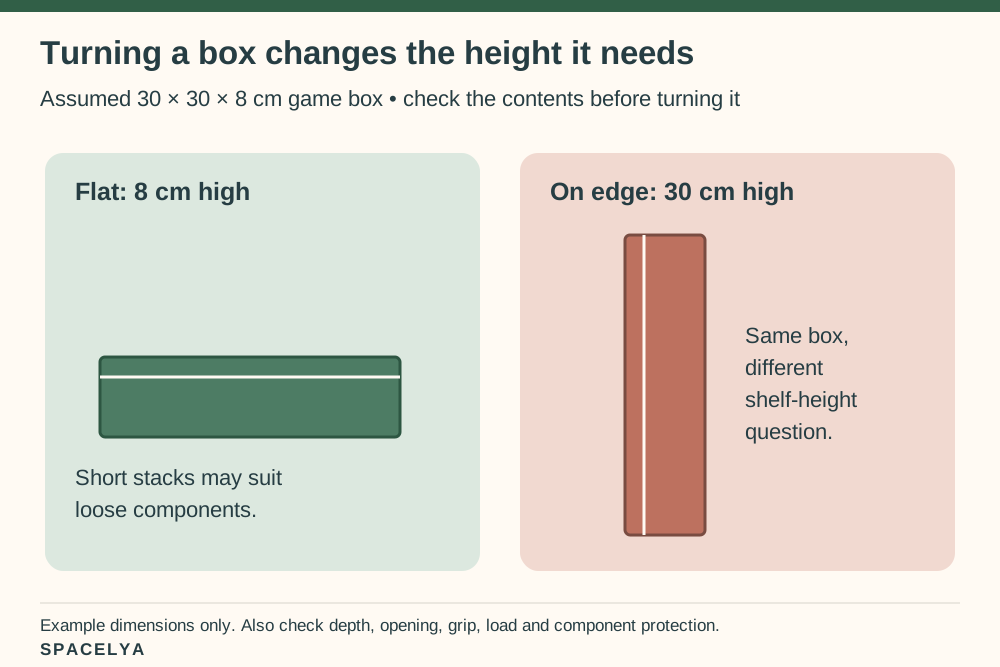
Record width, depth and height for the actual box, including a lid that sits slightly proud of its base. As a hypothetical example, a 30 × 30 × 8 cm box stands about 30 cm high on edge rather than 8 cm when laid flat. That changes the shelf-height question, but does not prove it will pass the cabinet opening or leave enough room to grip. Check each orientation with the complete game, not just an empty box.
Choose shelves that fit the boxes
Compare horizontal and vertical storage for each game, following any relevant product guidance. Some boxes contain loose components that shift if turned on edge. Choose the orientation around the contents as well as the exterior dimensions.
Keep frequently used games individually accessible. A short stack may be manageable, but a daily choice buried under several heavy boxes will be less convenient. Bottle-green storage or a small coral label can connect the collection with the room without replacing the game packaging.
Separate box fit from component behavior. A board may stay in place on edge while loose cards slide into the corners or an insert releases its tokens. Close the box and test the orientation gently before reorganizing the shelf. Where contents cannot stay together without squeezing or damaging them, use the flatter position and keep the stack short.
Keep small pieces with their game
Use appropriate internal bags or compartments to keep components together, particularly if the box changes orientation. Retain rules and identifying information with the set. Keep small parts inaccessible to children for whom they are unsuitable.
Do a quick completeness check when packing away, while the pieces are still visible. Avoid creating a separate drawer of unidentified tokens that needs sorting before the next game. A small internal container is useful when it fits without forcing the lid or damaging the contents.
Pack away one game before mixing its pieces with the next. Match the contents to its rules or component list, then keep cards, counters and any expansion clearly associated with that title. If the leaflet has gone missing, the maker's official instructions service may help; Hasbro's instructions hub is one example for its own games. Check the edition as well as the title, since a similar box may contain different pieces.
Put frequent games at easy reach
Reserve a convenient shelf for the games the household chooses regularly. Occasional games can occupy another suitable position that remains manageable to retrieve. Let the arrangement change if a new favorite becomes part of the routine.
Our small living-room ideas can help identify a position that does not displace essential everyday storage. Keep the game shelf easy to recognize so a guest or another household member can return a box without needing a detailed explanation.
Create a temporary game-in-progress tray
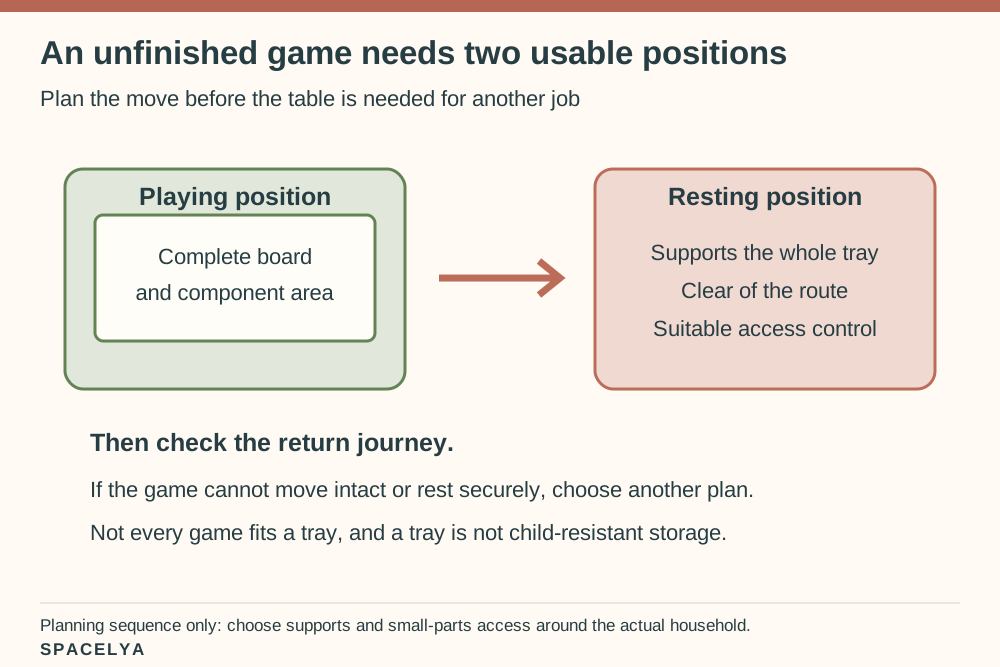
A suitable stable tray can hold a modest unfinished game when the table is needed for another task. Check the actual board or component footprint and choose a secure landing position. Not every game can be moved intact, and a large board should not overhang an unsuitable tray.
Keep the stored setup out of walkways and beyond inappropriate access to small pieces. If moving it is impractical, use a different plan for that game, such as scheduling play when the table can remain available.
Choose the tray's resting place before starting the game. It might be an existing clear shelf that supports the whole tray and remains inaccessible to children for whom its small pieces are unsuitable. Count both jobs: can the occupied tray be moved without losing the position, and can it be brought back when the table is free? Photographing a position for your own reference may suit some games better than moving the board; agree on that method with the players.
Use one overflow rule
Choose a practical limit: one shelf, one cabinet bay or another suitable defined area. When new games arrive, reassess what is played and what should move elsewhere. Avoid letting overflow boxes permanently occupy the floor beside the unit.
Our narrow living-room layout guide can help protect the route around that storage. The collection can be colorful in its own right; it does not need extra objects filling every gap between boxes. Leave enough room to remove a game and return it after play.
Use the next game night as a trial. Ask someone else to find the chosen game, take it out and return it after play. A small card game disappearing behind a large square box needs a clearer home, even if the shelf looks neat. Keep an obvious return gap and review games that have stopped being used before another row builds up on the floor.
Should I discard the original boxes to save space?
Consider identification, component protection and the way the game is used before doing so. Alternative storage may suit a particular game, but uniform small containers can make a varied collection harder to recognize. Keep instructions and necessary information with whatever system you choose.
About the illustrations
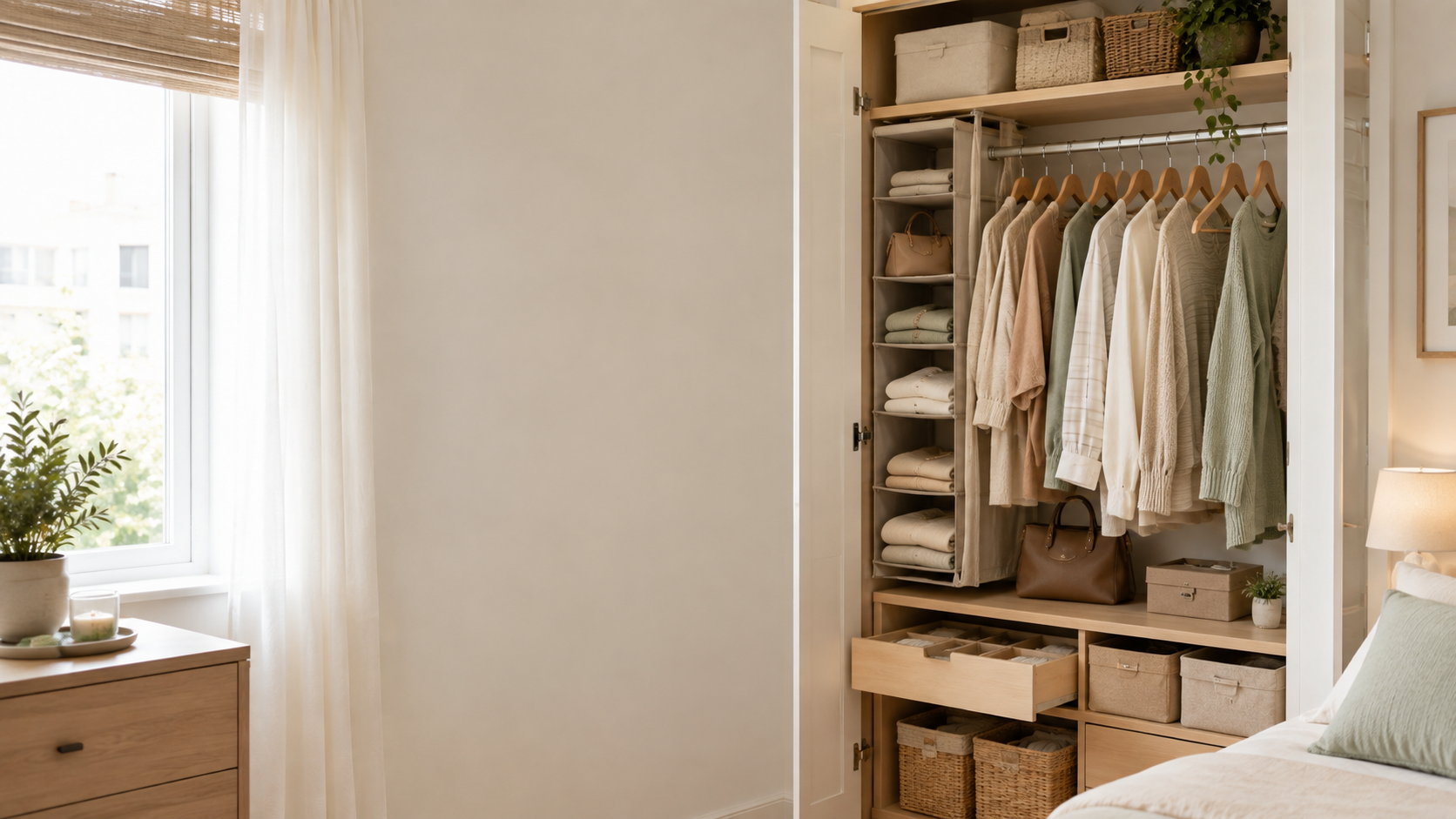
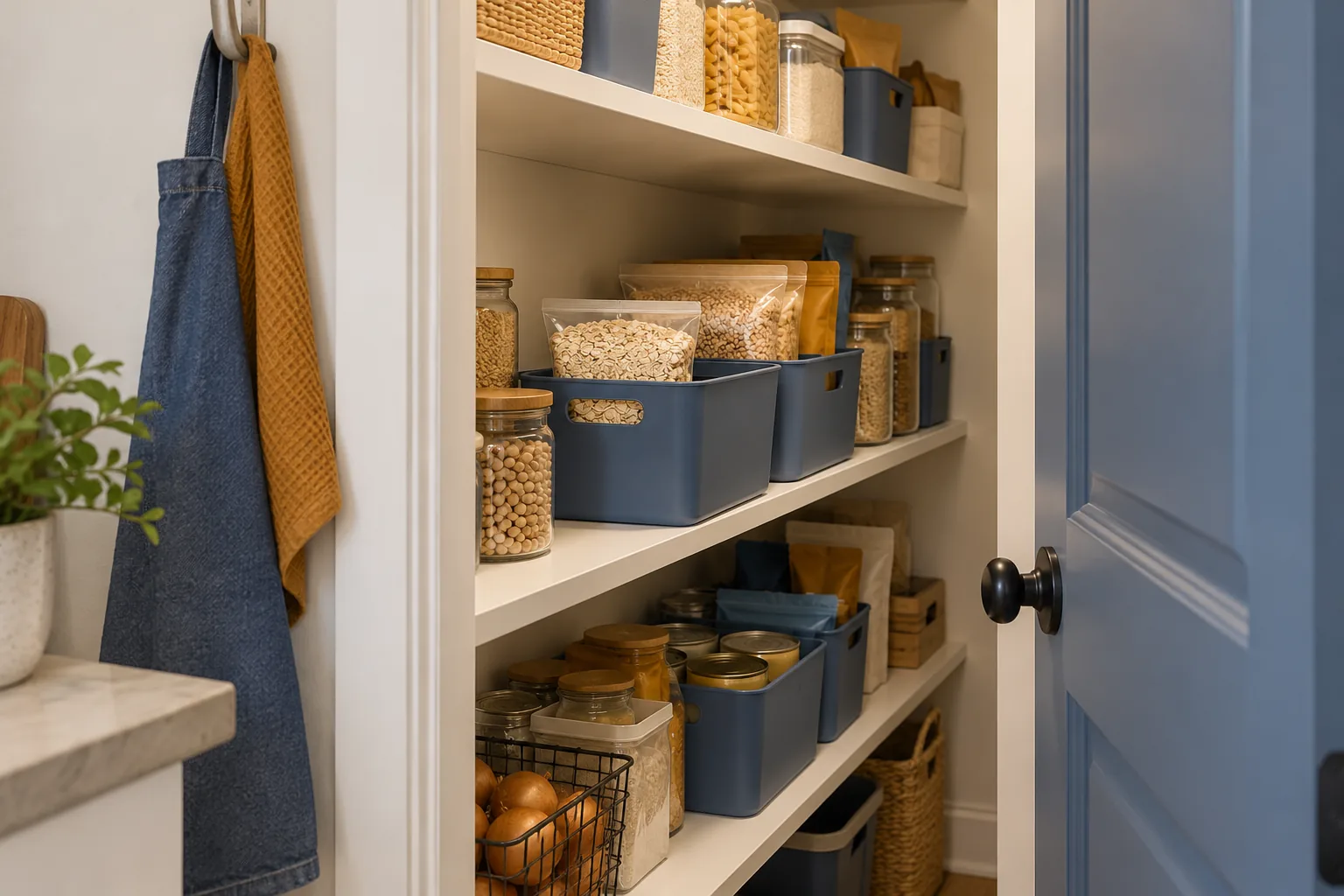
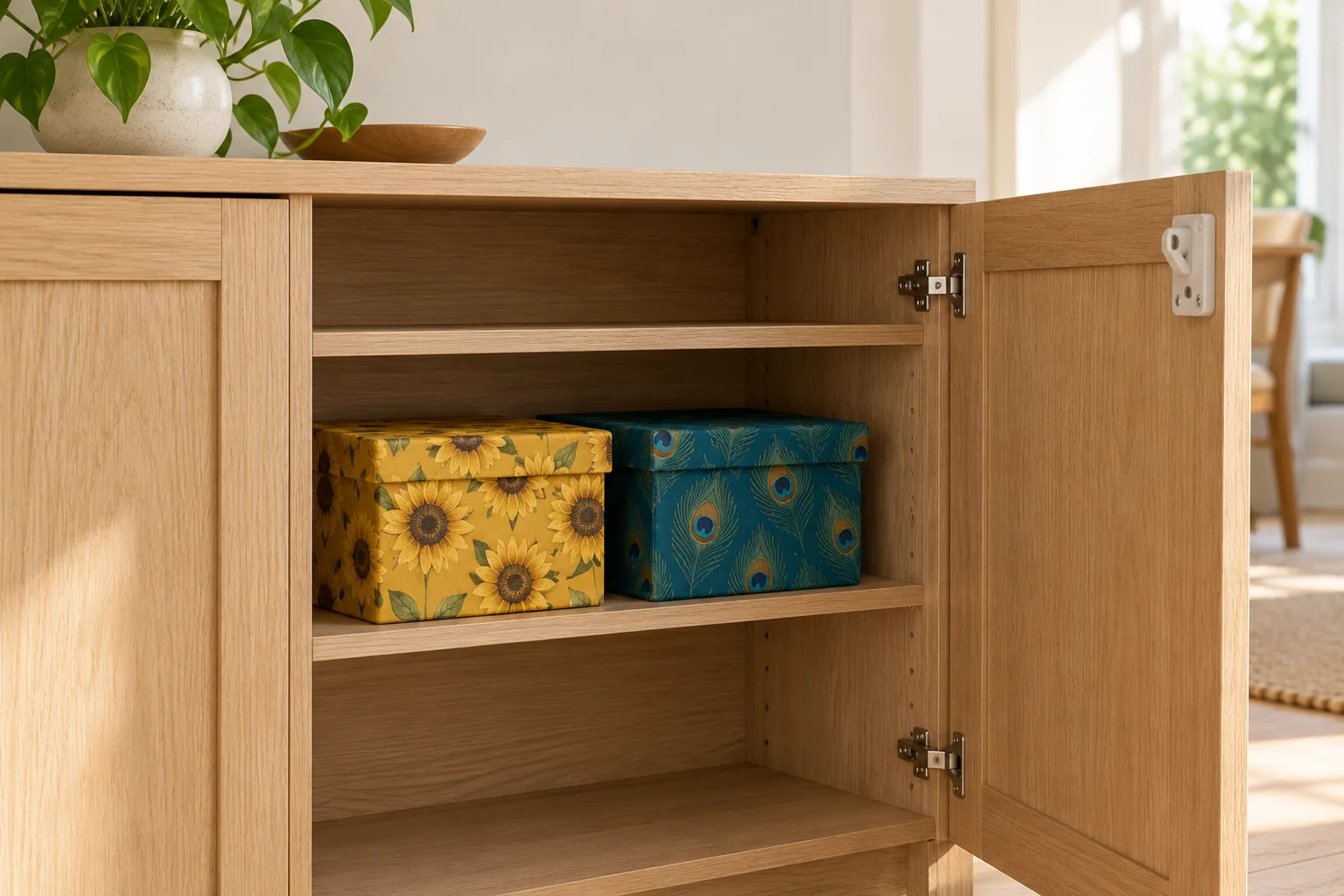
The reused AI-generated SPACELYA cabinet scene illustrates existing shelves and closed boxes. The original planning diagrams explain how to assess a game collection and a temporary playing setup. Their assumptions are labeled; no product fit, shelf load or child-resistant storage has been tested.
A beautiful small space is not about having more. It is about making what you have work better. — Spacelya