Deep Linen Closet Organization for Sheets and Household Textiles
A deep linen shelf can hide a complete spare sheet set behind the towels in front. Organize it around recognizable sets and manageable retrieval rather than building higher stacks. Begin with the textiles in suitable clean, dry condition and follow their care needs.
Keep the system connected to the beds and routines in the home. A clear label can save more searching than another matching basket.
Measure the full shelf and door opening
Record the depth, width and available height, then check the usable opening around the frame and hinges. A container can fit on the shelf yet be difficult to remove through a narrow doorway.
Consider the full loaded weight and shelf capacity. Keep substantial textile bundles in an appropriately supported accessible position rather than making a high shelf the automatic home for every spare duvet.
Measure a folded set too. A king-size fitted sheet and two pillowcases may form a much bulkier bundle than the hand towels used to test a basket in the shop. Try the largest normal clean bundle through the opening and back onto its shelf before committing a whole cupboard to matching containers.
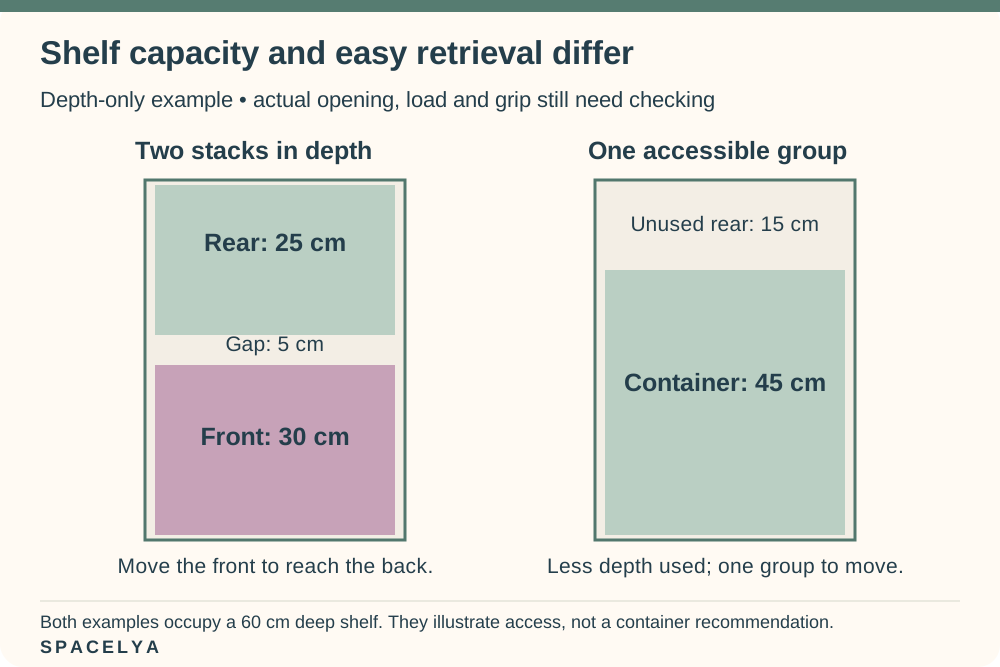
For a depth-only example, a 60 cm shelf can hold a 30 cm front stack, a 25 cm rear stack and a 5 cm gap. Everything fits, but the front stack still has to move to reach the back. A single 45 cm deep container would leave 15 cm unused behind it and could keep that one group retrievable in one movement. Neither layout is a universal recommendation: the width, opening, grip, load and actual textiles must work too. Empty depth can be the price of easier access.
Group sheet sets by bed
Choose a clear way to identify the bed or size each set serves. Keep compatible pieces together in a modest folded group or suitable container. The method should make sense to whoever changes the bedding.
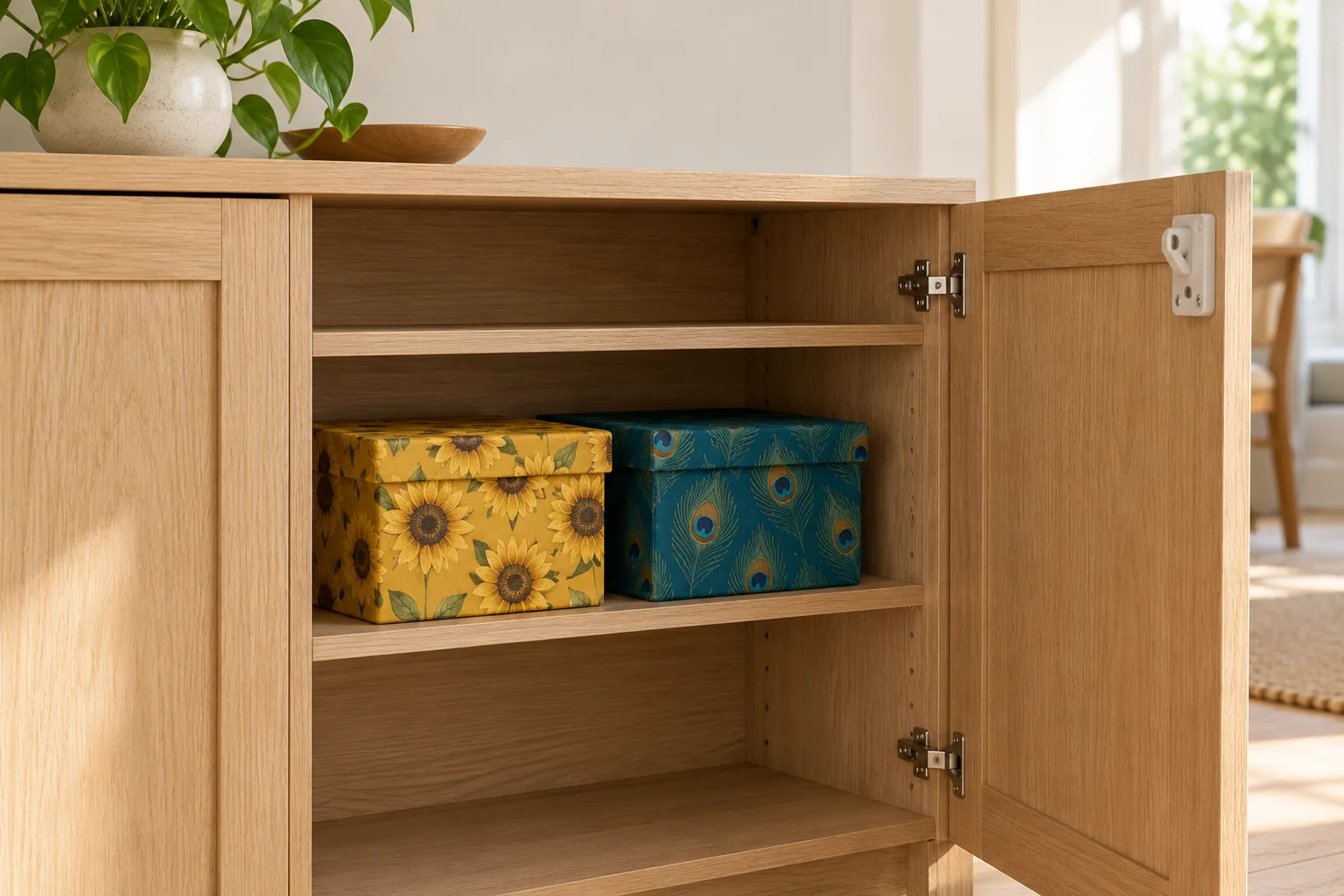
Seafoam labels with a plum detail can distinguish groups without requiring every sheet to match. Avoid a complicated folding routine if it delays putting laundry away. A stable recognizable bundle is sufficient when it remains easy to retrieve.
Use labels that answer a real question. “Main bed — double” and “Guest bed — single” are easier to interpret than “Set 1” and “Set 2.” If two beds use different-depth fitted sheets, include that distinction. Keep a loose pillowcase or spare sheet in its own named group rather than letting it make an incomplete bundle look complete.
After stripping a bed, you should be able to take one replacement group without checking every shelf. Keep the label with the shelf or container when the set goes into the wash, so its home is still obvious on laundry day.
Keep towels in a distinct section
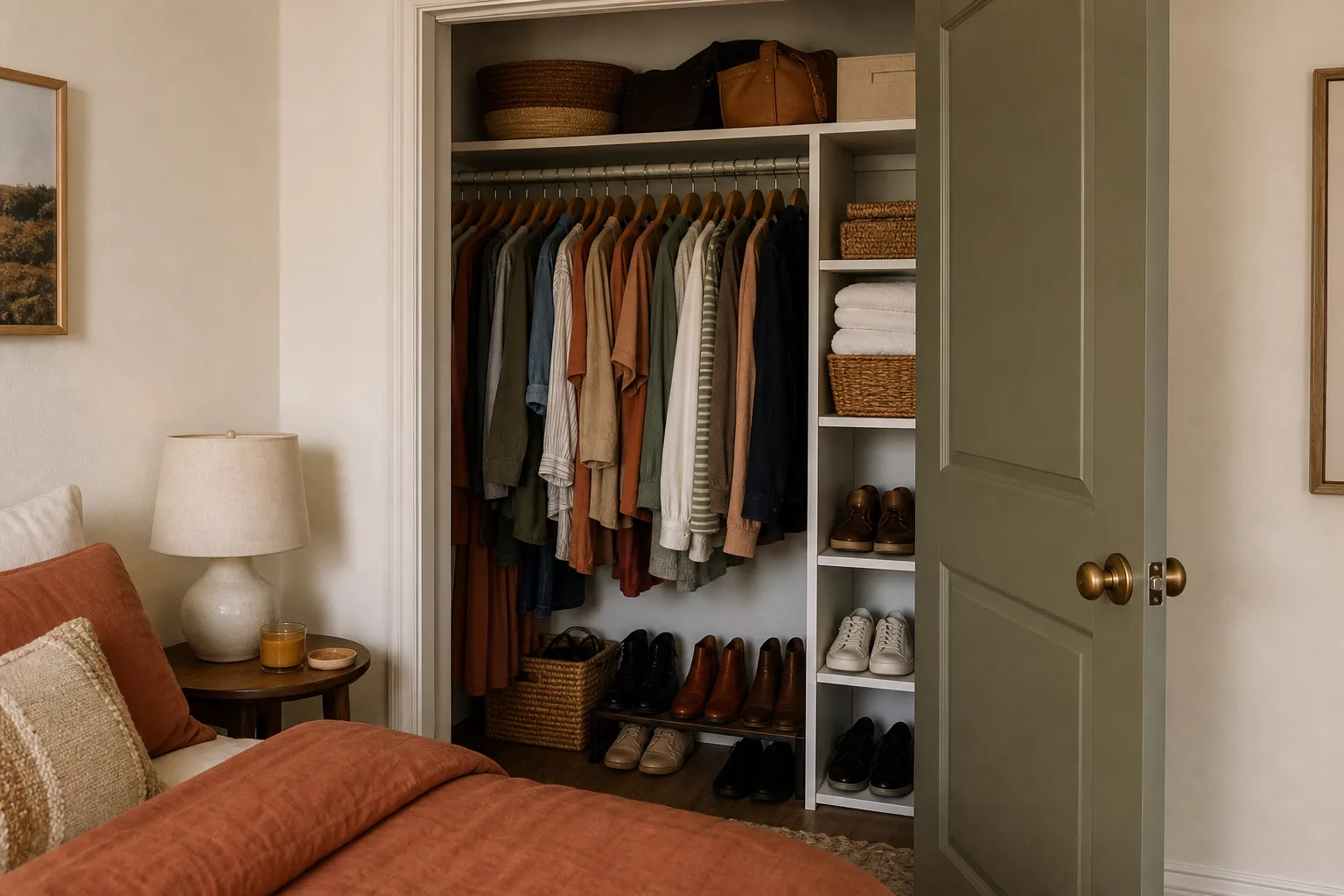
Give appropriate towel stock its own position so it does not conceal sheet sets. Choose stack heights around the shelf and the way towels are removed. Keep the group within comfortable reach and the support limits.
For homes without this closet, our towel-storage guide covers a different problem. Here, the useful distinction is between textile jobs within an existing suitable dry cupboard, rather than finding new room-wide storage positions.
Use handles to retrieve rear stock
A suitable modest handled container can bring an occasional group forward. Check the grip, loaded weight and space above the container. A handle is useful only when the whole group can be moved comfortably.
Keep labels facing the opening and avoid placing another heavy stack in front. If the rear position is difficult to access, reduce the depth used or choose smaller groups instead of filling the last available inch.
Store infrequent textiles above daily stock
Use higher positions only for items that can be retrieved safely with an appropriate means of access. Frequency does not make a heavy bundle suitable for an awkward lift. Keep the cabinet's installation and load guidance in mind.
Our small closet organization guide can help identify other appropriate positions. Follow textile-specific storage advice, especially for bulky or delicate materials, rather than assuming every spare item can be compressed in the same way.
Leave an easy return gap
Take a complete set out and put it back as though returning clean laundry. Notice whether the stack collapses or the container catches the shelf above. Leave room for ordinary variation in folding and bundle size.
Check the arrangement after the next bedding change. If one category always ends up at the front in a loose pile, make its intended home more accessible. The closet works when clean textiles can return without another complete shelf sort.
Test the cupboard when the laundry is back, not only when half the linens are on the beds. A storage system that closes neatly while two sets are in use may overflow on the day a guest leaves. Include those guest linens in the trial once they have been cleaned and dried as their care labels direct.
Keep freshly washed sets behind the next appropriate set to use, when the arrangement allows it. If you cannot see or retrieve an older set without dismantling the shelf, reduce the stack or divide the category. A label is useful; a label hidden behind a second tower is not.
Should each sheet set go inside one pillowcase?
That can be useful for some suitable sets, but it is optional. A labeled shelf group or appropriate container can also work. Choose the method around the textile's care needs, the bundle size and the way the household puts laundry away.
About the illustrations
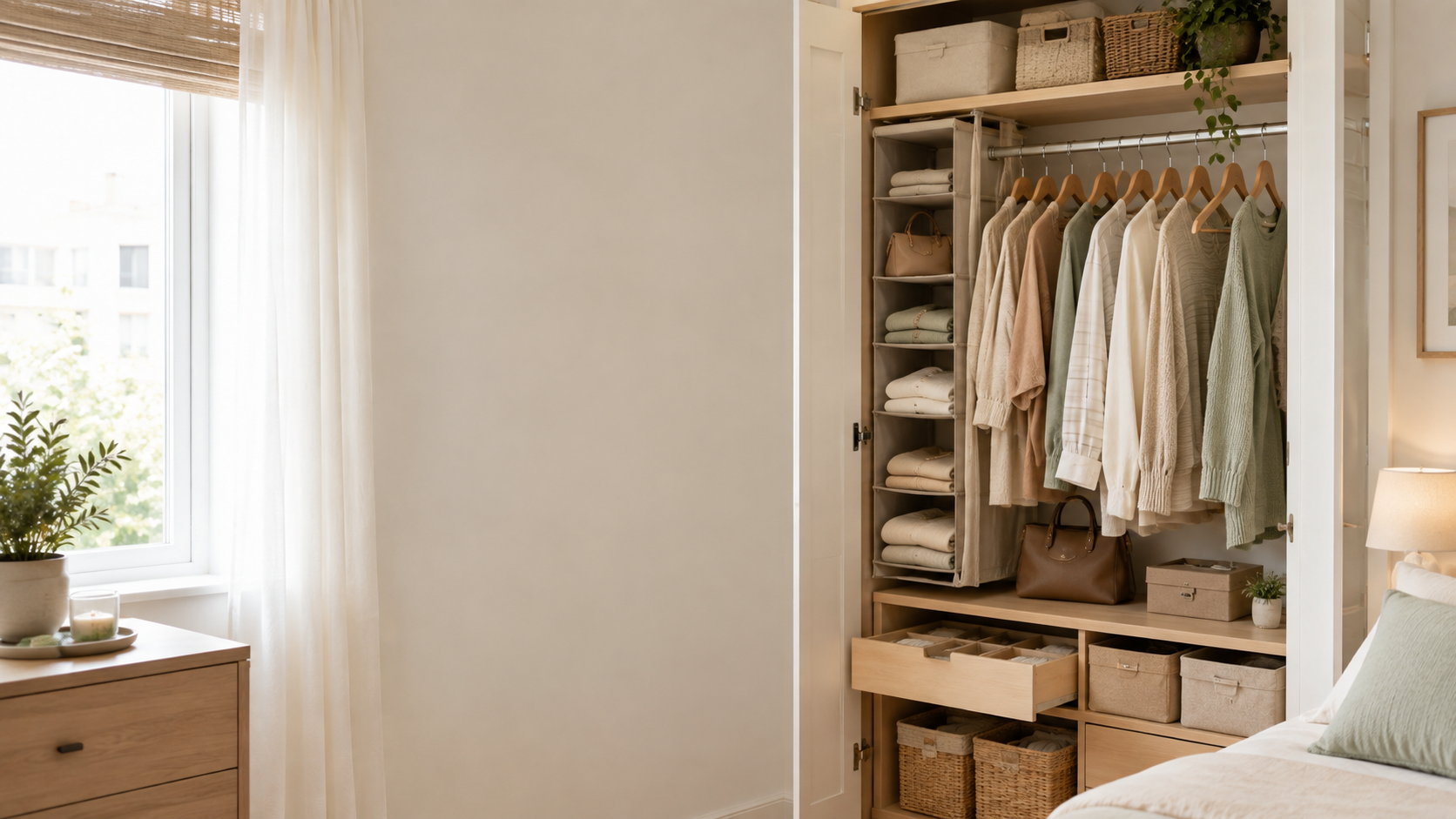
The room and storage scenes are reused AI-generated SPACELYA styling illustrations. They are visual references, not photographs of tested homes or products. The original SPACELYA planning graphic is explicitly illustrative; use the actual room, materials and product instructions when adapting the idea.
A beautiful small space is not about having more. It is about making what you have work better. — Spacelya