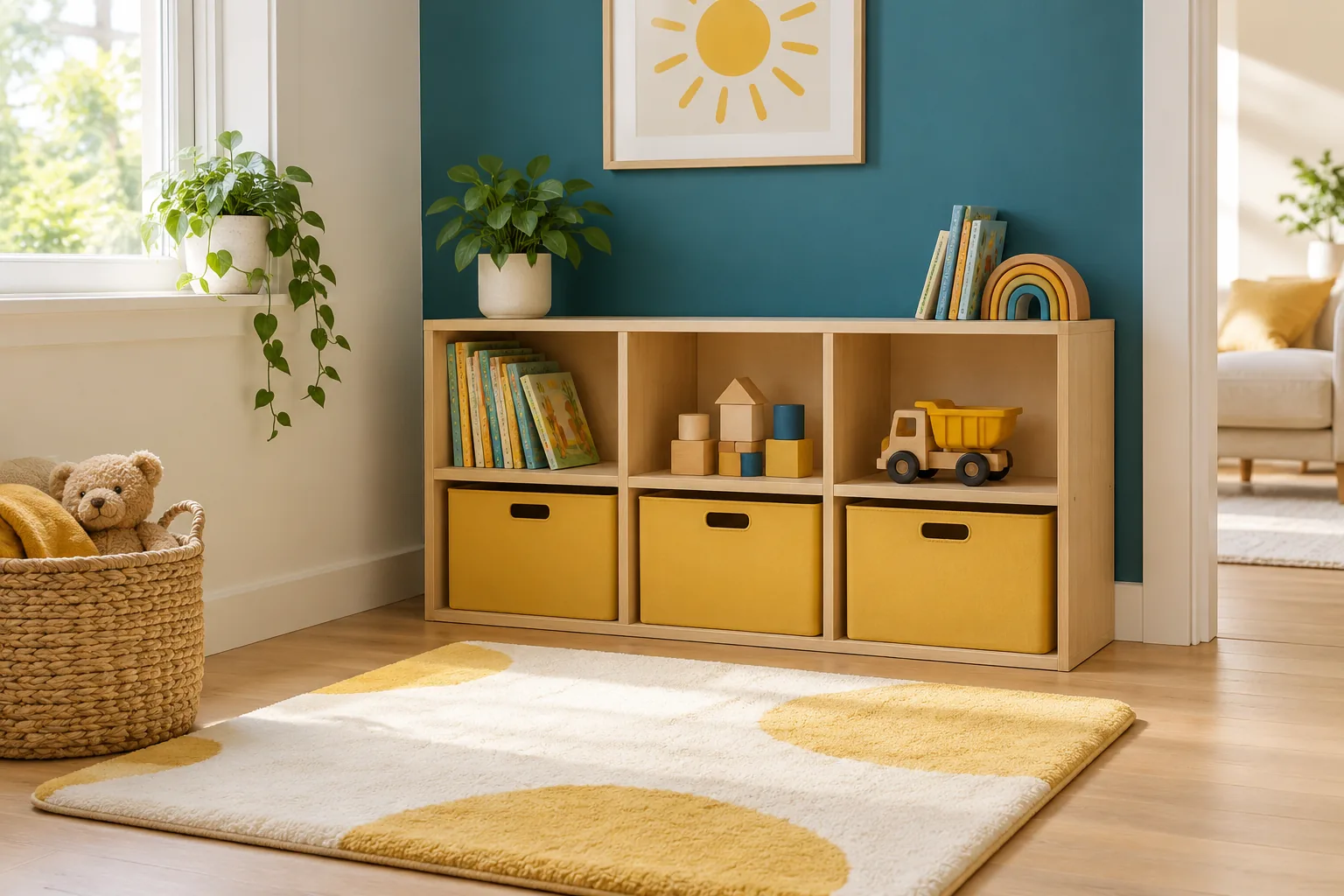
Toy Rotation Storage for a Small Home
The floor can be covered in toys even when most of them have not been used all week. A puzzle loses its pieces among the blocks, another box is opened to find the missing part, and putting things away becomes a search through several half-finished sets.
Toy rotation storage separates a manageable active selection from suitable sets kept elsewhere. It is a way to organize space, not a rule about how many toys a child should own or a promise about development. Start with what is appropriate for the children in the home, then give the reserve a retrievable place. You do not need a strict weekly timetable or a new wall of containers.
Choose a small active selection
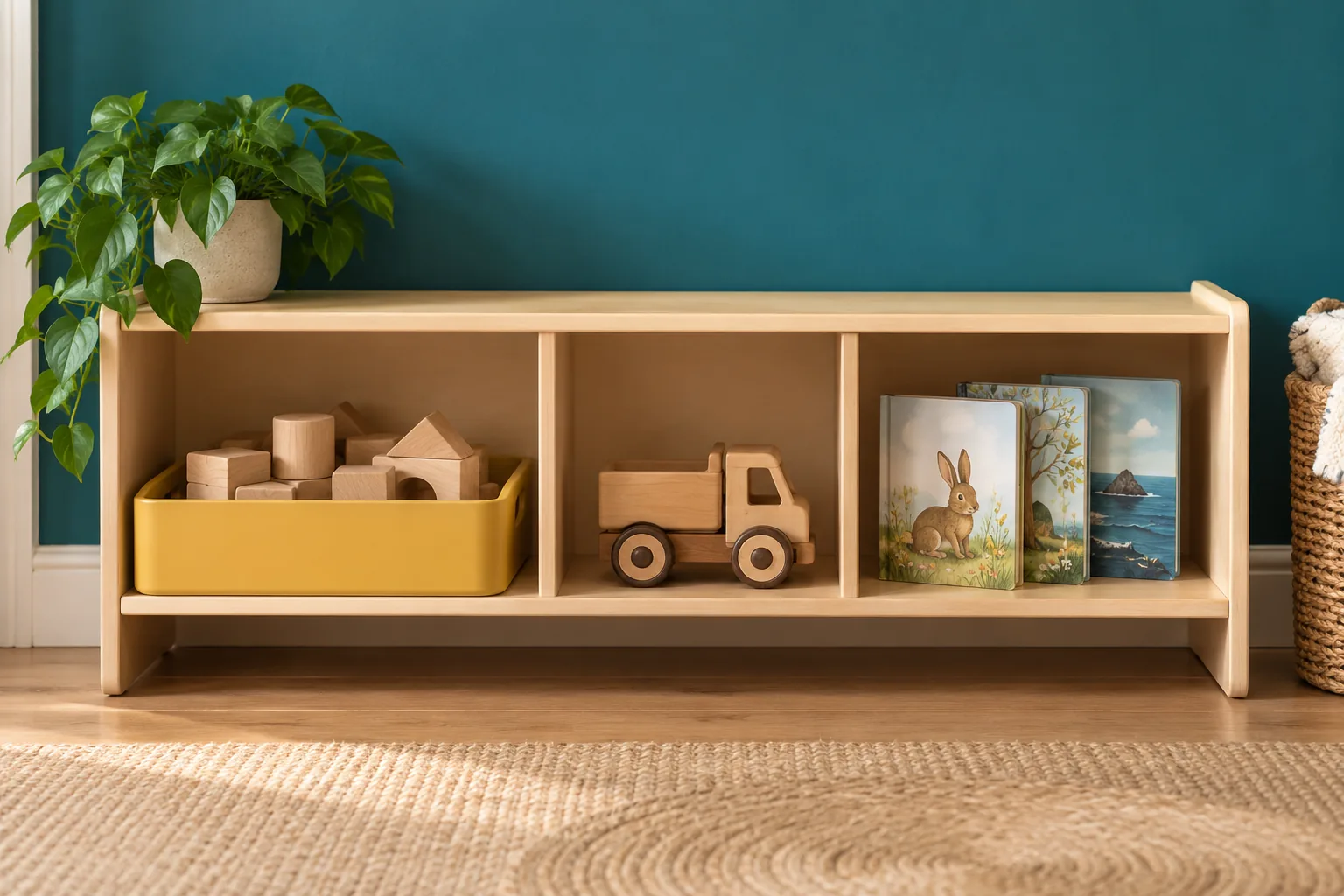
Begin with the toys that are genuinely part of the current routine. Keep suitable favorites available, and choose the other active materials around the children who use the space. A few related play options may be easier to store than several large sets whose pieces immediately mix together. The right quantity depends on their size, the room and the household.
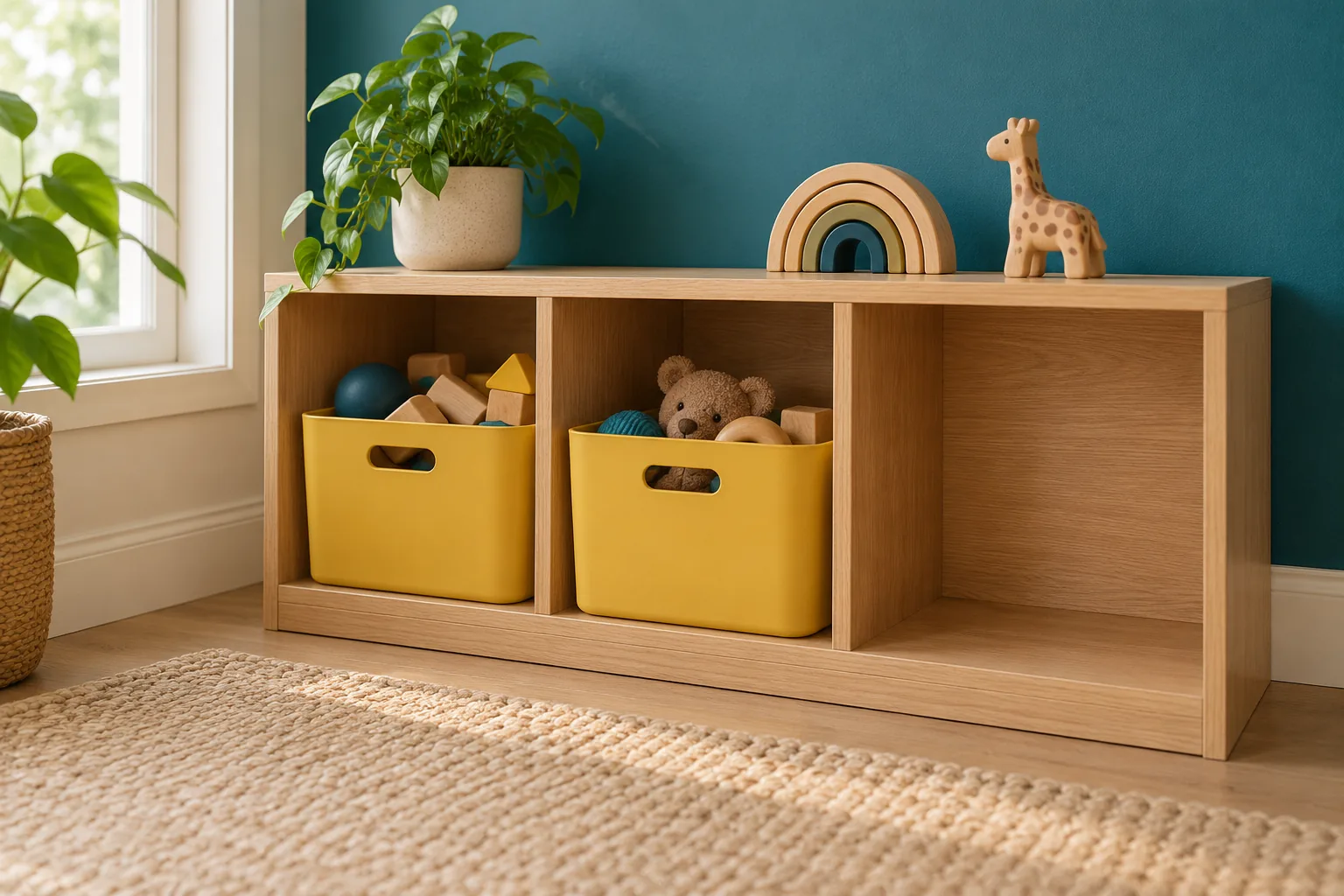
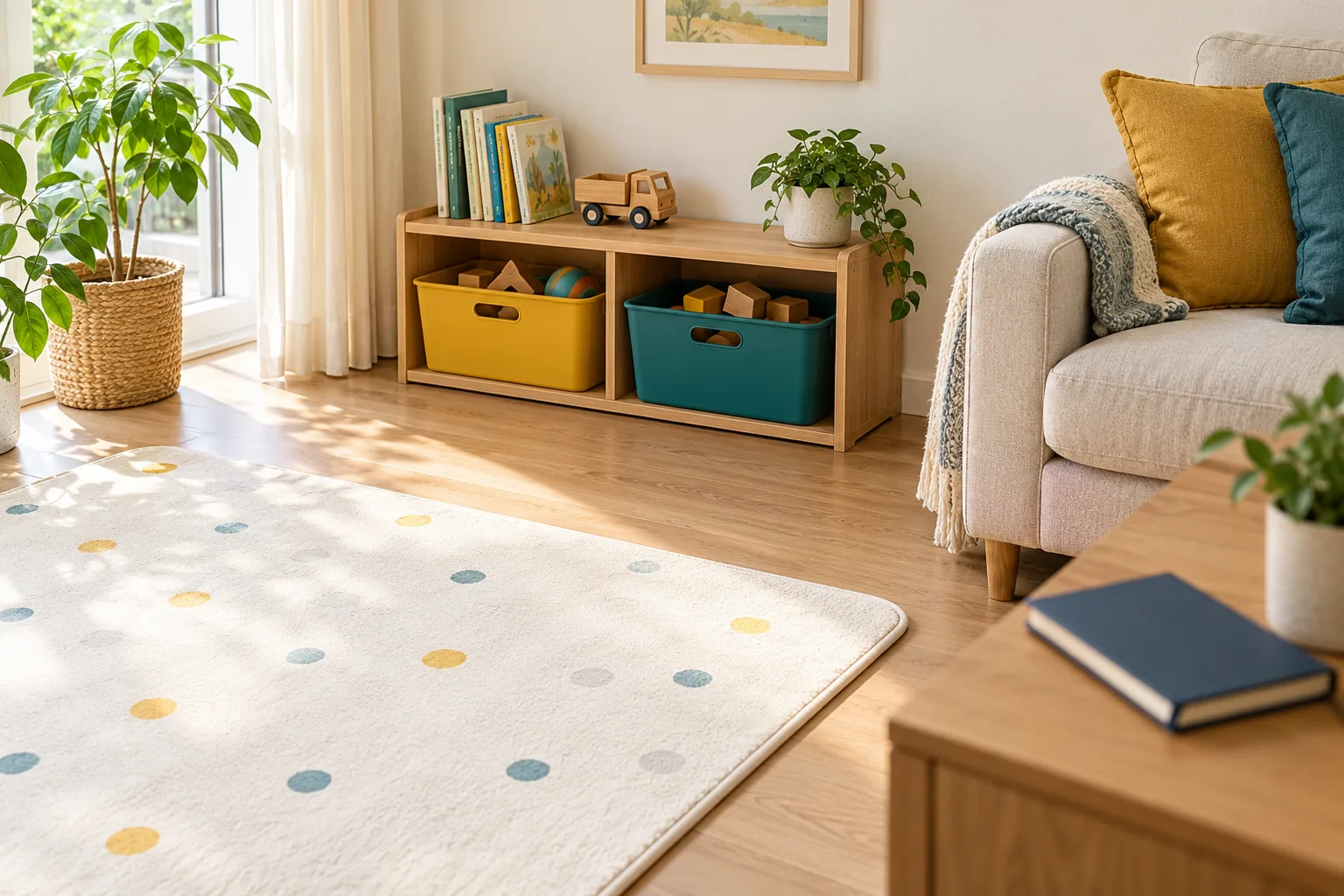
Look at the available home for that selection. A low shelf might hold a block group, a vehicle and a few books with room to take each out. The shelf does not have to be filled to look finished. Check the clear floor needed for play and the route around it, rather than counting every empty cubby as an invitation to add another category.
Follow the toys' age guidance, warnings and intended use. The CPSC's toy-safety guidance emphasizes choosing toys for the child's interests and abilities while keeping unsuitable small parts away from younger children. In a mixed-age home, consider everyone who can reach the active area.
Our children's bedroom storage guide covers the wider relationship between toys, clothes and school things. Here, keep the task narrower: decide what belongs in the active toy group before assigning storage to the rest.
Group complete sets together
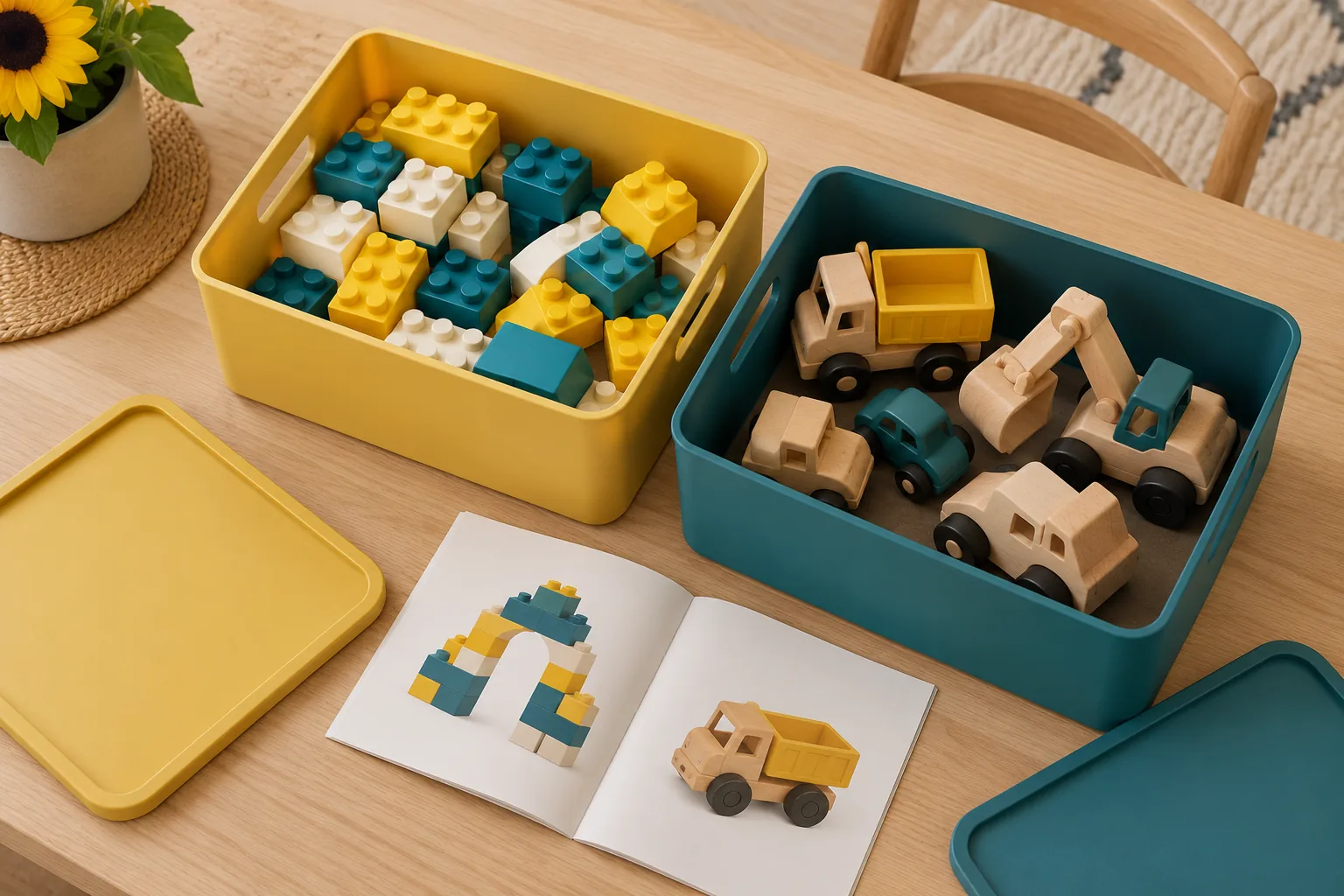
Sort by what needs to be used together. That may mean the board and pieces of a game, a construction set with its instructions, or the accessories that belong to a particular vehicle. Keep the identifying information and relevant safety guidance so the set remains understandable when it comes back out later.
Check the contents before storing them. An incomplete puzzle should not quietly enter the reserve and become the next confusing swap. Give missing pieces an adult-managed decision: find the part, follow the manufacturer's advice where needed, or decide whether the remaining item still has an appropriate useful role. Do not mix unidentified pieces into a shared toy box just to finish sorting.
Use a modest container suited to the contents and the responsible adult's handling. Try the existing box before buying a replacement. It should be easy to retrieve, open and put back without unpacking several unrelated groups. A large bin may hold more toys while making each individual set harder to find.
Items with batteries, magnets or small components need their own appropriate storage and access decisions, following current product guidance. A broad label saying “building toys” does not make every piece suitable for the same child. Keep those differences clear even when the containers share a color.
Keep stored sets in an appropriate closed place
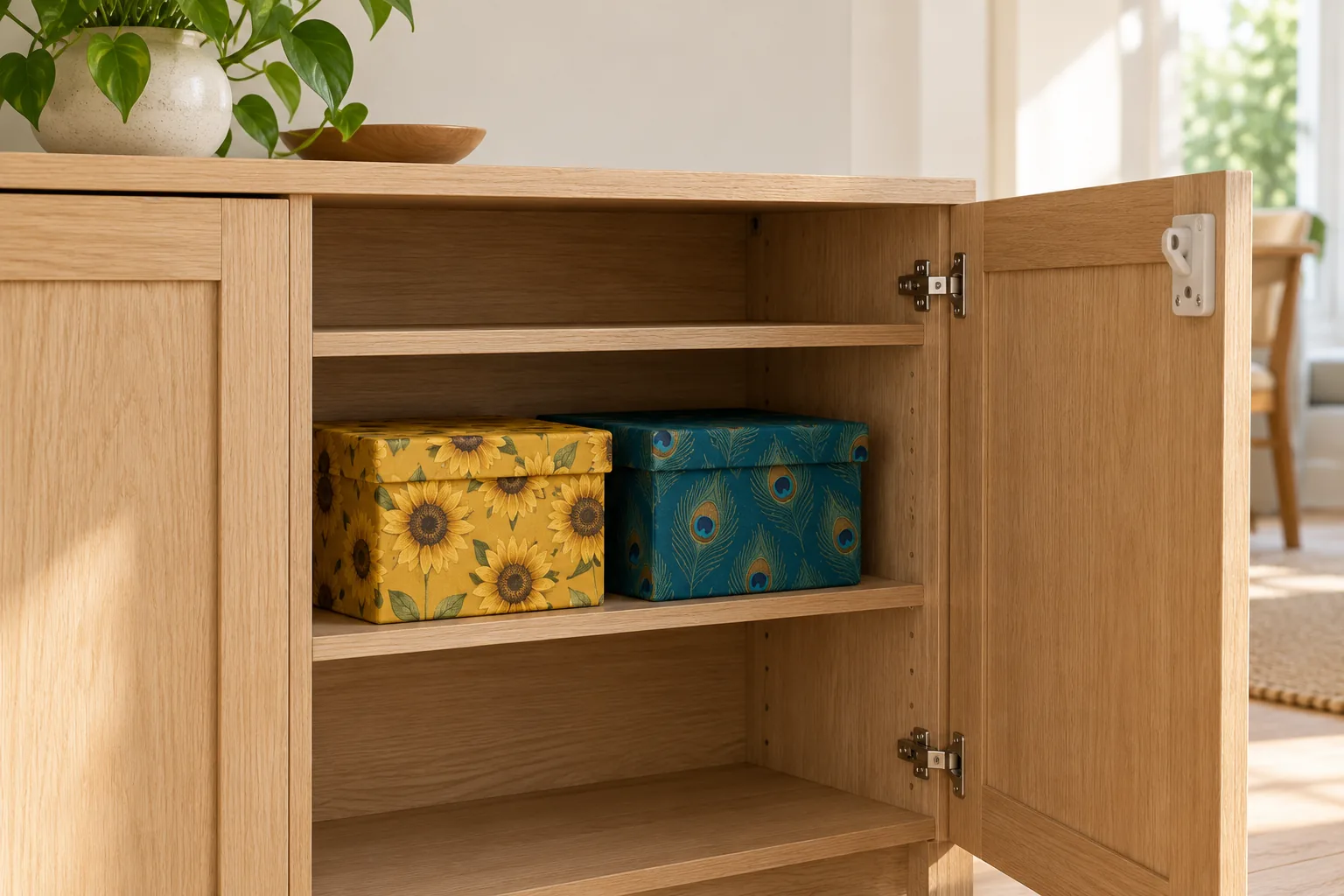
Choose the reserve location before removing a large quantity from the play shelf. A modest section of an existing cupboard may be enough. Use stable storage, appropriate access restrictions and furniture secured according to its instructions; avoid arrangements that invite children to climb to reach visible toys.
Keep the reserve manageable for the responsible adult too. A set that is trapped behind heavy household boxes is unlikely to be easy to rotate. Use a place where you can lift the appropriate container comfortably and return it without balancing several others. Heavy or awkward groups should not become a high-shelf solution simply because they are out of daily use.
For the active play area, Health Canada's toy-storage advice favors suitable open containers and warns against heavy toy-box lids and airtight bins children could enter. Keep reserve containers and adult access arrangements separate from containers offered for independent play. A decorative lid is not a child-resistant system.
Peacock and sunflower can make the storage cheerful without adding more objects. Repeat those colors through a few useful bins or flat category pictures, leaving the cupboard's capacity for the actual sets. This is a reserve for current useful toys, not a reason to create a growing archive of everything the household has ever owned.
Use simple category images for identification
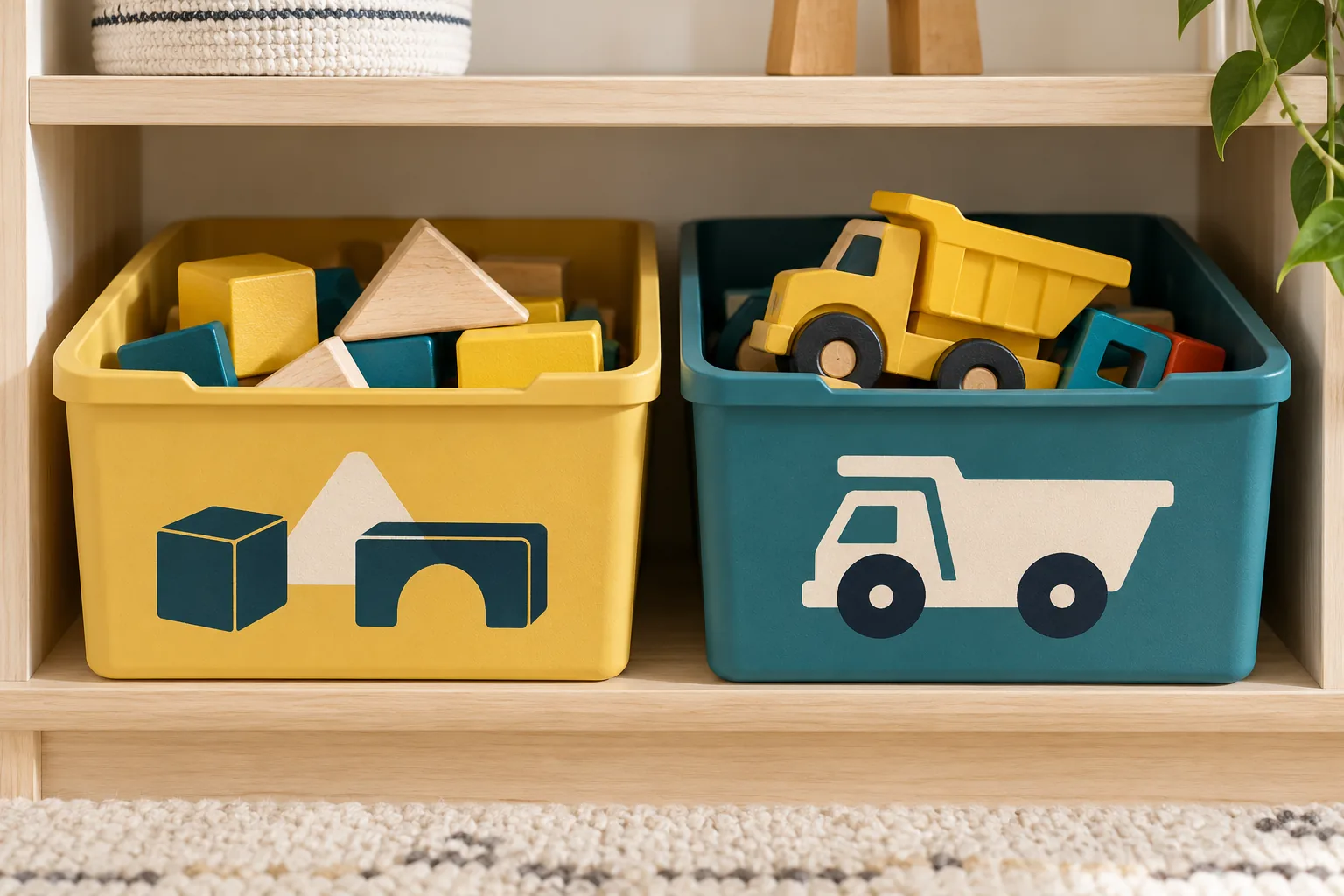
Make each category easy to recognize before developing an elaborate coding system. A clear picture of blocks or a vehicle can identify a broad group where that suits the users. A short written label can sit beside it when helpful. Use the word or image people in the household already understand.
Match the label to what the container really holds. If two sets must stay separate, give them separate identities rather than one general picture on a large mixed bin. If the category is broad enough to change over time, use an image that does not promise one exact arrangement of pieces.
Keep any label appropriately attached for the container and the children present. Avoid dangling tags, loose small attachments or a decorative fastening that creates another unsuitable component. Check worn or peeling labels during the ordinary review rather than assuming the first attachment lasts indefinitely.
Color can provide a second clue, but it need not carry the whole system. The sunflower bin might hold the active building group and a peacock one another activity; the picture still explains what belongs there if the colors are similar in dim light. The useful test is whether the contents can be identified and returned without opening every box or consulting a separate chart.
Leave a return space
A swap needs somewhere for the outgoing set to go. If the reserve cupboard is completely full and the active shelf is packed as well, bringing out another container adds a pile to the floor. Leave enough capacity for the transition instead of planning storage only for the final tidy arrangement.
That might be one empty bay, space beside the reserve group or a suitable adult-controlled surface used briefly while checking a set. It should not become a permanent overflow basket. Keep the route, furniture access and children's safe sleeping spaces available while the change happens.
A simple swap can start with returning one outgoing set, checking that its necessary parts are together and putting it in its assigned place. Then bring the next suitable group into the space released. Favorites that are still being used do not have to disappear simply because you are changing something else.
Where play shares a bedroom, our shared children's bedroom layout guide can help protect the movement around beds and storage. Do not use a bed or the doorway as the reserve's temporary home. The transition is part of the storage system and deserves its own small amount of space.
Review what is actually being used
Notice use before setting a timetable. Which sets are repeatedly chosen? Which are ignored because pieces are missing, the activity needs help or the container is difficult to open? Those are different situations and do not all call for another swap.
Where appropriate, involve the child in a straightforward choice between suitable options. Keep the conversation practical rather than treating a favorite as a problem that must be removed to make the shelf look balanced. A household may keep a few dependable items available while changing one or two other groups as interests and routines change.
Use the review to check condition as well. Stop offering damaged or otherwise unsuitable items, follow the manufacturer's guidance, and check the relevant official recall source when reviewing a particular product. Do not pass an unresolved safety problem into the reserve for later or donate it as somebody else's decision.
Finally, look at the storage itself. Can the responsible adult retrieve a set? Can the active group be put away without squeezing pieces into a full bin? If the reserve keeps expanding, decide what still has an appropriate future role rather than automatically buying the next stack of boxes. The system should make the selection easier to manage, not create another organizing job.
Does toy rotation need to happen every week?
No fixed interval suits every household. Change the suitable selection when actual use and available space suggest it. Keep appropriate favorites where they are useful and avoid making a full swap simply to meet a calendar. A small understandable change may be enough.
What if I have no cupboard for reserve toys?
Start with the suitable storage you already have and the quantity it can handle. A modest adult-managed section of existing household storage may work, provided the location and access are appropriate. If there is no practical reserve location, simplify the active selection and storage overall instead of creating an obstructive pile of rotation bins.
How do I manage toys for different ages?
Use the product's age guidance and the access needs of every child who uses the home. Keep unsuitable components out of younger children's reach through appropriate storage and supervision. A container color or picture label identifies a group; it does not replace those safety decisions or make mixed-age materials interchangeable.
Keep the reserve as simple as the play area
Choose a useful active selection, keep sets identifiable and leave room to put them back. Then review the system through ordinary use. Toy rotation can remain a small storage habit, with color in the useful containers and enough clear space for the room's other jobs.
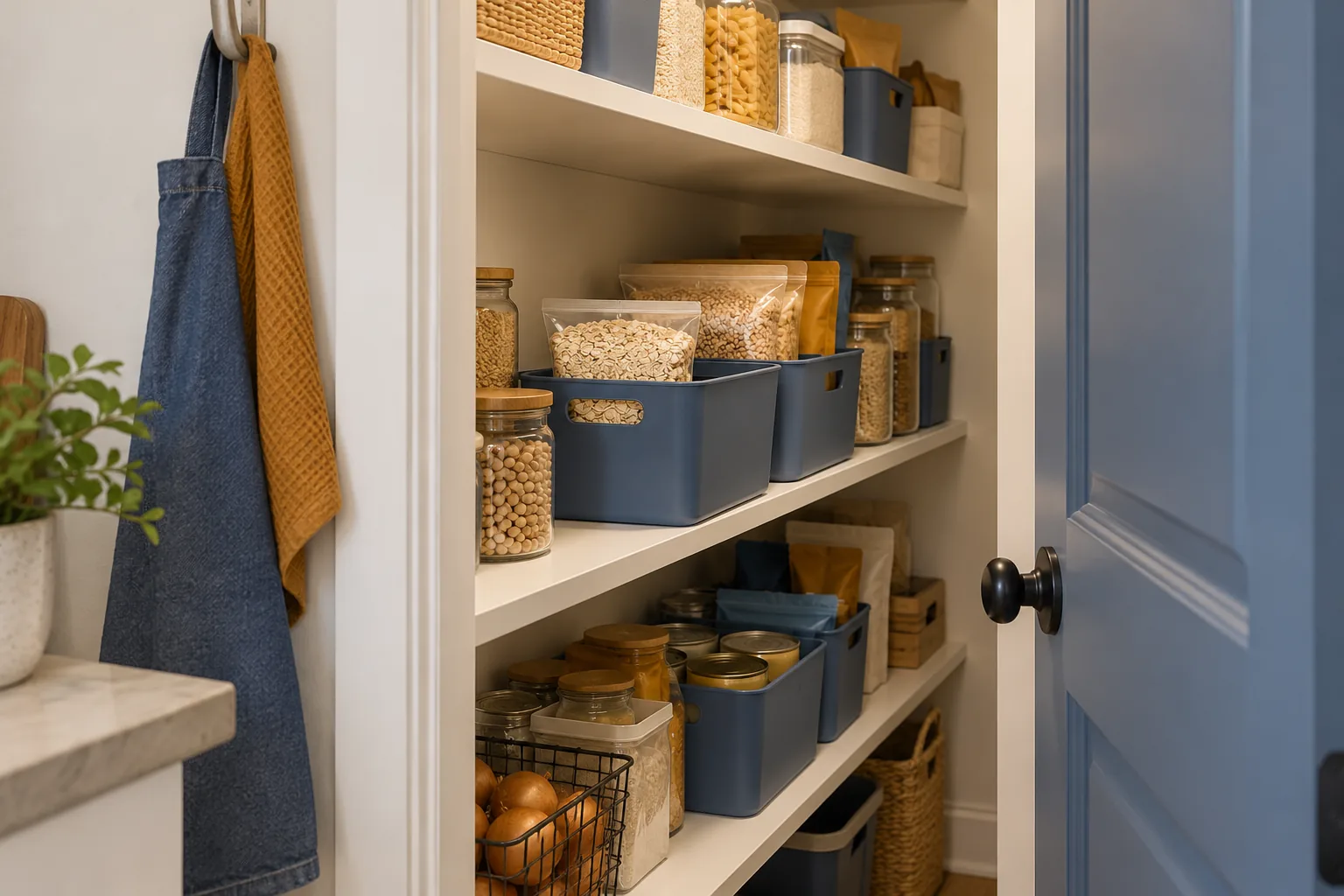
Images are AI-generated storage concepts using generic toy forms, not assessments of toy suitability or proof of a particular installation's safety. Follow actual product guidance and choose storage and access appropriate to the children present.
A beautiful small space is not about having more. It is about making what you have work better. — Spacelya