Small Bedroom Accent Walls: Choose the Wall Before the Color
You find a blue you love, paint the wall behind the bed, then discover that the wardrobe hides half of it and the open door hides the rest. The color may be lovely; the wall simply did not give it much room to work.
A small bedroom accent wall works best when it belongs to the room's layout. Before comparing shades, decide which view needs a focal point and how much wall is actually visible. The six approaches below help you work around windows, choose clear paint boundaries and use a fabric alternative when repainting is unsuitable. You can make one modest change without adding another object to the floor.

Choose the least interrupted bed wall
Start with the bed in a position that works for sleeping, opening storage and getting dressed. A colored wall should support that arrangement. It is rarely worth squeezing the bed into an awkward place just to create a symmetrical paint feature. If the layout still feels unsettled, our small bedroom layout ideas can help you decide where the furniture belongs first.
Then look at the wall above and beside the headboard. A continuous surface often gives a strong color a clear shape. Notice where a tall wardrobe, door or curtain interrupts it. You may find that a short visible wall at the end of the room offers a more coherent accent than the nominal bed wall.
Check with the bed made as you normally use it. A tall upholstered headboard and several pillows can conceal a substantial part of the paint. Hold a generous physical sample in the area that remains visible, rather than judging a tiny chip close to your face.
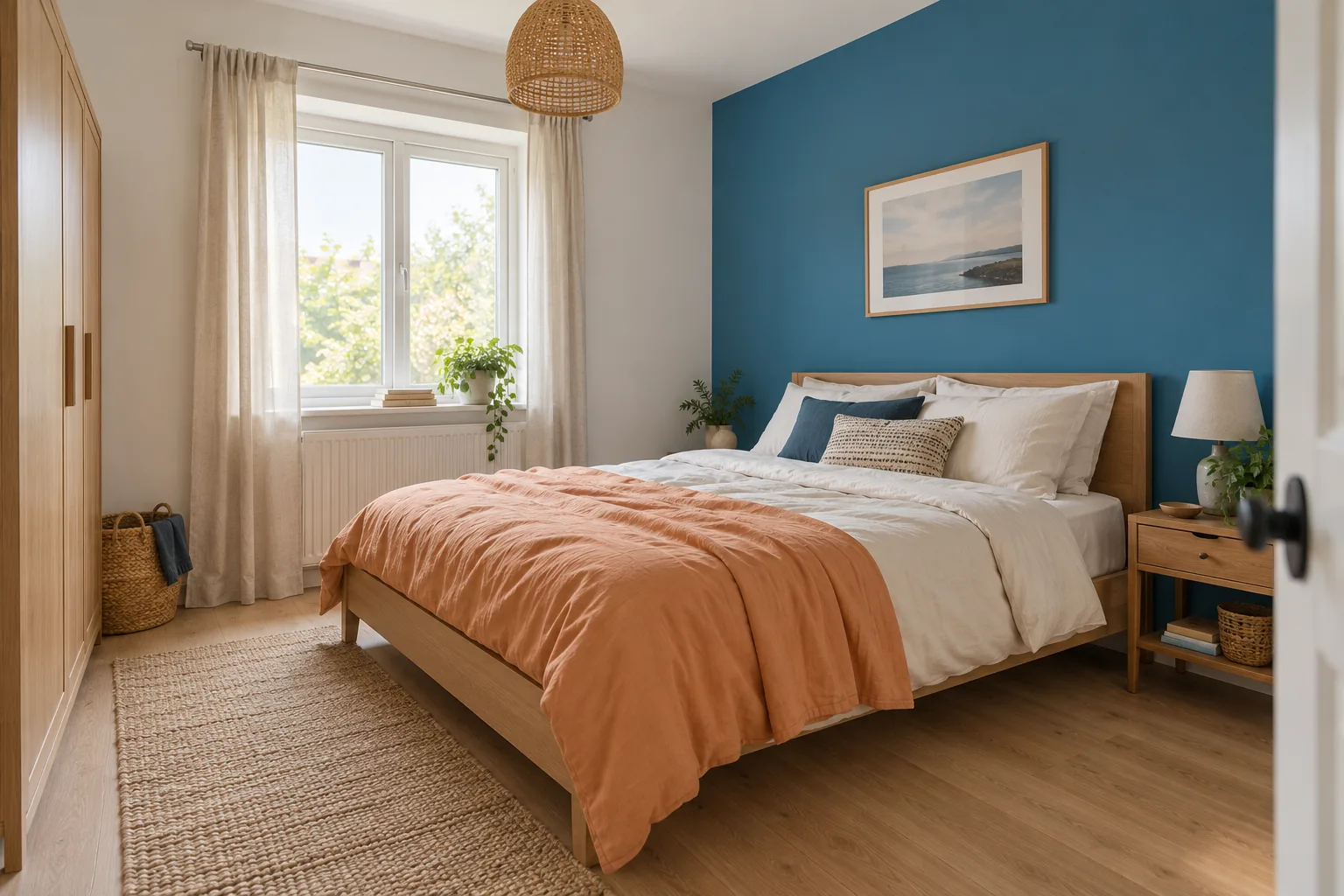
For a cheerful combination, try cerulean on the wall with apricot in a useful throw or pillow. Keep enough quiet space around the color for the bed and its outline to remain easy to read. These are palette suggestions, not a requirement to replace your bedding or buy matching accessories.
Work around an off-center window
An off-center window is part of the wall's composition. Start by looking at the opening, bed and curtains together. Where the wall still reads as a single surface, painting it from corner to corner can acknowledge the asymmetry rather than trying to disguise it.
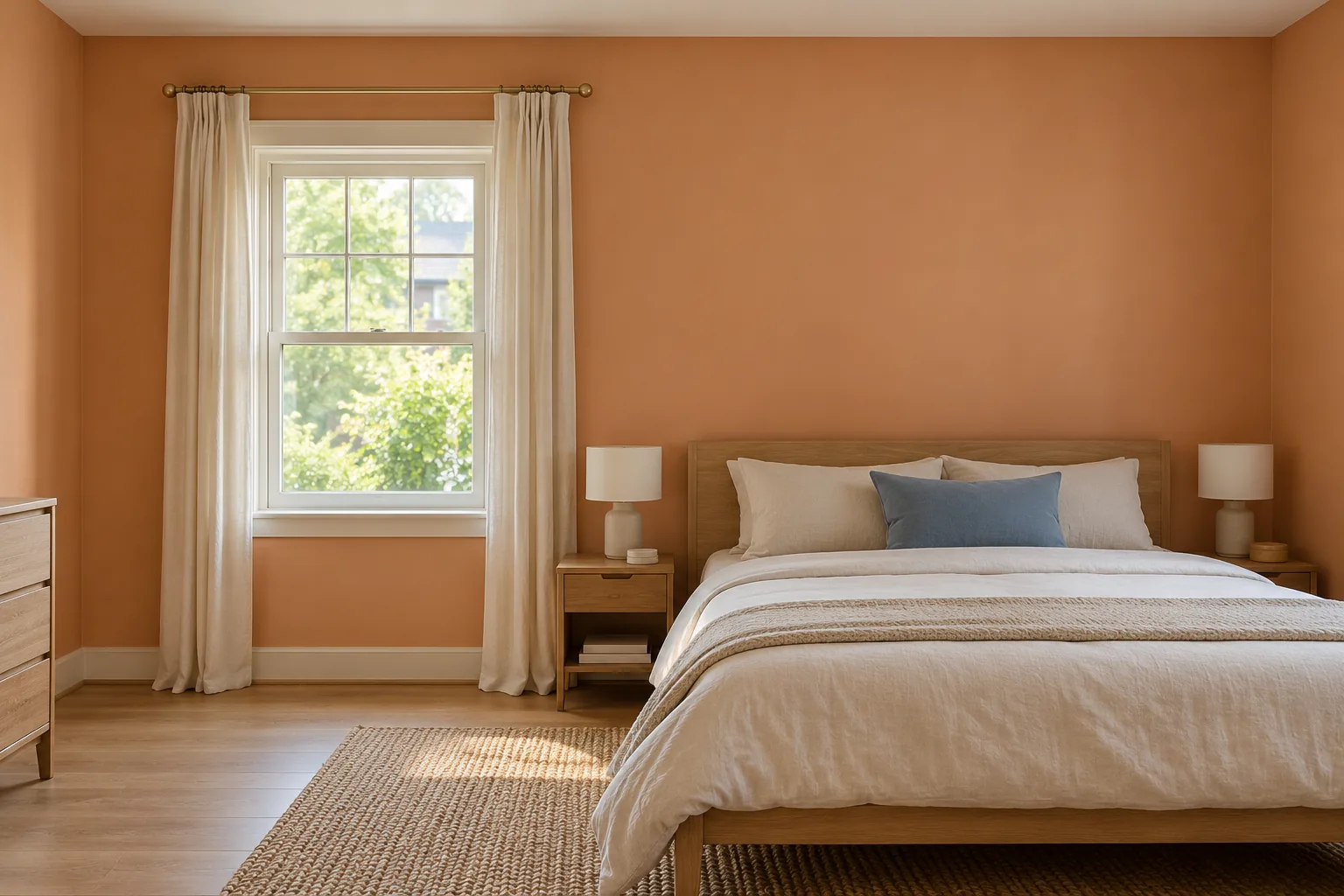
Imagine a window toward one end and a bed beside it. A soft apricot across the whole wall can connect the two, with simple pale curtains keeping the window distinct. That is different from painting a narrow rectangle beside the window solely to imitate a centered feature. The extra painted edge may create another shape to compete with the opening.
Open the curtains and the window as intended before settling on the arrangement. Keep controls, ventilation openings and access available. A newly painted wall should not depend on permanently closing a curtain over something you use. Check the view with curtains both open and drawn, since the amount of visible color can change considerably.
If the surface feels too fragmented, choose another wall or let the headboard provide the accent. You do not have to solve every asymmetrical feature with more paint. A deliberate relationship between bed, window and color is more useful than a room forced into false symmetry.

Stop color at a natural corner
Existing corners usually offer a straightforward place for an accent color to end. Before painting, trace the proposed boundary with your eyes from the floor to the ceiling. Check returns beside a wardrobe, recesses near the door and any short section that disappears behind a curtain.
Look at those edges from the doorway as well as from beside the bed. A small strip wrapped around a corner can become surprisingly noticeable from the entrance. Unless that wrap is a deliberate part of the design, keeping the adjacent wall pale may give the main surface a clearer outline.
Treat trim and the ceiling as decisions too. You can keep existing pale trim as a boundary if it suits the room. You do not need to repaint doors, skirting and every adjoining surface just because one wall is changing. A simple meeting of cerulean and warm white may provide all the definition the room needs.
Use a finish and preparation system appropriate to the actual surface, following the paint maker's instructions. Agree on changes in a rental before painting. If the wall has a damp patch or failing finish, address that underlying condition before choosing a decorative treatment. An accent color is a finishing decision, so it needs a sound surface to begin with.
Try a broad stripe instead of a full wall
A broad painted band can bring color behind the bed while leaving much of the wall pale. It is useful when a full wall feels stronger than you want, or when you would like the color to relate closely to the headboard rather than the entire room.
Plan the band with the actual bed and pillows in place. If its lower boundary disappears behind the headboard and its upper boundary sits just above the pillows, it may read as a small accidental strip. A broader visible area can look more deliberate, but there is no universal height that suits every bed or ceiling.
Make a large paper mock-up or another surface-safe temporary outline before committing. Look at how the band meets switches, bedside pieces, the window and the room's corners. You may want it contained on the bed wall or deliberately continued onto a return; judge that boundary as part of the whole composition. Follow the temporary material's surface instructions and test removal where appropriate.
Apricot makes a warm band against a pale wall, with a small cerulean textile linking it to the bedding. Keep the rest of the arrangement simple while you assess the shape. A band, an arch, a patterned headboard and several prints can compete for the same small area. One clear treatment is enough to begin with.


Use a textile headboard when painting is unsuitable
If the wall must stay as it is, a colored upholstered headboard can supply a substantial accent through a piece the bedroom already needs. A modest apricot headboard against a pale wall, with cerulean bedding, can create a focal point without repainting or adding freestanding decor.
Check the full bed dimensions before choosing upholstery. A thicker frame or wider headboard can take space from a bedside route or prevent a wardrobe door opening. Compare the finished depth with the bed you have, including how the headboard is meant to be fitted. Follow its mounting or frame-attachment instructions; a loose padded panel leaning behind pillows is not an equivalent installation.
Choose a fabric and care routine that suit daily use. Look at a real sample beside your bedding and existing wall color. Texture can provide interest even with a relatively quiet shade, while a very busy pattern may need fewer surrounding accents. Consider whether the surface will remain comfortable to use and straightforward to maintain.
Keep the accent contained in the bed itself before adding artwork or a fabric hanging above it. This also makes a future color change easier to understand: the useful headboard or bedding carries the scheme, while the room's remaining surfaces can stay calm.
Test the view from the doorway
Stand at the entrance with the door in its usual position and look at the proposed wall. Is the focal point where you expected, or does a wardrobe edge divide it? Then sit or lie in the bed and consider the view you will actually spend time with. Both positions matter more than the angle of a photograph.
Try a physical color sample in the chosen position and examine it in daylight and under the evening lights you normally use. Sherwin-Williams' color-selection guidance also recommends checking a paint sample at different times and in different lighting. A screen preview can narrow options, but the physical room is the useful final check.
Keep ordinary bedding, curtains and furniture in view during the test. An apricot sample can read differently beside an existing pink duvet than it does beside white linen. If you like the wall only after mentally replacing everything around it, try a different shade or reduce the painted area before expanding the project.
For richer whole-room palettes, our dark and cozy small-bedroom guide explores that separate approach. Here, finish by choosing one wall, one clear boundary and a shade that belongs with the things you intend to keep.

Which wall should be the accent wall in a small bedroom?
Begin with the wall that can support a coherent focal area once the bed and storage are in useful positions. The bed wall is a good candidate when it remains reasonably visible and uninterrupted. A different wall or a colored headboard may work better when doors, windows or tall furniture divide that surface.
Will an accent wall make a small bedroom look smaller?
There is no single result for every room. The amount of visible color, its contrast with neighboring surfaces, the light and the furniture all affect the impression. Test a generous physical sample in the actual room. If the full wall feels too strong, try a softer shade, a broad band or a textile accent.
Do the curtains and bedding have to match the accent wall?
No. They need to feel comfortable together, but an exact matching set is optional. Start with what you own, choose one useful textile that relates to the wall if needed and leave other surfaces quieter. A small repeated color can connect the room without turning every object into an accent.
Make the wall decision first
Settle the bed position, choose the surface you want to emphasize and test its boundaries. Then compare colors in that specific place. It is a manageable way to bring personality to a small bedroom while protecting the layout that makes it work every day.
Images are AI-generated styling concepts showing different accent treatments, not before-and-after evidence or exact paint-color samples. Check physical samples, product instructions and any rental permissions in your own room.
A beautiful small space is not about having more. It is about making what you have work better. — Spacelya