20 Small Balcony Ideas for Renters
Before decorating a rental balcony, find out what your lease and building rules allow for furniture, screens, planters and lighting. A balcony's size alone does not tell you what it can safely carry or what may be attached to its railing. Ask the building manager about unclear restrictions rather than estimating structural limits.
Measure the usable floor, door swing, drainage points and route back inside. Notice sun, rain and wind over several days. Start with one purpose and the smallest arrangement that serves it; these twenty ideas are alternatives rather than a shopping list.
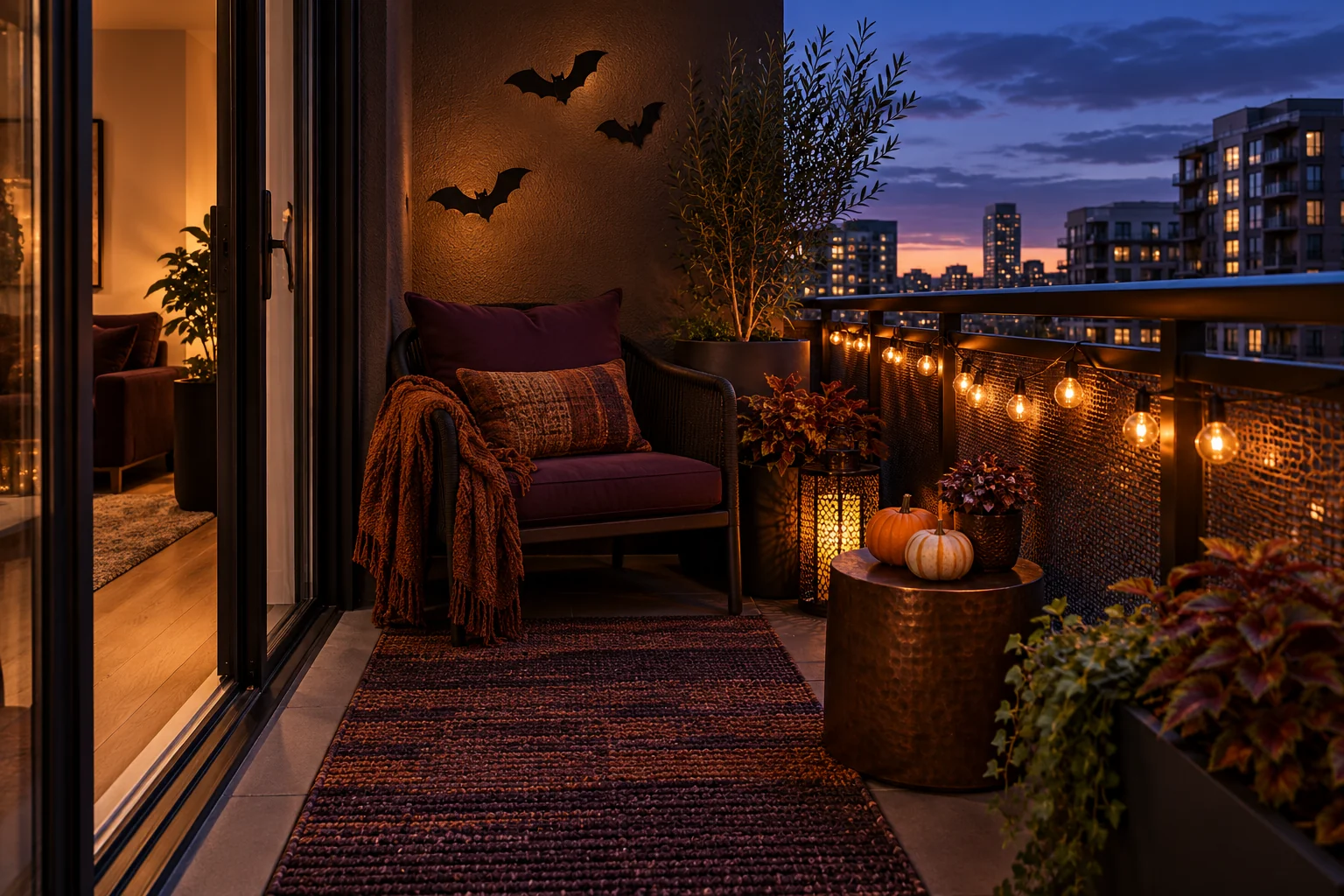
For seasonal styling of the same space, see our fall balcony guide or Halloween balcony ideas. Keep the everyday layout practical before adding a seasonal layer.
Decide what can stay outside and what must come back in
List the balcony's actual exposure: direct sun, wind-driven rain, sheltered damp or strong gusts. Choose furniture and lighting for those conditions under their instructions, not simply because their colors suit the room. Confirm building rules and appropriate support before attaching anything, and keep drainage and the door's movement clear.
Give cushions, throws and movable accents an indoor return location before buying them. For example, one chair cushion stored on an existing indoor shelf may be manageable; several large cushions can become a second furniture pile during wet weather. Do not place loose decorations on a railing or assume a heavy planter is suitable without checking the balcony's limits. If reliable outdoor storage is unavailable, keep the permanent setup simple and bring out only the useful soft items for each visit.
Start with one clear purpose
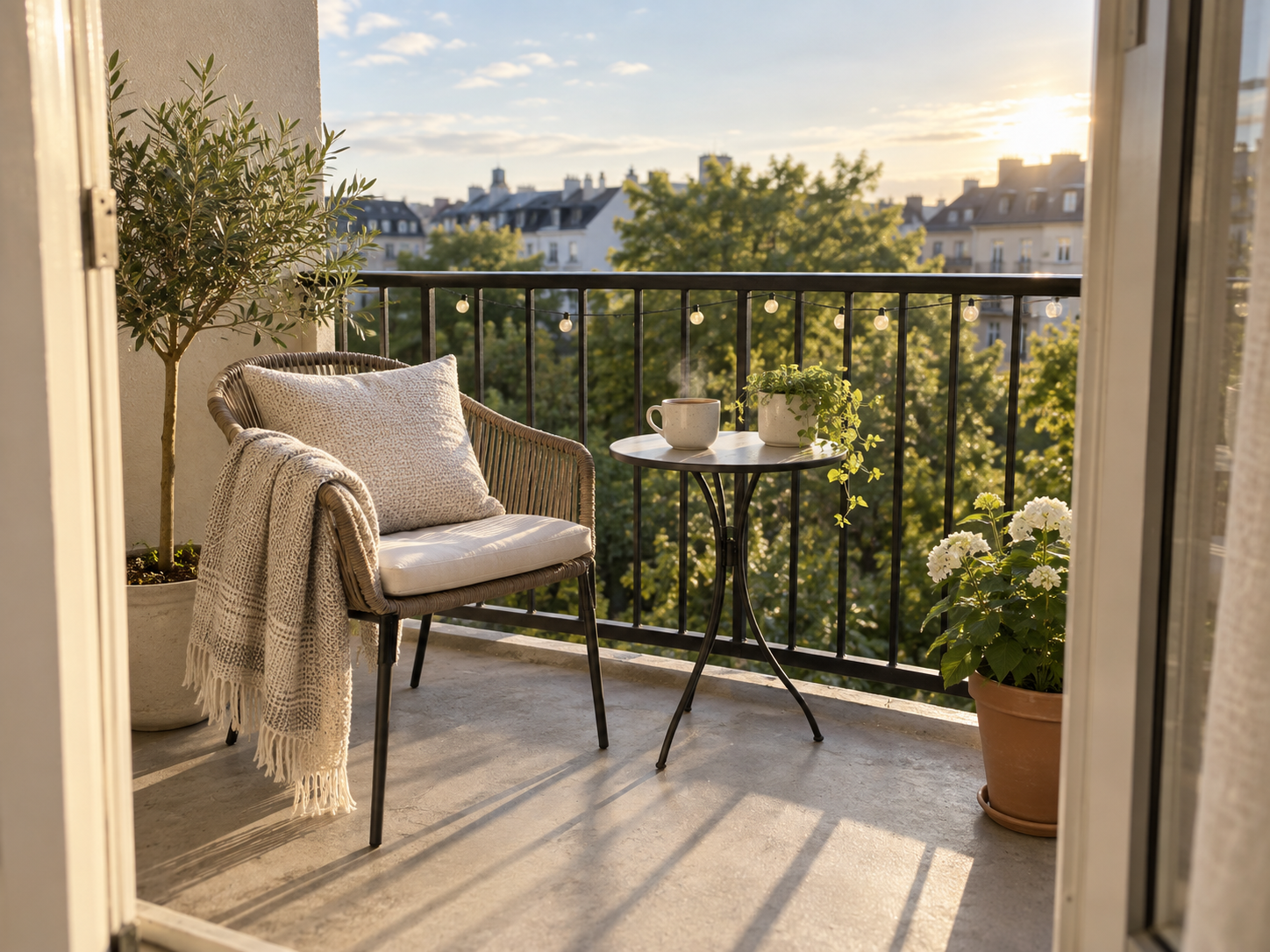
Choose the activity you would use most often: a solo morning coffee, growing a few plants or sitting with another person. Write down the pieces that activity genuinely needs. For coffee alone, one chair and a small surface may be enough. Compare that footprint with the door route before planning extra seating. A balcony used for several purposes needs furniture you can easily move between them.
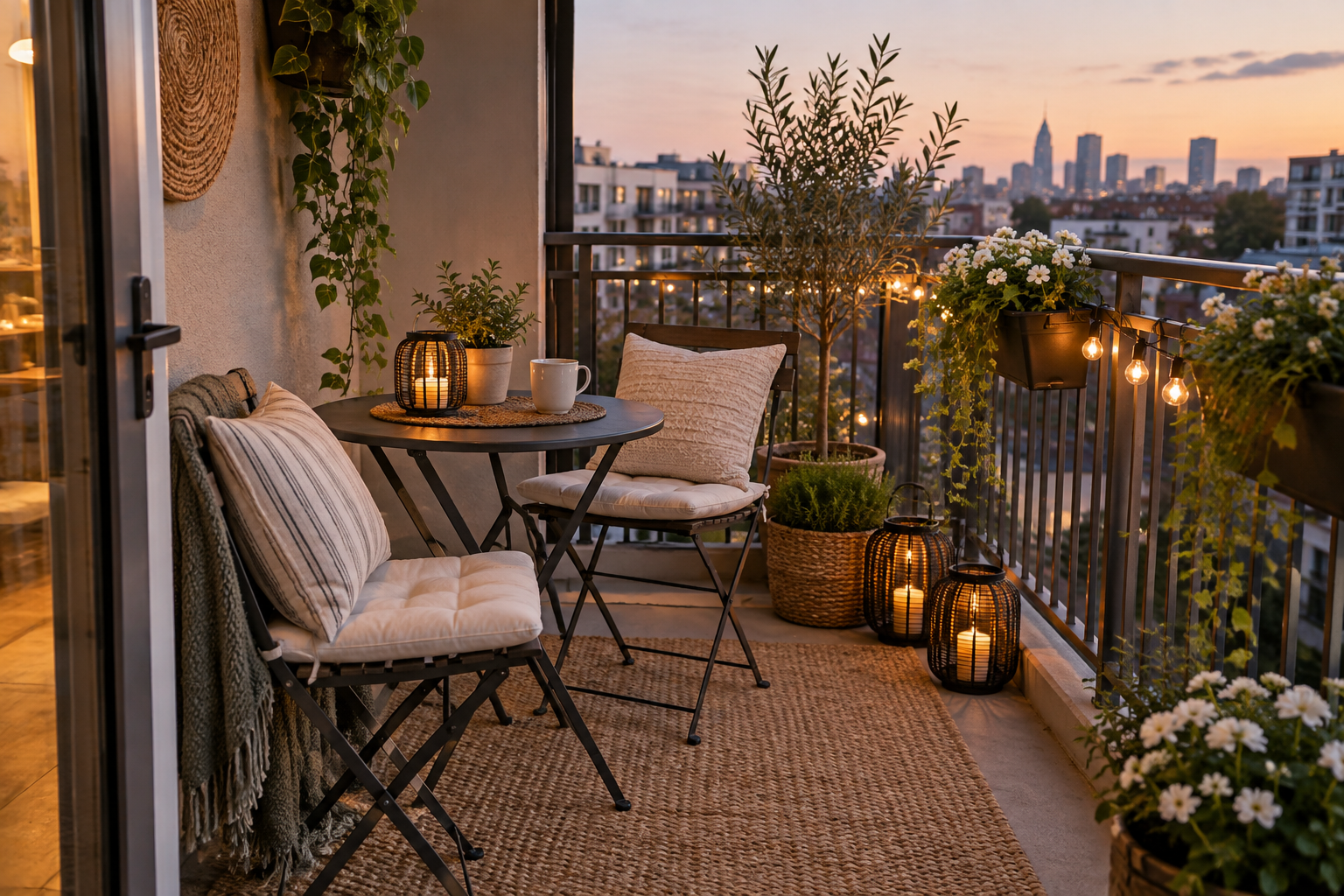
Use a small bistro set
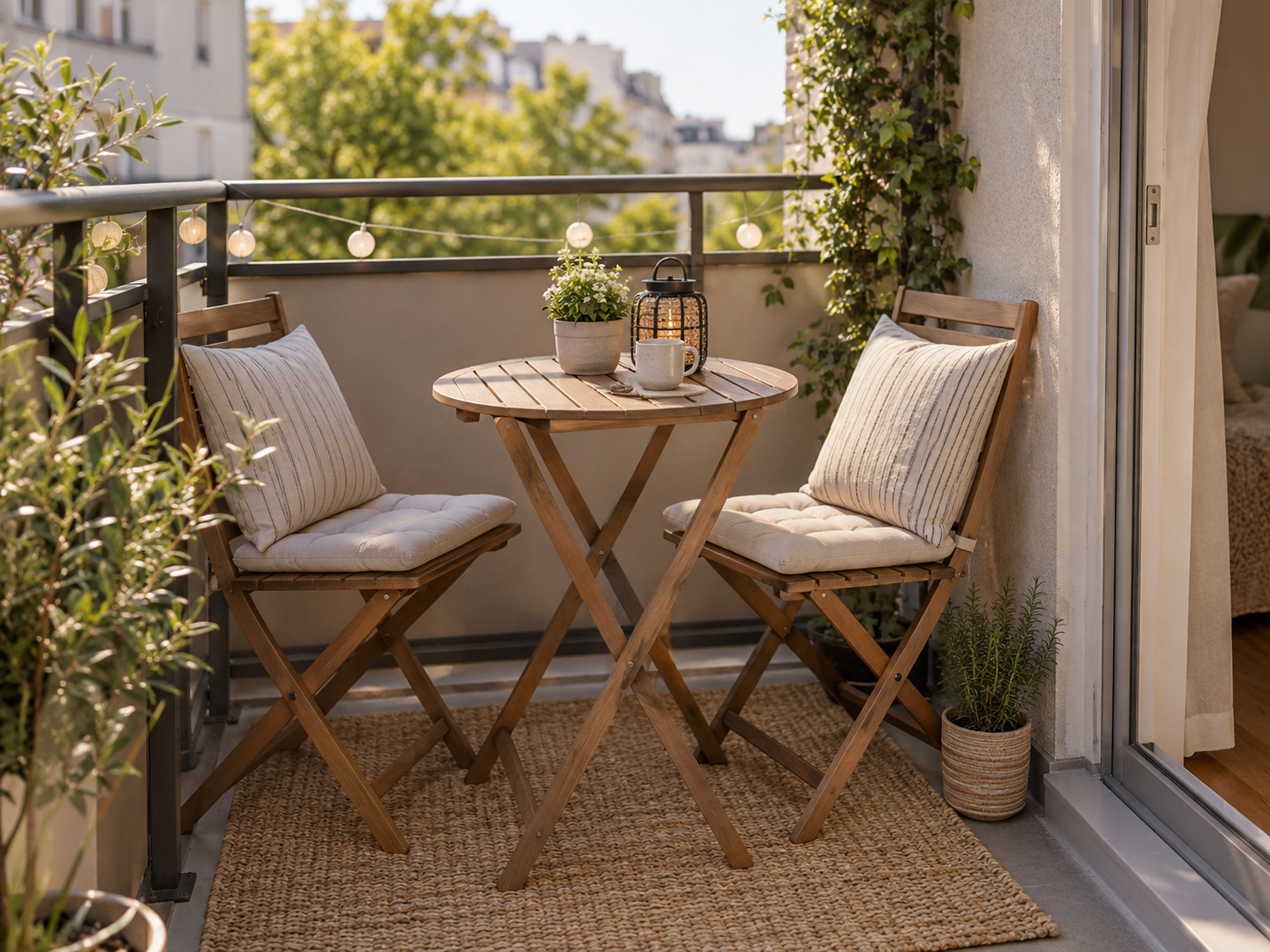
Measure the table and chairs in use, with someone seated and a chair pulled out. A set that fits neatly when pushed together may block the entrance at breakfast. Check the materials' outdoor care requirements and the furniture's stability. If two seats make movement awkward, choose one comfortable chair and a separate small surface rather than keeping a second chair permanently outside.
Choose folding furniture
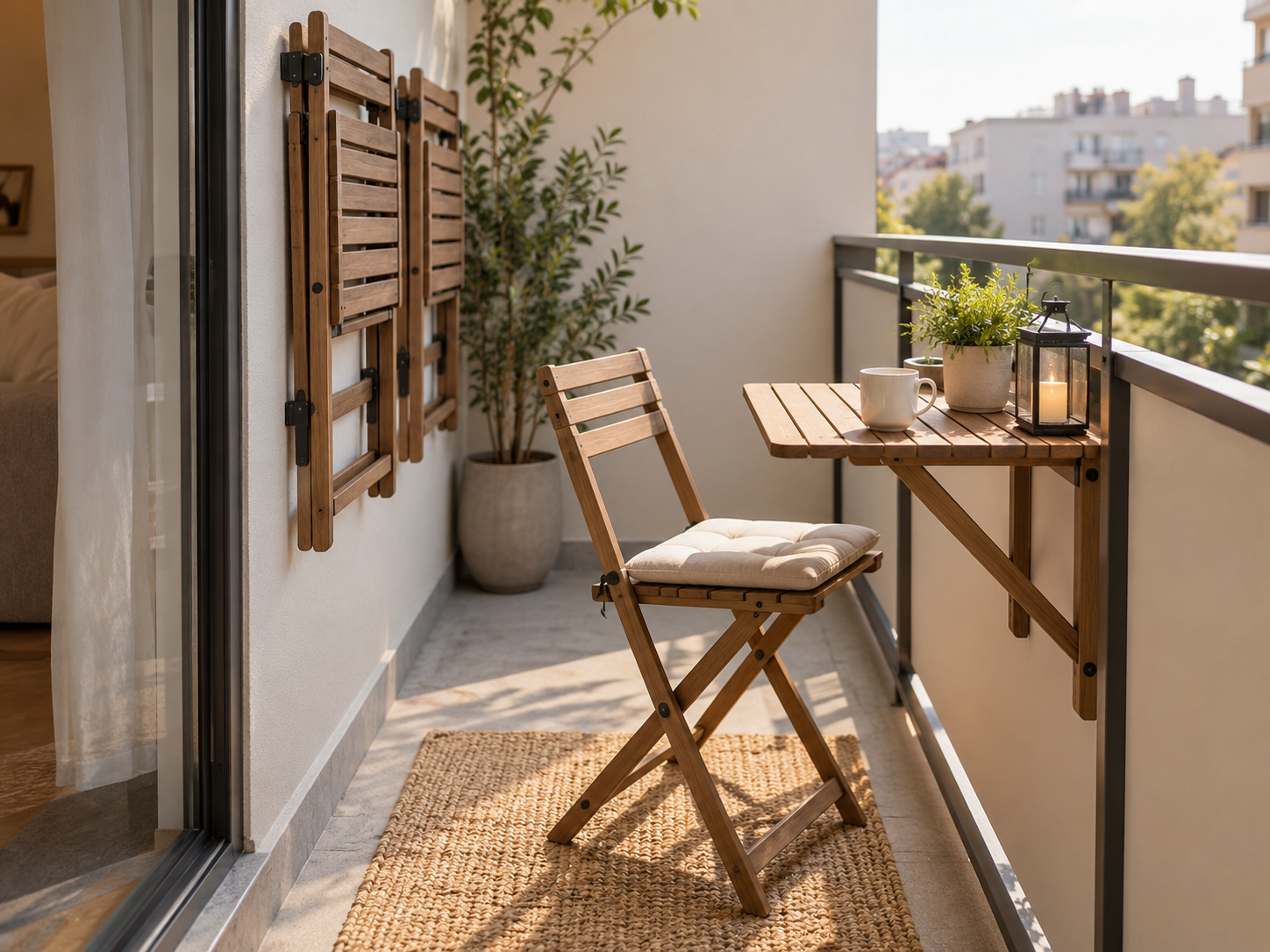
Test two arrangements before choosing folding furniture: the balcony while it is being used and the folded pieces in their storage home. A chair that gives back outdoor floor space can still block an indoor doorway when brought in.
Follow the product's folding, locking, handling and weather-storage instructions. Check the complete folded shape, its weight and the route through the balcony door. Handles, hinges and projecting feet can change whether a seemingly slim piece fits the intended location. Do not assume folded furniture can lean unsecured against a wall or be stacked unless its instructions allow the arrangement.
For an occasional breakfast setup, try putting out the chair and table, using them, then returning them to their appropriate places. Keep drainage, door movement and the indoor walking route available throughout. If the pack-away step requires clearing another room every time, a smaller setup or fewer pieces may be easier to use.
Try a narrow balcony table
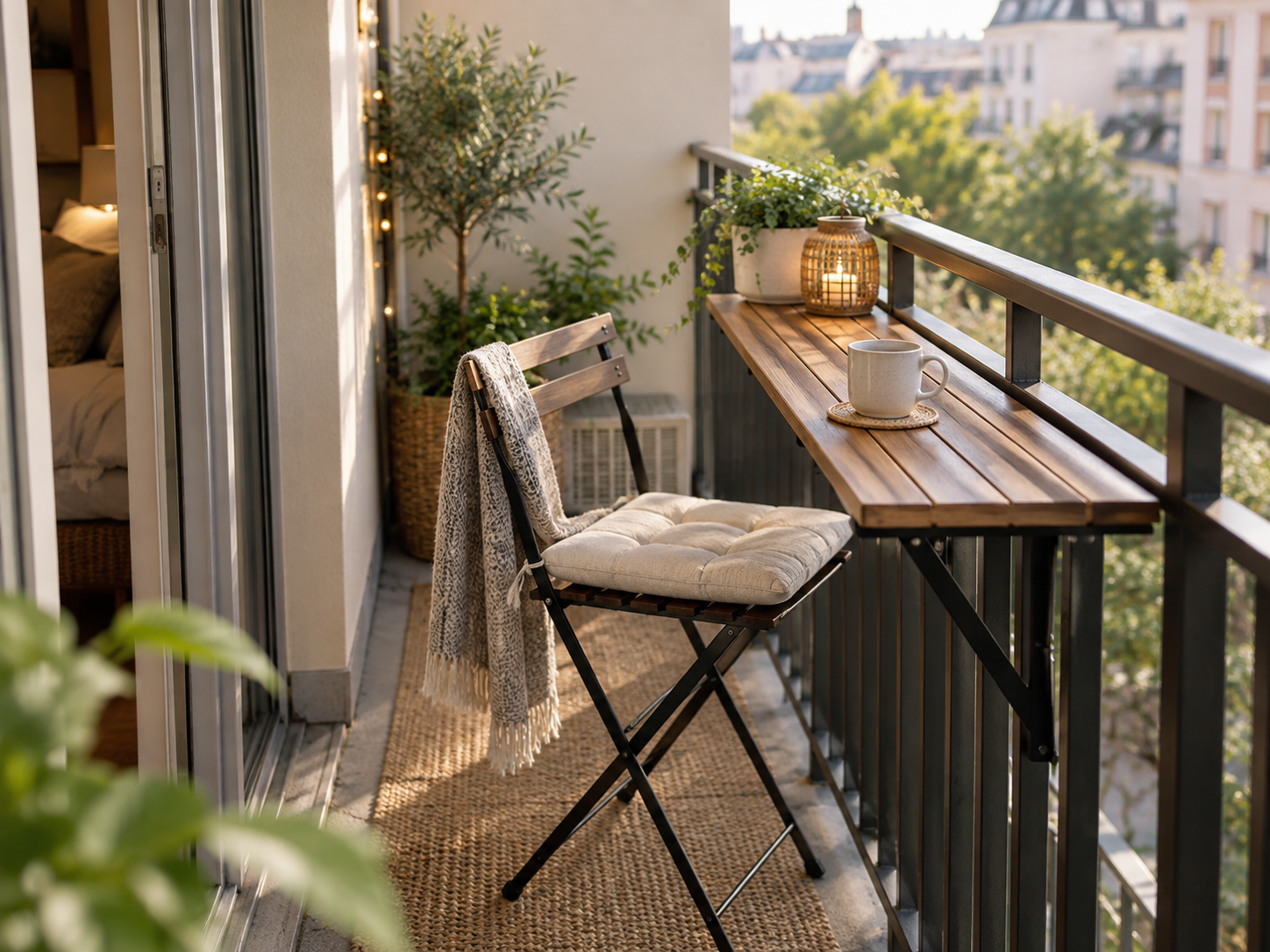
A shallow freestanding table can provide a drink surface beside a chair. Measure its feet as well as the tabletop, because splayed legs may use more floor than expected. Railing-mounted tables require explicit building permission and a mounting system suitable for the particular railing; do not improvise attachments. Choose a freestanding alternative if the railing setup or permitted load is uncertain.
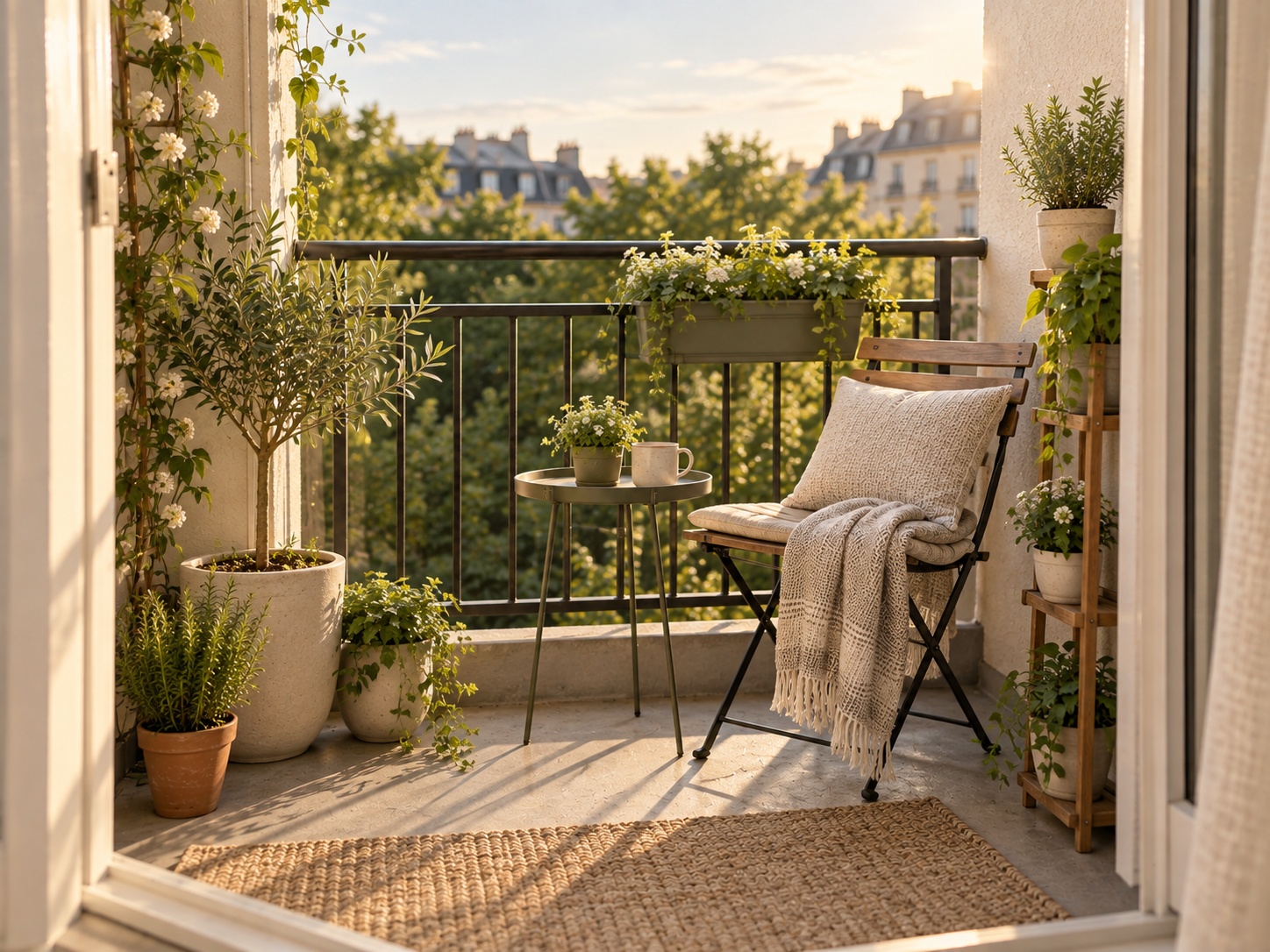
Add an outdoor rug
Use a rug designed for the exposure your balcony receives and check whether the building permits it. Leave drainage openings clear and follow the rug's drying and cleaning instructions. Lift it periodically to check the surface beneath, especially after rain. Skip a rug that stays wet, curls into a trip edge or makes the balcony door harder to operate.
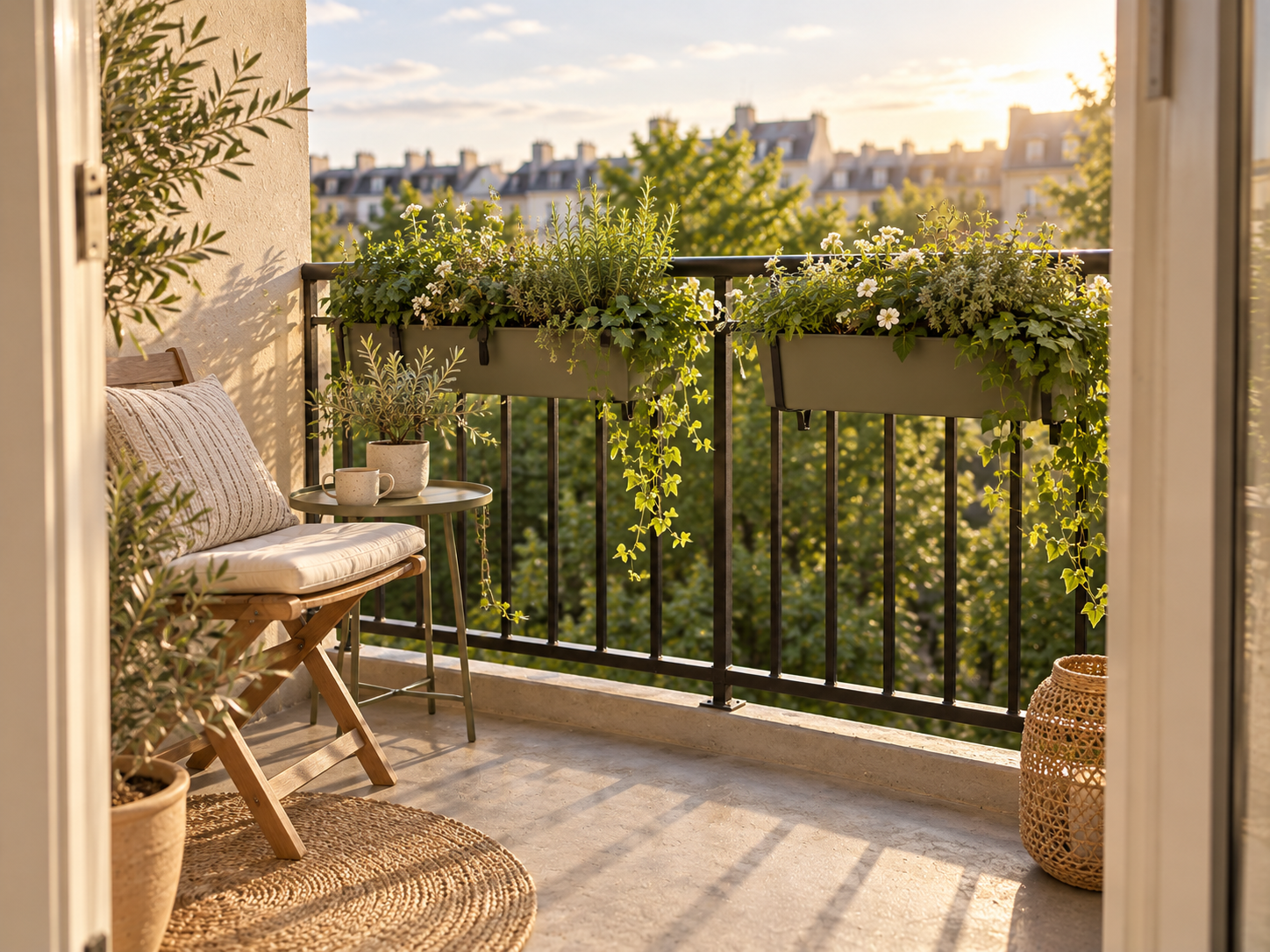
Use railing planters
Confirm that railing planters are permitted before buying them. Use a purpose-designed system compatible with the railing and follow its load and fixing instructions, including the weight of wet soil. Do not put unsecured pots on a ledge or improvise hooks over a public area. Where rules or wind exposure make railing storage unsuitable, keep a modest plant collection in approved floor positions.
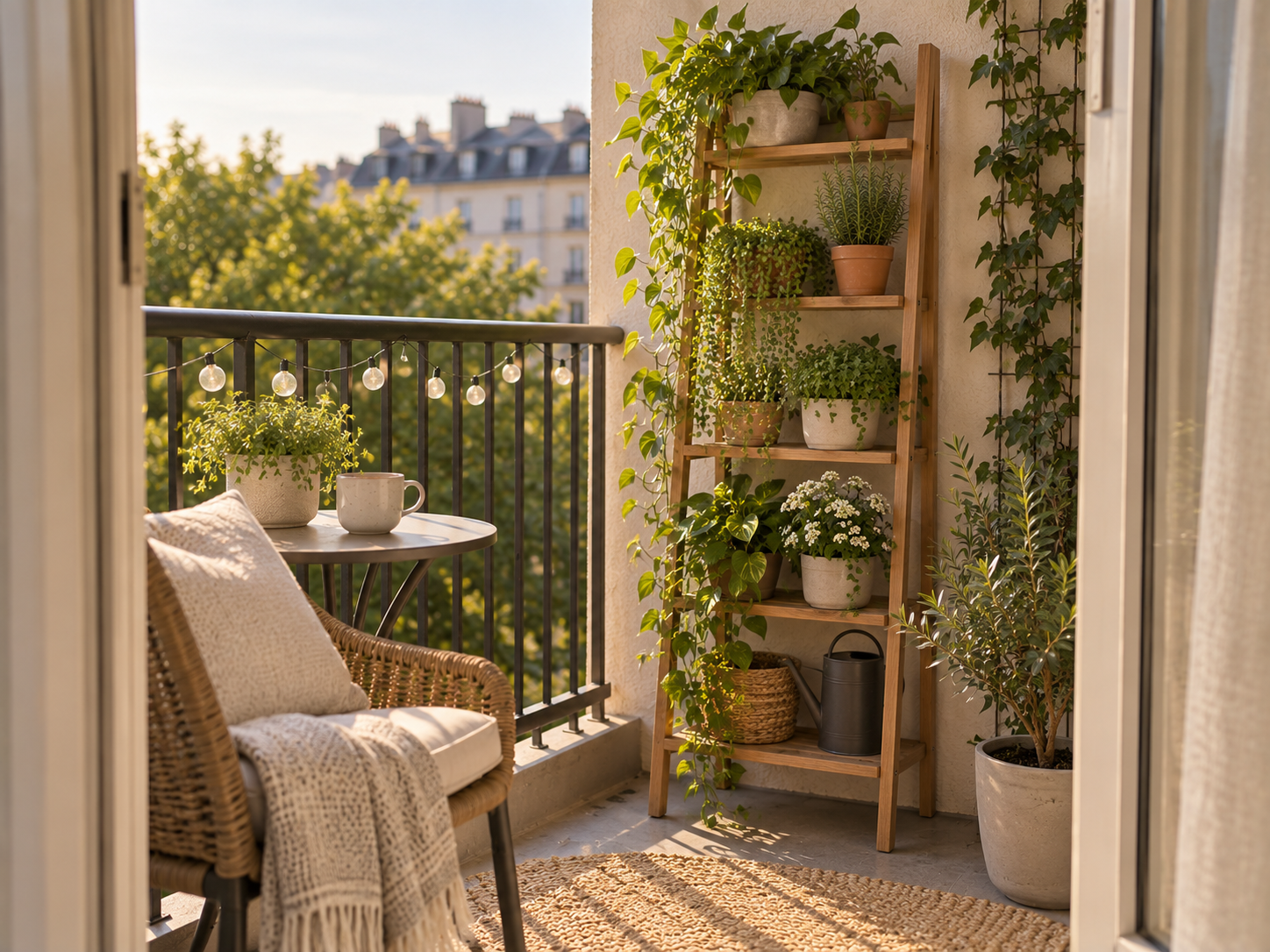
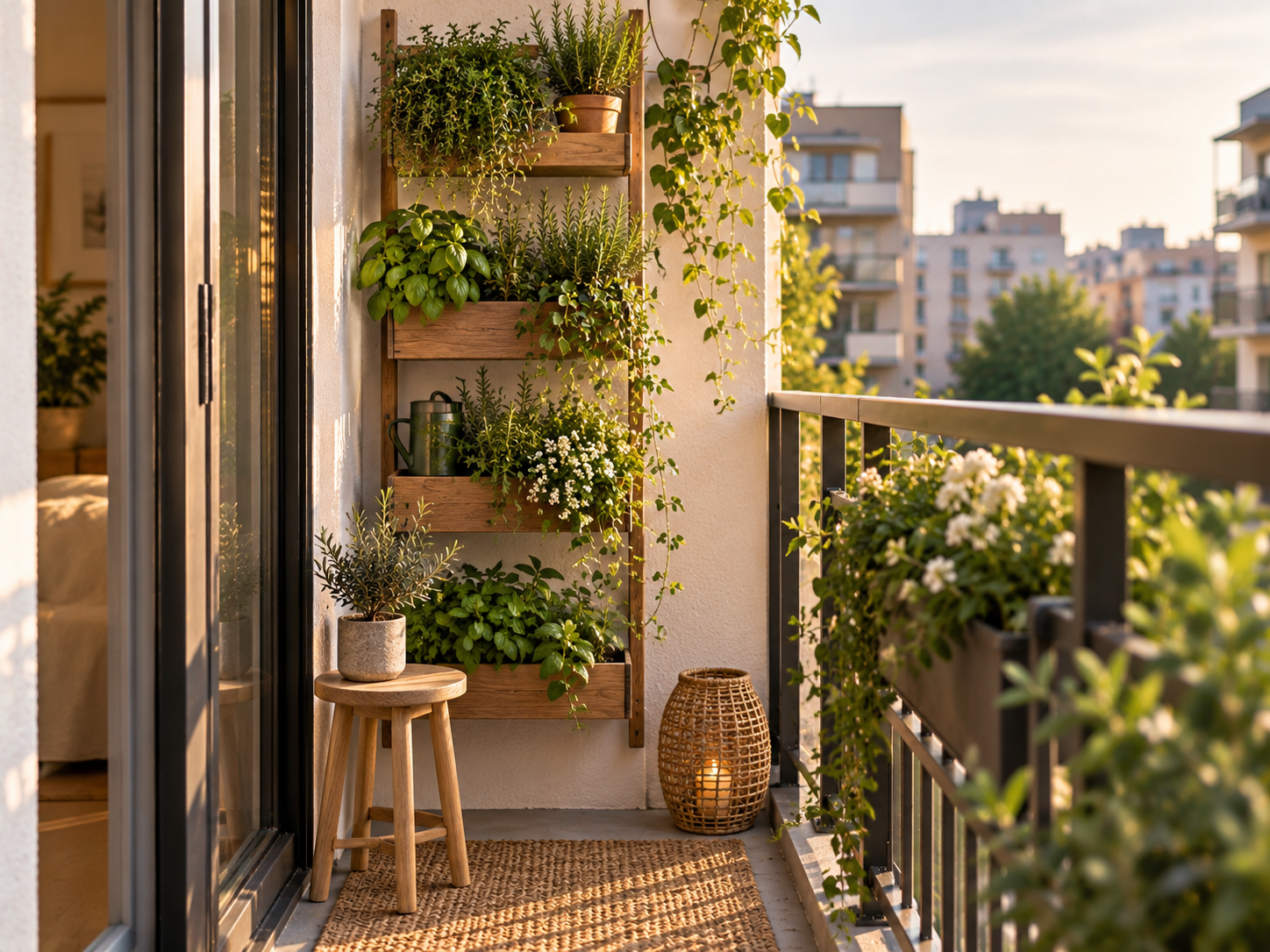
Create a vertical plant wall
A freestanding plant ladder needs a stable base, suitable outdoor materials and any securing measures required by its manufacturer. Include the pots and watered soil in its load. Keep it away from the railing so it does not create an easy climbing step for children. If you cannot secure the setup appropriately, use a few low planters instead of building upward.
Choose compact planters
Choose containers for the plant's needs, the conditions and the permitted location. Include a way to manage watering without directing runoff onto neighbors or public areas. Group a few pots where you can reach them to water and clean. Tiny containers may need frequent attention, so a balcony you rarely use may suit fewer manageable plants rather than an elaborate collection.
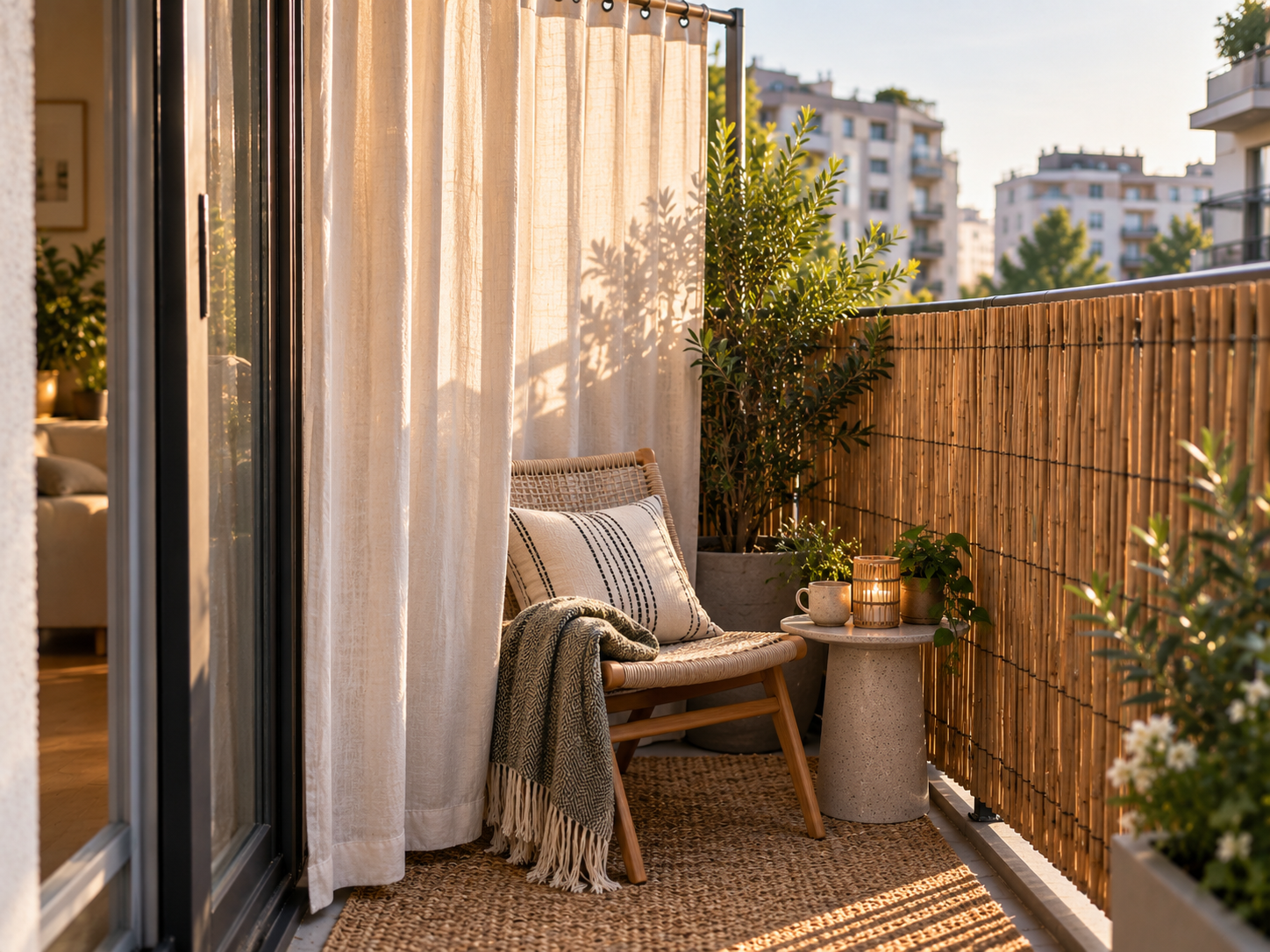
Add soft outdoor cushions
Choose cushions intended for outdoor use, then read their care and storage instructions. Measure the seat so the cushion does not hang over its edge or stop the chair folding. Store cushions indoors or as directed when rain and prolonged dampness make that necessary. Keep only the number needed for the chairs you actually use; spare cushions quickly become a storage problem.
Keep one lightweight throw nearby
Bring a throw out when you use the balcony and return it indoors afterward unless its care instructions support outdoor storage. Keep it off wet decking and away from heater or lighting equipment. Choose a washable textile that fits the chair without trailing along the route. A blanket adds comfort during an evening outside, but it does not need to become permanent outdoor decor.
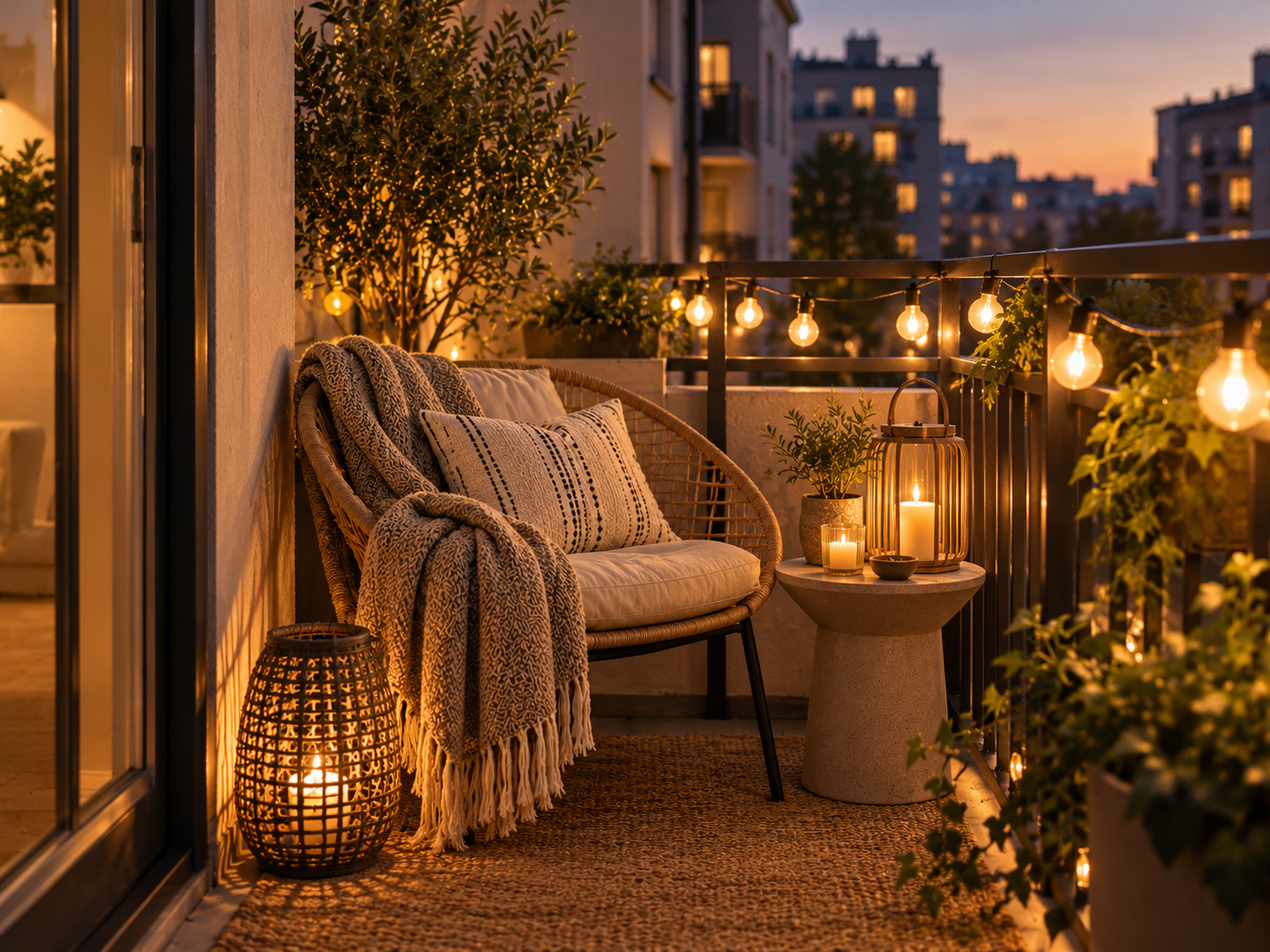
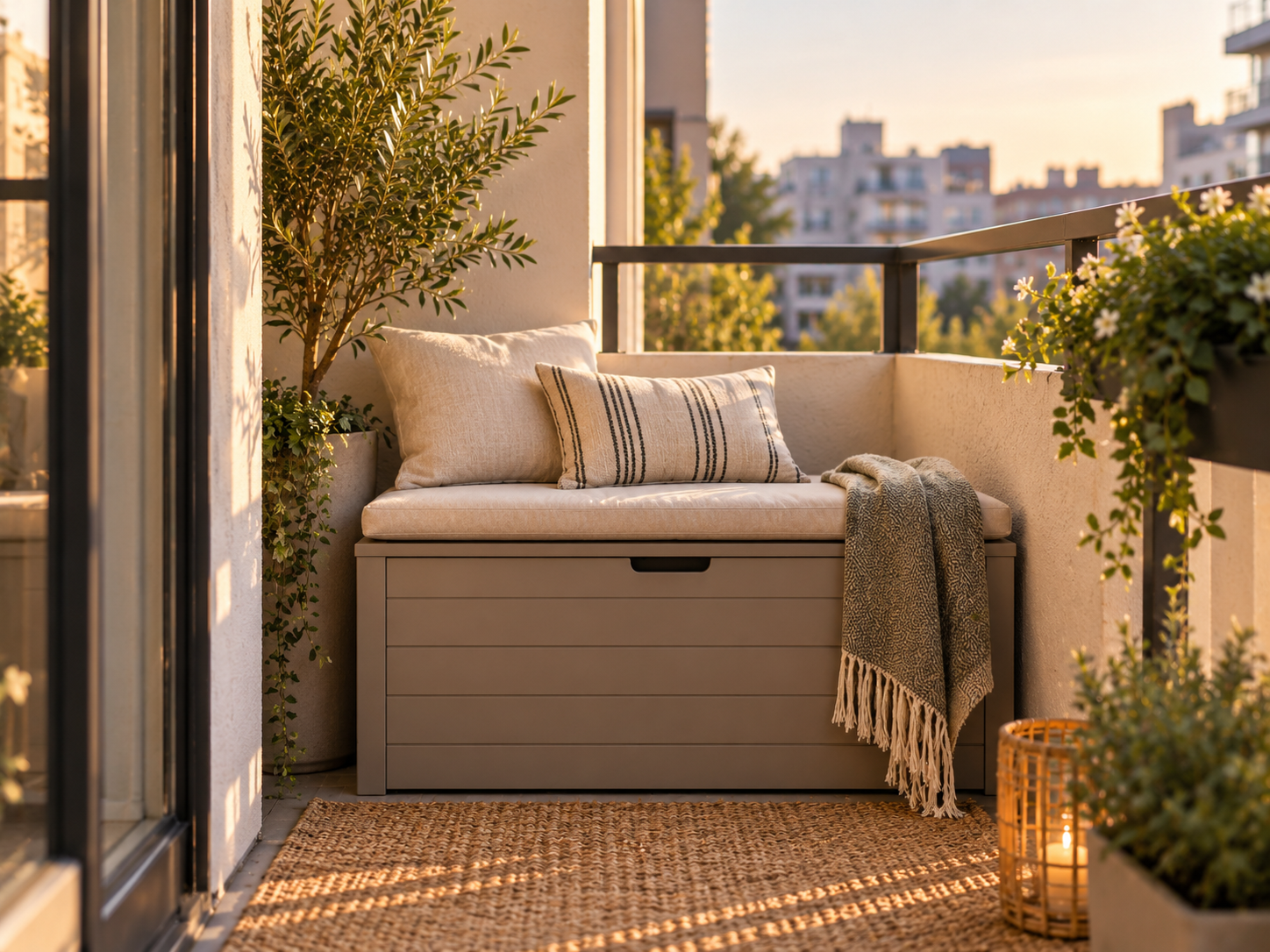
Use battery or solar lighting
Choose lighting rated for the actual outdoor conditions and follow the instructions for batteries, charging and positioning. A solar light needs the sunlight its design requires; a shaded balcony may not provide enough. Secure light fittings only in permitted ways and keep drainage and walking areas clear. Avoid trailing indoor electrical leads through a doorway that can pinch them.
Create renter-friendly privacy
Ask about permitted privacy screens and attachments first. A screen can catch wind even when it seems lightweight, so use a suitable approved product and follow its fixing instructions. Keep required visibility, ventilation and exit access intact. If a screen cannot be used safely or is prohibited, adjust the seating direction or use the balcony without enclosing its edges.
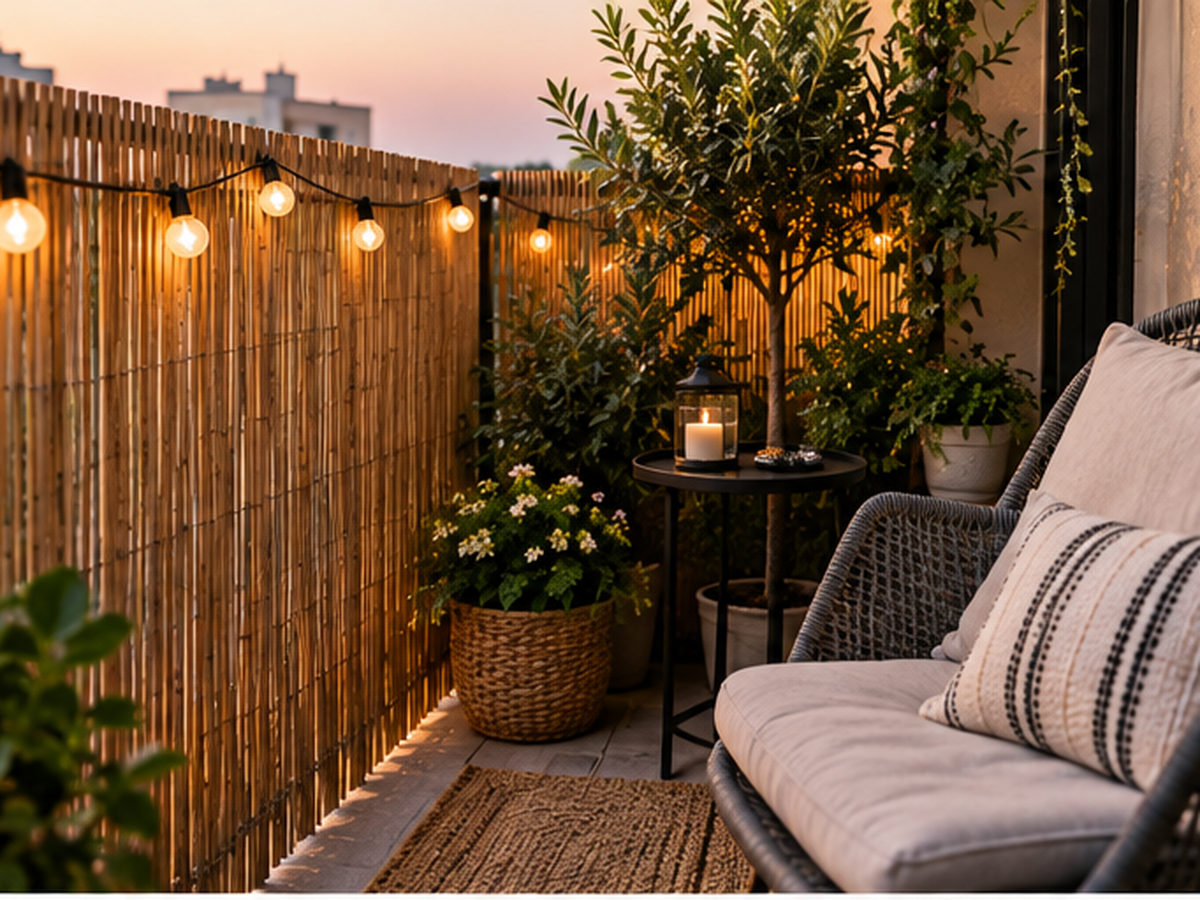
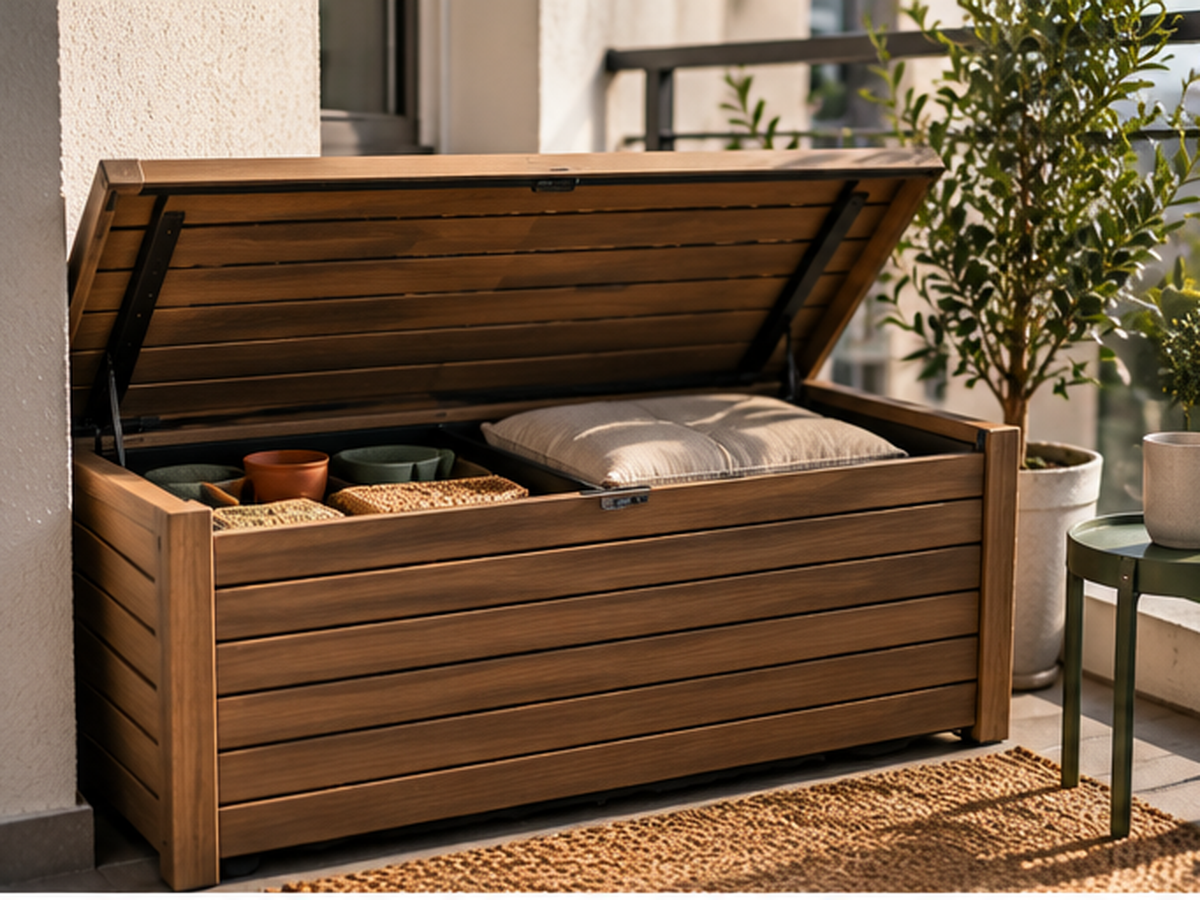
Use a slim storage bench
Check the bench's complete footprint, seat load and outdoor suitability. Open the lid with the bench in position and make sure it does not block the doorway. Contents need the storage conditions specified for them; an outdoor box is not automatically dry or suitable for electrical items. Follow child-safety and lid instructions, and omit the bench if a chair gives you a more comfortable layout.
Try stackable seating
Choose outdoor stackable seating with stable feet and follow the stated stacking limits. Measure the stack where it will be stored and make sure it cannot obstruct the door or become unsecured in wind. Bring it inside when required. If guest seating is only needed occasionally, storing it indoors can be more practical than maintaining a tall stack on a small balcony.
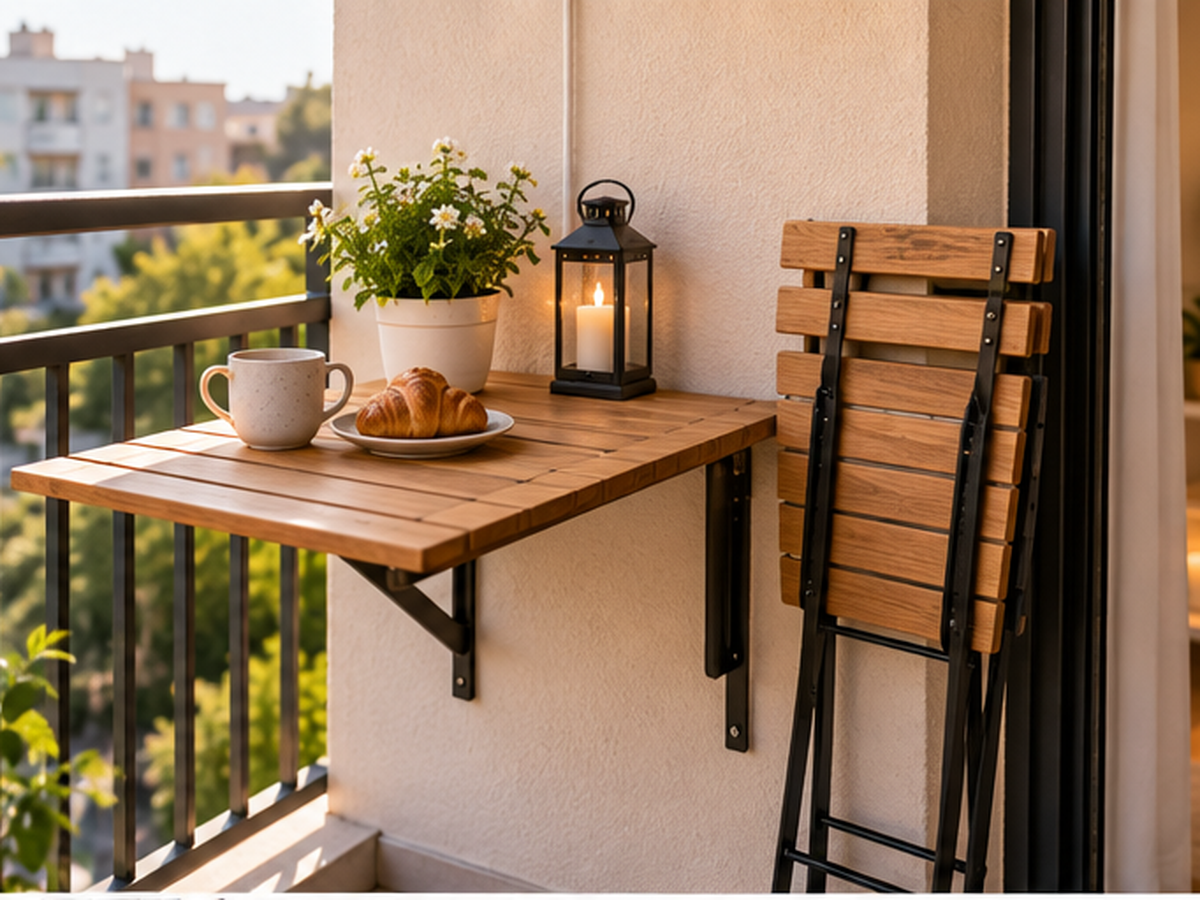
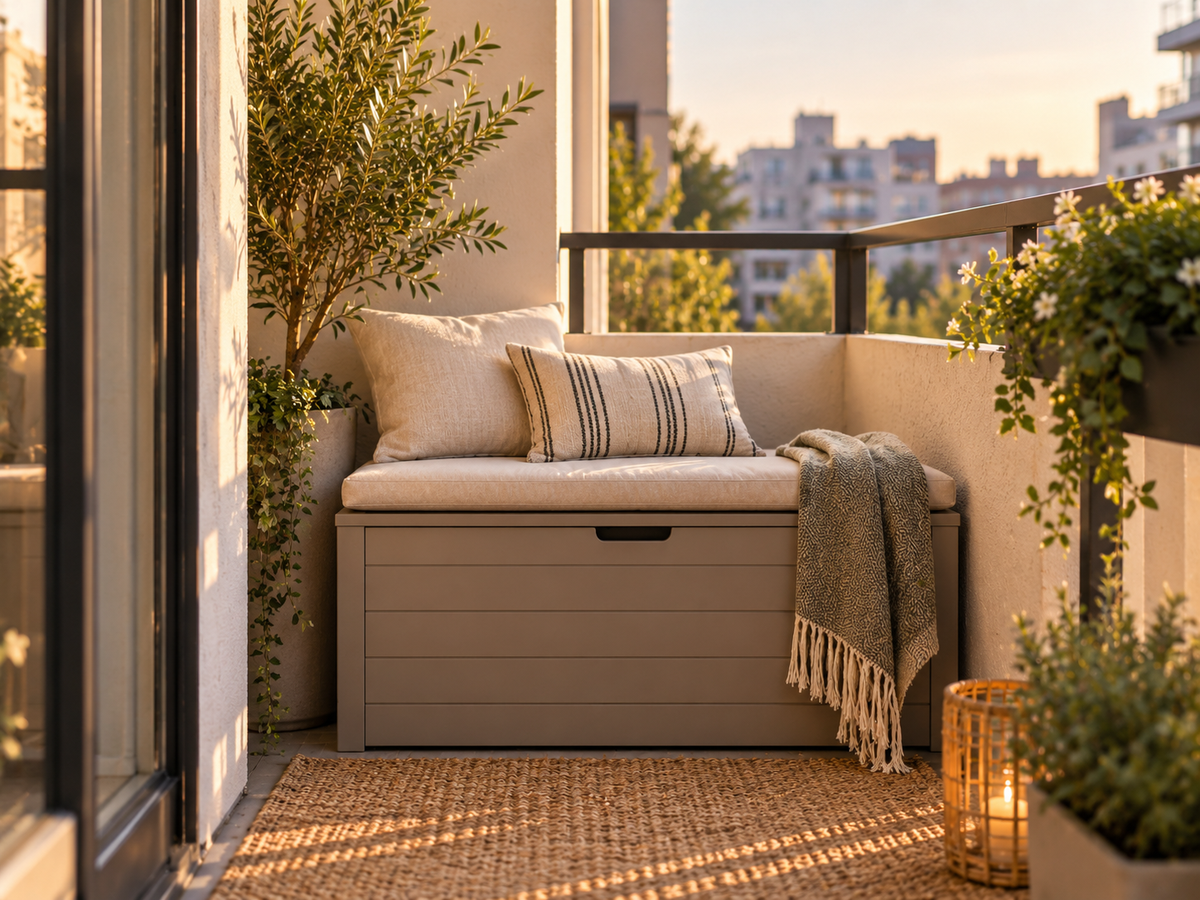
Use corners carefully
Check the corner with the door fully open and a person seated nearby. Avoid blocking a drain, inspection point or necessary route. A compact plant can work where a chair would be difficult to reach; a chair needs space for feet and movement. Treat the corner as usable only when it remains accessible for cleaning and the chosen object is stable in the conditions.
Keep the center open
Test the layout carrying a tray and opening the door from both directions. Keep the route suited to the people using it, including anyone with mobility needs. Open floor is useful for movement and maintenance, not just appearance. Resist adding a small object to every visible gap; a comfortable balcony often has fewer pieces than its dimensions could technically accommodate.
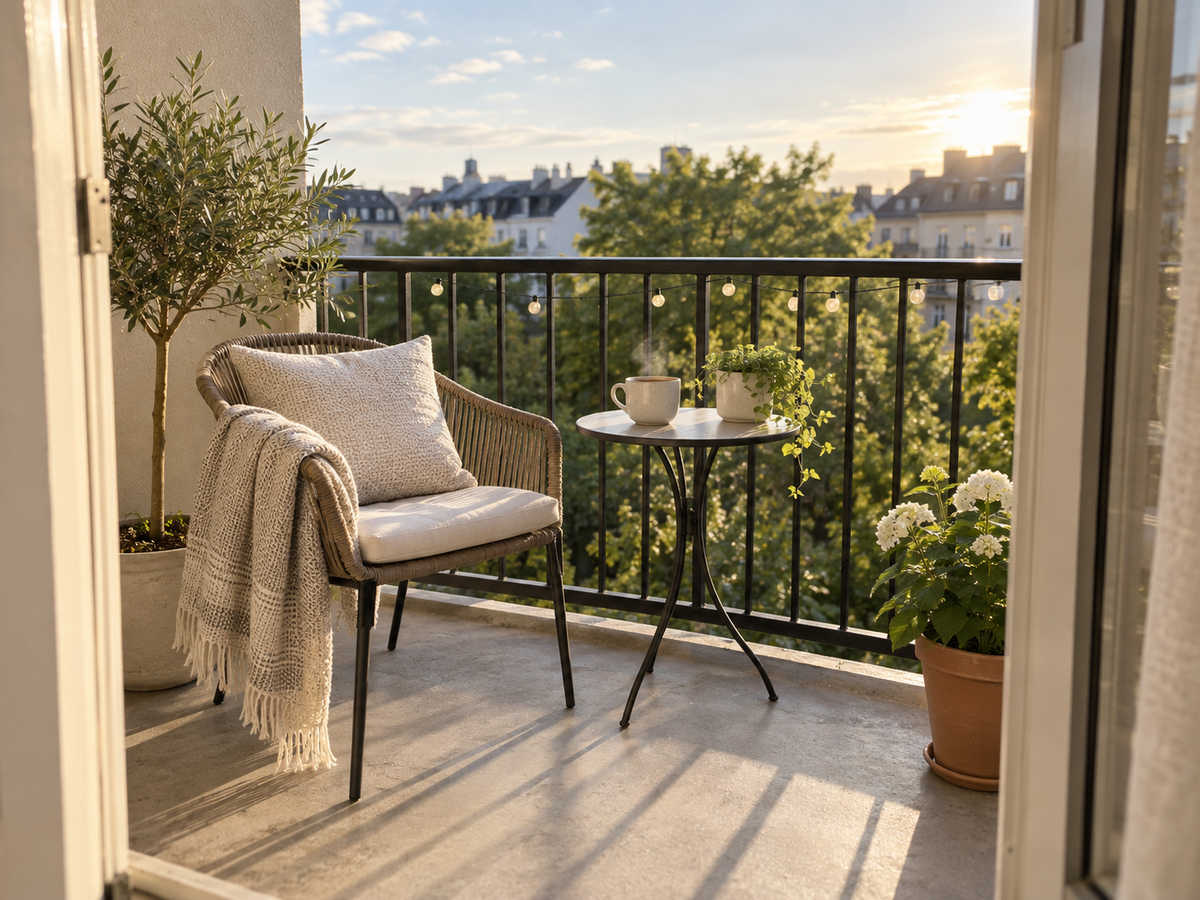
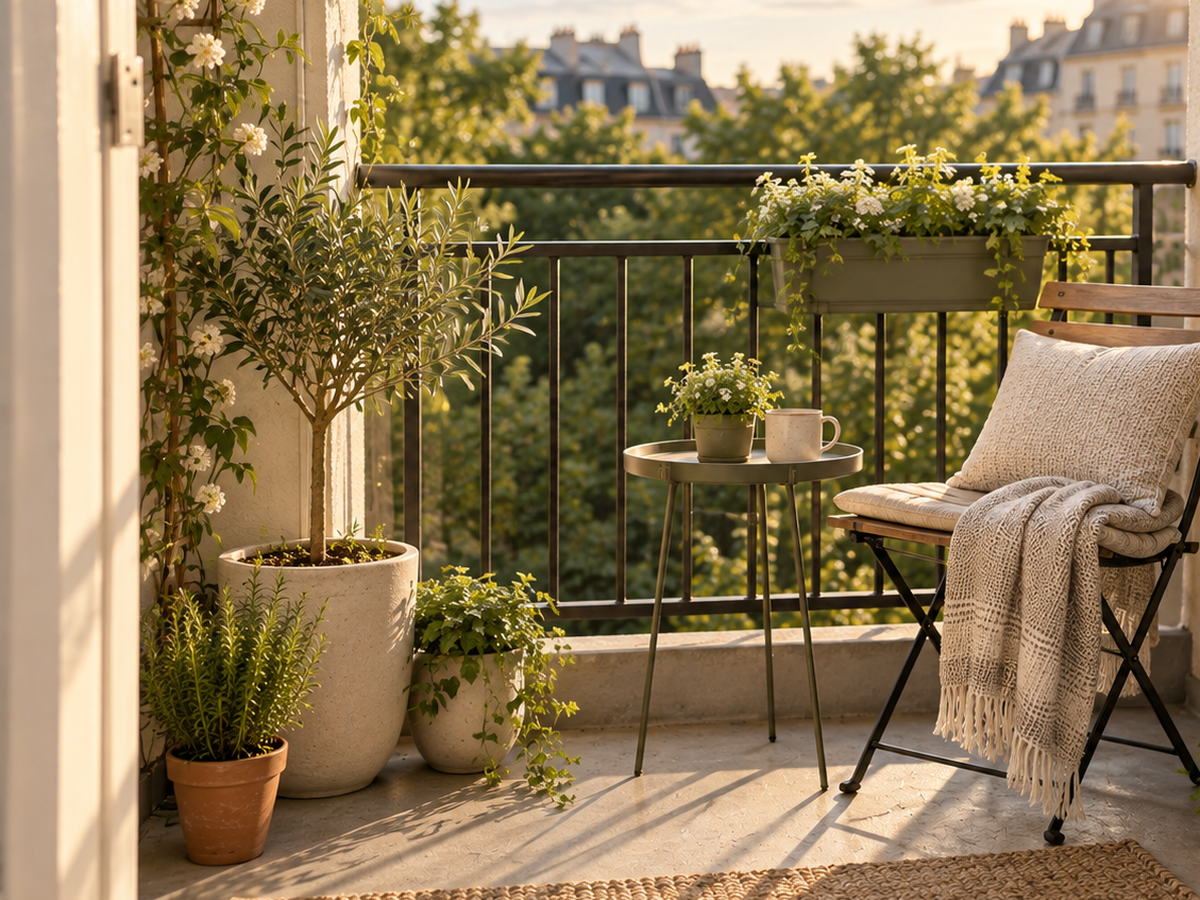
Add one statement plant
Check the plant's mature size, container requirements and suitability for the local exposure before choosing it. A large pot with watered soil may be much heavier than expected, so seek appropriate building guidance about placement and loading. Keep the container stable and off the escape route. Choose a smaller plant if a statement specimen would require guessing at the balcony's limits.
Use a small tray for drinks and decor
Use a tray that fits the surface fully and feels manageable when loaded. Take it outside after settling the furniture, then return it inside after use. Battery lighting can give a seasonal glow without adding an open flame. Do not balance a tray on the railing or an improvised seat surface simply to avoid purchasing a table.
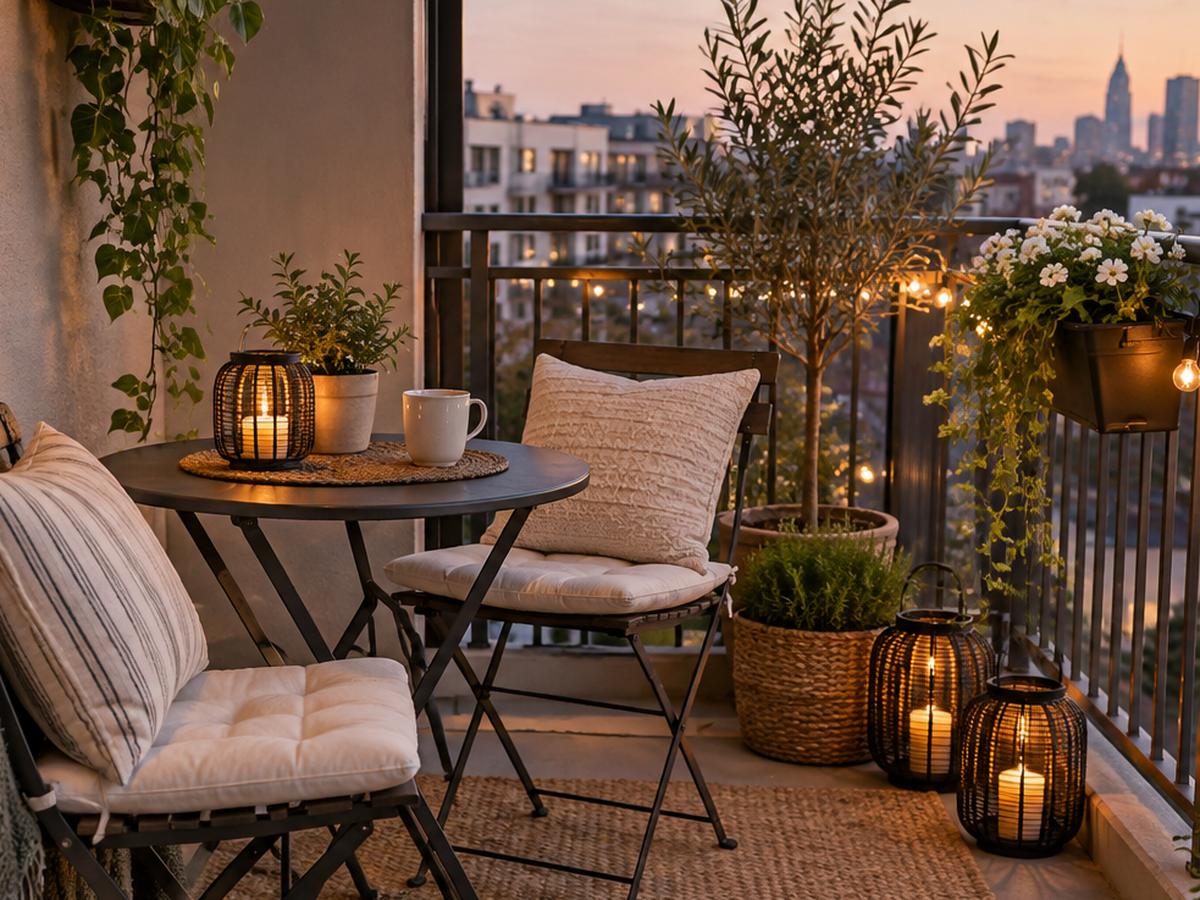
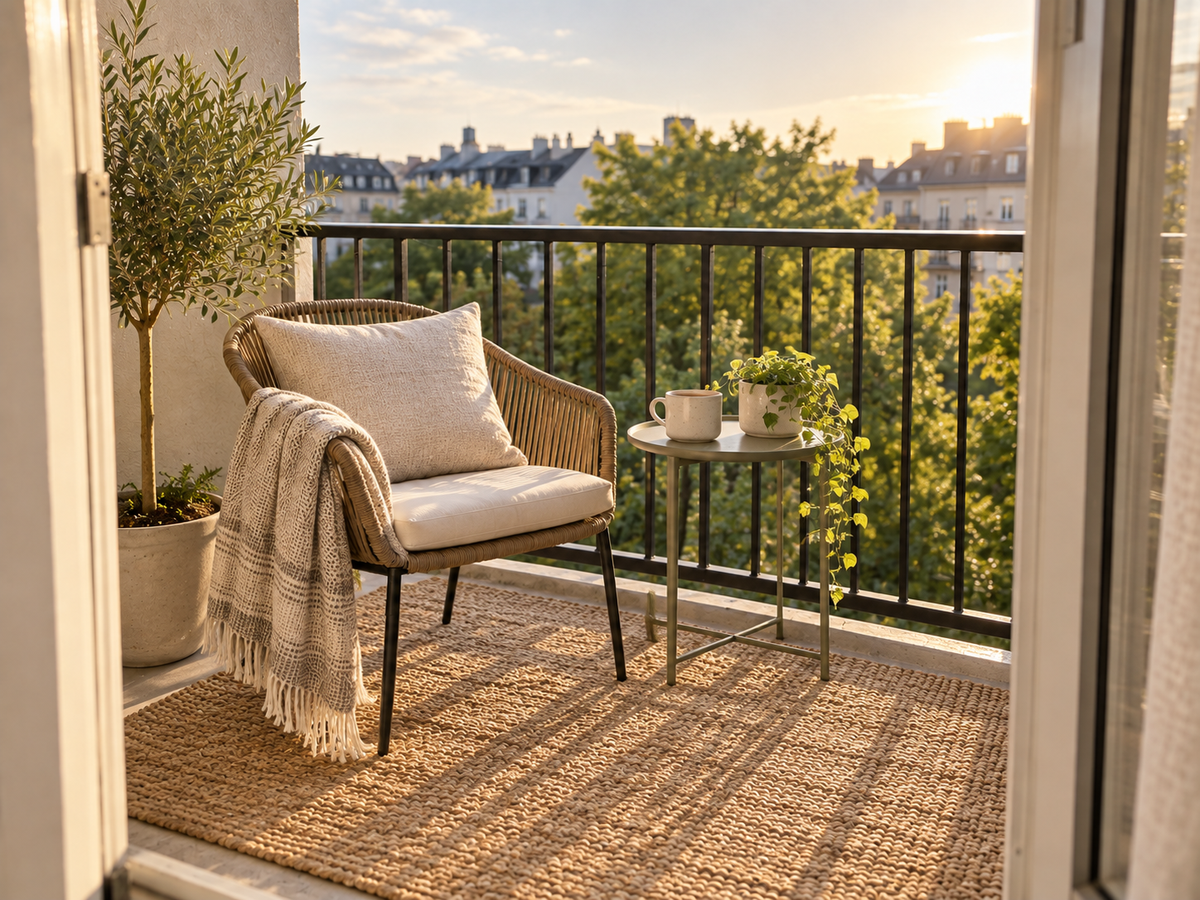
Keep the color palette simple
Choose colors from the furniture or cushions you already own, then repeat one accent through a pot or textile. Outdoor exposure and cleaning matter more than an exact match. For example, olive cushions and a terracotta container can create a connected scheme without repainting anything. Test the arrangement in daylight and at the time you usually sit outside before buying more accessories.
Choose decor you can take with you
Prefer pieces you can transport, maintain and use in another permitted location. Check whether the planter can be emptied, the rug rolled and the chair folded without damage. Keep any approved fixing instructions and original building fittings. Movable items still need to be secure while used; being removable does not exempt an object from wind, loading or shared-building restrictions.
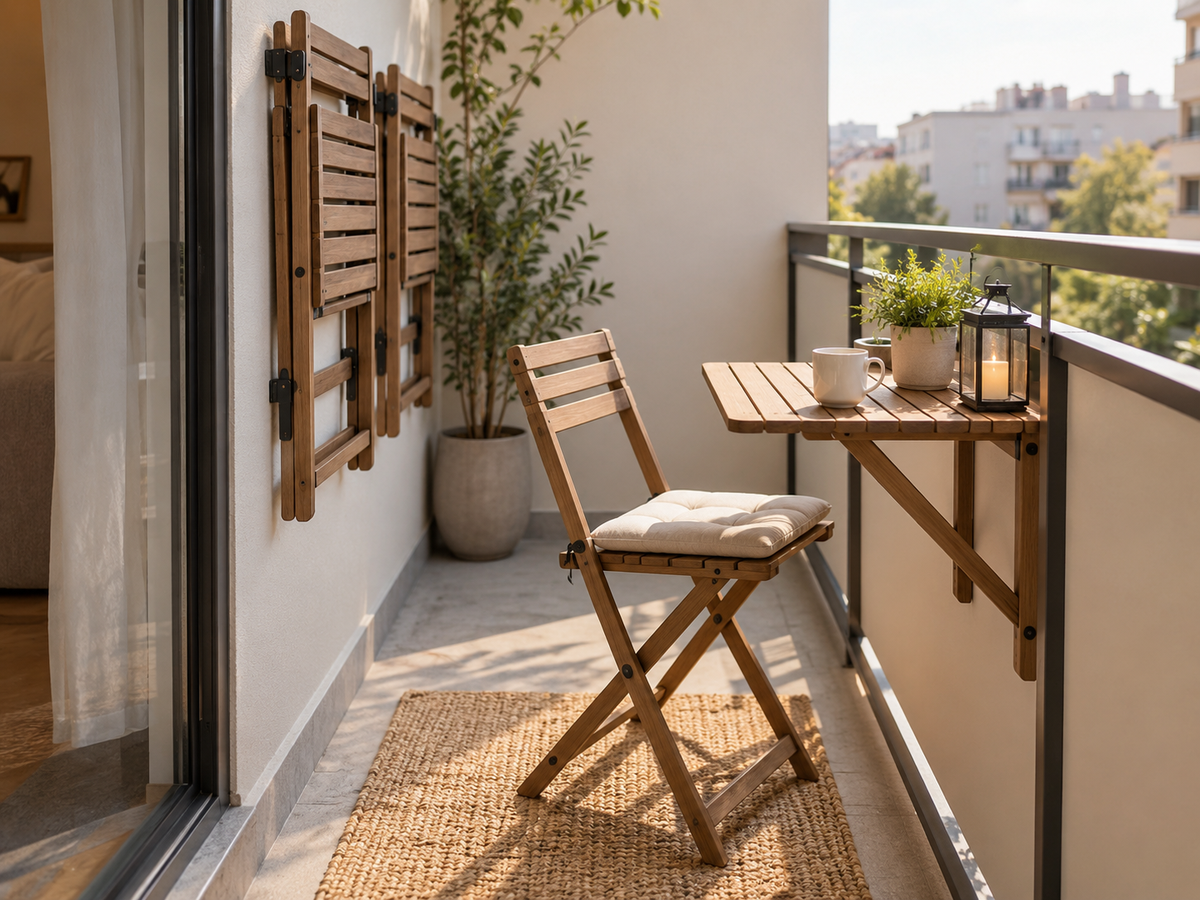
Test the visit and the pack-away step
Test the purpose you chose through a complete visit. For one-person seating, open the balcony door, reach the chair, sit down and return inside with the small items you brought out. Check the full chair and door movement, not only the empty floor between them.
For occasional meals, place the proposed table and chairs with people seated and standing up. For plants, check access for care without leaning over the railing or blocking drainage. Use only arrangements and products permitted by the building and suitable for the conditions; uncertain loading or attachments need appropriate building advice.
Finish by packing away what cannot remain outside under its instructions. Keep its indoor destination usable as well. If the arrangement works only by leaving loose pieces on the railing or obstructing the return route, reduce it before adding a seasonal layer.
Make the move-out plan part of the choice
Keep the balcony's original surfaces and fittings intact, store packaging or instructions that help with disassembly and review anything that remains damp after bad weather. Our renter-friendly decorating guide covers reversible changes indoors as well. A good rental balcony is enjoyable now and straightforward to clear when you move.
A beautiful small space is not about having more. It is about making what you have work better. — Spacelya