Lighting Ideas for a Small Entryway
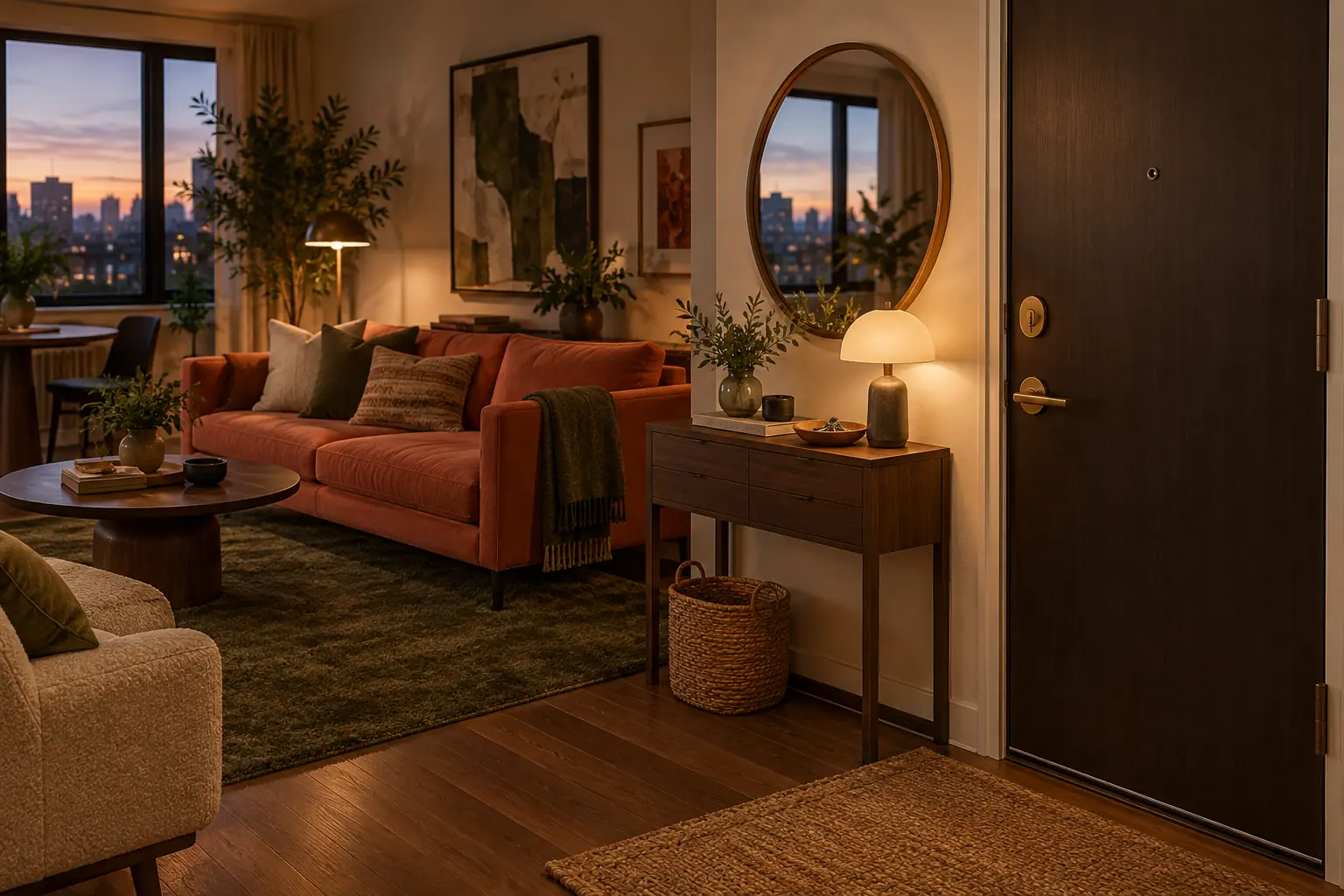
Arrival light needs to work when someone is carrying shopping, finding a key or taking off a coat. Begin with those moments instead of choosing a fitting solely from the entrance view. A modest light in a useful position can make a small entry feel welcoming.
Assess the existing arrangement after dark. Keep any electrical changes subject to appropriate qualified installation and the requirements of the location.
Light the lock and landing space
Notice whether the door hardware, threshold and ordinary key position are easy to see. Include the place where a bag is set down briefly. A bright source farther inside the home may leave these arrival tasks in shadow.
Look from the direction in which someone enters, not only back toward the door from the living room. Our front-door-opens-into-the-living-room guide can help identify a small landing area before its light is chosen.
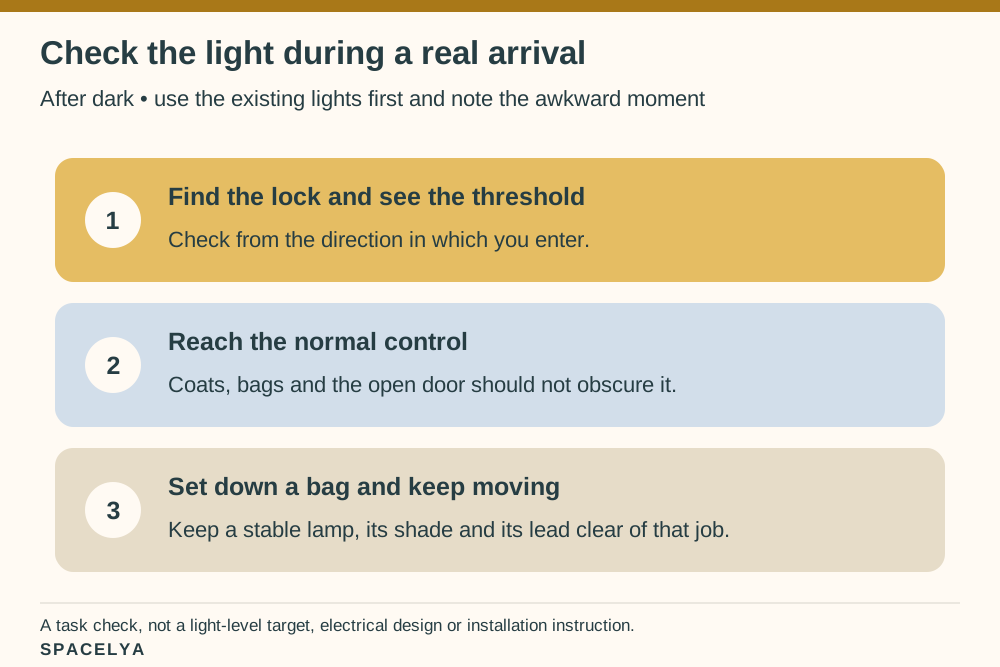
Try a three-part arrival check after dark: see the lock and threshold, find the normal control, then set down a bag without knocking the lamp. Use the existing lighting first and note the one place that is awkward. That tells you more than choosing a brighter bulb everywhere. In a hall with several doors, also check that the light reaches the turn toward the rooms you use.
Use a lamp only on stable existing furniture
A suitable lamp may provide useful light on an appropriate stable surface. Check its footprint alongside the keys or other items the surface must hold. A narrow console may not accommodate both jobs comfortably.
Keep the lamp's placement, support and electrical arrangement consistent with its instructions. An ochre shade with a midnight-blue detail can add warmth, but do not crowd the surface or balance the lamp at an exposed edge to preserve the visual effect.
Measure the complete lamp, including the shade's widest point. A small base can support a shade that projects beyond a shallow console. Leave the key tray in place while judging it; if the tray has to move to the floor, the furniture is being asked to do too much. A suitable wall or ceiling light may serve that entry more comfortably than adding a narrow table just for a lamp.
Check the reflected glare
Look at existing mirrors and glossy surfaces from the arrival position. A mirror can reflect a bright source directly toward the eyes instead of making the entry feel more comfortable. Assess the actual reflection before adjusting furniture or adding another mirror.
Choose suitable fixtures with an appropriate distribution of light. Do not cover a source with fabric or another improvised material. If the glare comes from the installation itself, discuss the options with an appropriately qualified professional.
Check from your usual eye position, then ask another household member to look if their height or needs differ. The mirror's reflection can change as the door opens. Adjust the position of suitable movable furniture or compare a properly shielded fixture, following its instructions, rather than trying to soften a bare source with a makeshift cover.
Keep the switch easy to find
Check whether coats, hanging bags or an open door obscure the normal control. Keep the route to it clear. A storage arrangement should not require someone to move belongings in darkness before turning on the light.
If the control arrangement needs changing, obtain the right professional advice. Consider the needs of the actual household rather than selecting a device solely because it is compact. Straightforward operation is part of a welcoming entrance.
Choose a suitable fixture for the ceiling height
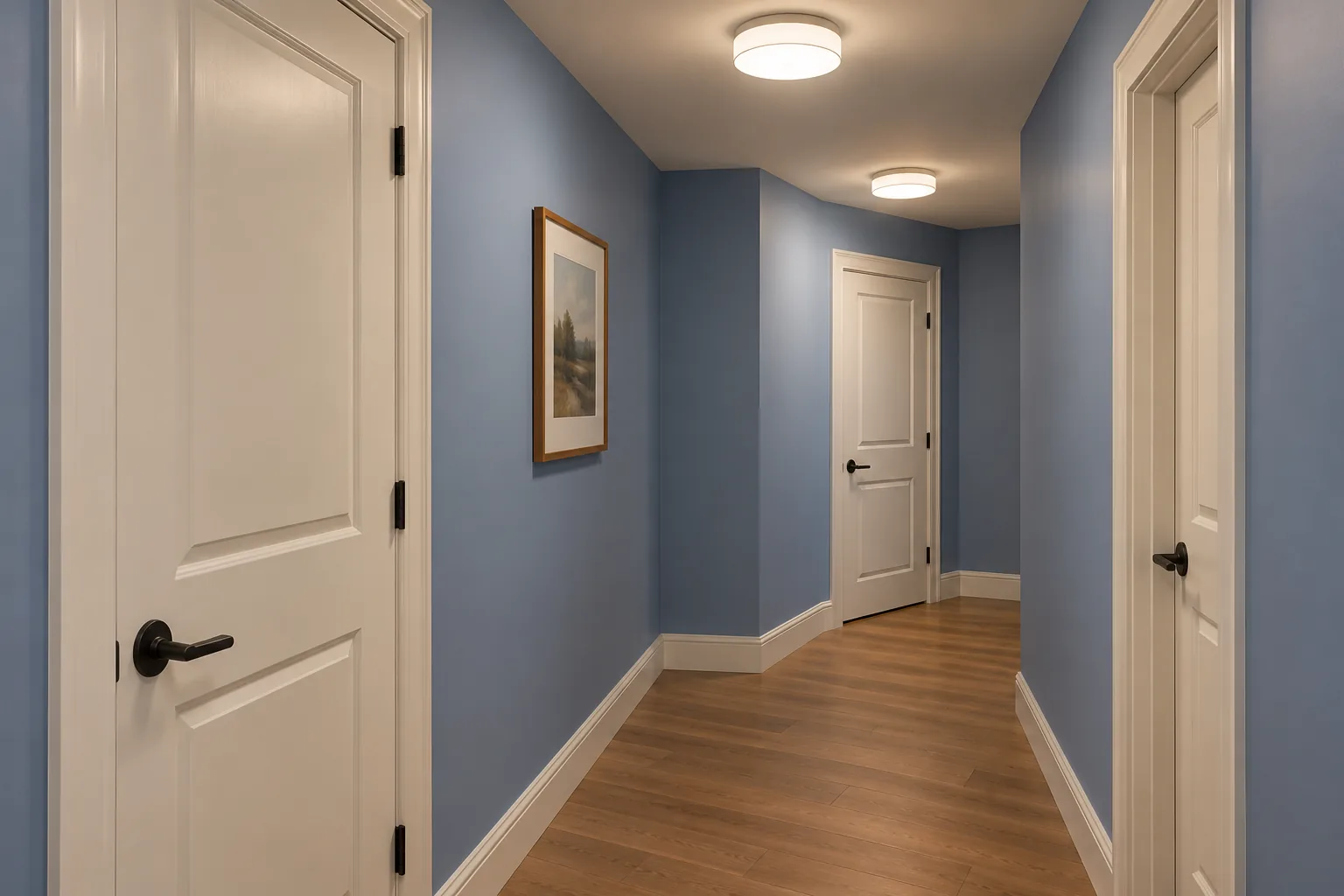
Compare the complete fitting dimensions and required clearances with the entry's height and door movement. A decorative hanging fixture may be unsuitable where a lower-profile product would leave more usable space.
Check the product's intended location and installation requirements. Color can come from a suitable shade or the surrounding wall; you do not need an oversized fitting to make the small area feel distinct from the living room.
If the fixture uses a replaceable bulb, check its permitted type, size and rating before comparing compatible choices. The U.S. Department of Energy explains lumens as the light-output measure to compare for brightness. More output alone does not show whether the shade throws light toward the lock or straight into a mirror. Judge the complete fitting in the entry, not the bulb label by itself.
Plan a clear cord route
Keep cables away from the threshold, door swing and walking route, using appropriate products and instructions. Avoid a loose lead across the floor as a permanent lighting solution. A convenient socket should not be reached through an unsuitable route.
Our entryway storage ideas can help keep hooks and furniture from crowding the lighting arrangement. Test an ordinary arrival with a bag in hand. The useful light is the one that supports the movement without requiring another object to be shifted first.
Do not hide an extension lead under the entry rug. CPSC's extension-cord guidance warns against routing cords under carpets or rugs because heat cannot escape properly. Keep the threshold and door movement clear; if a suitable supply cannot be reached without a bad route, reconsider the lamp position or discuss a permanent solution with a qualified electrician.
Is a table lamp enough for an entryway?
It depends on the area it lights and the household's tasks. Assess the threshold, door hardware and route as well as the lamp's appearance. Use the complete suitable lighting arrangement rather than assuming one decorative source covers every need.
About the illustrations
The entry and hallway scenes are reused AI-generated SPACELYA styling illustrations. The original graphic is an arrival-task checklist. These visual references do not demonstrate measured light levels, electrical compliance or a tested installation.
A beautiful small space is not about having more. It is about making what you have work better. — Spacelya