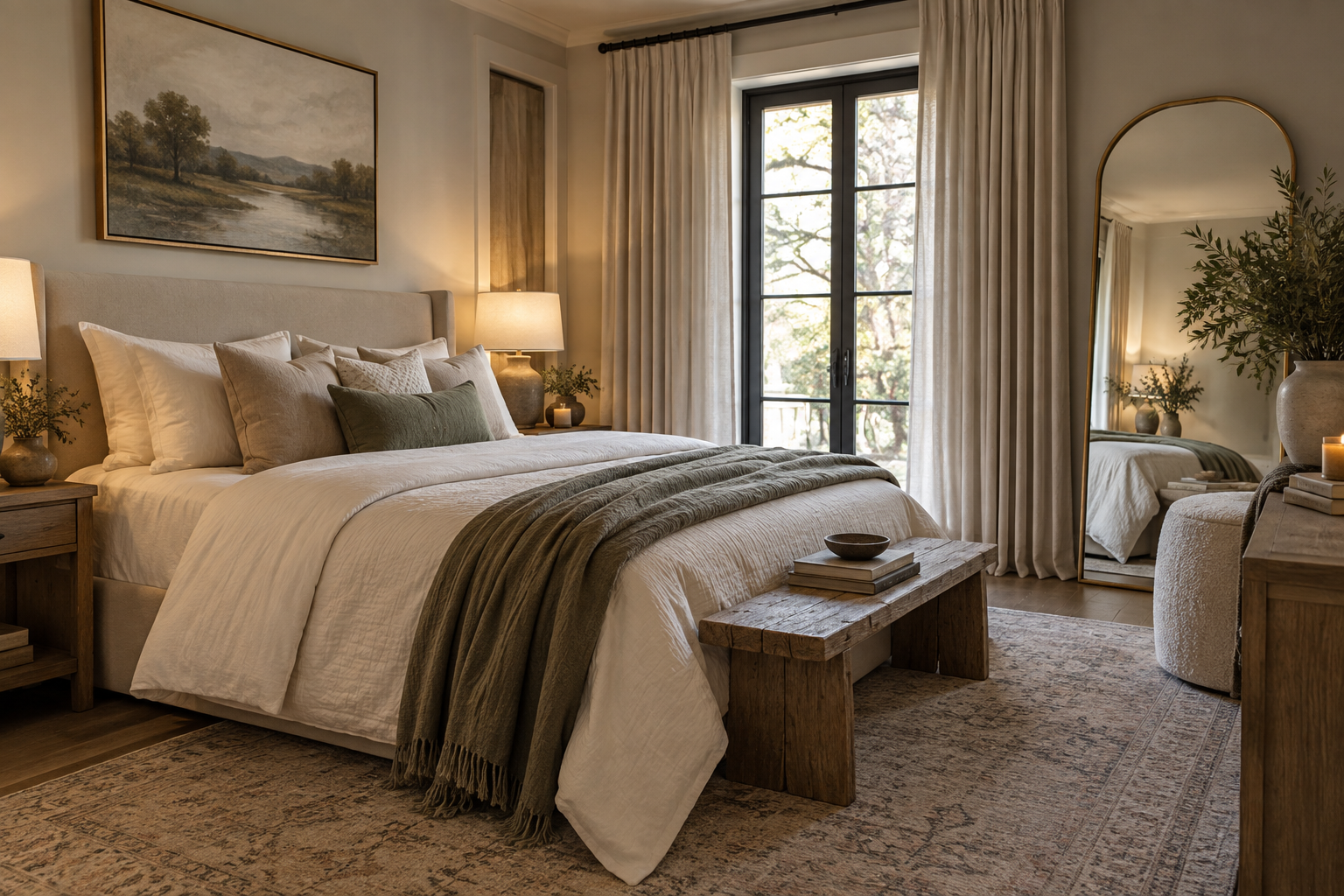
14 Ways to Make a Small Room Look More Expensive
A polished small room usually comes from coherent choices and careful maintenance, rather than a large decorating budget. Start by straightening the existing arrangement and identifying one unfinished detail. An awkward lamp, poorly fitted curtain or overflowing shelf can matter more than the price of the objects around it.
Set a spending limit for the specific improvement you need and check measurements before buying. These ideas describe styling effects, not a promise to increase a property's value. Keep comfort, accessibility and belongings you enjoy central to the decision.
For layout rather than finishing details, use our small-space decor starting guide. A good arrangement makes inexpensive finishing changes easier to notice.
Prioritize condition, proportion and one repeated finish
Start with maintenance that changes the whole view: straighten a curtain, clean a shade according to its instructions, conceal a safely routed cable or remove damaged unused decor. Then photograph the room from its doorway for your own comparison. Identify the largest visual interruption rather than replacing every small accessory.
Choose one finish or color already present and repeat it selectively. A wood frame can connect to a wood side table; a deep-blue cushion can connect to a blue artwork detail. Mixing sound secondhand and existing pieces can work well when their scale and condition are considered. These are appearance choices, not a promise that a room's financial value will increase. Spend on the remaining functional problem, such as an uncomfortable light or an unsuitable furniture footprint, before buying decorative duplicates.
Build a colorful palette around the pieces that stay
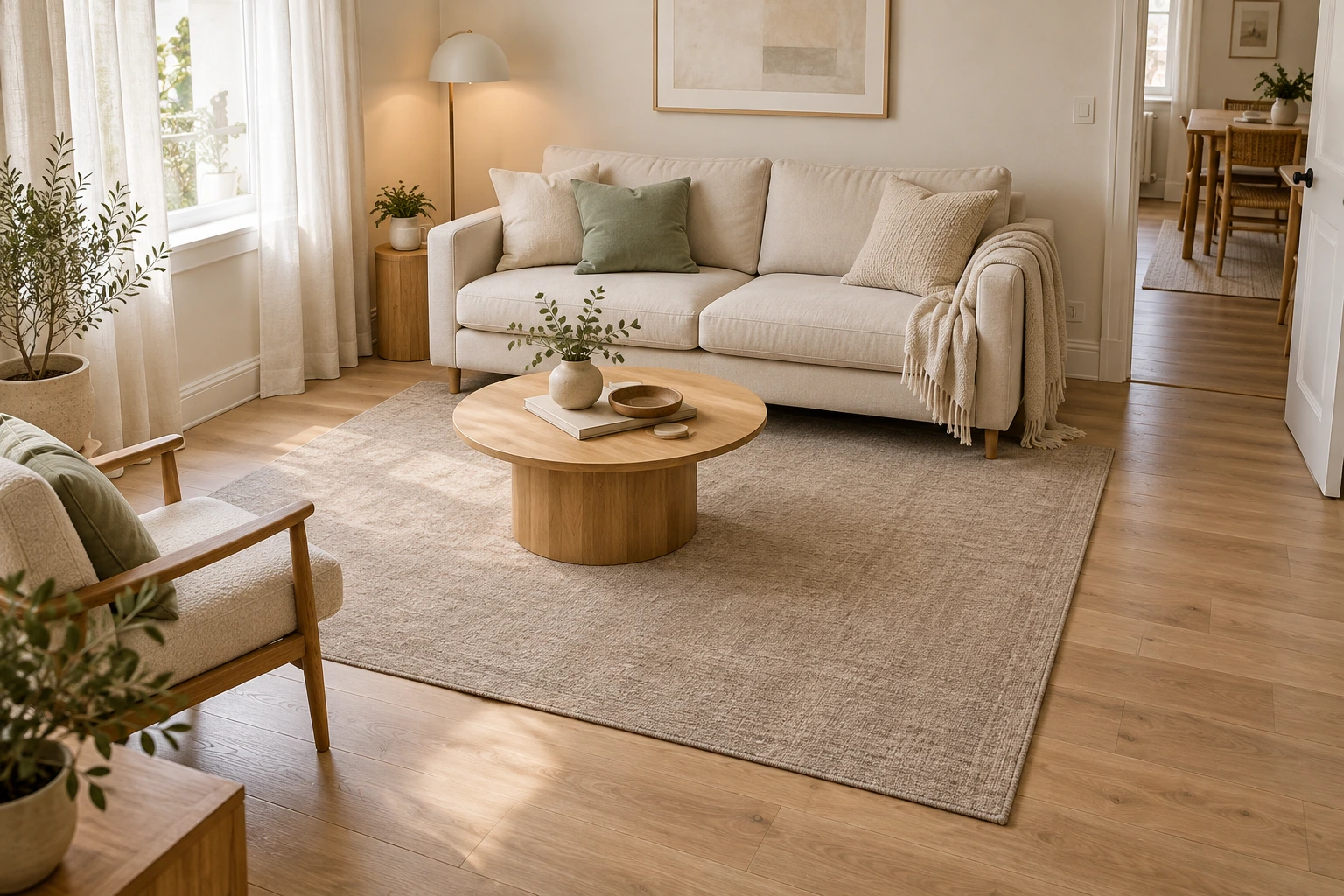
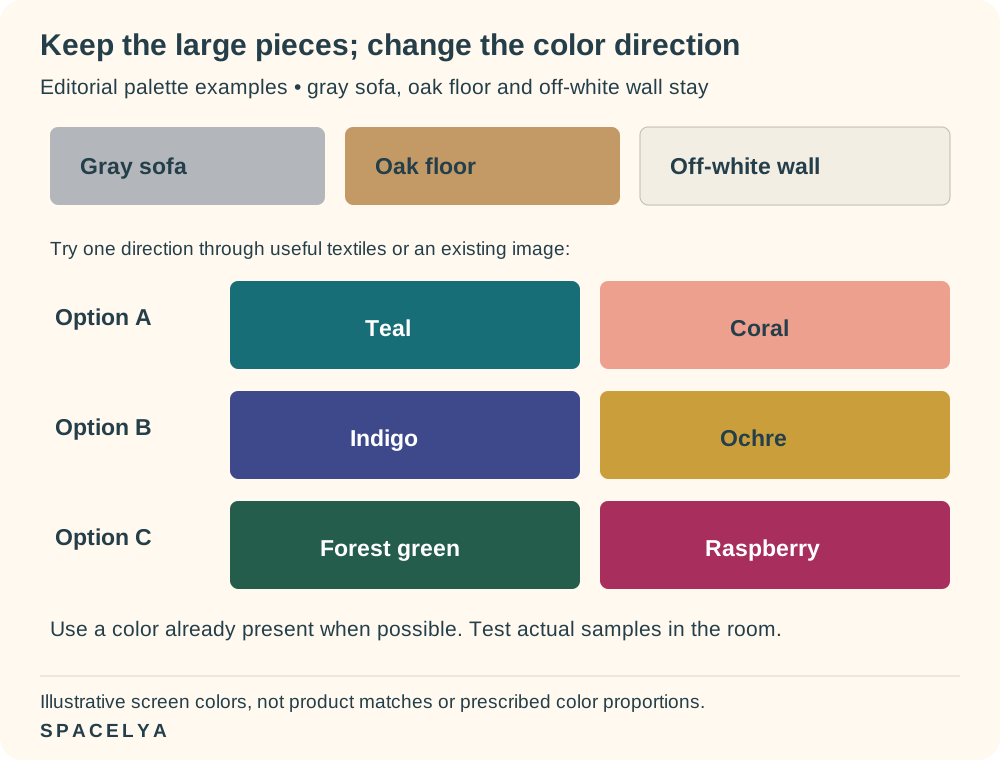
Begin with the large finishes you are keeping, then try a relationship between useful pieces. A gray sofa, oak floor and off-white wall can take several colorful directions. Teal with coral gives a different emphasis from indigo with ochre or forest green with raspberry. None requires replacing the sofa or buying an entire matching set.
Use a color already present in a rug or artwork as one of the pair when possible. Try the other in a cover, textile or existing frame. The accompanying palette is an editorial color study; the swatches are not paint or fabric matches, and they do not prescribe how much of each shade to use.
View actual samples together in daylight and under the lamps you keep. A considered room can be bright and personal. Coherence comes from how the choices relate to that room, not from keeping everything beige or buying expensive materials.
Hang curtains higher and wider
Measure the proposed rod and curtain stack with the window and nearby cupboards open. A higher rod can change the proportions visually, but its fixings must suit the wall and fabric load. Keep curtains away from heaters as instructed. If drilling is unavailable, compare our rental curtain options before choosing panels based only on length.
Use warm layered lighting
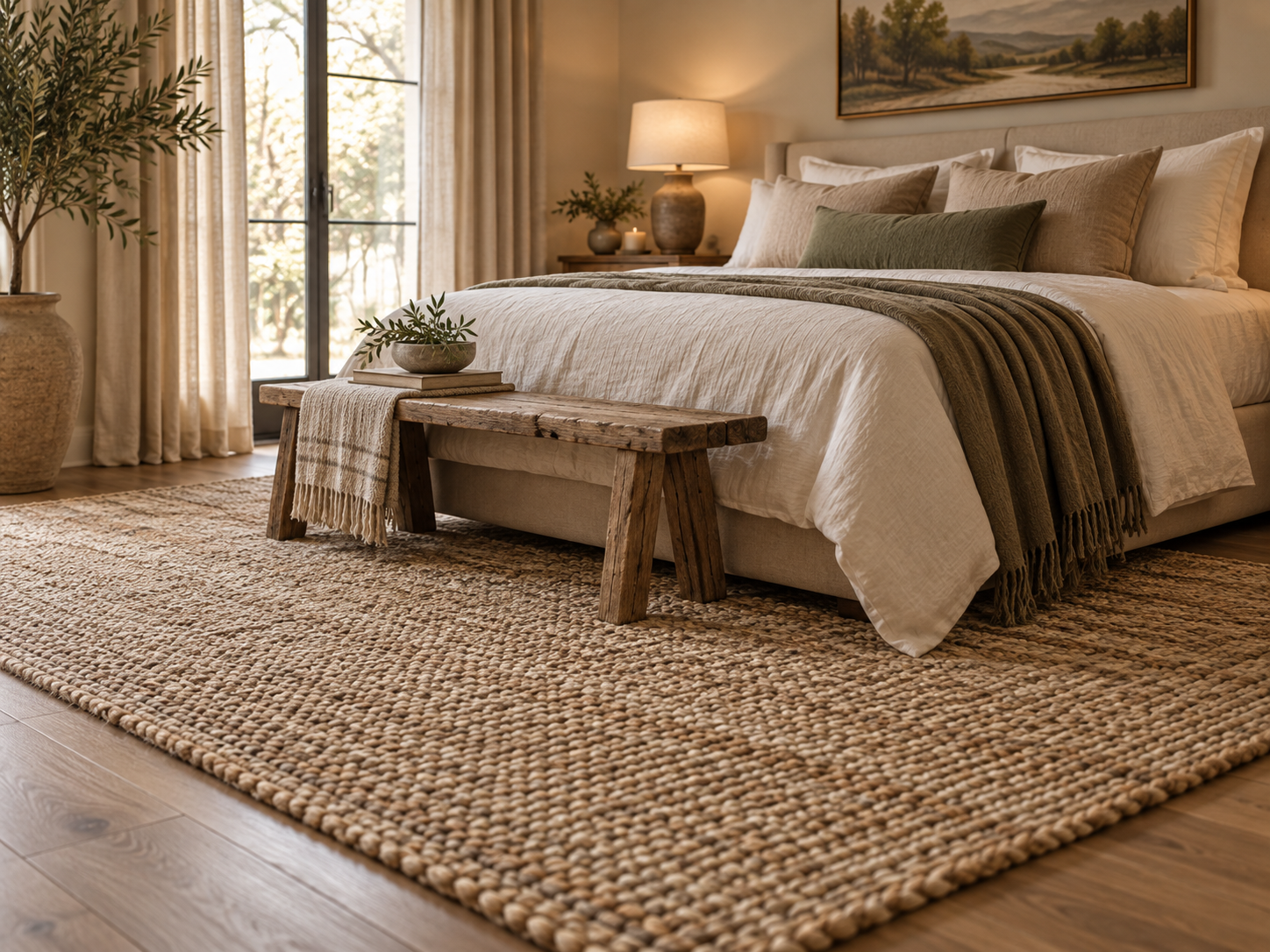
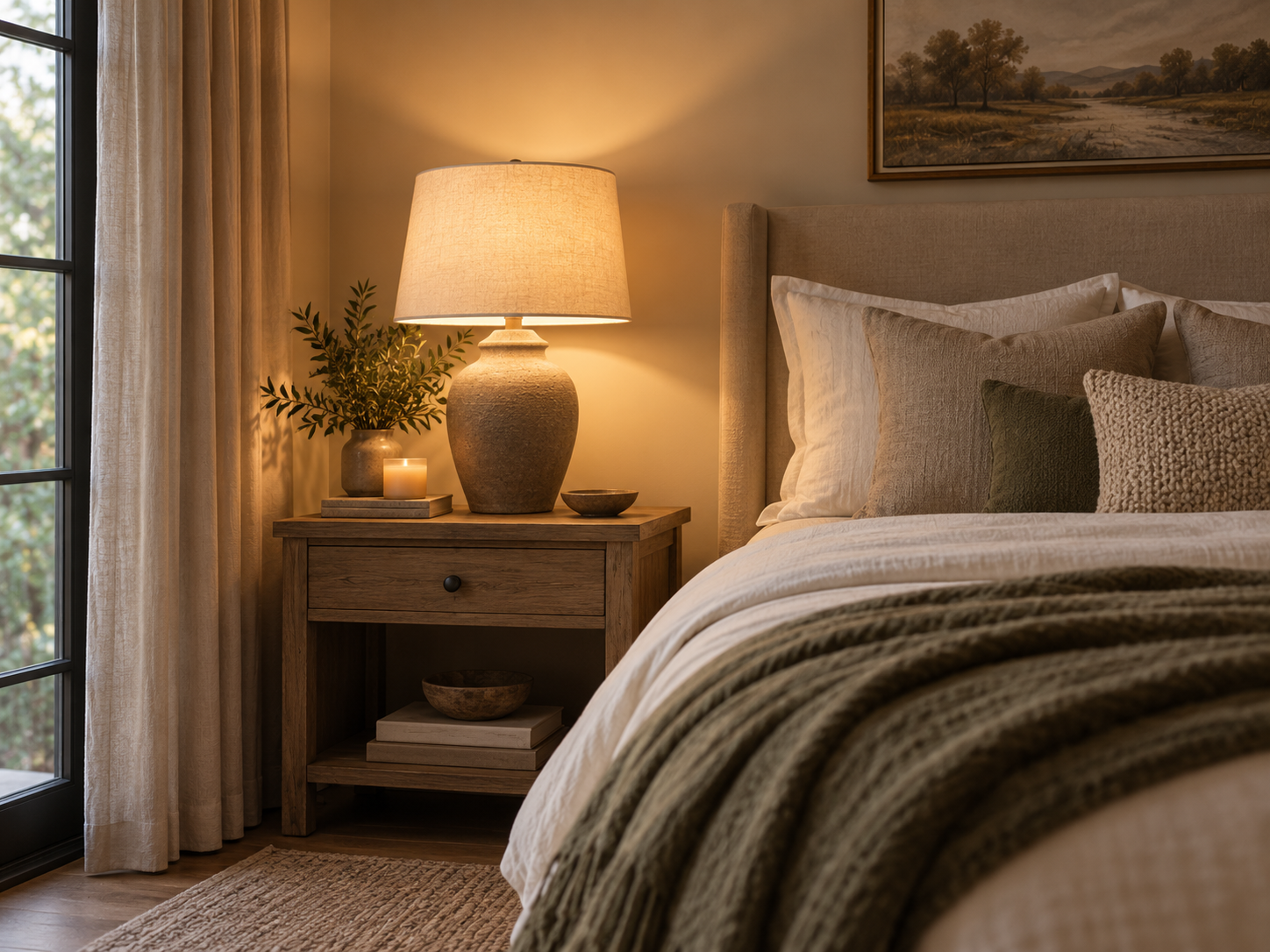
Move an existing lamp to the place where you relax or read and assess the room after dark. Choose compatible bulbs with light that suits the task, following fixture and dimmer instructions. A second useful source can reduce dependence on one overhead light. Avoid buying several decorative lamps that introduce cables and take surfaces away from the people using the room.
Add one large mirror
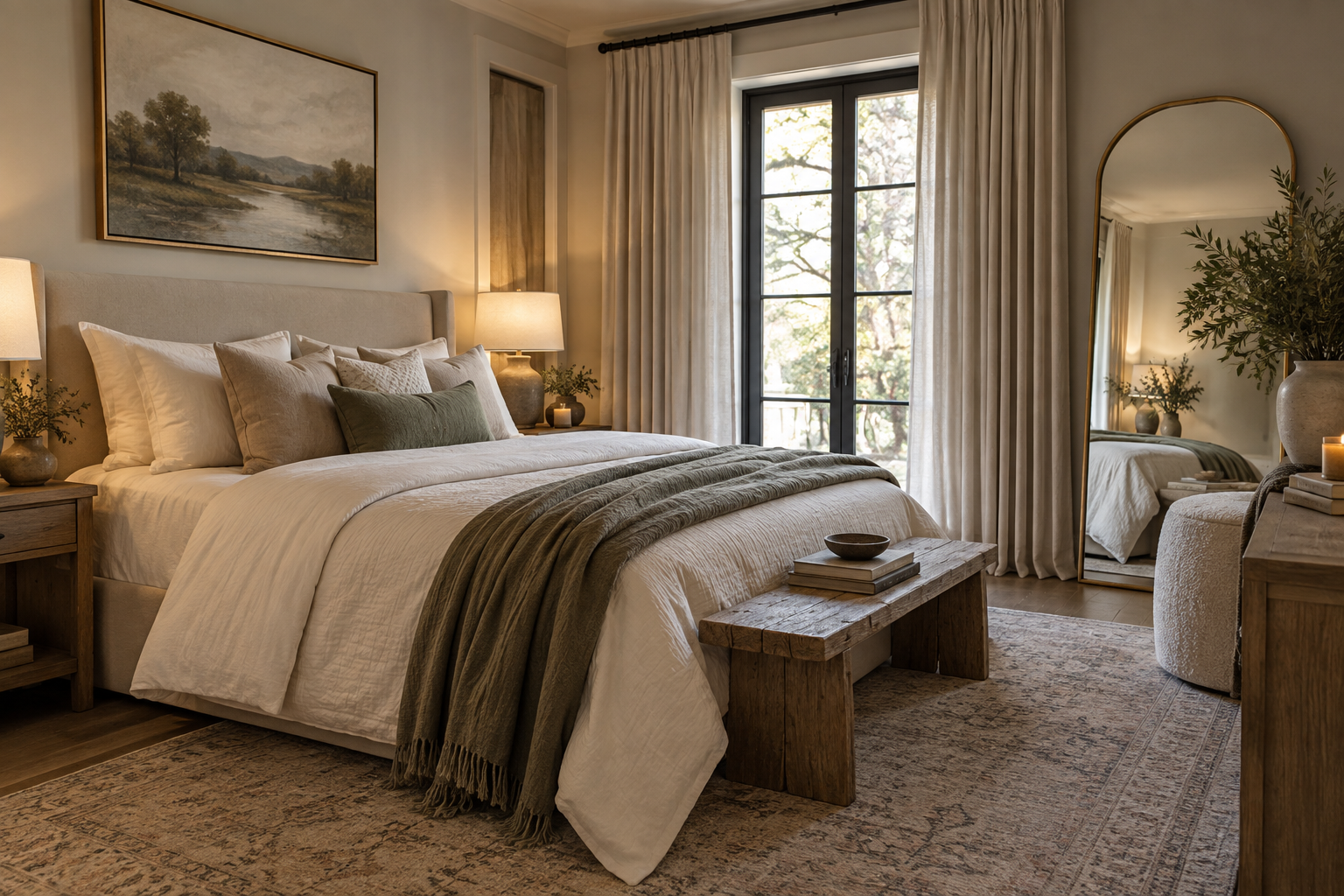
Test the reflected view and frame size against the wall before buying. A mirror can create a focal point, but reflecting a busy storage area may make the room feel less settled. Follow the mirror's appropriate mounting or securing instructions. A smaller well-positioned piece is preferable to a large unsecured mirror chosen solely for a luxury-looking photograph.
Use larger artwork instead of many tiny pieces
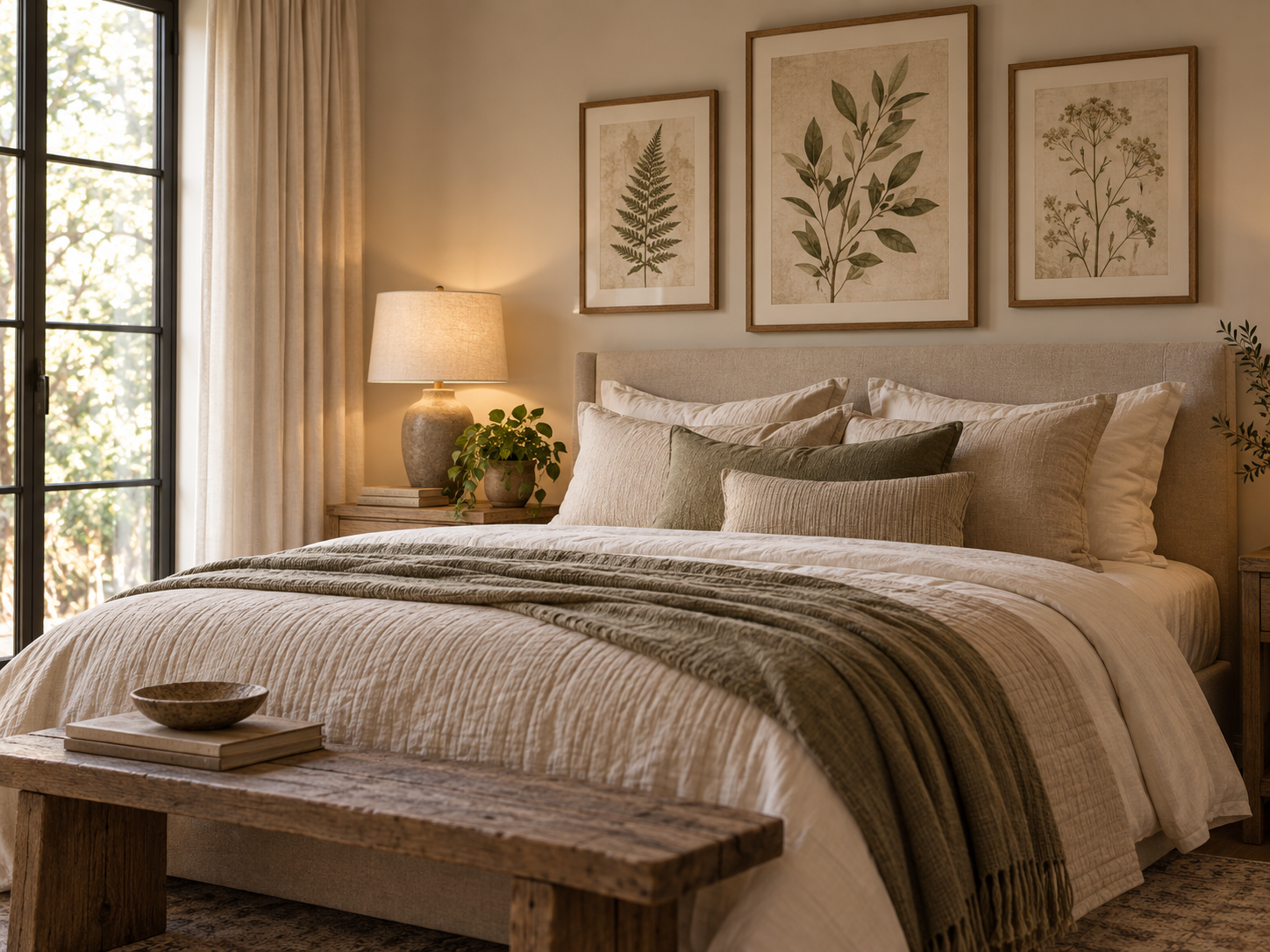
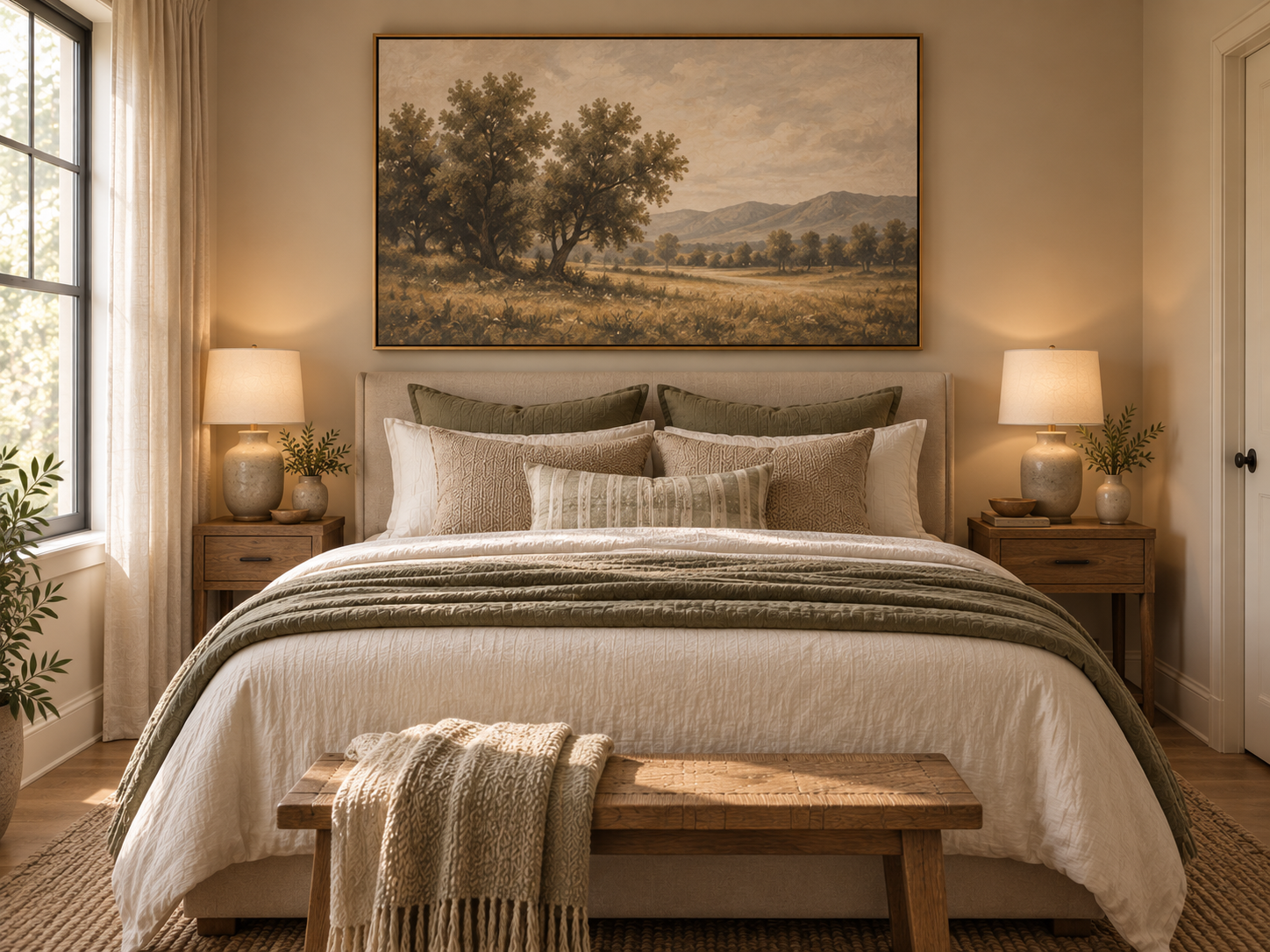
Use a paper outline to compare the frame with the furniture below it. One considered piece can connect a room, while a small collection can also work when spacing is deliberate. Choose an image you enjoy and a frame within your budget. Our gallery wall versus large artwork guide compares the two approaches.
Upgrade small hardware details
On your own furniture, measure screw spacing and test a compatible handle before changing the entire set. Store original parts and avoid new holes unless the project allows them. For rented cabinets, get permission first. Matching an existing finish can be enough; replacing functional hardware makes little difference if the main issue is a damaged surface or an overflowing drawer.
Add texture with cushions and throws
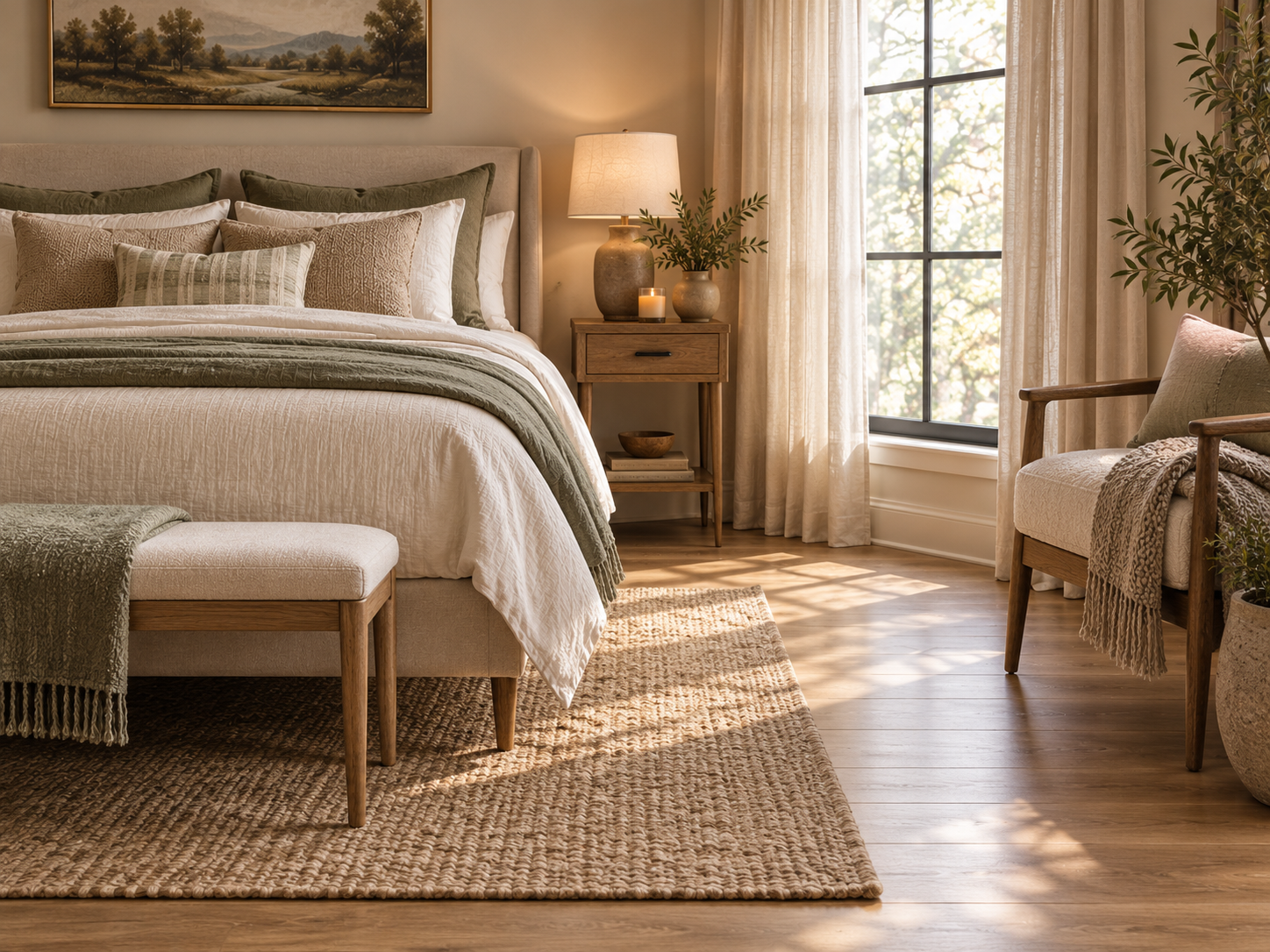
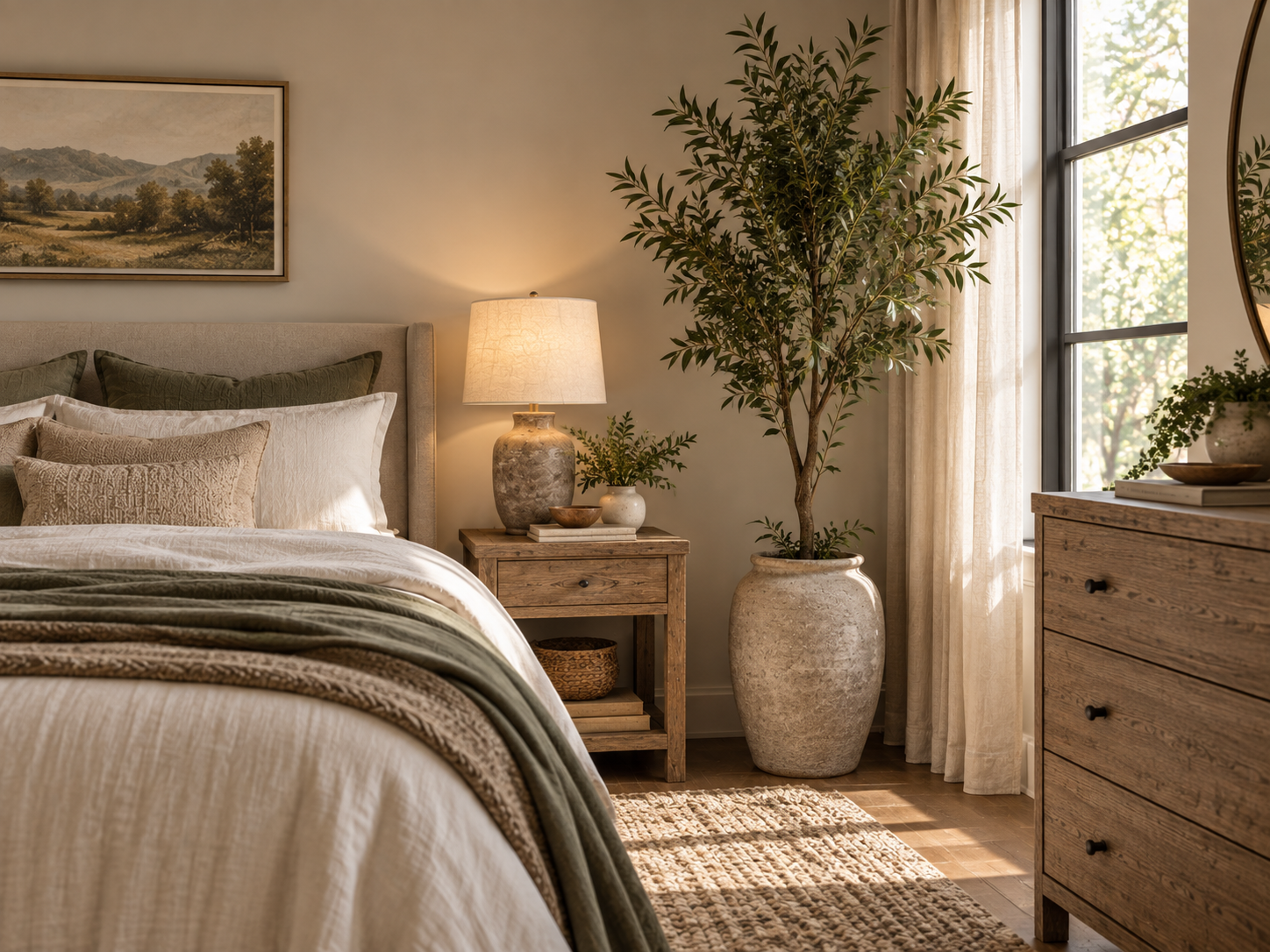
Choose texture where you touch it: a comfortable cushion cover, washable throw or suitable curtain. Compare care instructions and how the fabric feels before buying. Keep enough room to sit without removing a pile. A limited combination of textures can add depth, but delicate or difficult-to-clean material is a poor upgrade for a room used heavily by children, pets or guests.
Keep surfaces mostly clear
Clear the surface, return everyday essentials and then add one small grouping if there is room. Keep a drink area or task space usable. Notice what repeatedly lands there during the week and create storage for those items. A tray can define a small category, but putting the entire clutter pile on a tray does not make the surface easier to use.
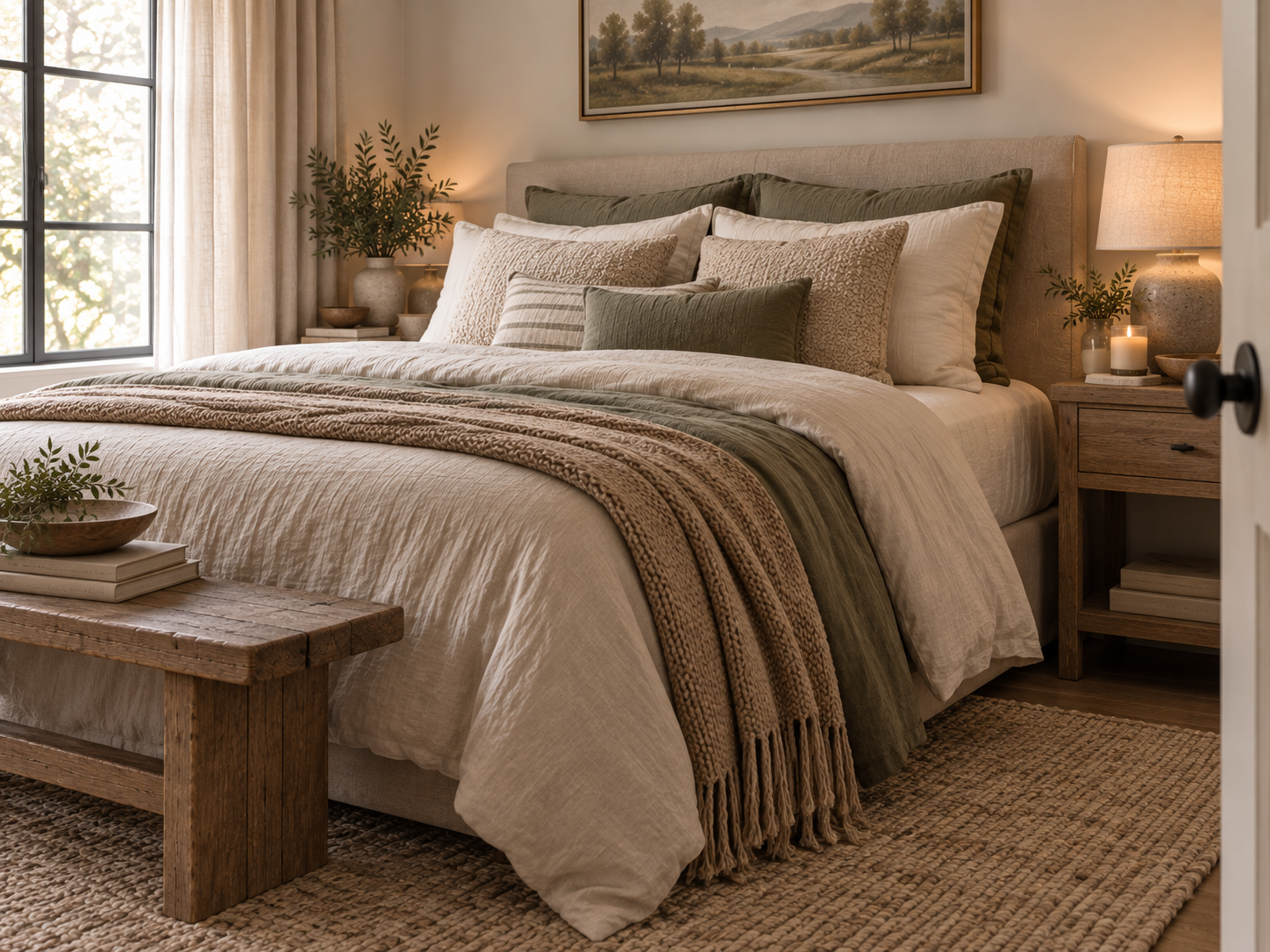
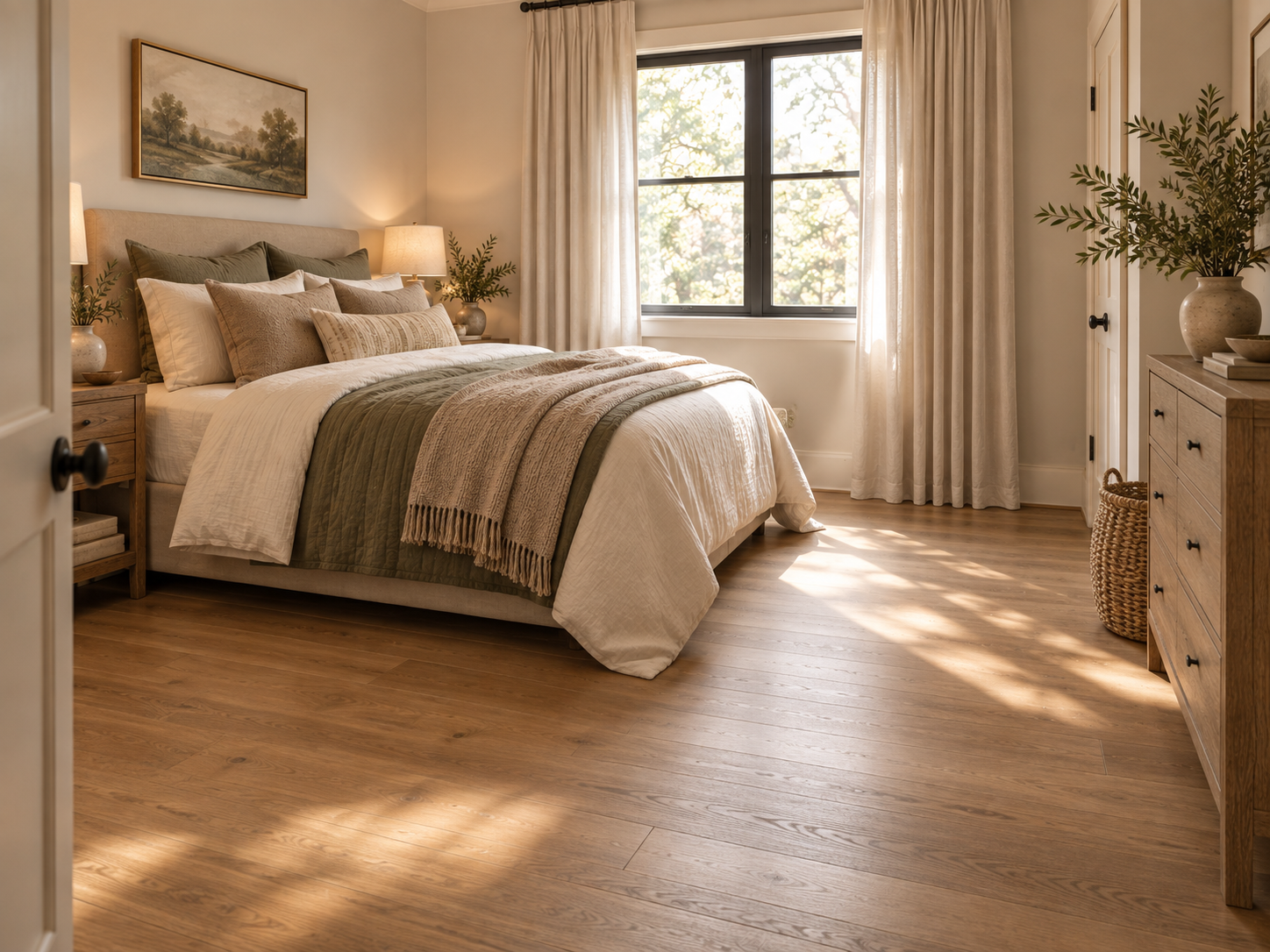
Coordinate useful storage instead of buying a matching set
Sort the contents before choosing how open storage should look. A useful mixed set can become easier to read with consistent labels or one repeated color; it does not have to be replaced by identical boxes.
For example, a shallow box for charging cables and a taller basket for folded scarves can sit on the same shelf with clear category labels. Matching their outside appearance by choosing two deep boxes might bury the cables or waste useful space. Include the handles, internal capacity and retrieval movement before deciding.
Use the arrangement for a normal week and notice whether items return to their assigned homes. The finished impression comes from a maintained routine as well as the color of the containers. Our bedroom storage guide illustrates the separate outside and inside fit checks.
Bring in natural materials
Add a natural material through something the room needs, such as a useful wooden surface, washable linen cover or suitable storage basket. Check the item's finish and care requirements in that location. Material choice alone does not determine quality or cost. Avoid buying decorative objects simply to tick off a list of wood, ceramic and woven textures.
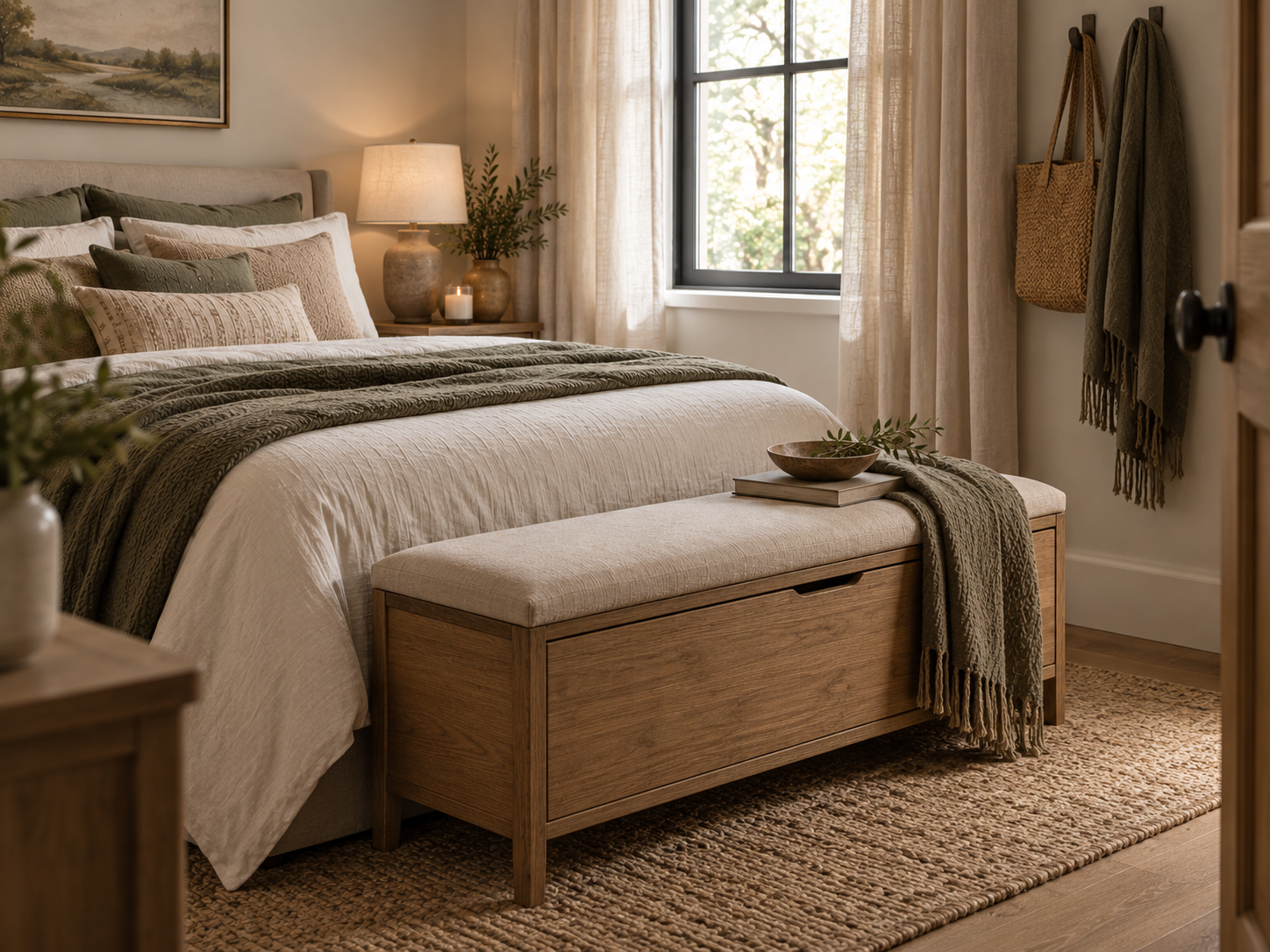
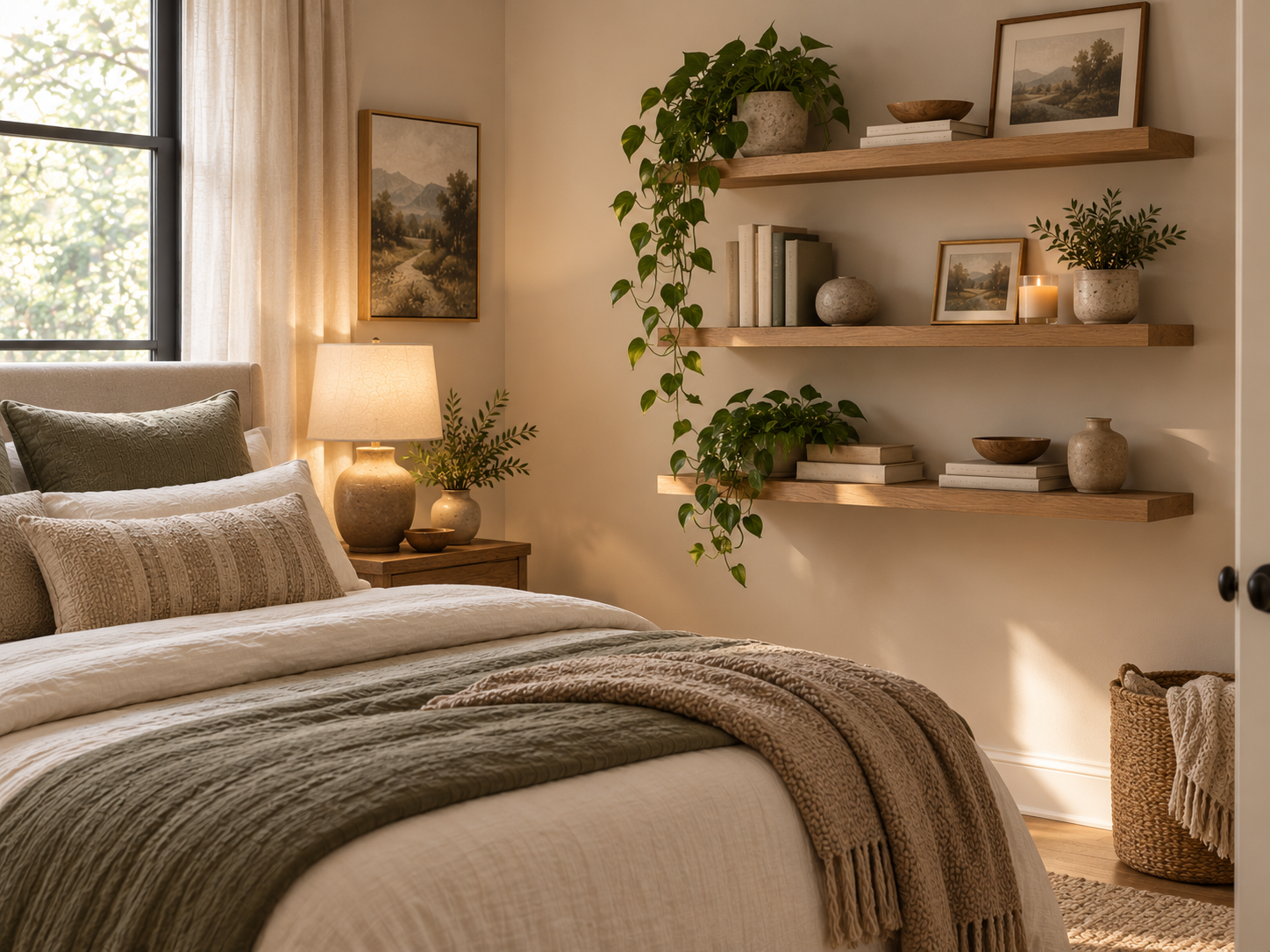
Create one strong focal point
Choose the feature already most visible from the entrance, then help it stand out by simplifying nearby objects. A painting, bed headboard or existing window can serve as the focus. Keep other pieces connected through color or shape. One focal area is a useful styling choice, but it should not take priority over the room's comfortable routes or essential storage.
Style shelves with breathing room
Separate practical book storage from a small display section. Place books where you can remove them without dismantling the accessories, and use suitable support for their weight. Leave some space around the displayed object rather than balancing items at the edge. A shelf that looks edited but cannot hold the books you need may require another layout instead of more styling.
Use plants strategically
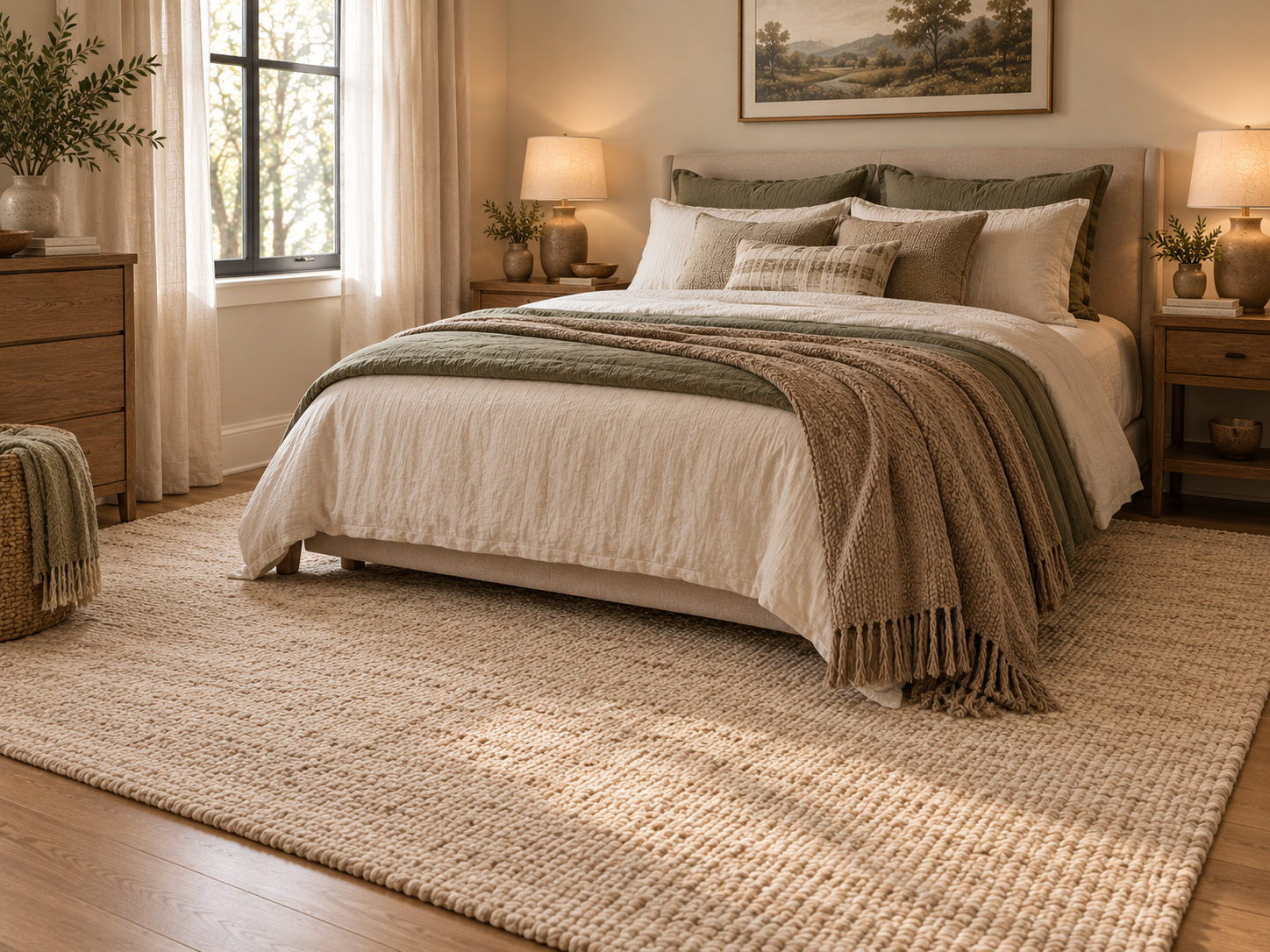
Choose a plant suited to the light and care you can provide, with household suitability checked for children or pets. Put it in a stable container with appropriate surface protection. A healthy small plant can look more considered than a large struggling one. If plant care does not fit your routine, keep the room personal through another existing object rather than adding a maintenance task.
Remove anything that makes the room feel unfinished
Begin with loose packaging, shifted textiles and cables without a proper route. Clean and repair your own items where appropriate, while reporting rented-property defects to the responsible party. Keep ventilation and service points accessible when concealing equipment. Take another look before shopping; fixing one visible maintenance issue can be more effective than placing a new decorative item beside it.
A low-spend finishing sequence
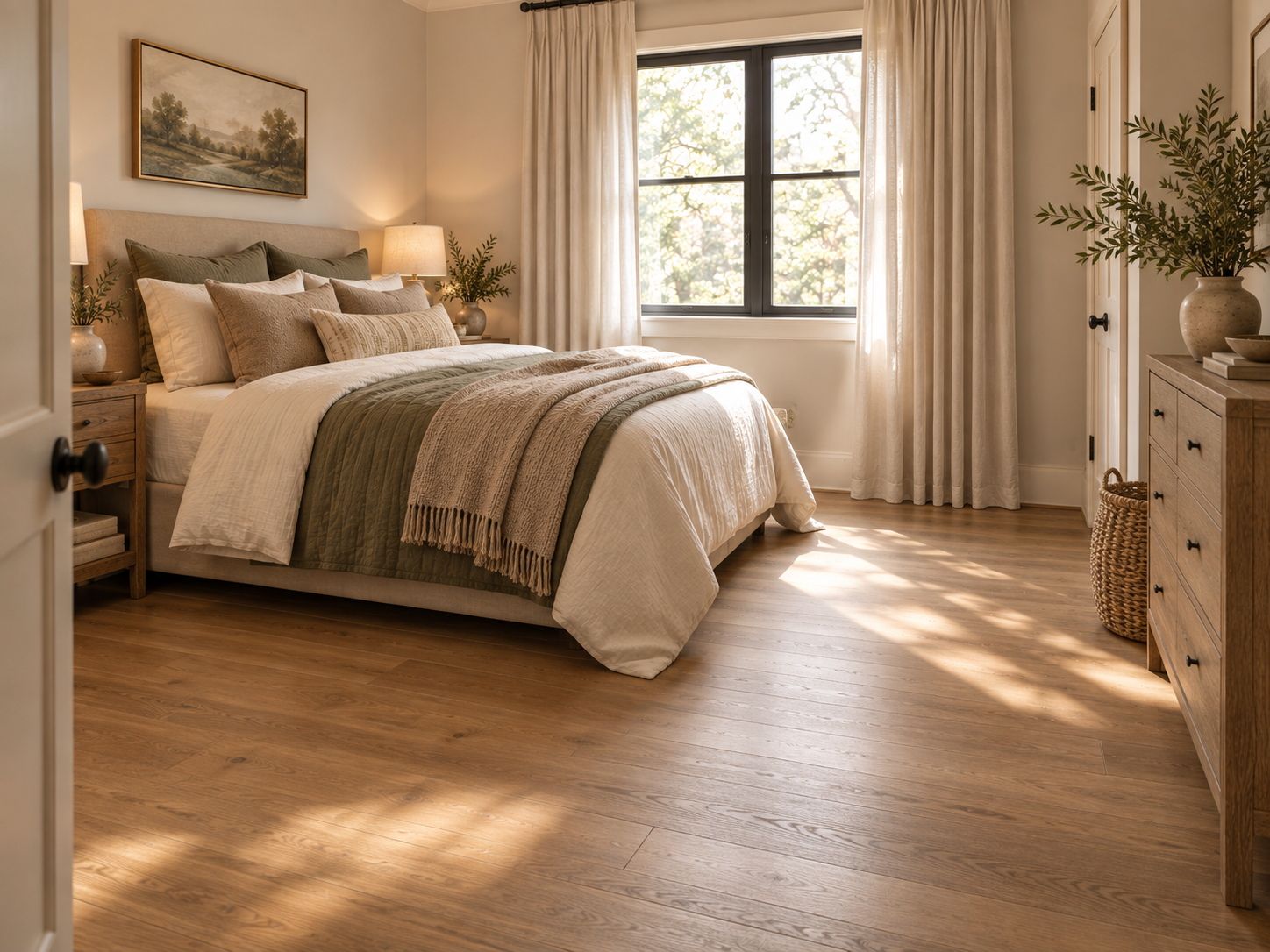
First clear packaging and return belongings to their places. Next adjust the existing lamps and textiles. Then identify one genuinely missing piece, such as a suitable curtain length or practical storage container, and measure for it.
For an entrance where everyday items keep reappearing, our entryway storage guide addresses the routine behind the clutter.
Keep the room personal
A finished appearance does not require hiding every colorful or inexpensive item. Give meaningful pieces a deliberate place and keep the surrounding arrangement usable. Spend where the change improves your daily comfort or solves a real problem, rather than chasing a photograph's idea of luxury.
A beautiful small space is not about having more. It is about making what you have work better. — Spacelya