How to Choose a Rug for a Small Living Room on a Budget
A rug can make a small living room feel settled, but choosing one from a tiny product photo is a gamble. A bargain stops being useful if the rug catches a door, leaves the seating looking disconnected, or needs cleaning you cannot manage at home.
Start with the furniture you already have and the way you use the room. Then narrow the search to rugs that fit that space, suit your cleaning routine and stay within your total spending limit. You do not need to replace the cushions or buy a matching set of accessories to make the result work.
Measure the seating area before you browse
Put the sofa, chairs and coffee table where you actually want them. Measure the width and depth of this group, then measure the open floor beside it. Note door swings, a balcony threshold, a pull-out bed and any drawer that opens close to the floor. Those details matter more than a standard room-size label.
Sketch two or three possible rug outlines on paper. If you mark them on the floor, use a method approved for that surface; do not assume adhesive tape is safe for every finish. Walk the usual route with the layout marked out. Open the doors and move a chair as you would during a normal evening.
If the arrangement still feels awkward, work through our narrow living room layout ideas before buying the rug. Moving the furniture first can change the size you need.
Use one rug to connect the sofa, chair and table
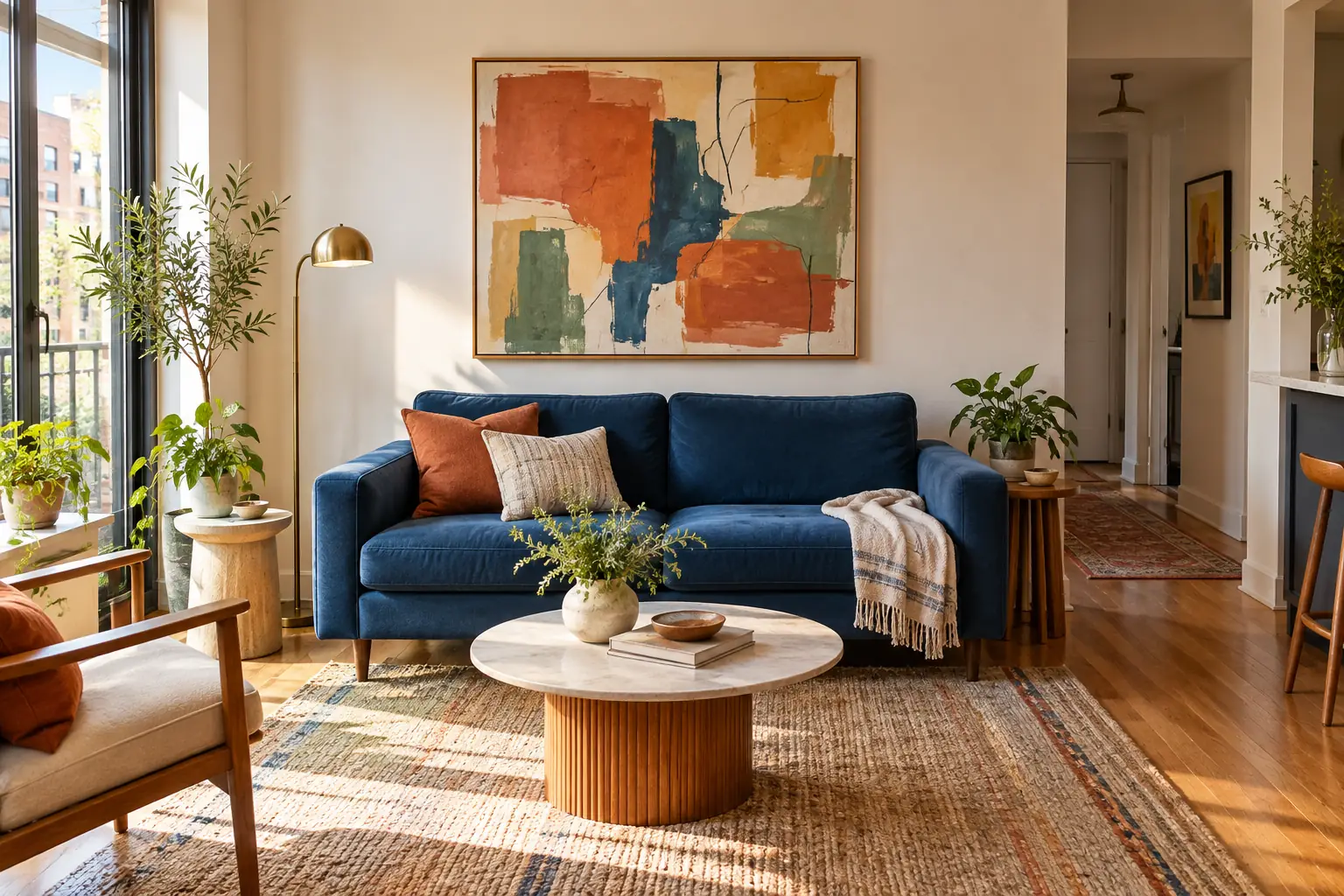
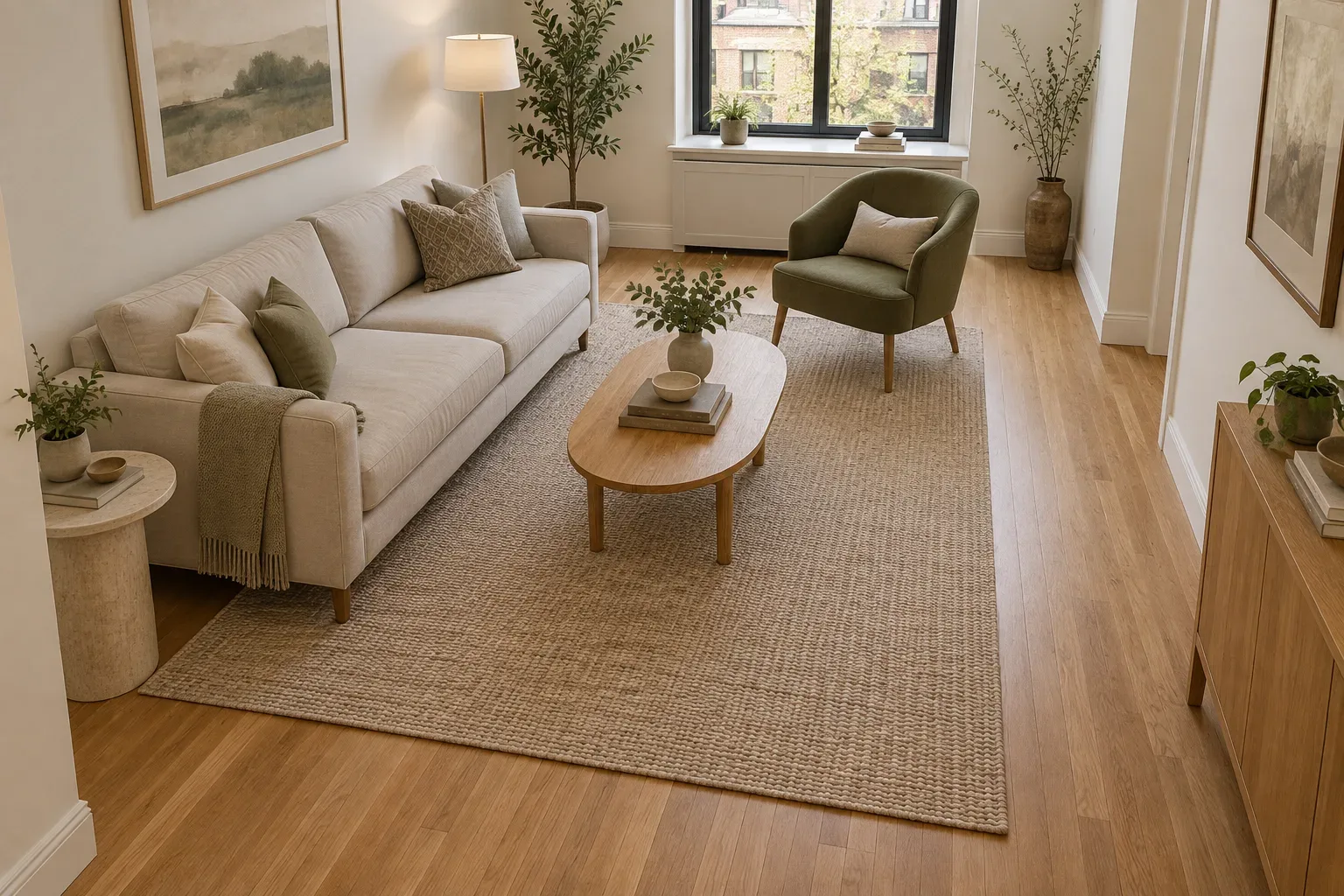
Try a rug that reaches under the sofa's front legs and connects the chair to the same seating area. If the room comfortably accommodates a larger size, putting more of the furniture on the rug can also work. The useful test is whether the pieces feel grouped while the walkway remains usable.
IKEA's rug-sizing guide illustrates both partial and full sofa placement and suggests a rug longer than the sofa for a framed seating group. Treat that as a starting point to test against your actual floor plan, rather than a reason to squeeze in the largest size.
A smaller rug is still an option when you want a soft spot beneath a coffee table or beside a reading chair. Know what job it will do. If you want to unify the whole seating group, a small rectangle floating between the furniture may disappoint even when the pattern is lovely.
Check the pile, edges and backing in your own room
Look beyond the overhead product photo. Check the rug's stated thickness, edge finish and backing, then compare them with the space beneath your door and with the floor manufacturer's guidance. A rug plus a pad takes up more height than the rug alone.
For a busy compact seating area, a flat weave or low pile is a useful place to begin your search. Decide whether its texture feels comfortable enough for how you use the room: shoes on, bare feet, sitting on the floor or moving a chair. Construction varies, so a material name on its own cannot tell you how soft, stable or easy to clean a particular rug will be.
If a pad is recommended, check its compatibility with both the rug and your floor finish. Include it in the measurements and budget. Keep edges lying flat and away from a tight turning point in the walking route.
Read “washable” as a care instruction to verify
Before buying, open the care details for the exact size and construction. Find out what can be washed, how it dries, whether your machine has enough capacity, and whether a separate pad has different instructions.
For example, Ruggable's care guidance distinguishes a removable cover from its pad in a two-piece system; its all-in-one rugs have different instructions. Some larger sizes need a commercial machine. The word washable does not answer those questions by itself.
Also think about where a wet rug or cover would dry in a small apartment. If the recommended cleaning method requires a service, allow for that expense. Save the care instructions with the receipt so you can follow the right method later.
Set a full-cost limit, then compare sizes
Write down the amount you can comfortably spend on the complete purchase. Add the rug price, any required pad and delivery. Check whether returning it would involve a collection charge, paid postage or a journey you cannot easily make. A sale price is much less useful when the wrong size is expensive to send back.
Compare the sizes that passed your floor-plan test before you compare patterns. If the size you need is beyond your limit, look at a simpler design, a different construction or a later purchase. Buying a smaller size just to meet today's price can mean paying twice when you replace it.
For each shortlisted rug, keep four notes: exact dimensions, delivered cost with the needed pad, cleaning method and return terms. That short list makes a quieter but suitable rug easier to compare with a tempting photograph.
Choose a color that works with what you own
Use the largest existing pieces as your reference: the sofa, floor and curtains. A warm neutral rug can repeat one of those tones; a patterned rug can pick up a color already in a cushion or a piece of art. You do not have to match everything exactly.
Think about the amount of pattern already in the room. If the curtains and wall art are busy, a quieter rug gives the seating area some breathing room. If most surfaces are plain, a restrained stripe or a small repeating pattern may supply enough interest on its own. Request a sample when one is available and affordable, or examine close-up photos alongside the care information.
For more ways to work with existing pieces, see small apartment living room ideas that feel open and cozy.
Make a secondhand bargain pass the same checks
Ask for the exact measurements, a clear view of both sides and close-ups of the edges. Check disclosed stains, odors, wear, loose backing and whether the seller can provide a care label. A listing that says “large” is not enough to judge the fit.
Include transport and any cleaning you plan to arrange in the cost. Check whether you can inspect the rug before paying and whether returns are possible. If the condition or construction is unclear, keep looking rather than treating the low price as the deciding factor.
Secondhand can be worth considering, but it still needs to fit the room and your routine. The same shortlist works for a used rug, a clearance item and a full-price purchase.
A five-minute check before you order
Confirm the exact listed size against the outline you tested.
Check that doors, chairs, drawers and a sofa bed still work with the rug and any pad in place.
Read the care directions for that specific product and size.
Add the delivered price, needed accessories and likely cleaning expense; read the return terms.
Choose a design you can use with the furniture and decor you already own. Save the size, care instructions and order details together.
Small living room rug questions
Does a small living room need a small rug?
Not automatically. Measure the seating group and the walking routes first. A larger rug can connect the furniture when it fits comfortably; a small rug can suit a reading corner or a compact table area. The right size depends on the job you want it to do.
Can I put a rug over carpet?
Check the rug and pad manufacturer's advice for that use. Test that the rug remains flat and stable beneath the furniture and does not create a troublesome edge in the walking route. Do not assume a pad intended for a hard floor is suitable on carpet.
Should I buy a machine-washable rug for an apartment?
It can be convenient if the specified washable part fits your machine and you can dry it as directed. Check those details before paying extra for the feature. A rug with another cleaning method may suit your home better if you have no practical drying space.
What should I prioritize on a tight budget?
Start with fit and manageable care, then compare the full cost. Color is easier to work into the room when you take your existing furniture as the starting point.
One rug, one useful decision
Choose the rug that fits the tested layout, makes sense for your cleaning routine and meets your complete budget. Leave the furniture in its planned positions when it arrives, compare the real color in your room's light and follow the return instructions promptly if it is unsuitable.
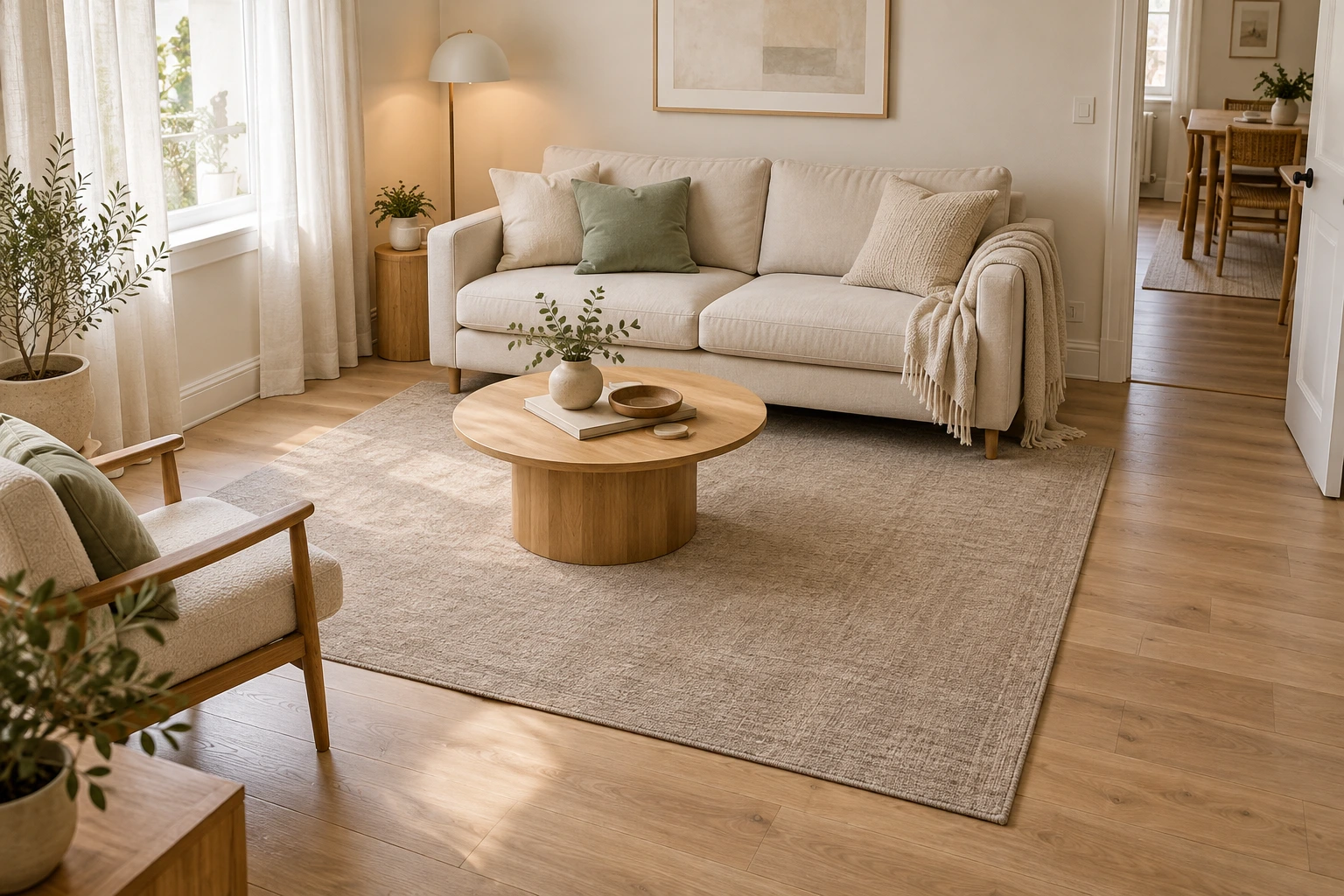
Room images are styling illustrations, not photographs of a tested product or a before-and-after project. The cover was created with AI for this guide.
A beautiful small space is not about having more. It is about making what you have work better. — Spacelya