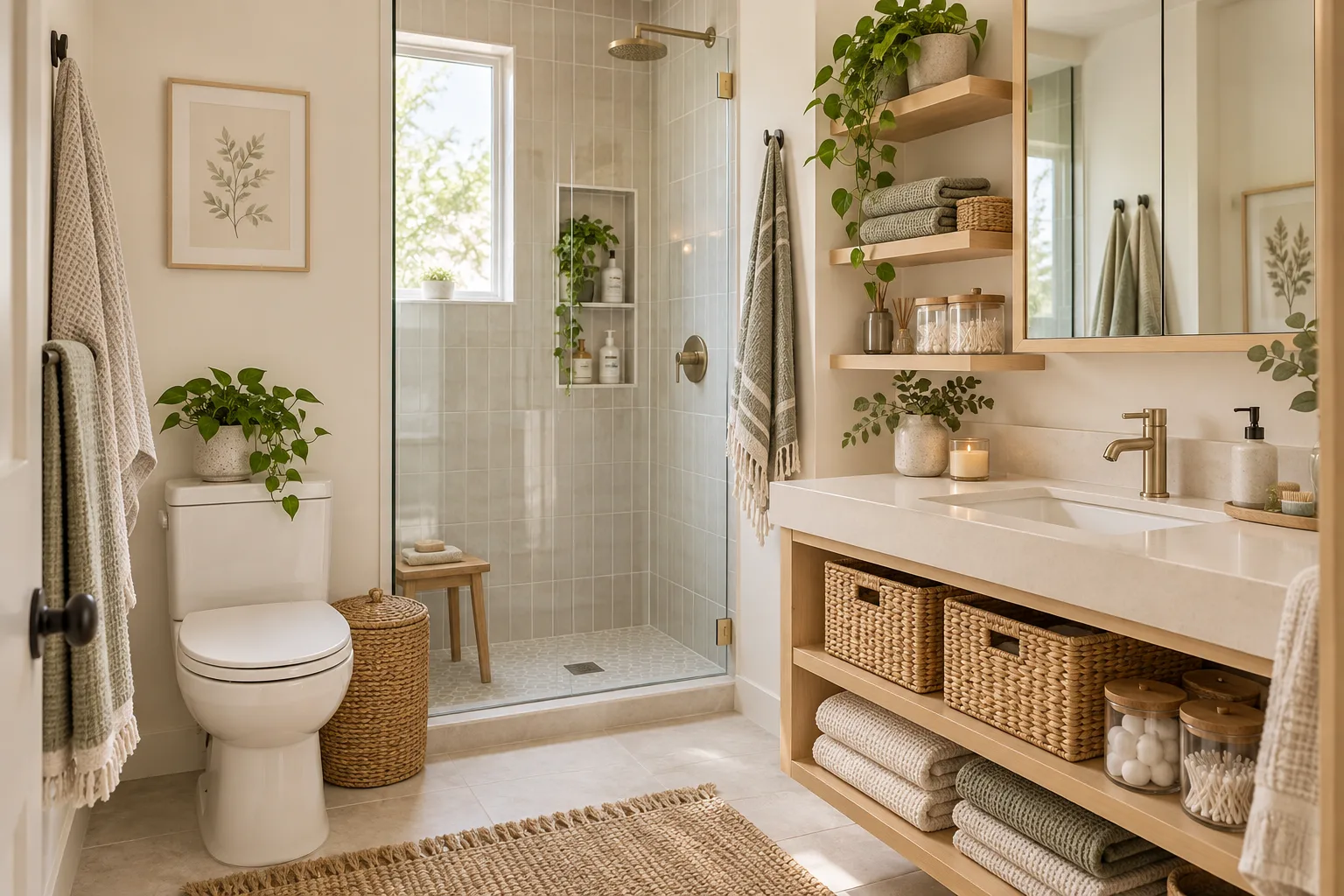
18 Small Bathroom Storage Ideas That Make the Most of Every Inch
Small bathroom storage works best when it solves a specific daily problem: towels that stay damp, toiletries that crowd the sink, or supplies you cannot find. Adding more containers before checking the room can make those problems harder to manage.
Start by measuring the door openings, cabinet interiors and the route to the sink, toilet and shower. Separate daily essentials from backups, then choose one or two of the ideas below for the space you actually have. Check rental permission, wall construction and installation instructions before adding mounted storage.
These options are alternatives, not a list of eighteen products to buy. Keep surfaces dry where possible and address leaks or persistent moisture first. The EPA's moisture guidance explains why controlling moisture matters. For towel-specific options, see our guide to storing towels without a linen closet.
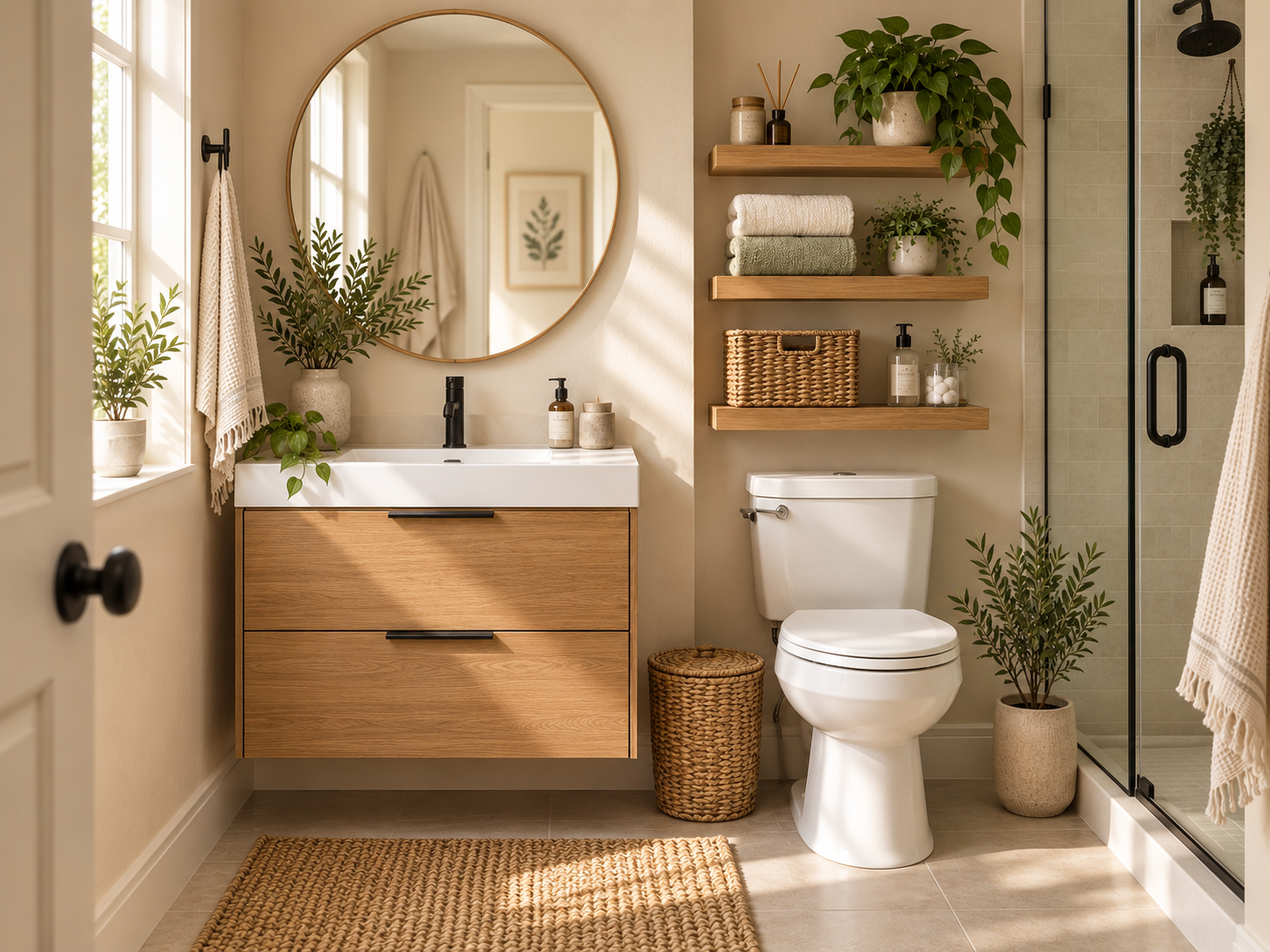
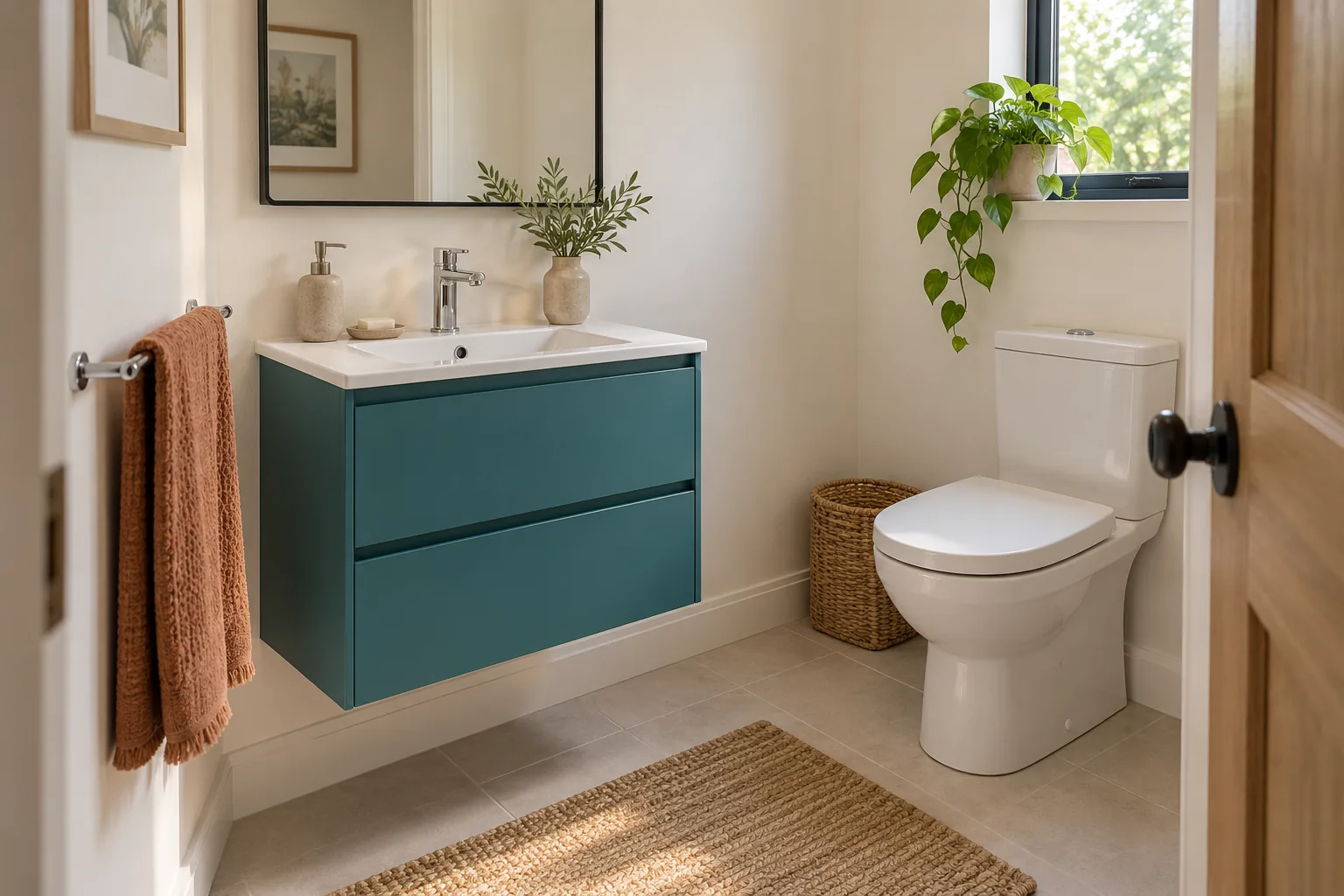
Add floating shelves above the toilet
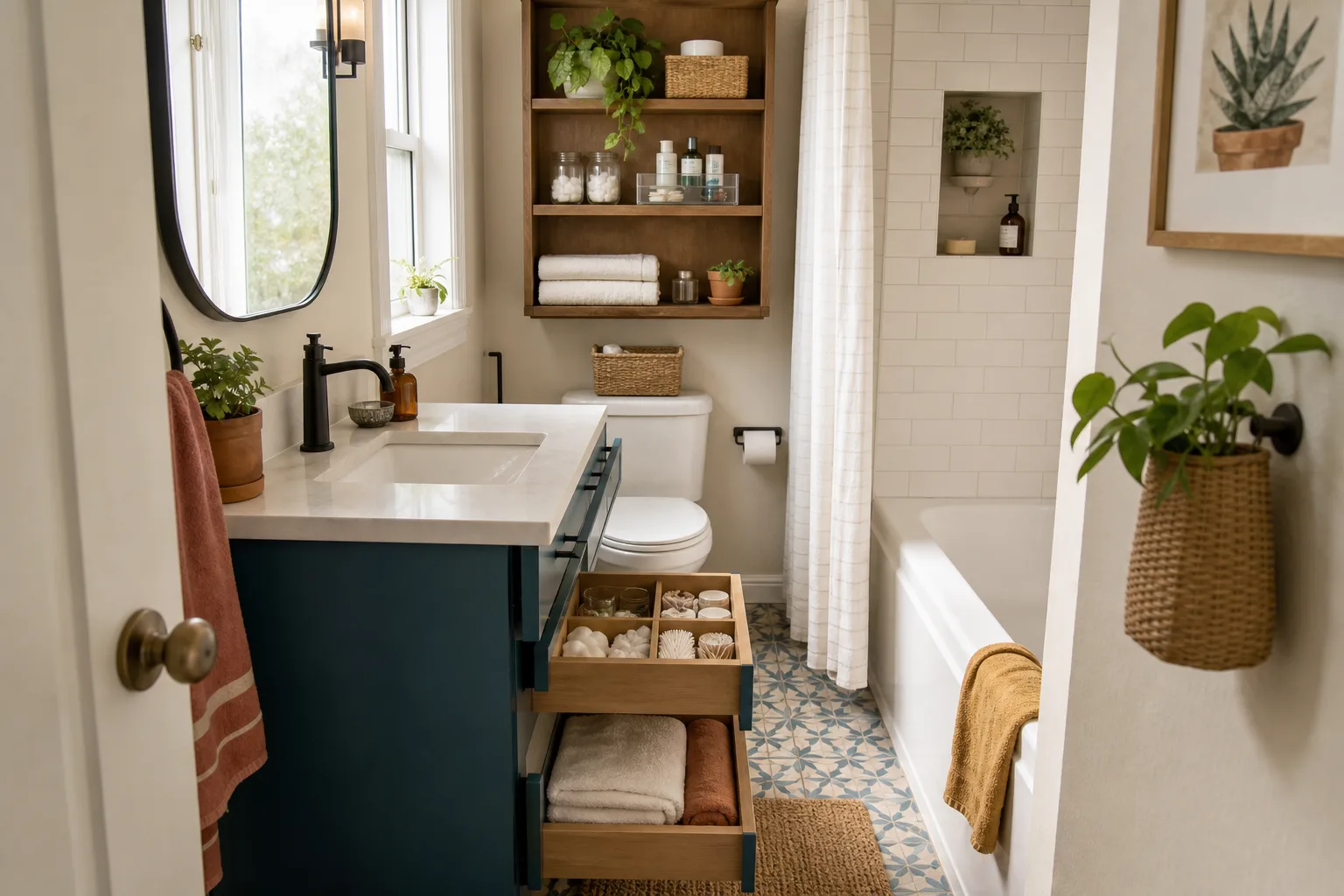
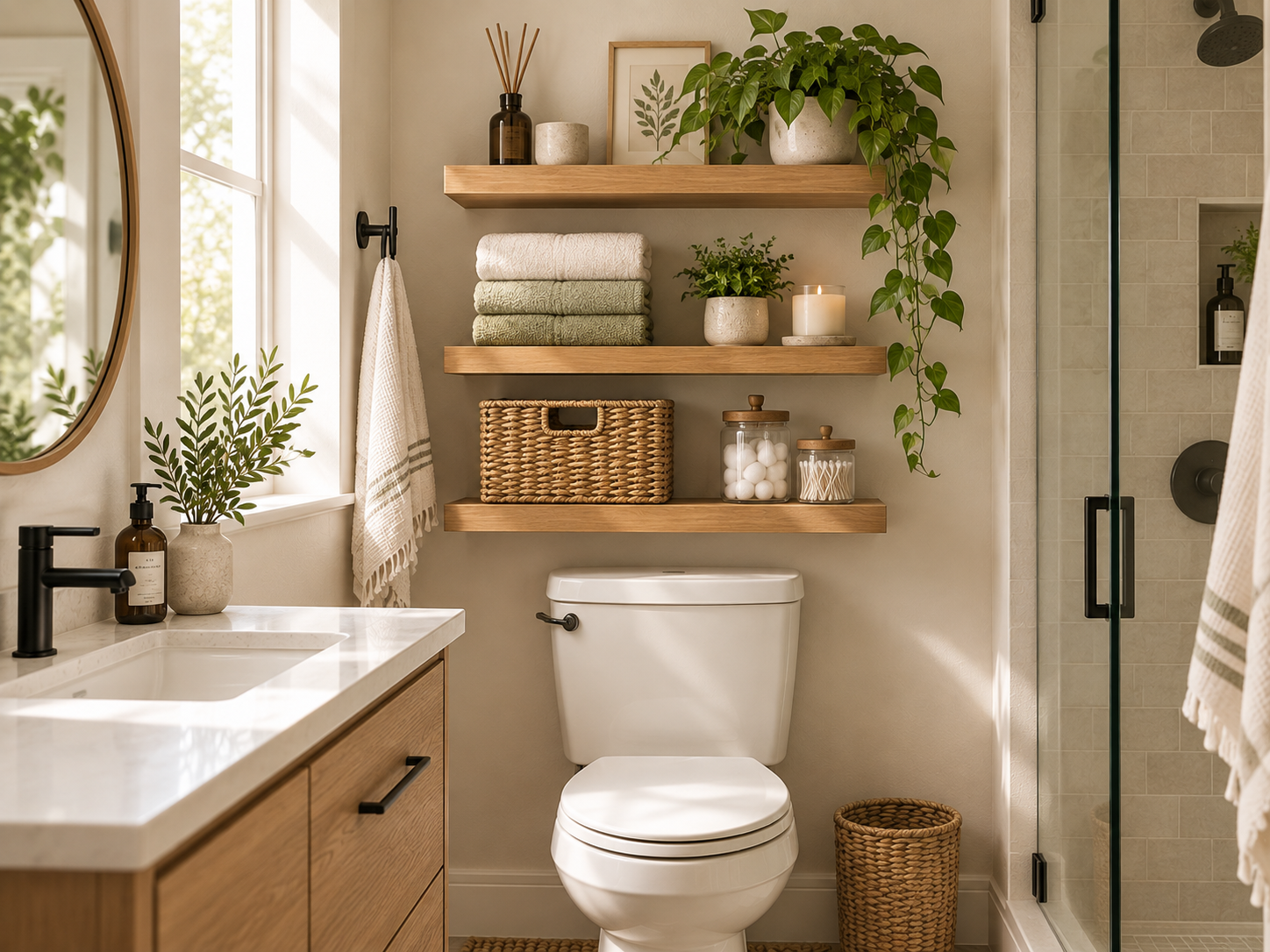
Measure the wall above the toilet with the lid raised and leave room to reach the flush mechanism and tank lid. Choose a shallow shelf that does not project into the space where you sit or stand. Before drilling, check the wall construction, hidden services and rental rules; use fixings suitable for the shelf, wall and intended load.
Store a small reserve of toilet paper or folded clean towels here, rather than heavy bottles balanced near the edge. Keep frequently used items on the lowest comfortable shelf. If installing a shelf is unsuitable, compare the other options in our bathroom organization guide before buying a freestanding unit.
Use a slim bathroom storage cart
Measure the narrowest part of the gap, including the baseboard, pipes and toilet bowl, rather than assuming the visible opening is usable. Then check the cart's complete width, including wheels and handles. Put a cardboard footprint in the gap and open every nearby door before ordering.
Use the top level for a few daily items and lower levels for contained supplies. A cart needs to roll out for cleaning without blocking the doorway. Skip it if reaching the toilet or sink becomes awkward. In a household with young children, reachable shelves are unsuitable for cleaning products or medicines that need secure storage.
Install wall-mounted baskets
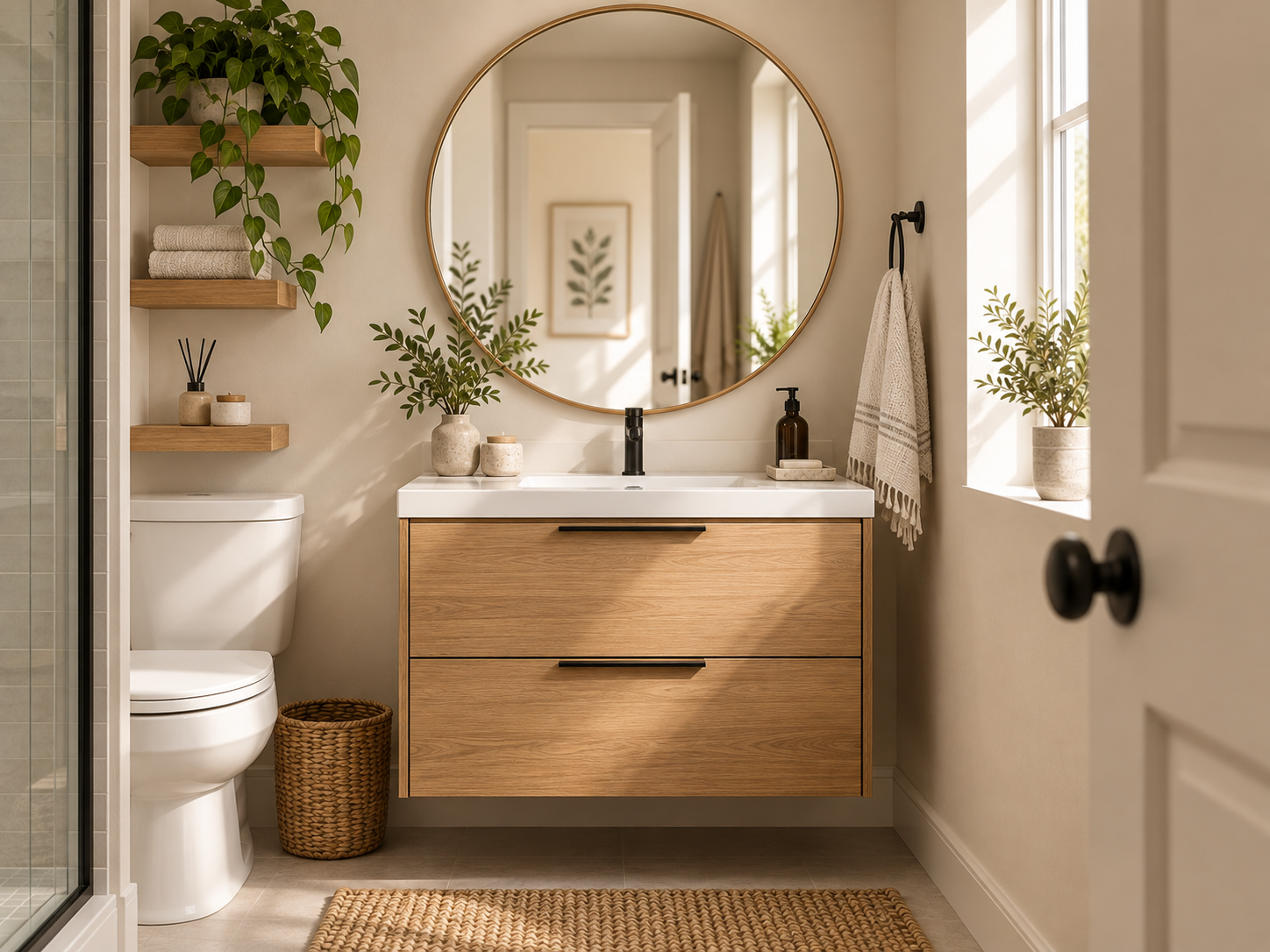
Start with the items you want the basket to hold. Fold one towel or stand the intended bottles together, then check the basket's usable internal dimensions. Deep baskets may hold more but can project into a narrow bathroom's walking space.
Use a mounting system rated for the basket's loaded weight and appropriate for the wall. Do not hang a loaded basket from decorative handles unless they are designed for that purpose. Keep paper products away from splashes, and avoid enclosing damp towels in woven storage. For a rental, use an existing suitable mounting point or choose a non-mounted alternative when permission is unclear.
Use the back of the bathroom door
Close the door and measure the gap above it before choosing an over-door organizer. The bracket must suit the door's thickness and allow the door to shut normally; do not force it closed against an oversized hook. Check both sides for interference with the frame, nearby wall and existing hardware.
Hang only what the organizer is designed to support. Spread towels so they can dry rather than stacking several damp ones on a single hook. If a pocket organizer hides the towel rail or makes the door hard to use, a smaller hook arrangement will work better. Keep the handle and lock fully accessible.
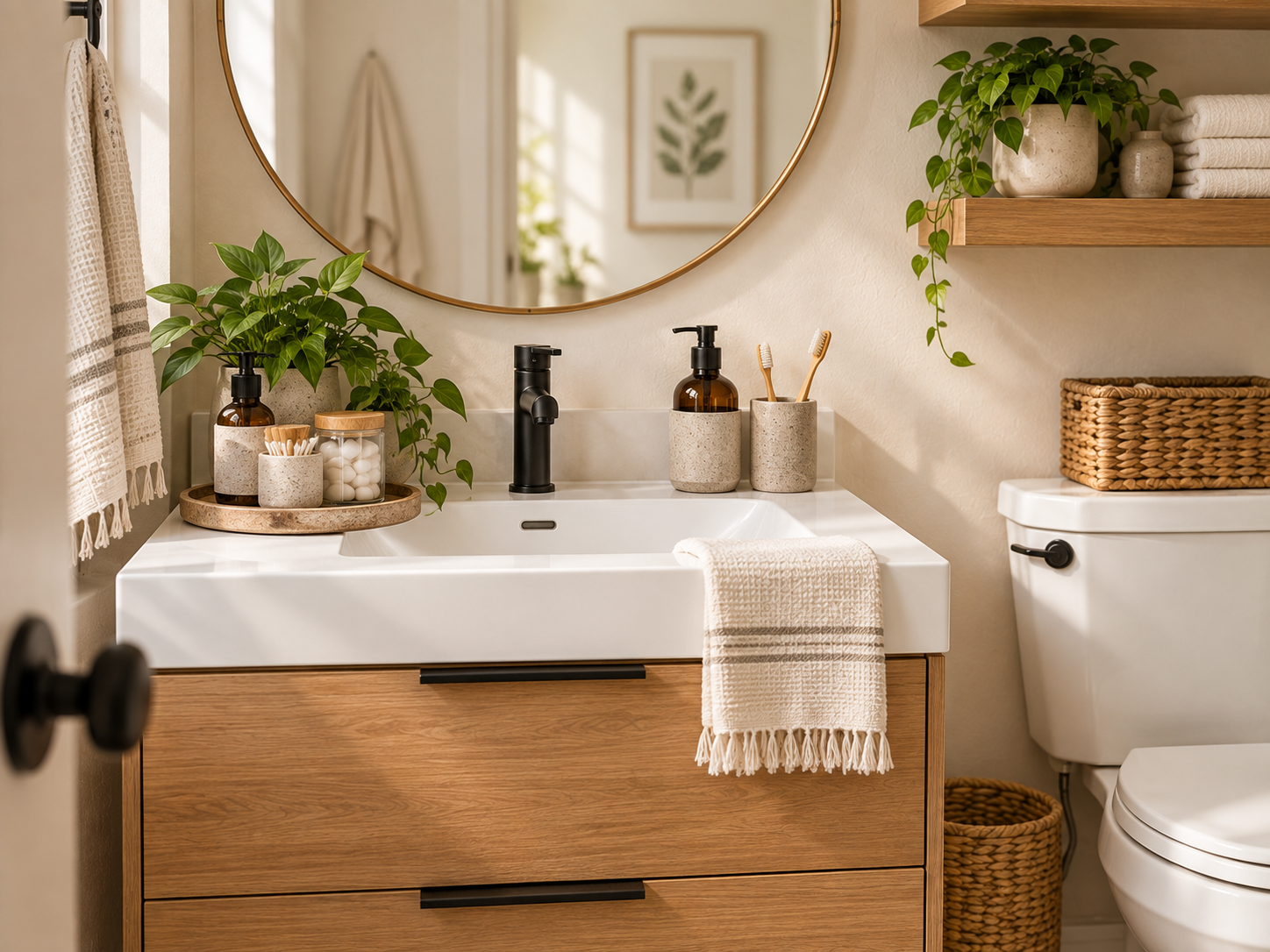
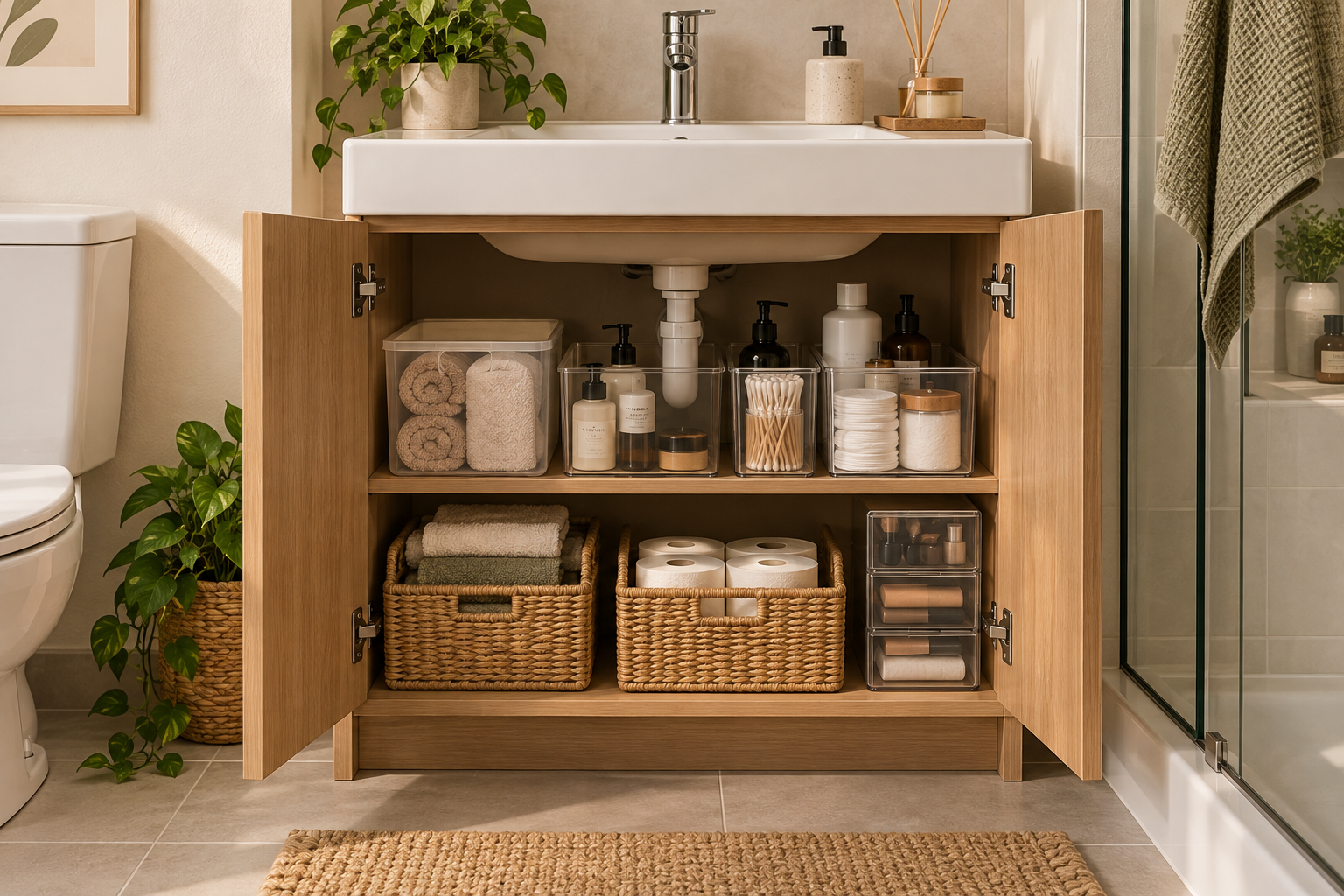
Add storage under the sink
Draw a quick map of the cabinet, including the drain, water lines, shutoff valves and hinges. A bin that fits beside the pipe may not pass through the door opening. Measure that opening first, and choose removable storage that leaves plumbing accessible.
Group supplies by use: daily refills in front, less-used items behind, and any products requiring secure storage in a suitable locked location. Do not stack organizers over a leak or use them to conceal moisture. Address the source before storing belongings there. Our small bathroom sink storage guide compares options for vanities and pedestal sinks.
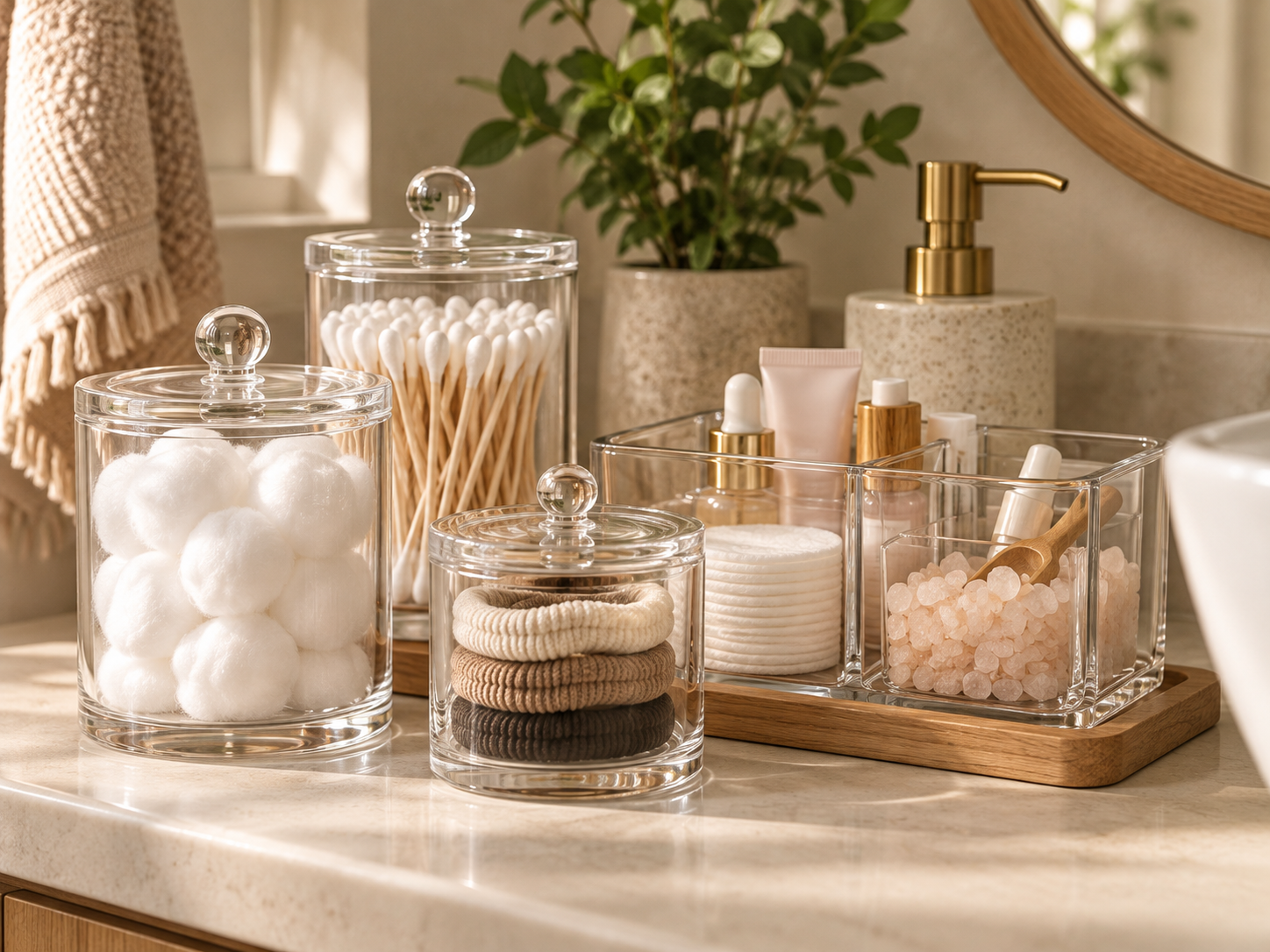
Use clear containers for small products
Choose containers after sorting the items, not before. A shallow divided box is often easier to use for hair ties or grooming accessories than a tall jar. Keep small tools separated so you can lift out the item you need without emptying the container.
Place cotton pads and other moisture-sensitive supplies in a dry spot away from shower spray. Follow the storage instructions on cosmetics and personal-care products, and keep labels and expiry information visible. Transparent storage is useful when seeing the contents saves time; if a container simply displays a large collection you rarely use, reduce the collection first.
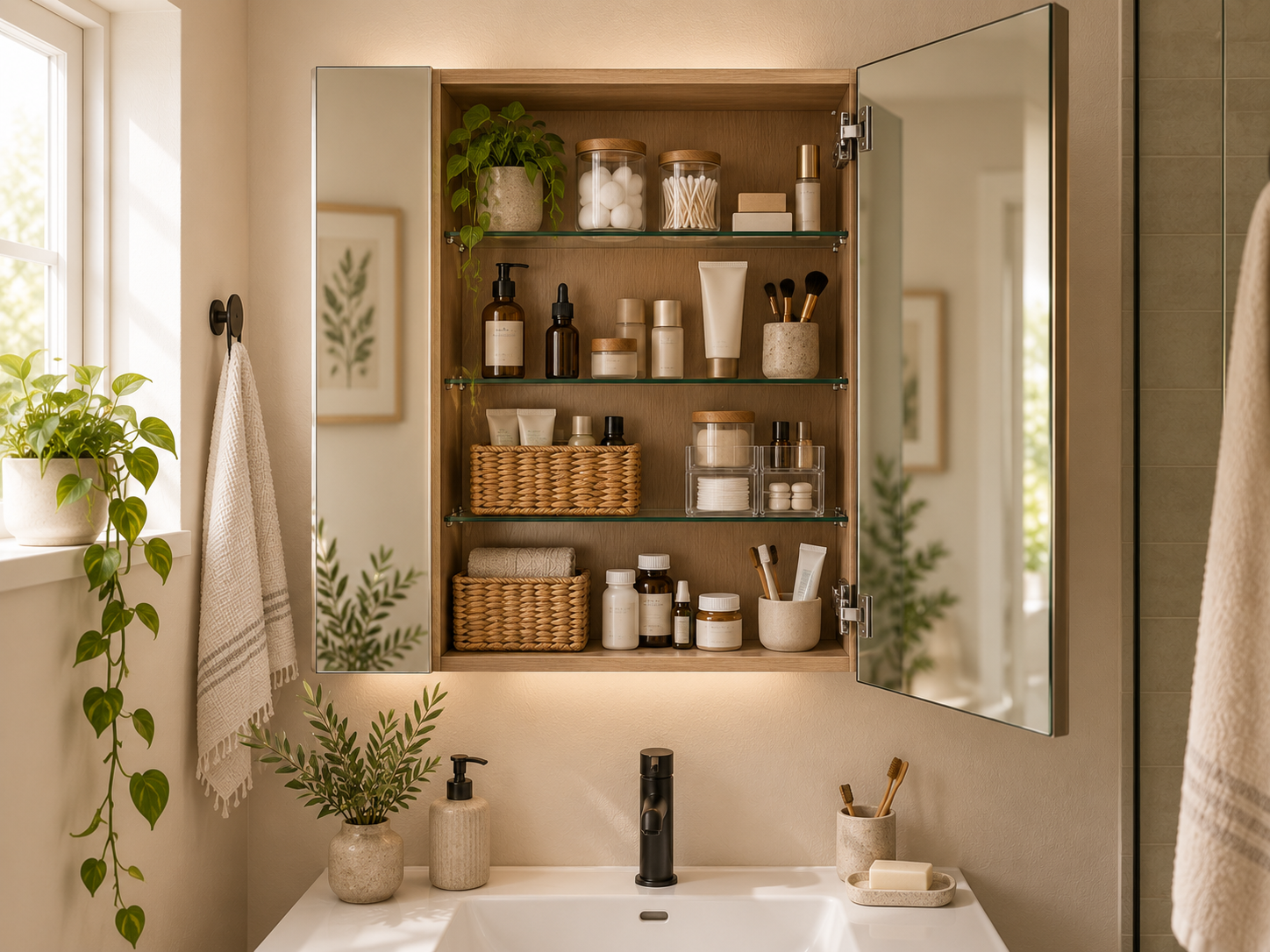
Install a mirrored medicine cabinet
A mirrored cabinet is most useful when its interior shelf depth suits the items you actually store. Measure your taller daily products and check whether the door can open fully beside a wall or light fitting. A surface-mounted cabinet also projects farther into the room than a flat mirror.
Replacing or recessing a cabinet may involve walls, wiring or plumbing. Check permission and use an appropriate installer when the work calls for one. The name 'medicine cabinet' does not mean every medicine belongs in it: follow each product's storage instructions and keep medicines out of children's reach. A dry storage location elsewhere may be more suitable.
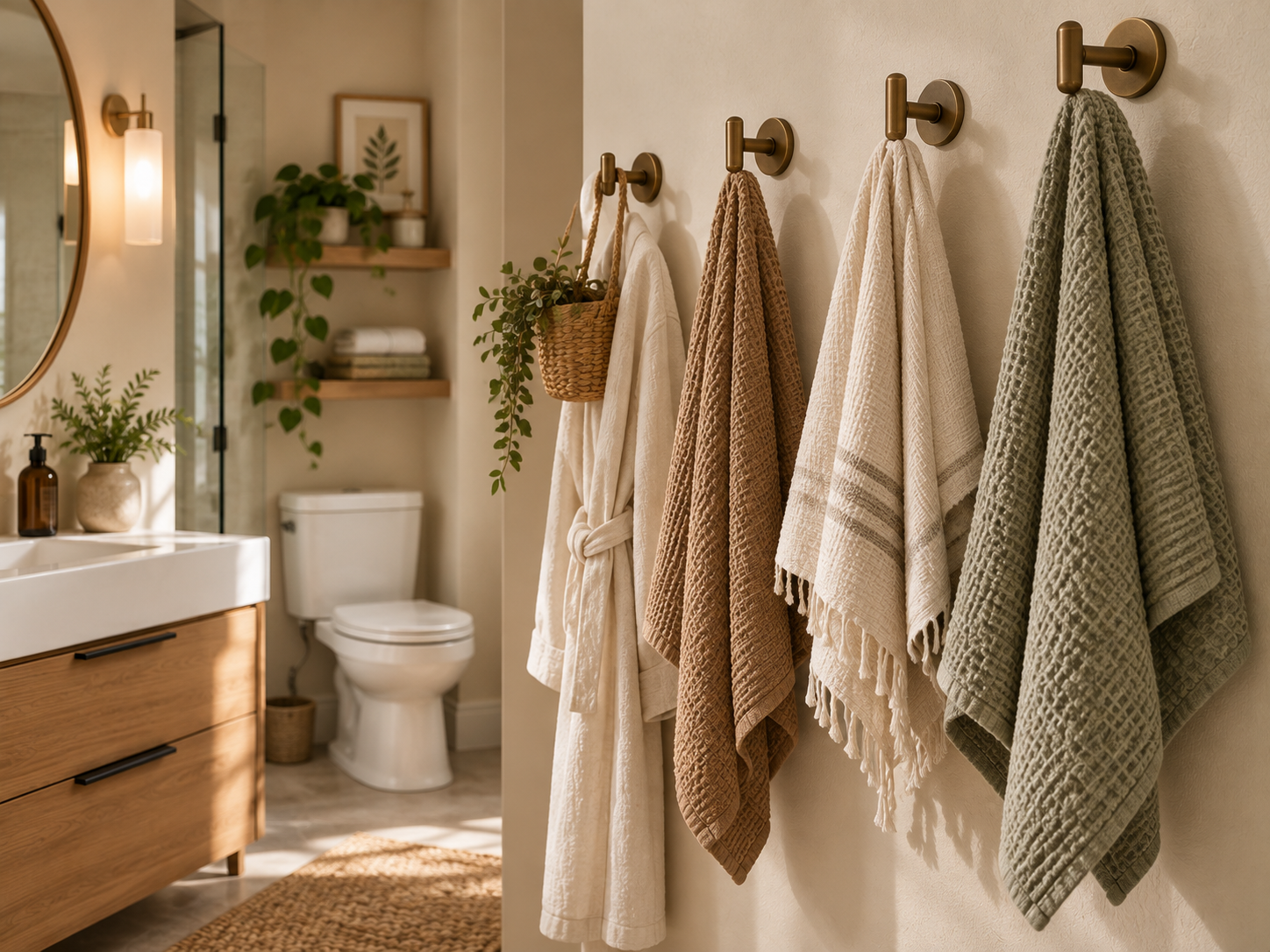
Add hooks instead of towel bars
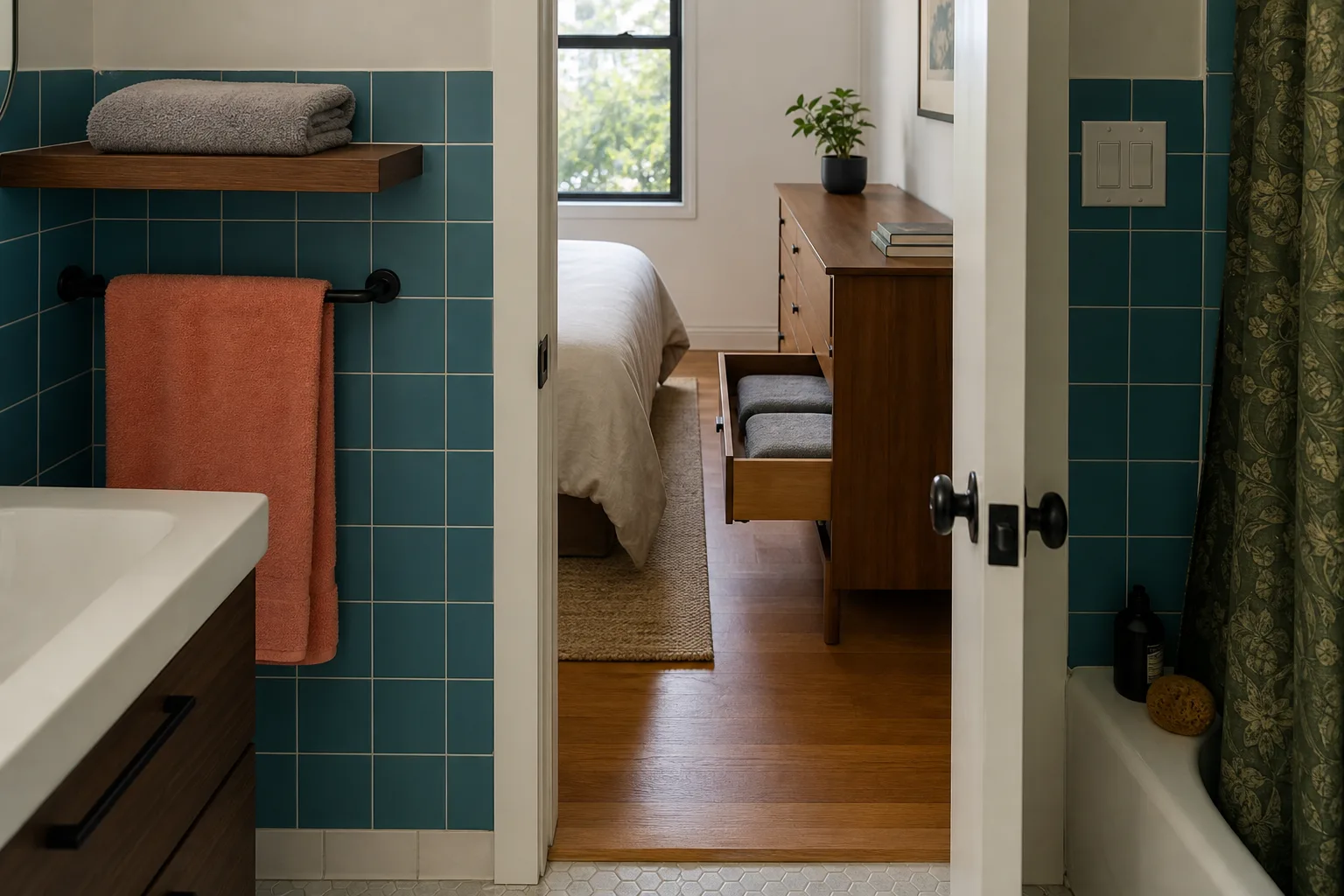
Hooks can accommodate robes or spare towels on a short section of wall, but they are not automatically better for drying. Test the arrangement with your largest towel: it should hang clear of the floor and spread enough to avoid a permanently damp bunch of fabric.
Place hooks where the intended user can reach them without stretching over the toilet or leaning around a door. For adhesive hooks, check surface compatibility, humidity restrictions, weight limits and waiting time in the manufacturer's instructions. If the towels stay damp, retain a rail or space the hooks farther apart rather than adding more hooks to the same small area.
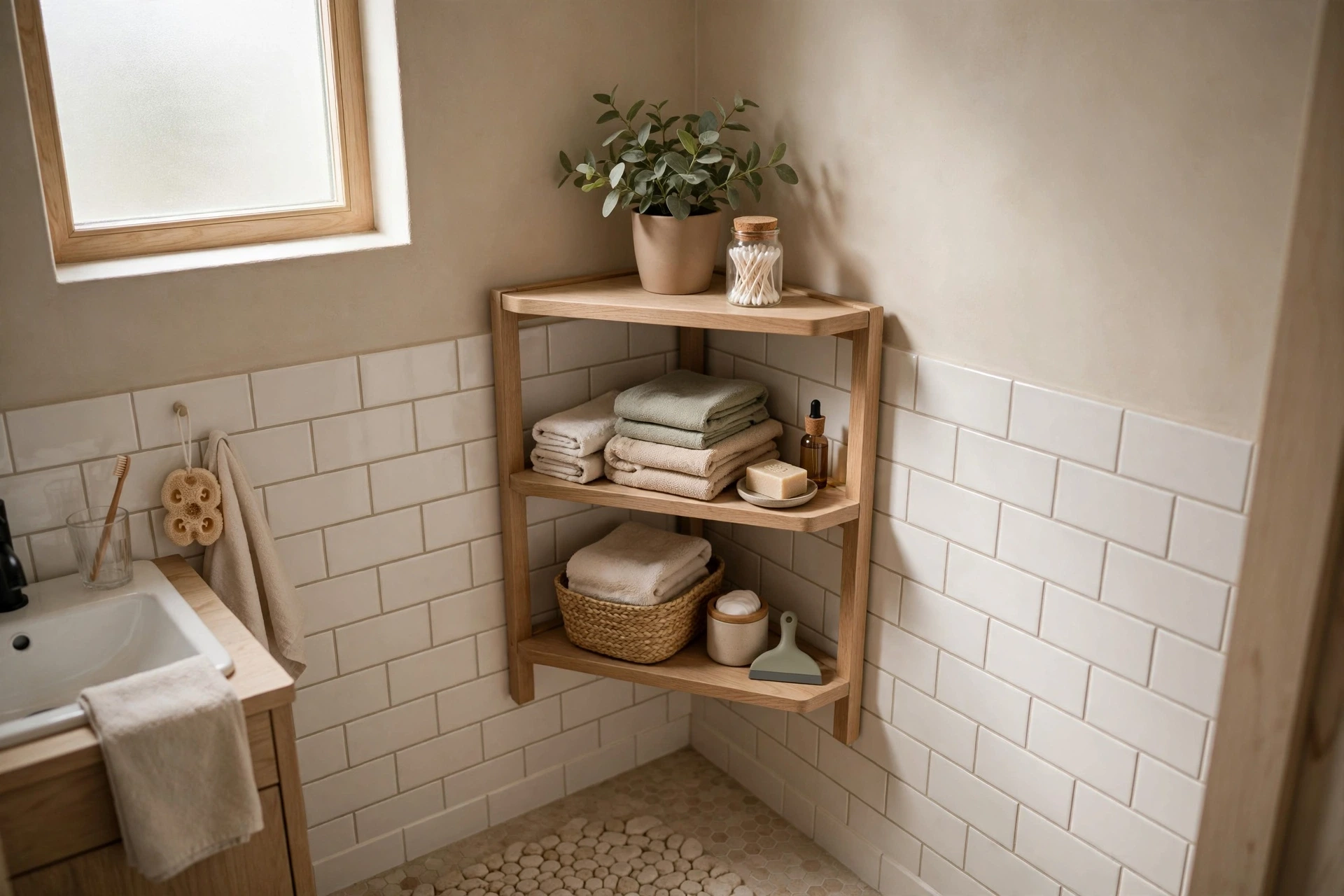
Use a corner shelf
Look for a corner you can reach comfortably without stepping into the shower or squeezing behind the toilet. Measure the depth of both walls and check how a triangular shelf changes the standing space. A corner is useful storage only when the contents are accessible.
Keep the shelf's job narrow: daily toiletries near the vanity, or a clean towel stack in a dry corner. A decorative plant and several extra bottles can quickly turn it into another crowded surface. Choose materials intended for the bathroom conditions, follow mounting instructions and keep heavy items low. Do not place a freestanding corner unit where a door can knock it over.
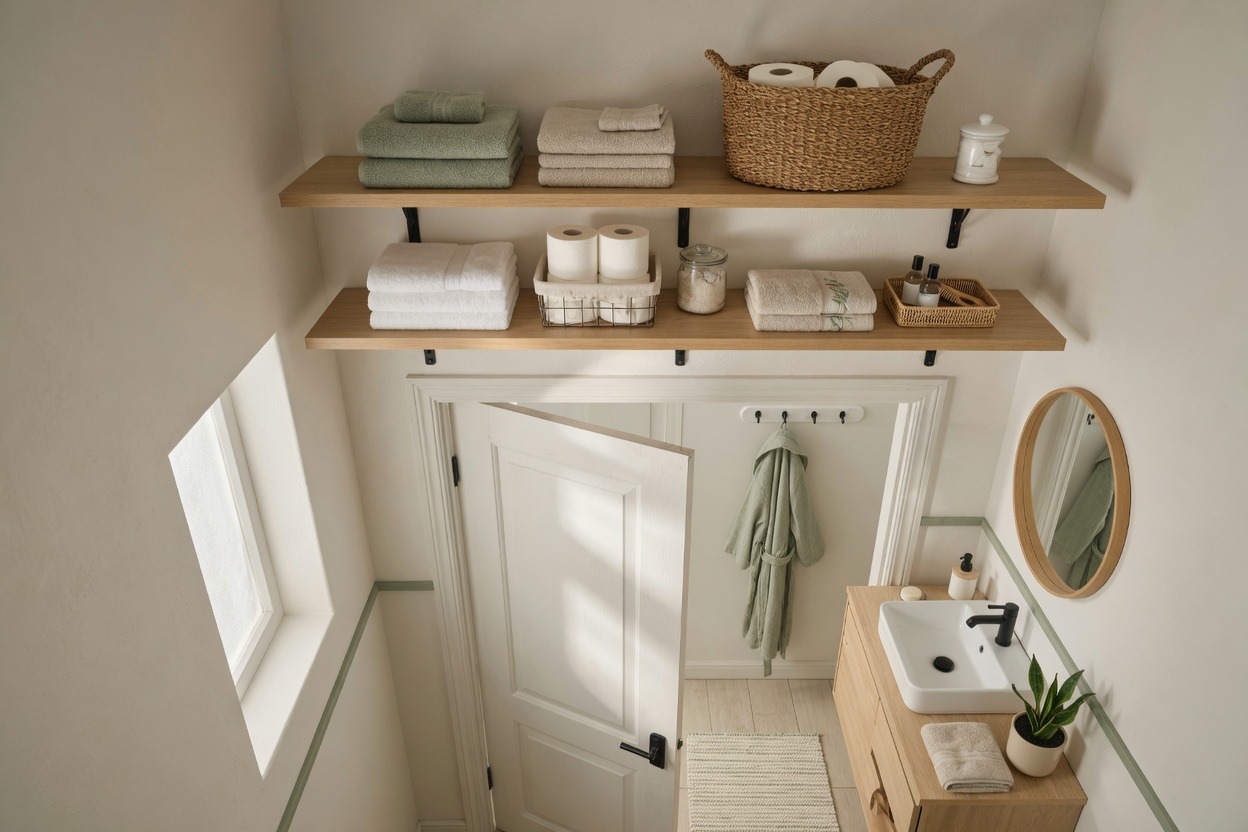
Add shelves above the bathroom door
Above-door storage suits lightweight items used occasionally, such as a small reserve of paper supplies. It is a poor location for heavy bottles or things you need every morning. Check the wall, fixings and door movement, and avoid any arrangement that obstructs ventilation.
Think about retrieval before installing the shelf. You should not need to balance on the toilet, tub edge or a bathroom chair to reach it. If a stable, appropriate step cannot be used safely in the room, choose a lower storage position. Keep containers well within the shelf edge so opening or closing the door does not dislodge them.
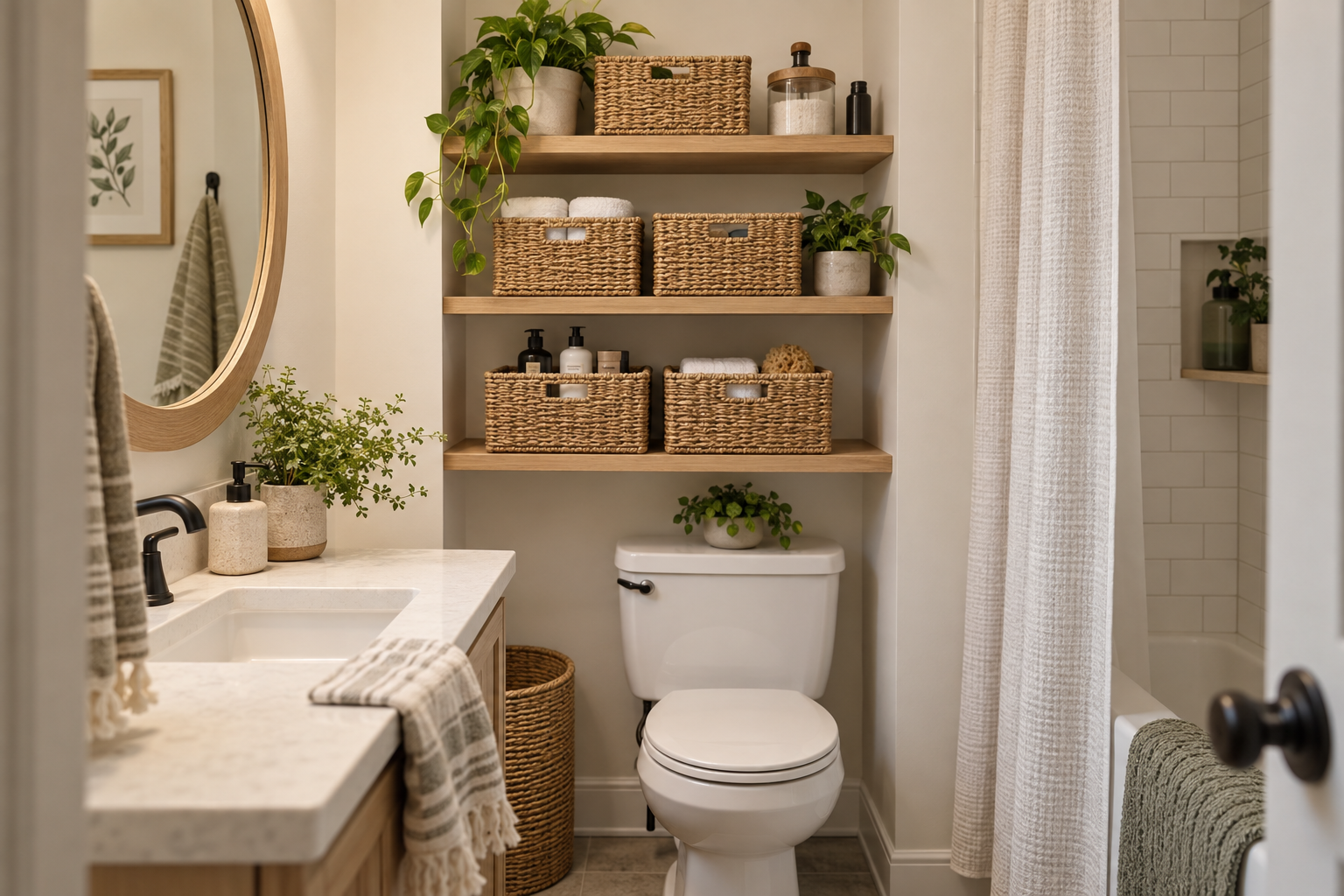
Use matching storage baskets
Matching baskets can make open storage look calmer, but assign each one a specific category first. Try one for clean hand towels, one for refills and one for a particular person's daily supplies. Label opaque baskets if everyone in the household needs to use the system.
Check the shelf depth against the basket, including handles, and leave space to lift it out. Do not fill a large basket with unrelated items simply to hide them. Store clean, dry textiles separately from used towels, and inspect natural materials for moisture damage. Reuse containers you already own when their sizes work; visual consistency is optional, easy access is not.
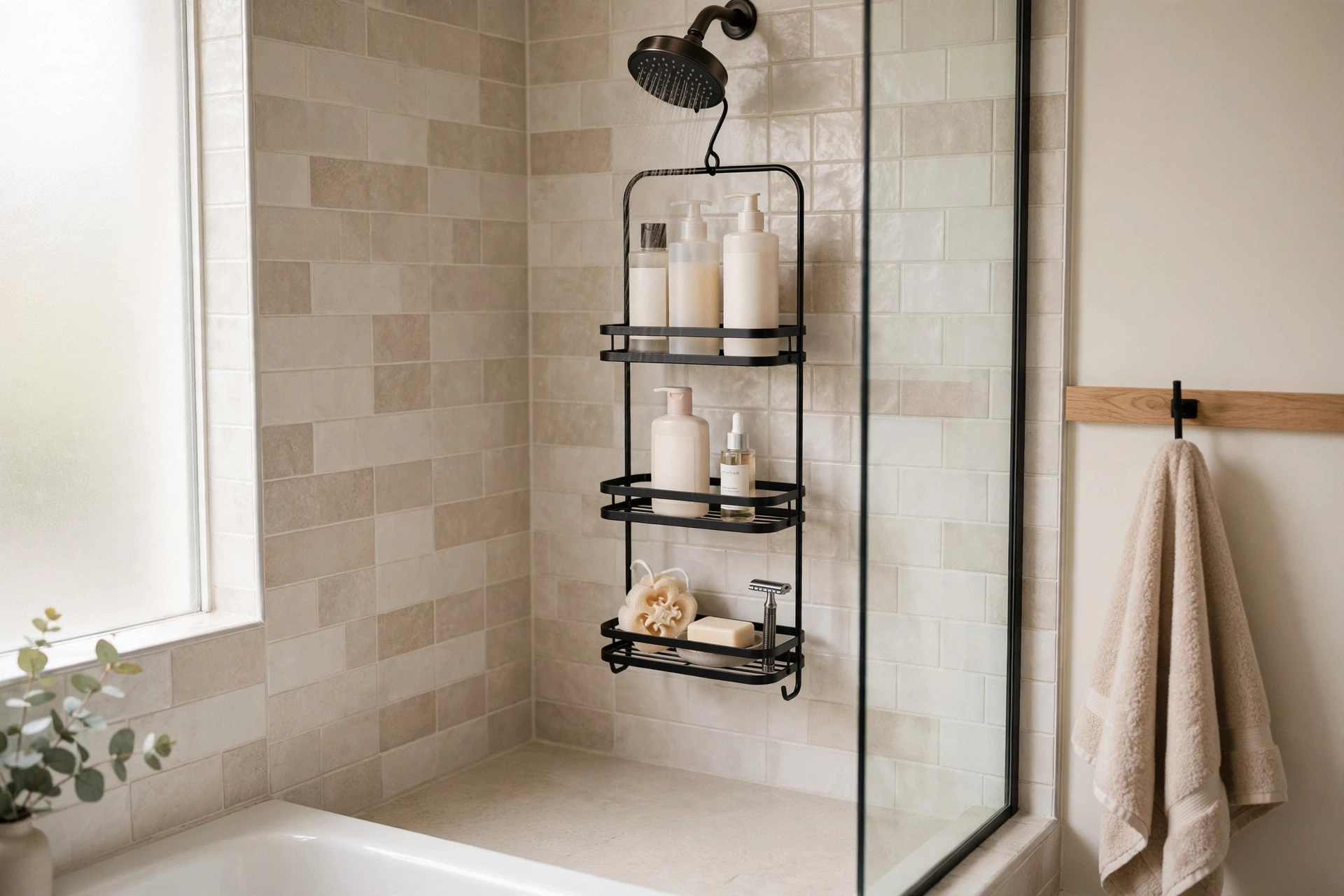
Install a shower caddy
Count the bottles you use during an ordinary shower and choose storage for that set. A caddy filled with unopened backups adds weight and makes cleaning harder. Confirm compatibility with the showerhead, rail, pole or wall surface before choosing a mounting method.
Keep controls, grab bars and the shower entrance clear. Do not load plumbing fixtures or safety equipment with an organizer unless the manufacturer explicitly allows it. Leave drainage holes unobstructed, remove residue regularly and check for loosening or corrosion. If an adhesive caddy is unsuitable for the surface or steam exposure, use a properly installed alternative rather than adding extra tape.
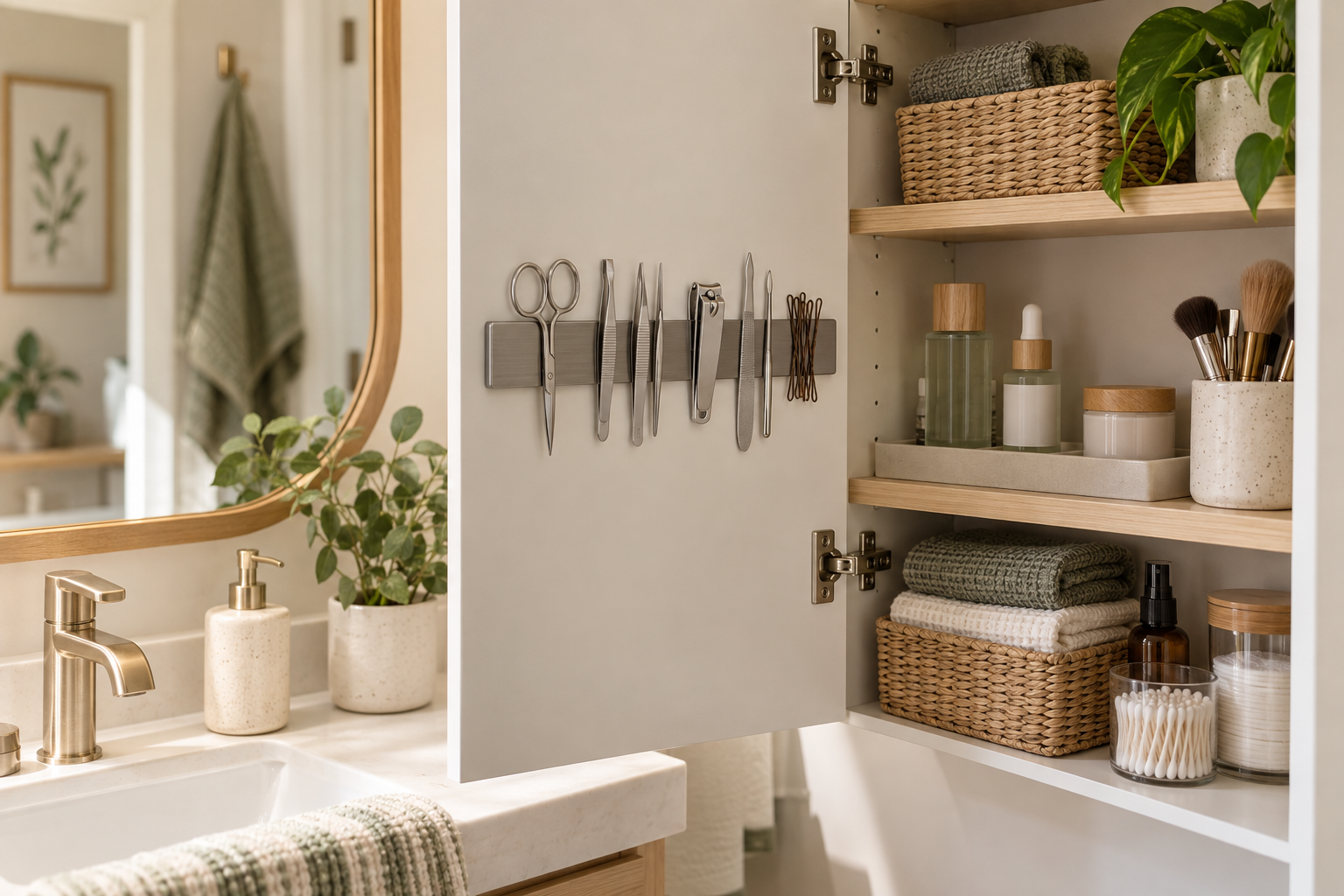
Use magnetic storage for small items
A magnetic strip inside a dry cabinet can organize suitable metal grooming tools, but first check that the tools are actually magnetic and that the strip is designed for this use. Leave enough space to remove an item without scraping it against a shelf or mirror.
Mount the strip according to its instructions and keep sharp tools protected and inaccessible to children. Loose magnets and small detachable parts are unsuitable in reachable children's storage. If the cabinet is damp or the tools need protective cases, a shallow divided tray may be a better option. Magnetic storage is useful only when it improves safe, ordinary access.
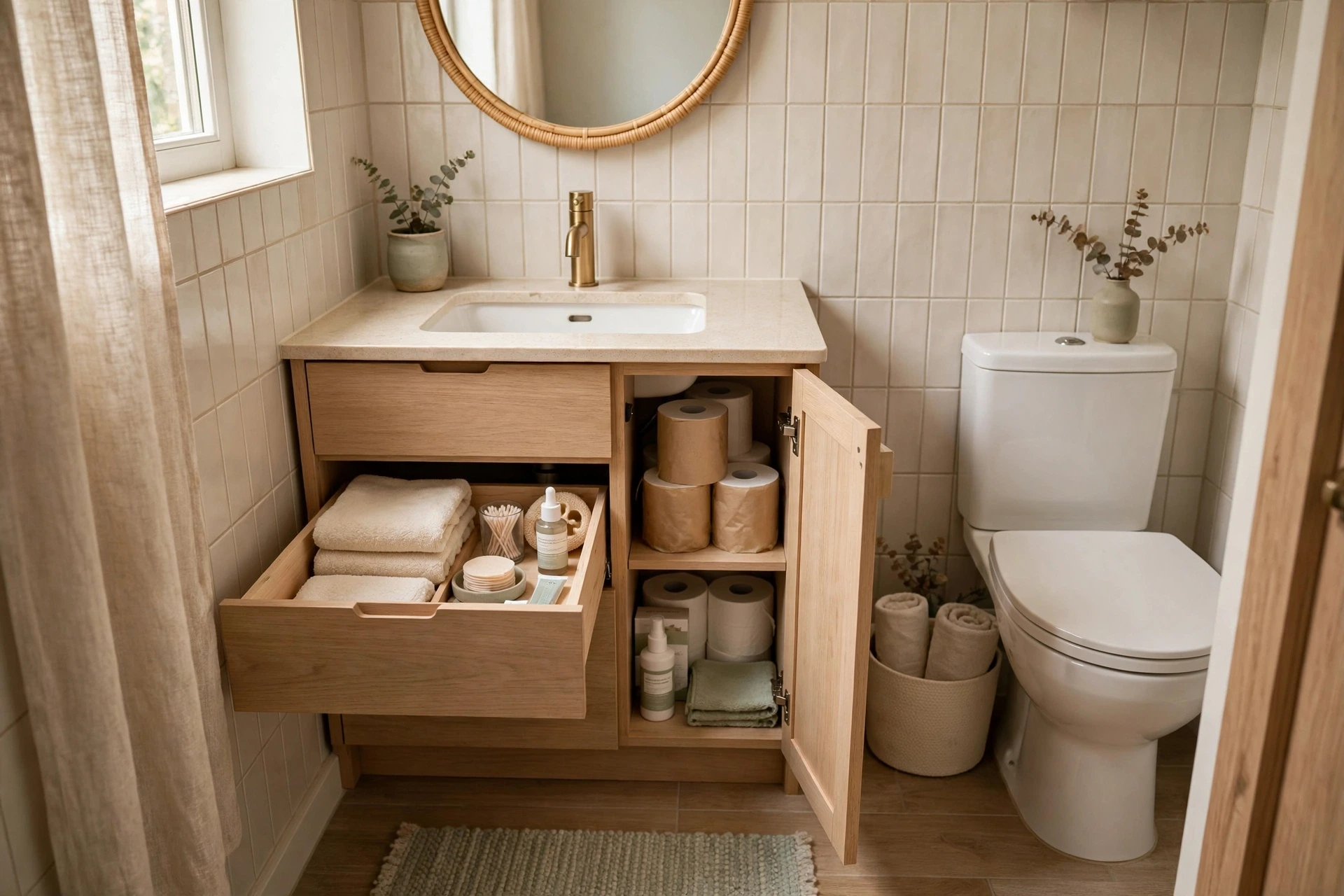
Choose a vanity with built-in storage
If a vanity replacement is already planned and permitted, compare the usable storage inside each model rather than its exterior width alone. Pipes, drawer cutouts and hinges can reduce the space considerably. Bring measurements of the products and towels you expect it to hold.
Tape the proposed footprint on the floor, then test the door swing and standing room in front of the basin. Drawers must open without hitting the toilet or doorway. Replacing a sink just to gain storage is a much larger project than adding bins to an existing cabinet; account for installation, plumbing and rental restrictions before deciding.
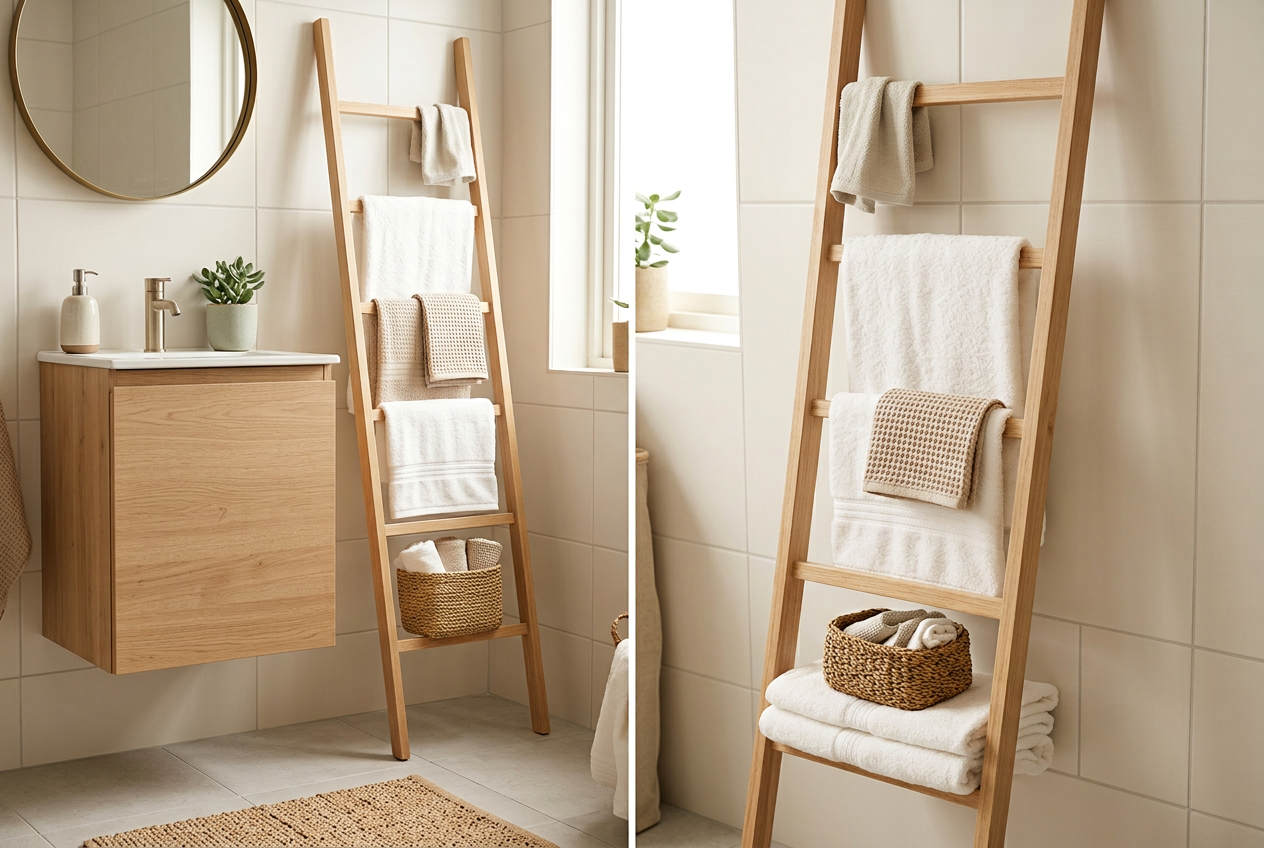
Add a ladder shelf for towels
A ladder-style towel rack needs a stable position and enough room for towels to hang without brushing the floor or crowding the sink. Check the maker's instructions: some racks need to be secured, and a decorative ladder is not necessarily designed to support wet towels.
Do not use it as a climbing aid, and skip it where children could climb it or where a passing person could knock it over. Keep the feet away from splash zones and test whether you can still clean behind it. If the room has no spare footprint, wall hooks or a suitable over-door rack are more practical than a floor-standing display.
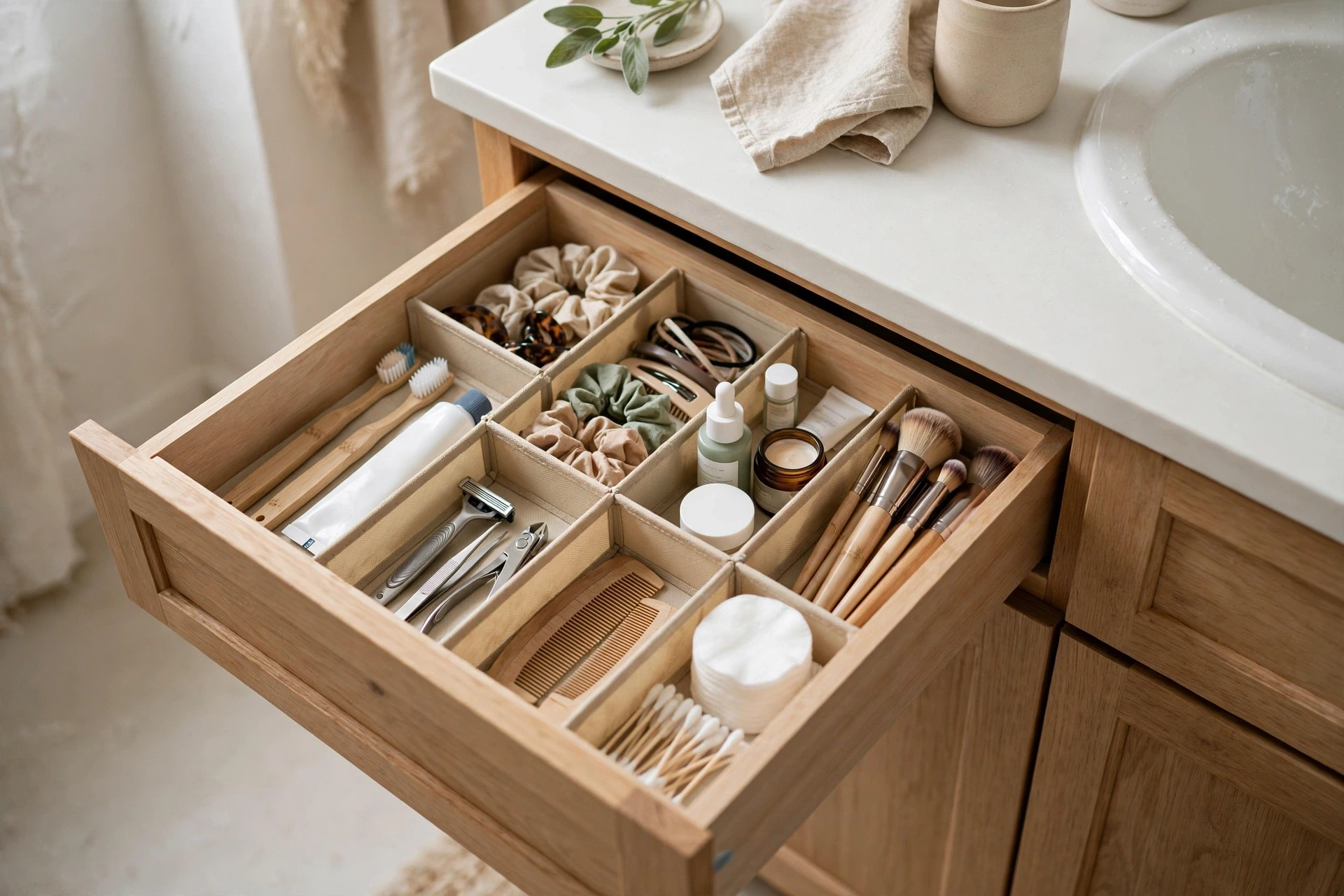
Use drawer dividers
Empty the drawer and measure its internal width, depth and height with the drawer fully closed. Include any intrusion from plumbing. Arrange your daily items in groups, then choose dividers that support those groups without using up most of the drawer themselves.
Put frequently used items toward the front and protect sharp tools with suitable covers. Small open trays often work better than a complicated adjustable grid. Check that containers do not slide when the drawer moves, and leave room for your hand to lift things out. Keep product labels readable instead of decanting every item for a matching appearance.
Store toilet paper vertically
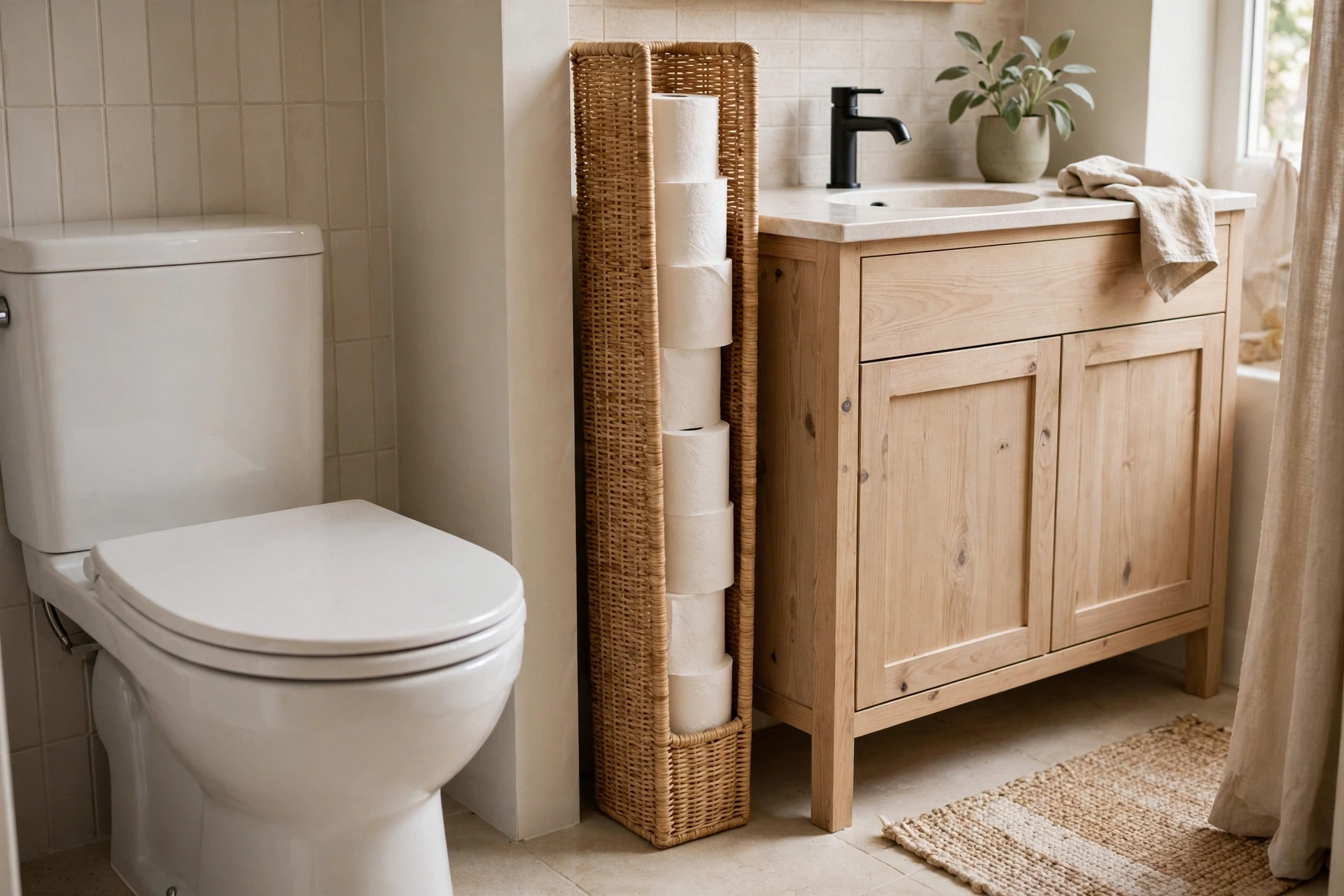
Keep the roll currently in use easy to reach, then store a modest reserve in a dry cabinet, covered container or suitable holder. Measure the holder with rolls inside: some designs are wider at the base than the product photo suggests.
Do not position paper next to shower spray, beneath a known leak or where it obstructs cleaning around the toilet. A tall holder is useful only if it remains stable and leaves the walking route clear. If bathroom storage is damp or limited, keep additional stock elsewhere and replenish a small bathroom supply. You do not need to store the entire multipack beside the toilet.
Declutter what you do not use
Sort one category at a time: daily toiletries, towels, cleaning supplies and backup products. Keep the items you use, identify duplicates and check labels before deciding what to discard. Dispose of medicines and chemicals using the appropriate local guidance; do not pour unwanted products down the drain simply to clear a cupboard.
Return everyday items to the most accessible positions before adding an organizer. Try the revised arrangement for a week and note the specific remaining problem: bottles falling over, towels not drying or refills getting lost. Buy storage for that problem rather than purchasing several containers in advance.
Choose the storage form by ruling out what cannot work
Choose by the problem and rule out the options that cannot work before buying anything. These three situations lead to different decisions.
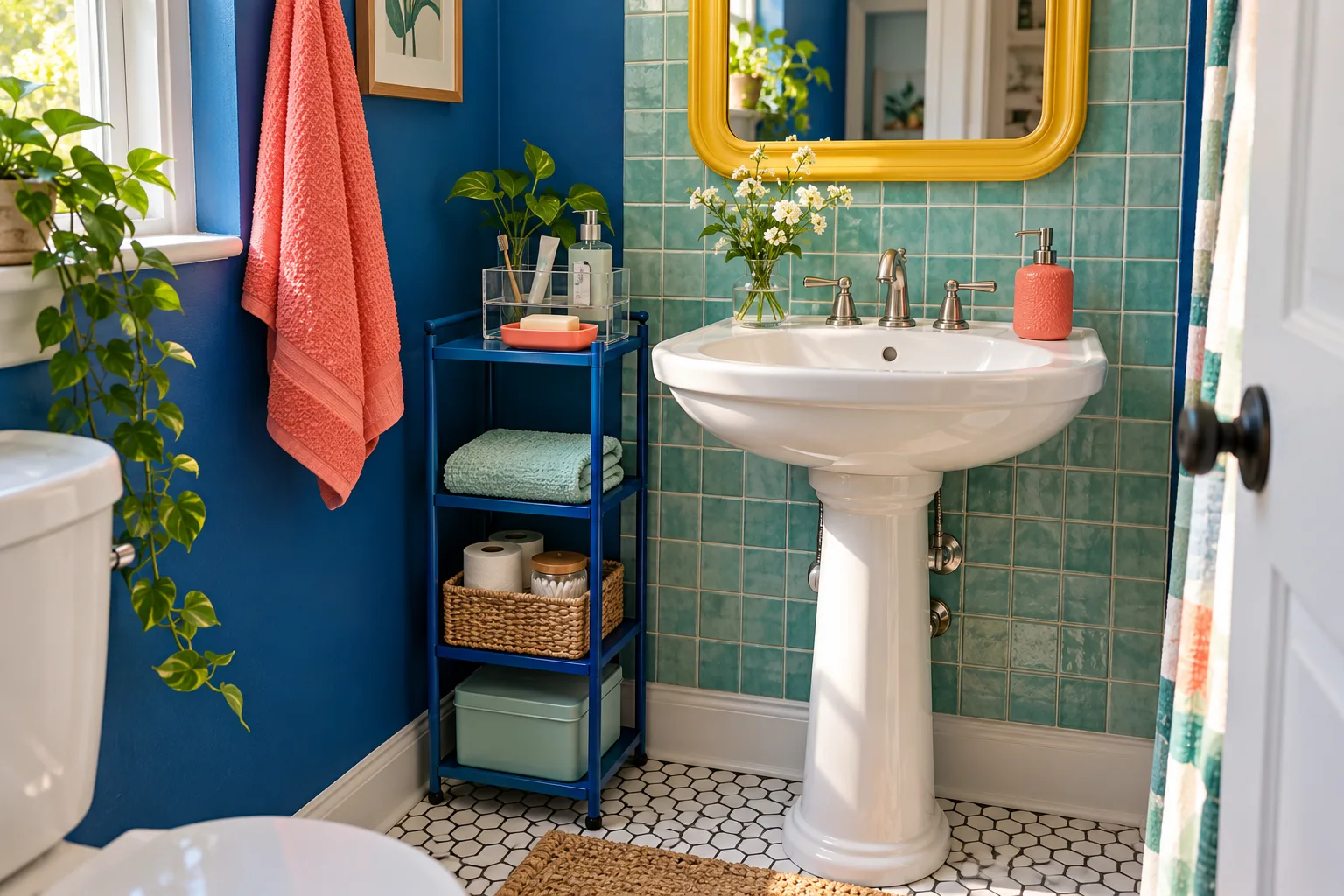
A pedestal sink has no useful cabinet, and the route beside it is already tight. Another floor cart or ladder shelf would compete with that route. If a suitable wall position and installation are available, compare a shallow wall cabinet or shelf there. If neither the wall nor the floor can take storage, keep the daily kit in a nearby appropriate location and bring out individual items. Our sink-storage guide for bathrooms with no counter space explains the landing-place check.
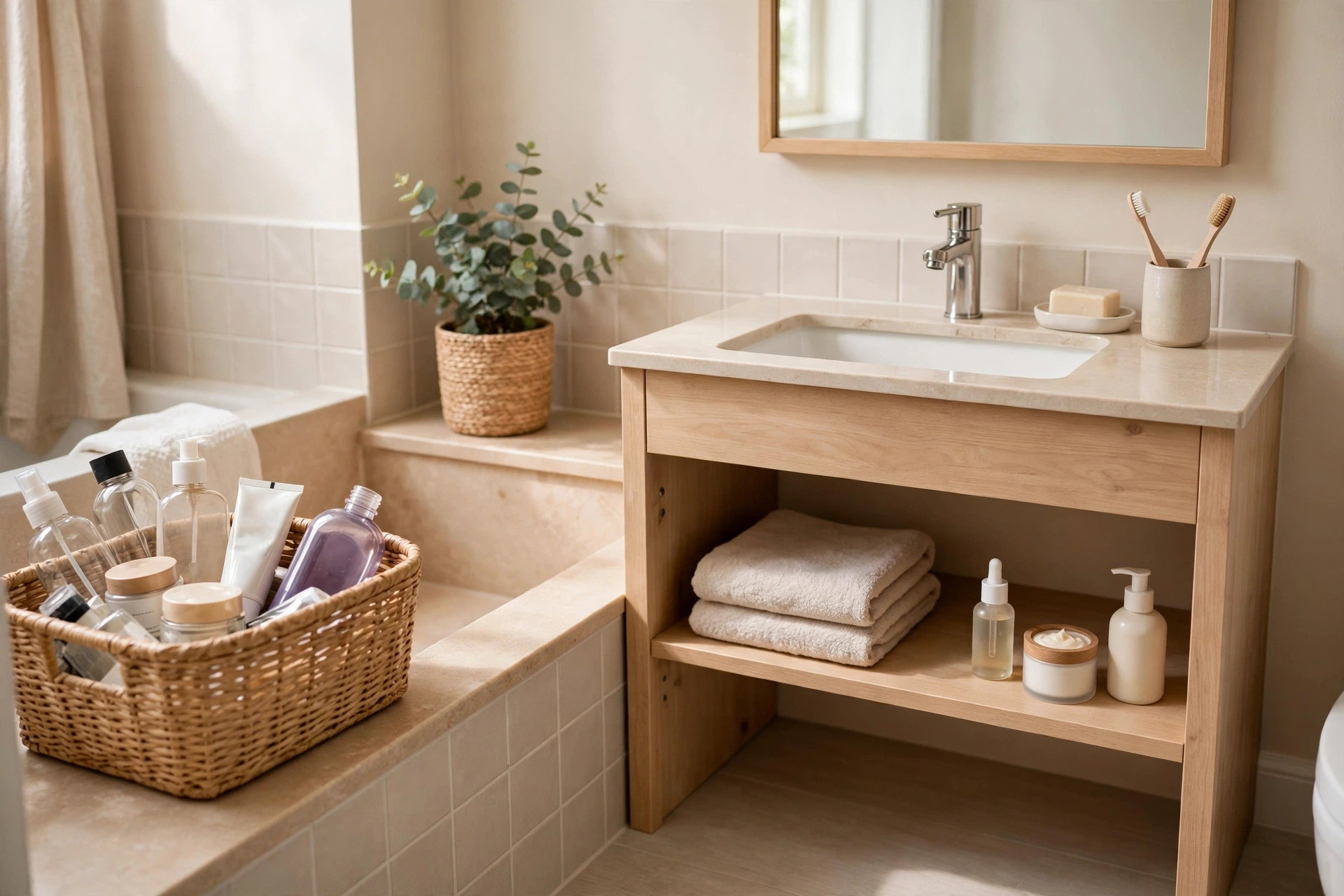
A vanity drawer holds the daily toiletries, but new organizer trays would prevent the taller bottles from fitting. Check the contents, the closed drawer height and the tray's own base before replacing the arrangement. A smaller tray for the loose items may help without enclosing everything. Do not sacrifice a working bottle space just to make all the containers match.
Clean towels fit on a shelf, but used towels remain damp. Another clean-towel basket does not supply a drying position. Compare the available hanging arrangement, ventilation and actual towel use instead; our towel-storage guide separates clean stock from towels in use. Address leaks or persistent moisture rather than arranging storage around them.
Test the smallest suitable change through normal use and cleaning. A shelf or basket earns its space when it solves the identified problem without creating a new obstacle.
A beautiful small space is not about having more. It is about making what you have work better. — Spacelya